
If you’ve ever felt your fishing line wasn’t casting far enough or your bait wasn’t sinking properly, the solution might be simpler than you think. Knowing how to put a weight on a fishing rod can make a huge difference in your fishing experience.
It helps you control your cast, reach the right depth, and attract more fish. In this guide, you’ll discover easy steps to add weight correctly, avoid common mistakes, and improve your fishing skills instantly. Ready to cast smarter and catch more?
Let’s dive in.
Credit: www.gosupps.com
Choosing The Right Weight
Adding the right weight to your fishing rod helps you cast better and reach the right spots. The right weight also keeps your bait at the right depth in the water.
Choosing a weight depends on the type of fishing, water conditions, and fish you want to catch. This guide explains different types of fishing weights, their sizes, and materials.
Types Of Fishing Weights
There are several types of fishing weights, each serving a special purpose. Some common types include split shot, egg sinkers, bullet weights, and pyramid weights.
- Split Shot:Small round weights you pinch onto the line.
- Egg Sinkers:Oval-shaped weights that slide on the line.
- Bullet Weights:Shaped like bullets, good for fishing in weeds.
- Pyramid Weights:Have a pointed shape for holding on sandy bottoms.
Weight Sizes And Their Uses
Weight sizes vary from very small to heavy. The size you need depends on water speed, depth, and the size of the fish.
| Weight Size | Best Use |
| 1/16 oz to 1/4 oz | Calm water and light fishing |
| 1/2 oz to 1 oz | Moderate currents and medium fish |
| 1 1/2 oz and above | Strong currents and large fish |
Material Options
Fishing weights come in different materials. Each affects the environment and fishing experience differently.
- Lead:Common and cheap but can harm water life.
- Tungsten:Dense, small size, and eco-friendlier than lead.
- Steel:Durable and less toxic, but heavier than tungsten.
- Bismuth:Safe for the environment but more costly.
Attaching Weights To The Rod
Putting weight on a fishing rod helps cast the line farther. It also keeps the bait at the right depth.
There are several ways to attach weights to your rod. Each way suits different fishing needs.
Using Split Shot Sinkers
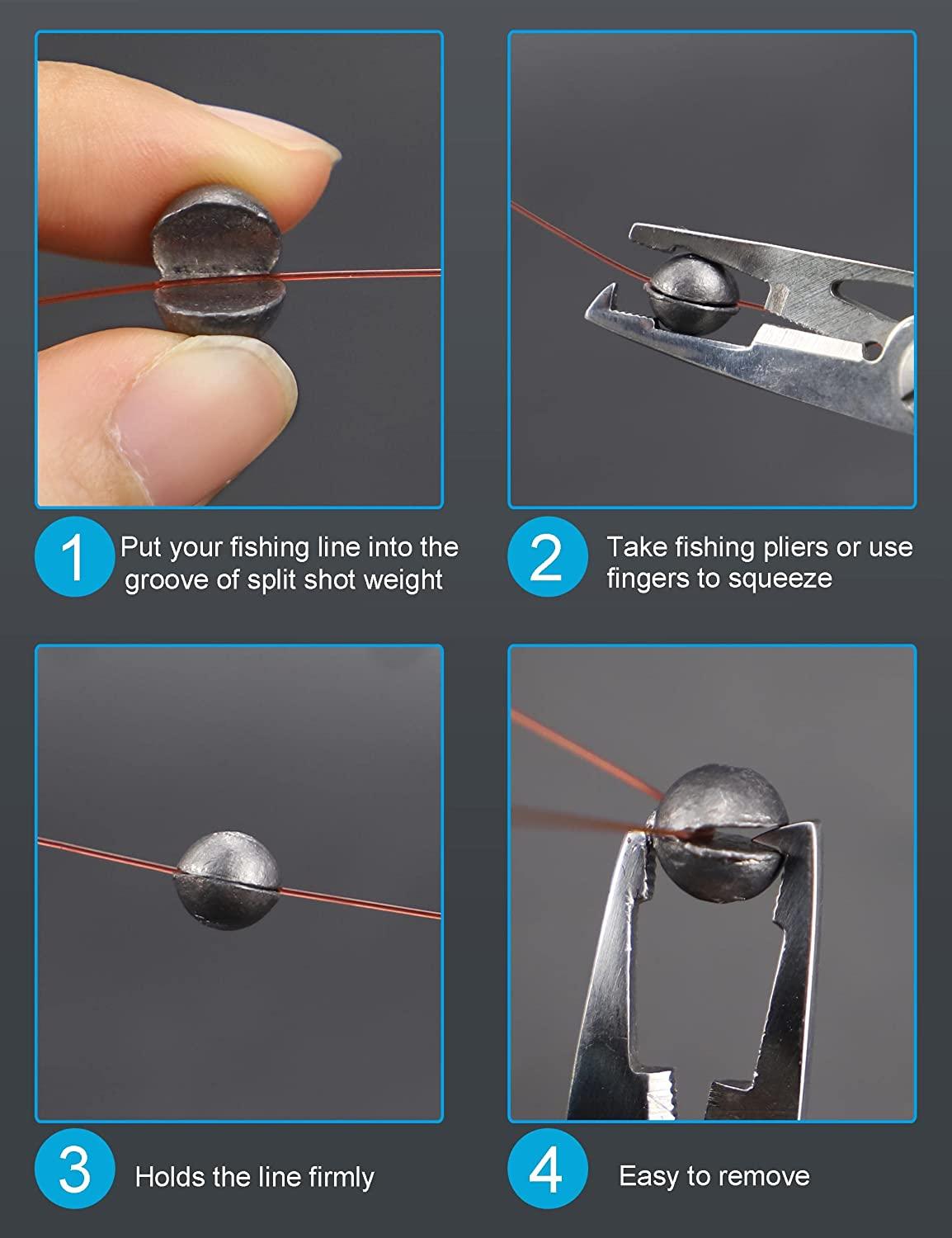
Split shot sinkers are small weights that clip onto the fishing line. They are easy to add and remove.
To use them, pinch the sinker around the line just above the hook. Use pliers to secure it tightly.
- Place the sinker 6 to 12 inches from the hook
- Add more sinkers for extra weight
- Use light sinkers for shallow water
Slip Sinkers Setup
Slip sinkers slide freely on the line. They let fish bite without feeling the weight.
Thread the sinker onto the main line before tying the hook or swivel. Add a stopper knot above the sinker.
- Use a bead between the sinker and knot to protect the knot
- Adjust the stopper knot to set fishing depth
- Works well in deep water or strong currents
Fixed Weight Methods
Fixed weights attach firmly to the line. They do not move when casting or retrieving.
Tie the weight directly above the hook or lure. This setup helps keep bait steady in flowing water.
- Use a clinch knot to tie the weight securely
- Choose weight size based on casting distance
- Best for fishing in calm water or still ponds
Balancing The Rod
Balancing a fishing rod helps improve your casting and control. Adding the right weight makes the rod feel steady and comfortable.
Knowing how to balance the rod can make fishing more enjoyable and reduce arm fatigue.
Why Balance Matters
A well-balanced rod gives better control and accuracy. It helps you cast farther and feel the fish biting more clearly.
- Reduces arm and wrist strain during long fishing trips
- Improves sensitivity to detect fish movements
- Helps maintain steady aim when casting
- Prevents the rod from tipping forward or backward
Adjusting Weight Placement
Place the weight near the reel seat or handle for better balance. Moving the weight changes how the rod feels in your hand.
| Weight Position | Effect on Balance |
| Near handle | Makes rod feel lighter and easier to control |
| Middle of rod | Can cause the rod to tip forward |
| Near tip | Makes rod tip heavy and harder to lift |
Testing Rod Sensitivity
After adding weight, test how the rod feels by tapping the tip gently. You want to feel vibrations without the rod being too heavy.
- Hold the rod in your usual fishing position.
- Tap the rod tip on a soft surface or shake it slightly.
- Notice if you can feel the movement clearly in the handle.
- Adjust the weight if the rod feels too heavy or too light.
Credit: usfws.medium.com
Matching Weight To Fishing Conditions
Choosing the right weight for your fishing rod helps you cast better and catch more fish. The weight depends on the water and weather conditions you face.
Understanding how to match the weight to these conditions keeps your fishing line steady and improves your control.
Considering Water Depth
Deep water needs heavier weights to keep the bait near the bottom. Light weights work well in shallow water because they let the bait move naturally.
- Use 1/4 to 1/2 ounce weights for shallow waters
- Choose 3/4 ounce or heavier for deep waters
- Adjust weight if the bottom is rocky or sandy
Dealing With Currents And Wind
Strong currents and wind push your line and bait away. Use heavier weights to hold your position and keep the bait where fish swim.
| Condition | Weight Size | Reason |
| Calm Water | Light (1/8 – 1/4 oz) | Allows natural bait movement |
| Moderate Current or Wind | Medium (1/2 – 3/4 oz) | Keeps bait stable and in place |
| Strong Current or Wind | Heavy (1 oz or more) | Prevents bait from drifting away |
Targeting Specific Fish Species
Different fish react to weight changes. Use the right weight to suit the fish you want to catch.
- Small fish like panfish: light weights for gentle presentation
- Medium fish like bass: medium weights for control and distance
- Large fish like catfish: heavy weights for strong pulling power
Common Mistakes To Avoid
Adding weight to a fishing rod helps control the bait and improve casting. Many anglers make errors when putting weight on their rods.
These mistakes can cause poor fishing results or damage to your equipment. Learn what to avoid for better fishing trips.
Using Too Much Weight
Using too much weight can make your rod bend too much. This strain may break the rod or tire your arm quickly.
Heavy weight also lowers your casting distance and reduces sensitivity to fish bites. Use only the weight your rod can handle.
- Check the rod’s recommended weight range.
- Start with light weights and add slowly.
- Avoid using large weights on light rods.
Ignoring Rod Action
Rod action shows how much the rod bends. Fast action rods bend near the tip, slow action rods bend along the length.
Ignoring rod action can cause poor casting and less control. Match your weight to the rod’s action for best results.
- Fast action rods need lighter weights.
- Slow action rods can handle heavier weights.
- Use weights that let the rod bend naturally.
Neglecting Line Strength
Your fishing line must support the weight you use. Heavy weights can break weak lines easily.
Check your line’s strength before adding weight. Use a stronger line if you want to add more weight safely.
- Match line strength to your weight and rod.
- Replace old or damaged lines regularly.
- Use heavier line with heavier weights.
Advanced Weighting Techniques
Adding weight to a fishing rod can improve casting distance and bait presentation. Advanced techniques help control the rod’s balance and sensitivity.
These methods are useful for different fishing conditions and target species. Learning to adjust weight precisely makes fishing more effective.
Using Multiple Weights
Using several weights on a line helps create a natural bait movement. It also lets you fine-tune how the bait sinks and moves underwater.
- Place small split shot weights near the bait for slow sinking.
- Add a heavier weight further up the line to improve casting distance.
- Adjust weight spacing to change bait action in the water.
- Use different weight sizes to balance rod sensitivity and casting power.
Weighted Rigs For Different Baits
Different baits need different weighting setups. The right weight helps keep the bait in the strike zone longer and looks natural.
| Bait Type | Recommended Weight | Weight Placement |
| Live Worm | Light | Close to hook |
| Soft Plastic | Medium | Mid-line |
| Crankbait | Heavy | Near lure head |
| Spinnerbait | Varies | Integrated in lure |
Customizing Weight Distribution
Custom weight distribution improves balance and rod feel. You can change the location and size of weights to suit fishing style and conditions.
Try this method for better weight distribution:
- Start with a base weight at the bottom of the line.
- Add smaller weights spaced evenly above the base weight.
- Test the rod’s balance and adjust weight positions.
- Ensure the bait moves naturally without too much drag.

Credit: saltyscales.com
Frequently Asked Questions
How Do You Attach A Weight To A Fishing Rod?
To attach a weight, thread the line through the weight’s hole. Slide the weight up the line. Secure it with a knot or stopper to keep it in place.
What Types Of Weights Work Best For Fishing Rods?
Split shot, egg sinkers, and bullet weights are common. Choose based on fishing depth and water current. Lighter weights suit calm waters; heavier weights work in strong currents.
Why Is Adding Weight To A Fishing Rod Important?
Adding weight helps cast the line farther and controls bait depth. It ensures the bait sinks correctly and improves fishing accuracy.
Can I Reuse Fishing Weights On Different Rods?
Yes, fishing weights are reusable. Remove carefully to avoid damage. Store weights separately to prevent tangling and corrosion.
Conclusion
Adding weights to your fishing rod can improve your catch. It helps the bait reach the right depth. Choose the correct weight for the water conditions. Attach it securely to avoid losing it. Practice can make this process easy. Always check the balance of your rod.
A well-weighted rod casts better and catches more fish. Adjust as needed based on the fishing environment. Happy fishing!