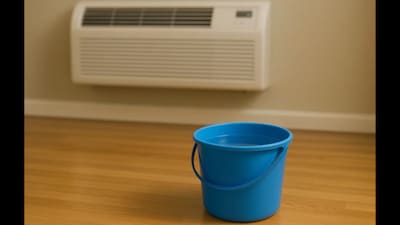
Have you ever wondered if your air conditioner uses water to keep you cool? It’s a question that might surprise you but makes a lot of sense when you think about how cooling works.
Understanding whether your AC relies on water can help you manage it better and even save on bills. You’ll discover the truth behind your air conditioner’s operation and learn some tips that could improve your comfort and efficiency. Keep reading—you might be more connected to water than you think!

Credit: northnjhvac.com
How Air Conditioners Work
Air conditioners cool air by removing heat and moisture, not by using water directly. They work with refrigerants that absorb heat inside and release it outside. Some units collect water from the air as a byproduct, but water is not the main cooling source.
Basic Cooling Mechanism
An air conditioner cools the air by removing heat. It pulls warm air from the room and passes it over cold coils. These coils absorb the heat, making the air cooler. The cooled air then blows back into the room. This process repeats to keep the room comfortable. The system also removes moisture from the air, which helps reduce humidity.
Role Of Refrigerants
Refrigerants are special fluids inside the AC. They change from liquid to gas and back. This change helps absorb and release heat. When refrigerant absorbs heat, it turns into gas. Then, it moves outside and cools down back to liquid. This cycle keeps going to remove heat from the room. Refrigerants are key to the AC’s cooling power.
)
Credit: www.pulse.ng
Water Usage In Different Ac Types
Evaporative coolersuse water to cool the air. They work by passing air through wet pads. The water evaporates and cools the air. This process uses a lot of water, especially in dry climates.
Traditional split and window unitsdo not use water to cool air. They use a refrigerant and a compressor to remove heat. Water may form as condensation, but it is drained away and not reused.
Portable air conditionerswork like traditional units. They also do not use water to cool air. Some models have a small water tank to collect condensation. This water must be emptied regularly, but it is not part of the cooling process.
Do Standard Acs Consume Water?
Standard air conditioners do not use water to cool air. Instead, they rely on a refrigeration cycle. This cycle moves heat from inside your home to the outside. The process causes moisture in the air to condenseon the cold coils inside the unit.
This moisture, or condensate, forms because the air cools and releases water vapor. The water does not come from the AC system but from the air itself. This is why your AC can sometimes drip water.
The water collected needs to be removed to keep the system working well. There are several ways this happens:
- Draining through a pipe or hose outside the building
- Collecting in a pan that needs to be emptied
- Using a pump to move the water to a drain
Impact Of Water Use On Efficiency
Water-cooled systemsuse water to remove heat from the air conditioner. This helps cool the refrigerant faster and makes the system more efficient. These systems need a constant water supply and regular maintenance to avoid water waste and scaling. They work best in large buildings or places with easy water access.
Air-cooled systemsuse air instead of water to cool the refrigerant. Fans blow air over coils to remove heat. These systems do not use water, so they save water but might be less efficient in very hot weather. They are common in homes and small buildings because they need less maintenance and no water connection.
Environmental Concerns
Air conditioners can use water in some cooling systems. The water helps to cool the air by absorbing heat. This process can use a lot of water, which may affect the environment.
Saving water is very important. Using less water helps protect nature. Some air conditioners use less or no water at all. These options are better for the environment.
- Evaporative coolersuse water but much less than regular ACs.
- Dry coolerswork without water by moving heat with air only.
- Energy-efficient AC unitsreduce both water and electricity use.

Credit: www.evapolar.com
Tips To Reduce Water Use With Air Conditioning
Regular maintenancehelps air conditioners use less water. Clean or replace filters often to keep airflow smooth. Check for leaks to avoid wasting water. Drain pans and pipes should be clear to stop water buildup. Scheduling professional inspections can catch hidden problems early.
Choosing the right air conditioner can save water. Energy-efficient modelsoften use less water during operation. Systems with smart controlsadjust cooling based on needs, reducing water use. Consider ductless mini-split systemsthat cool rooms individually, avoiding extra water waste. Look for units with a high SEER rating for better efficiency.
Frequently Asked Questions
Does An Air Conditioner Need Water To Operate?
No, most air conditioners do not require water to operate. They use refrigerants to cool air. However, some specialized systems like evaporative coolers, also known as swamp coolers, do use water to help cool the air.
How Does Water Affect Air Conditioner Performance?
Water is not typically involved in standard air conditioning systems. However, in evaporative coolers, water helps reduce air temperature. This process is effective in dry climates, as it adds moisture to the air, improving cooling efficiency.
Can Air Conditioners Leak Water?
Yes, air conditioners can leak water due to condensation. This occurs when warm air passes over the cold evaporator coil. Proper maintenance can prevent leaks by ensuring the drainage system is not clogged and the unit is functioning correctly.
Do Portable Air Conditioners Use Water?
Some portable air conditioners use water in their cooling process. These are usually evaporative coolers, which add moisture to the air. Most traditional portable AC units rely on refrigerants and do not require water for cooling.
Conclusion
Air conditioners mainly use refrigerant, not water, to cool air. Some types, like evaporative coolers, do use water to help cool. Knowing this helps you understand how your AC works and saves energy. Regular maintenance keeps your unit running well and avoids water problems.
Stay cool and use your AC wisely this summer. Simple facts make a big difference in home comfort.