Choosing the right trowel size for your mosaic tile project can make all the difference between a smooth, lasting finish and a frustrating mess. You might think any trowel will do, but the truth is, using the wrong size can cause uneven surfaces, weak adhesion, or even tile damage.
If you want your mosaic tiles to look flawless and stay put for years, you need to know exactly what size trowel to use. Keep reading, and you’ll discover simple tips that save you time, money, and headaches on your next tiling project.

Credit: www.reddit.com
Choosing The Right Trowel Size
Picking the correct trowel size is key for laying mosaic tiles properly. The size affects how much adhesive you spread and how well tiles stick.
Using the wrong trowel can cause uneven surfaces or weak tile bonds. This guide helps you select the best trowel for your mosaic project.
Factors Influencing Trowel Size
The size of the mosaic tiles affects which trowel you should use. Smaller tiles need less adhesive, so a smaller trowel works best.
The surface you are tiling also matters. Rough or uneven surfaces may need a larger notch to spread more adhesive for better grip.
- Tile size: smaller tiles require smaller notches
- Tile backing: mesh-backed mosaics may need different trowel sizes
- Surface texture: rough surfaces need more adhesive
- Type of adhesive: some adhesives work better with certain trowel sizes
Common Trowel Sizes For Mosaics
Most mosaic tiles fit best with small notched trowels. The standard sizes range from 1/8 inch to 3/16 inch notches.
| Trowel Notch Size | Best For |
|---|---|
| 1/8 inch (3 mm) | Very small mosaic tiles under 2 inches |
| 3/16 inch (5 mm) | Standard mosaic tiles 2 inches or less |
| 1/4 inch (6 mm) | Larger mosaic tiles or uneven surfaces |
Choose a smaller trowel for smooth surfaces and small tiles. Use a larger notch for bigger tiles or rough surfaces to ensure good adhesion.
Credit: www.create-enjoy.com
Trowel Types For Mosaic Tiles
Choosing the right trowel for mosaic tiles is important. Trowels help spread adhesive evenly.
The size and type of trowel affect the final look. Let’s explore different options.
Notched Trowels
Notched trowels are popular for mosaic tiles. They have teeth on the edge.
The notches help in applying the right amount of adhesive. This ensures a strong hold.
- V-notch trowels create grooves for small mosaics
- U-notch trowels are used for larger tiles
Square Vs. Rounded Notches
Square and rounded notches serve different purposes. Square notches offer more grip.
Rounded notches provide a smoother finish. They are better for delicate tiles.
| Square Notches | Rounded Notches |
| Better for thick tiles | Ideal for thin mosaics |
| Creates strong bonds | Offers smooth appearance |
Impact Of Tile Thickness And Backing
The size of the trowel you use depends on the thickness of the mosaic tile. Thicker tiles need more mortar for a strong hold. The backing of the tile also affects how the mortar spreads.
Tiles with mesh backing require a different mortar application than paper-backed tiles. Choosing the right trowel helps ensure even coverage and a solid installation.
Thin-set Mortar Coverage
Thin-set mortar must cover the whole tile back for a good bond. A trowel with the right notch size helps spread mortar evenly. This avoids gaps that can cause tiles to loosen.
Smaller mosaic tiles often need a trowel with smaller notches. Larger or thicker tiles need bigger notches to hold enough mortar.
- 1/8 inch notch for small, thin tiles
- 1/4 inch notch for medium thickness tiles
- 3/8 inch notch for thick or uneven tiles
Substrate Considerations
The surface under the tile, called the substrate, affects trowel choice. Rough or uneven surfaces need more mortar. Smooth surfaces need less mortar for good contact.
Using the correct trowel notch size ensures the thin-set fills all gaps. This prevents hollow spots under the tile that can cause cracking or detachment.
- Uneven substrate: use a larger notch trowel
- Flat substrate: use a smaller notch trowel
- Porous substrate: adjust mortar thickness as needed
Installation Tips For Even Adhesion
Choosing the right trowel size is key for mosaic tile installation. It helps spread mortar evenly and holds the tiles firmly.
Using the correct technique avoids gaps and loose tiles. These tips will guide you through proper mortar application.
Applying Mortar Correctly
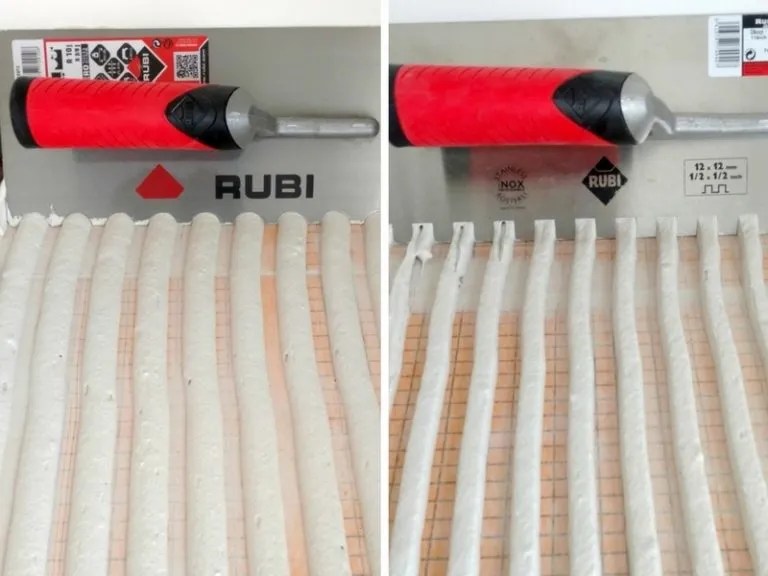
Use a small notched trowel, usually 1/4 inch, for mosaic tiles. This size spreads mortar thinly and evenly.
- Hold the trowel at a 45-degree angle.
- Spread mortar in straight lines, not circles.
- Comb the mortar with the notched side to create ridges.
- Work in small sections to prevent drying before tile placement.
Avoiding Common Mistakes
Too much mortar can cause uneven tiles. Too little leaves gaps and weak adhesion.
| Mistake | Problem | Solution |
| Using Large Trowel | Excess mortar | Choose 1/4 inch notched trowel |
| Spreading Mortar Too Thin | Loose tiles | Ensure full mortar coverage under tiles |
| Not Combing Mortar | Poor adhesion | Create ridges with notched trowel |
| Working Too Slowly | Mortar dries out | Apply mortar in small, manageable areas |
Tools And Materials Checklist
Choosing the right trowel size is important for laying mosaic tiles. Using proper tools helps make the job easier and the results better.
This checklist covers essential tools and the best mortar types for mosaic tile work.
Essential Tools
You need some basic tools to install mosaic tiles correctly. These tools help spread mortar evenly and place tiles with care.
- Notched trowel – usually 1/8 inch or smaller for mosaic tiles
- Rubber grout float for filling gaps
- Tile spacers to keep tiles even
- Bucket for mixing mortar
- Mixing paddle or drill attachment
- Measuring tape and pencil
- Level to check flatness
- Sponges and rags for cleaning
- Protective gloves and safety glasses
Recommended Mortar Types
Choose a mortar type that fits mosaic tiles and your surface. Mortar holds tiles in place and keeps them strong.
Thinset mortar is common and works well for mosaics. It comes in different formulas for indoor or outdoor use.
- Modified thinset mortar with latex for better bond and flexibility
- Unmodified thinset for natural stone mosaics
- Epoxy mortar for waterproof or heavy-duty areas
- Ready-mix mortar for small or quick jobs
Maintenance After Installation
Taking care of mosaic tile after installation helps keep it looking new. Regular maintenance protects the tile and grout from damage.
Proper cleaning and sealing extend the life of your mosaic tile surface. Learn simple ways to maintain your tile.
Cleaning Grout Lines
Grout lines can collect dirt and stains. Clean them gently to avoid damage. Use mild cleaners and soft brushes for best results.
- Use a pH-neutral cleaner for regular cleaning
- Apply a soft brush to scrub grout lines carefully
- Avoid harsh chemicals that can erode grout
- Wipe spills immediately to prevent stains
- Rinse the area with clean water after cleaning
Sealing And Protection
Sealing mosaic tiles and grout protects them from moisture and stains. Reapply sealant every year or as needed to keep protection strong.
| Type of Sealant | Recommended Use | Reapplication Frequency |
| Penetrating Sealant | Grout protection | Every 12 months |
| Surface Sealant | Tile surface protection | Every 6 to 12 months |
| Impregnating Sealant | Deep protection for porous tiles | Every 12 to 18 months |

Credit: www.tilemountain.co.uk
Frequently Asked Questions
What Size Trowel Is Best For Mosaic Tiles?
A 1/8-inch square-notch trowel works best for mosaic tiles. It spreads adhesive evenly without excess. This size ensures proper coverage and strong tile adhesion.
Can I Use A Larger Trowel For Mosaic Tiles?
Using a larger trowel may cause uneven adhesive layers. It can lead to poor tile bonding and uneven surfaces. Stick to a smaller notch size for mosaics.
How Does Trowel Size Affect Mosaic Tile Installation?
Trowel size controls adhesive thickness and coverage. Proper size ensures tiles stick firmly without excess glue. It also helps prevent tile shifting and ensures a smooth finish.
Is A 1/4-inch Trowel Suitable For Mosaic Tiles?
A 1/4-inch trowel is too large for mosaic tiles. It applies too much adhesive, risking uneven surfaces. Smaller notches like 1/8-inch are better for precise application.
Conclusion
Choosing the right trowel size helps your mosaic tile stick well. Small tiles need a smaller trowel to spread adhesive evenly. Larger tiles require a bigger trowel to hold enough glue. Using the correct trowel size saves time and reduces mess.
It also makes your tile work look neat and last longer. Remember, matching your trowel to tile size ensures a smooth installation. This simple step improves your entire tiling project. Keep this tip in mind for your next mosaic tile job.