Have you ever wondered why George Orwell, a writer known for his sharp political insights, often mentioned a nice cup of tea in his works? There’s something comforting and powerful about this simple ritual that goes beyond just a warm drink.
You’ll discover how a cup of tea played a surprising role in Orwell’s life and writing. By the end, you might see your own tea time in a whole new light. Keep reading to find out why this humble beverage mattered so much to one of the greatest writers of the 20th century.

Credit: www.reddit.com
Tea In Orwell’s Life
George Orwell loved tea and it played a big role in his daily life. Tea was more than a drink for him; it was a comfort and a way to relax.
His writing often showed how important tea was during hard times. Tea helped Orwell think clearly and stay calm.
Early Encounters With Tea
Orwell first drank tea as a child in England. It was part of family life and daily meals. He grew used to its warm, soothing taste early on.
When Orwell traveled to places like Burma and Spain, tea stayed with him. It reminded him of home and offered comfort during tough moments.
Tea As A Daily Ritual
Orwell made tea a daily habit. He drank it every morning and often in the afternoon. Tea breaks gave him time to think and write.
He believed a nice cup of tea could improve his mood and focus. This simple ritual helped him face long writing sessions and stressful days.

Credit: www.youtube.com
Tea And British Culture
Tea is an important part of British life. It is more than just a drink. Tea brings people together and shapes daily habits.
The British have a long history with tea. It influences social customs and national identity in many ways.
Social Significance
Tea time is a social event in Britain. It offers a moment to relax and connect with others. People often share stories and enjoy company over a cup of tea.
- Tea breaks at work help people refresh and bond.
- Afternoon tea is a traditional social gathering with snacks.
- Tea is served at many family and community events.
- Offering tea shows hospitality and kindness.
Tea And Identity
Tea is a symbol of British culture. It represents comfort, tradition, and unity. Many British people feel a strong connection to tea as part of their identity.
| Aspect | Role of Tea |
| Daily Life | Tea marks breaks and meals. |
| Tradition | Afternoon tea is a classic custom. |
| Hospitality | Serving tea welcomes guests. |
| National Symbol | Tea reflects British values and history. |
Orwell’s Tea Philosophy
George Orwell held simple but deep views on tea. He saw tea as more than a drink. It was a symbol of comfort and honest living.
Orwell’s tea philosophy reflects his love for plainness and genuine moments. His writings show tea as a small joy in daily life.
Simplicity And Authenticity
Orwell believed tea should be simple and true to its form. He favored basic tea without fancy additions or distractions.
- Use plain tea leaves, no flavored blends
- Boil fresh water for each cup
- Steep tea for the right time, not too long
- Add milk if desired, but no sugar or spices
Tea As Comfort And Solace
Tea gave Orwell a quiet moment to think and rest. It was a way to find peace during hard times.
| Aspect | Meaning for Orwell |
| Warmth | Physical comfort and calm |
| Routine | Simple daily pleasure |
| Focus | Helps clear the mind |
| Company | Shared moments with friends |
Brewing The Perfect Cup
George Orwell wrote about the simple joy of a good cup of tea. Brewing it well needs care and attention. A perfect cup warms you inside and clears your mind.
Orwell shared tips on how to brew tea just right. Following these helps you enjoy your tea the way Orwell liked it.
Orwell’s Brewing Tips
Orwell believed in strong, fresh tea. He said to use boiling water and good quality leaves. Let the tea steep long enough to release flavor.
- Use fresh, boiling water for the best taste
- Steep tea for about 3 to 5 minutes
- Choose loose tea leaves over tea bags
- Pour water directly over the leaves to start brewing
- Add milk after brewing to keep the flavor balanced
Common Mistakes To Avoid
Many people make errors that spoil their tea. Avoid weak tea by not brewing too briefly. Using cold water can make tea taste flat.
- Do not use water that is not boiling
- Avoid steeping tea for less than 3 minutes
- Don’t add milk before the tea is brewed
- Skip using old or stale tea leaves
- Do not reuse tea leaves for a fresh cup
Tea’s Timeless Wisdom
Tea has been a symbol of calm and thought for centuries. George Orwell once wrote about how a simple cup can bring peace.
Its warmth invites us to slow down and be present. Tea carries lessons that apply beyond the cup.
Patience And Mindfulness
Making tea teaches patience. Waiting for the water to boil and the leaves to steep requires quiet attention.
- Boil water carefully
- Let tea leaves infuse fully
- Enjoy the aroma and color changes
- Drink slowly to savor flavor
Connection And Reflection
Tea invites moments to connect with others or reflect alone. It creates space for sharing and thought.
| Tea Moment | Meaning |
| With Friends | Sharing stories and laughter |
| Alone | Quiet thinking and rest |
| After Work | Calming the mind and body |
Tea In Modern Times
Tea remains one of the most popular drinks worldwide. People enjoy tea every day for its taste and comfort.
George Orwell wrote about tea with care and respect. His words still remind us of tea’s simple joy.
Continuing Traditions
Tea traditions have passed down through many generations. Families still follow old ways to make and drink tea.
Tea time brings people together. It is a moment to relax and share stories or quiet thoughts.
- Using a teapot for brewing
- Serving tea with biscuits or snacks
- Gathering in the afternoon or evening
- Respecting tea’s warmth and taste
Tea’s Role In Contemporary Life
Today, tea is part of many lifestyles. People drink it at work, home, or with friends.
Modern tea culture includes new flavors and styles. Yet, the simple pleasure of tea stays the same.
- Green tea and herbal blends grow in popularity
- Tea shops offer a wide variety of choices
- Quick tea bags for busy schedules
- Tea helps people focus and feel calm

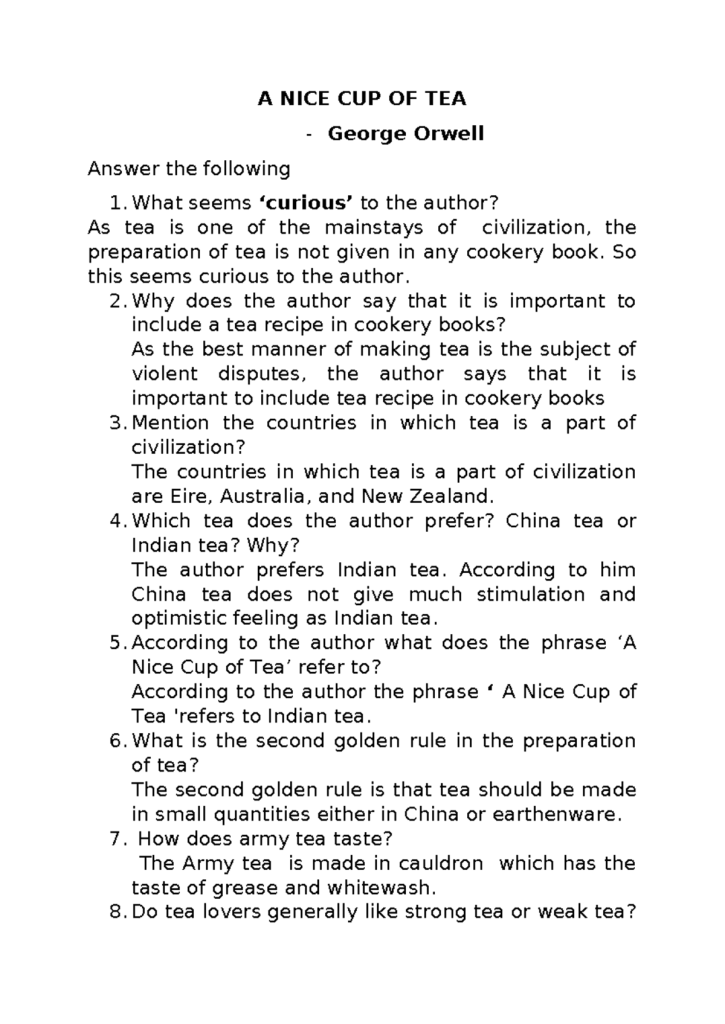
Credit: www.scribd.com
Frequently Asked Questions
What Is George Orwell’s “a Nice Cup Of Tea”?
George Orwell’s essay, “A Nice Cup of Tea,” outlines his personal tea-making preferences. Published in 1946, it provides detailed steps on brewing the perfect cup. Orwell emphasizes using loose leaves over tea bags and discusses the importance of boiling water.
His essay remains a classic guide for tea enthusiasts.
How Does Orwell Prefer His Tea Brewed?
Orwell prefers using loose tea leaves for brewing. He insists on boiling water and letting the tea steep. He suggests pouring the tea first, then adding milk. Orwell’s detailed instructions aim to enhance the flavor and aroma. His method reflects traditional British tea-making practices.
Why Is “a Nice Cup Of Tea” Popular?
“A Nice Cup of Tea” is popular for its charming insight into British tea culture. Orwell’s essay mixes humor and detailed instructions. It resonates with tea lovers and those interested in cultural traditions. His personal preferences offer a nostalgic look at post-war British life.
What Are Orwell’s Key Tea-making Tips?
Orwell’s key tips include using loose tea leaves and boiling water. He advises warming the teapot before brewing. He also suggests pouring tea before milk to maintain flavor. His emphasis on quality ingredients and careful preparation reflects a deep appreciation for the ritual of tea-making.
Conclusion
George Orwell shows us how tea brings comfort and calm. His words invite us to enjoy simple moments. A nice cup of tea can warm both body and mind. It reminds us to slow down and appreciate small joys. Tea is more than a drink; it’s a quiet friend.
Take time to savor your next cup, like Orwell did. These moments can make life feel a little better.