When you have a baby, cleaning bottles is a big part of your day. You might wonder, “Can I wash baby bottles in the dishwasher?” It is a good question. Many parents want to save time and make sure bottles are clean. This article will help you understand if washing bottles in the dishwasher is safe and how to do it right.
Why Clean Baby Bottles Carefully?
Babies are small and their bodies are still growing. Their immune systems are weak. This means they can get sick easily if they drink from dirty bottles. Bacteria and germs can grow on bottles if they are not cleaned well.
Cleaning bottles is very important. You must remove milk, formula, and dirt. This keeps your baby healthy and safe.
Can You Use a Dishwasher for Baby Bottles?
The short answer is: Yes, you can wash baby bottles in the dishwasher. But there are some important things to know. Not all bottles are the same. Some can go in the dishwasher, some cannot.
Manufacturers often say if their bottles are dishwasher safe. Check the bottle’s label or box. If it says “dishwasher safe,” you can put it in the dishwasher. If not, wash it by hand.
Benefits of Washing Baby Bottles in the Dishwasher
- Saves time: You don’t have to wash by hand.
- Good cleaning: The hot water and strong jets clean well.
- Sanitizes bottles: High heat kills many germs and bacteria.
- Less contact with germs: You don’t touch dirty bottles.

Credit: www.reddit.com
Risks of Washing Baby Bottles in the Dishwasher
- Not all bottles are safe: Some plastics can melt or break.
- Heat damage: Some parts like nipples can wear out faster.
- Water spots: Hard water can leave marks on bottles.
- Wrong placement: Bottles may not get clean if placed poorly.
How to Wash Baby Bottles in the Dishwasher the Right Way
Follow these steps to clean bottles safely and well:
- Check the label: Make sure bottles say “dishwasher safe.”
- Rinse bottles: Rinse milk or formula from bottles before washing.
- Disassemble parts: Take apart nipples, rings, caps, and bottles.
- Place bottles upside down: Put bottles on the top rack, upside down.
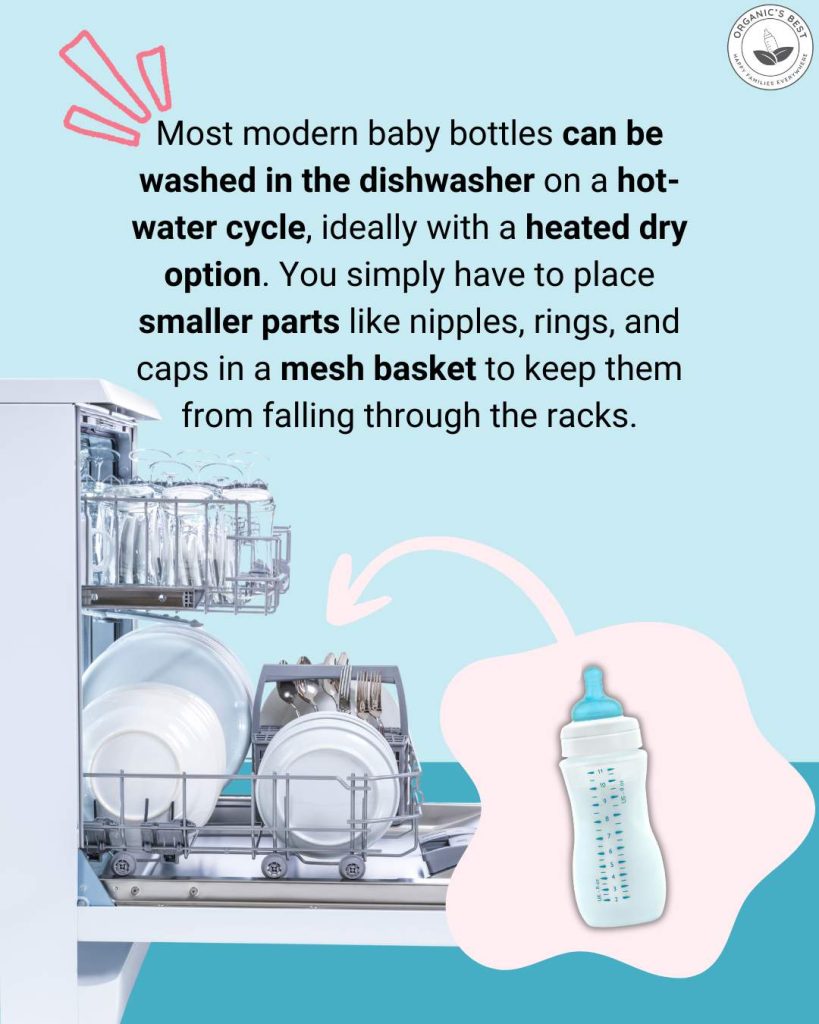
- Put small parts in a basket: Use a dishwasher basket or mesh bag for nipples and rings.
- Use hot water: Choose a hot water cycle for better cleaning and sanitizing.
- Avoid strong detergents: Use gentle, baby-safe dishwasher detergent if possible.
- Dry completely: Let bottles dry fully before using or storing.
Where to Put Baby Bottles in the Dishwasher?
The top rack is the best place for baby bottles. The bottom rack can get too hot. The top rack is safer and bottles will stay in place better. Put bottles upside down so water can go inside and clean well.
Small parts like nipples and caps should go in a dishwasher basket or mesh bag. This keeps them from falling to the bottom and getting lost.
What About Bottle Nipples?
Nipples are soft and can get damaged by heat. Most nipples are made of silicone or latex. Silicone nipples handle heat better than latex. If your bottle nipples say “dishwasher safe,” you can clean them in the dishwasher. Otherwise, wash them by hand.
Check nipples after washing. If they look cracked or worn, replace them. Old nipples can be unsafe for your baby.
Choosing the Right Dishwasher Detergent
Use a mild detergent to protect baby bottles and your baby’s health. Some detergents have strong chemicals. These can stay on bottles and harm your baby.
Look for detergents that say “baby safe” or “gentle.” Avoid adding extra rinse aids or fabric softeners.
When Should You Wash Bottles by Hand?
Sometimes, washing by hand is better. Here are some reasons:
- Bottles are not dishwasher safe.
- You don’t have a dishwasher.
- Bottles have special shapes or parts.
- You want to clean bottles right after use.
Washing by hand is easy. Use warm water, soap, and a bottle brush. Clean every part carefully. Rinse well to remove soap.
How to Sanitize Baby Bottles
Sometimes, you want to sanitize bottles. This means killing all germs and bacteria. Dishwashers with a hot water sanitize cycle do this well.
If your dishwasher does not have this cycle, you can sanitize bottles by boiling. Boil bottles and parts in water for 5 minutes. Let them dry on a clean towel.

Credit: www.searshomeservices.com
Tips to Keep Baby Bottles Clean and Safe
- Clean bottles soon after use.
- Use a bottle brush to reach all spots.
- Check bottles and nipples for damage.
- Replace old bottles and nipples often.
- Store bottles in a clean, dry place.
- Wash hands before handling bottles.
Summary Table: Washing Baby Bottles in Dishwasher
| Step | What to Do | Why |
|---|---|---|
| Check label | Make sure bottles are dishwasher safe | Prevents damage to bottles |
| Rinse bottles | Remove milk and formula before washing | Improves cleaning results |
| Disassemble parts | Take apart nipples, rings, caps | Allows water to clean all surfaces |
| Place on top rack | Put bottles upside down on top rack | Avoids heat damage and cleans better |
| Use mesh basket | Put small parts in basket or bag | Keeps small parts safe and clean |
| Choose hot cycle | Use hot water and sanitize if possible | Kills germs and bacteria |
| Dry completely | Let bottles air dry fully before use | Prevents mold and germs growth |
Final Thoughts
Washing baby bottles in the dishwasher is safe when done right. Always check your bottle’s instructions first. Use the top rack and hot water cycle. Take care with nipples and small parts. If you do not have a dishwasher, washing by hand is a good option.
Clean bottles well to keep your baby healthy. A clean bottle means happy, safe feeding time. Now you know how to wash baby bottles in the dishwasher. It can save time and keep bottles clean.
Frequently Asked Questions
Can Baby Bottles Be Safely Cleaned In A Dishwasher?
Yes, most baby bottles are dishwasher safe. Use the top rack to avoid heat damage.
Which Dishwasher Cycle Is Best For Baby Bottles?
Use a hot water cycle with a heated dry setting for thorough cleaning.
Should I Disassemble Baby Bottles Before Putting In Dishwasher?
Always take apart bottles, nipples, and rings to clean all parts properly.
Can Dishwasher Detergent Harm Baby Bottles?
Choose mild, fragrance-free dishwasher detergent to avoid chemical residue on bottles.