
Have you ever wondered if the air conditioner in your car uses gas? It’s a question that pops up for many drivers, especially when you want to understand how your vehicle works and how it affects fuel consumption.
Knowing the answer can help you save money, keep your car in good shape, and stay cool without surprises. You’ll discover exactly how your car’s air conditioner operates and whether it impacts your gas usage. Keep reading—you might be surprised by what you learn!
Credit: wefixautoservices.com
How Car Air Conditioners Work
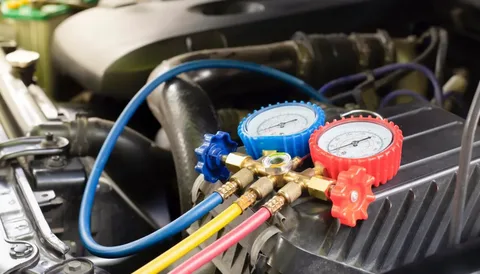
Car air conditioners do not use gas to cool the air inside the car. They use a special fluid called refrigerant. This fluid helps remove heat and cool down the air.
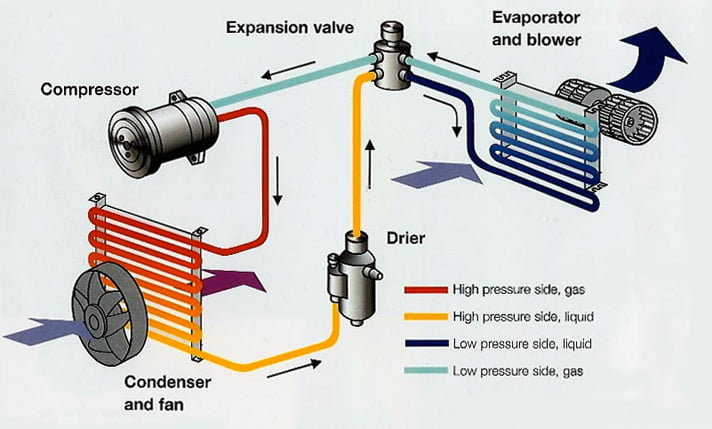
The air conditioning system has several parts that work together. These parts move the refrigerant and make the cooling happen.
Role Of Refrigerant
The refrigerant is a key part of the car’s air conditioner. It moves heat from inside the car to the outside. The refrigerant changes from gas to liquid and back.
It absorbs heat inside the car and releases it outside. This keeps the car cool and comfortable.
Compressor Function
The compressor is like the heart of the air conditioner. It pumps the refrigerant through the system. It also increases the pressure of the refrigerant gas.
This high-pressure gas can then release heat easily when it moves through the system.
Cooling Cycle Process
The cooling cycle starts when the compressor pumps the refrigerant. The gas then moves to the condenser outside the car. Here, it changes to liquid and releases heat.
The liquid refrigerant flows to the evaporator inside the car. It changes back to gas and absorbs heat from the air. A fan blows the cool air into the car cabin.
- Compressor pumps refrigerant gas
- Condenser cools gas to liquid
- Evaporator absorbs heat inside car
- Cool air blows into car cabin
Fuel Consumption And Air Conditioning
Many people wonder if the air conditioner in a car uses gas. The air conditioner does not use gas directly. It uses power from the engine, which can affect fuel use.
Understanding how the air conditioner affects fuel consumption helps drivers save gas. It also explains how the engine works with the air conditioner on.
Impact On Gas Mileage
Using the air conditioner can lower a car’s gas mileage. The engine works harder to power the AC compressor. This extra work uses more fuel.
Fuel consumption can increase by about 5 to 10 percent with the AC on. The exact amount depends on the car and driving conditions.
Engine Load Increase
The air conditioner adds load to the engine. The AC compressor needs power to run. This makes the engine burn more fuel to keep the car moving.
When the engine is under more load, it uses more gas. This can be noticeable when driving uphill or in stop-and-go traffic.
- AC compressor runs using engine power
- Engine works harder with AC on
- More fuel is burned under higher engine load
Comparison With Windows Down
Driving with windows down uses less fuel at low speeds. Air resistance is low, so the engine does not work harder. This can save gas compared to using AC.
At higher speeds, open windows cause more air drag. This makes the engine work harder. Using AC at high speeds can use less fuel than driving with windows down.
- Windows down saves fuel at low speeds
- Open windows increase drag at high speeds
- AC may use less fuel at highway speeds
Common Misconceptions
Many people think the air conditioner in a car uses gasoline. This is not true. The AC system works differently from the car’s engine.
Understanding how the car AC works helps clear up these wrong ideas. Let’s look at some facts about car air conditioners.
Ac Direct Gas Usage Myth
Some believe the car’s AC uses gasoline directly to cool the air. The AC does not burn gas or use it like the engine.
The air conditioner uses a different system that does not involve gasoline. Gasoline powers the engine, not the AC.
Refrigerant Vs Gasoline
The car AC uses a fluid called refrigerant. This fluid helps absorb heat and cool the air inside the car.
Gasoline is fuel for the engine. Refrigerant is a special chemical that changes from liquid to gas inside the AC system.
- Refrigerant cools the air in the AC system
- Gasoline fuels the engine to run the car
- They serve very different purposes
Energy Source For Ac
The car’s engine powers the AC compressor by using fuel indirectly. The AC does not use gas itself.
The AC compressor runs from the engine’s power. This means the engine uses gasoline, and some energy goes to run the AC.
- Engine uses gasoline to produce power
- Power runs the AC compressor
- AC cools air using refrigerant, not gas
Credit: www.familyhandyman.com
Factors Affecting Ac Energy Use
The air conditioner in a car uses energy to cool the cabin. This energy often comes from the engine. Several factors affect how much energy the AC uses.
Knowing these factors helps drivers understand fuel use and car performance when the AC is on.
Vehicle Type And Engine Size
Big vehicles like trucks or SUVs need more energy to run the AC. Their engines are larger and use more fuel. Small cars use less energy for the AC.
Engines with bigger sizes work harder when the AC is on. This can increase gas use. Smaller engines may struggle more but use less fuel overall.
- Large vehicles use more AC energy
- Bigger engines consume more fuel with AC
- Small cars have lower AC fuel impact
Driving Conditions
Hot weather makes the AC work harder. Stop-and-go traffic also increases energy use. High speeds can lower AC fuel consumption a bit.
Long trips on highways use AC more efficiently than city driving. This is because the engine runs steadily at high speed.
- Hot weather raises AC energy use
- Traffic stops increase fuel consumption
- Highway speeds improve AC efficiency
Ac Maintenance
Well-maintained AC systems use less energy. Dirty filters or low refrigerant make the AC work harder. This uses more gas.
Regular checks keep the AC efficient. Clean parts and correct refrigerant levels reduce fuel consumption.
- Clean filters improve AC efficiency
- Proper refrigerant levels reduce energy use
- Regular maintenance lowers gas consumption
Tips To Reduce Fuel Impact
Using the air conditioner in a car can increase fuel consumption. It is important to use the AC wisely to save fuel and reduce emissions.
Here are some practical tips to help you lower the fuel impact while staying cool on the road.
Efficient Ac Use
Running the AC at full power uses more fuel. Try to use it moderately and only when needed.
- Set the temperature to a comfortable but not too cold level.
- Use the AC only after driving for a few minutes with windows down.
- Turn off the AC when the car is parked or not moving.
- Use the recirculation mode to cool the air inside faster.
Regular System Checks
Keep your car’s AC system in good shape to improve its efficiency and reduce fuel use.
| Check | Why It Matters |
| Refrigerant level | Low levels reduce cooling and increase fuel use |
| Air filters | Dirty filters block airflow and strain the system |
| Compressor condition | Worn compressors use more power and fuel |
| Leaks | Leaks cause refrigerant loss and reduce performance |
Alternative Cooling Methods
You can cool your car without heavy AC use to save fuel. Try these simple methods.
- Park in shaded areas to keep the car cooler.
- Use sunshades on windows to block sunlight.
- Open windows briefly before starting to let hot air out.
- Use fans that run on the car’s battery to circulate air.
Credit: www.hdaccondenser.com
Frequently Asked Questions
Does Using Ac In A Car Increase Fuel Consumption?
Yes, using the air conditioner in a car can increase fuel consumption. The AC system relies on the engine’s power, which requires more fuel. This additional load can lead to reduced fuel efficiency, especially in older vehicles. However, modern cars are designed to minimize this impact.
How Does A Car Ac Work?
A car’s AC system uses a refrigerant to cool the air. The compressor, powered by the engine, compresses the refrigerant. It then moves through the condenser and evaporator, cooling the air before it enters the cabin. This process provides the chilled air you feel.
Is It More Efficient To Use Ac Or Windows Down?
Using AC is generally more efficient at higher speeds. Open windows increase aerodynamic drag, reducing fuel efficiency on highways. In contrast, at lower speeds, using windows might be more efficient. Each method affects fuel differently, so consider your speed and comfort preferences.
Can A Car Ac Run Without The Engine?
No, a car’s AC system requires the engine to be running. The compressor, which is crucial for cooling, is powered by the engine. Without the engine, the AC system cannot function. However, some electric vehicles have AC systems powered by the battery.
Conclusion
The air conditioner in a car does not use gas like fuel. It runs on the car’s engine power and uses refrigerant to cool the air. This means it does not burn gasoline directly. Knowing this helps you understand how your car’s cooling system works.
Keep your AC maintained to stay cool and save energy. Now you know the basics of car air conditioners and fuel use. Simple and clear.