Are you thinking about buying an entire cow to stock up on quality meat? It’s a smart decision for both your wallet and your taste buds.
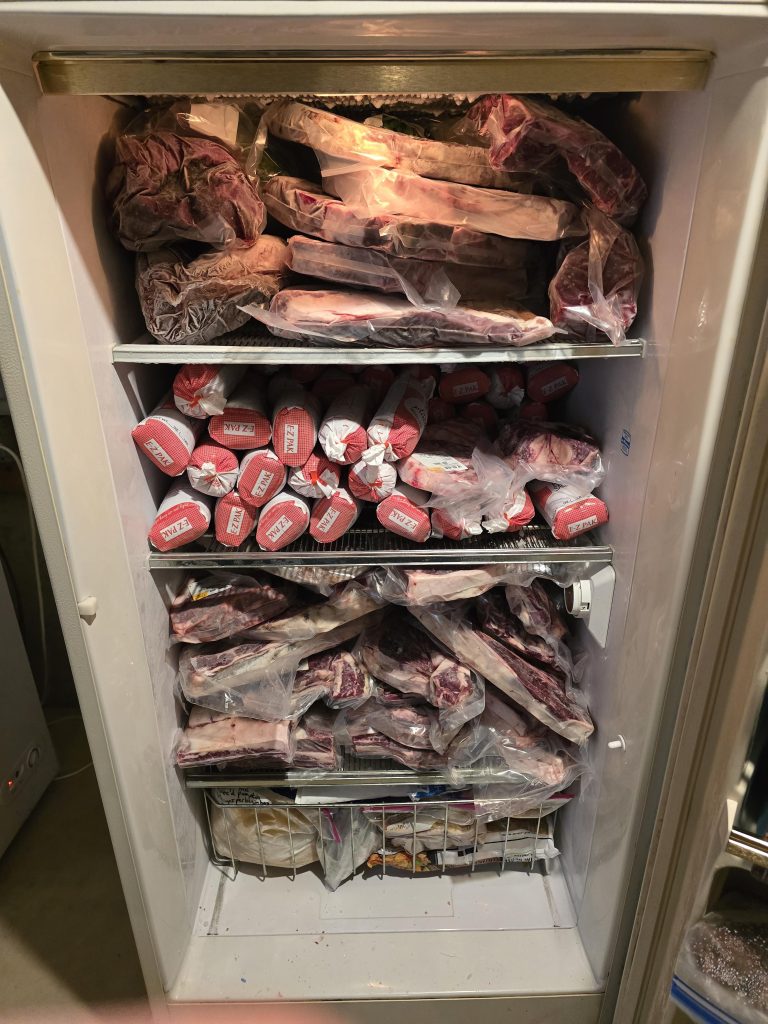
But before you dive into this meaty investment, there’s an important question you need to answer: How big of a freezer do you need to store a whole cow? Choosing the right size is crucial to avoid wasting your purchase and to ensure your beef stays fresh and delicious.
This guide will walk you through everything you need to know to make the best decision for your needs. From calculating the space required to understanding the types of freezers available, we’ve got you covered. Stick around, and you’ll soon have all the information you need to keep your freezer well-organized and efficient.
Credit: springrivercattle.com
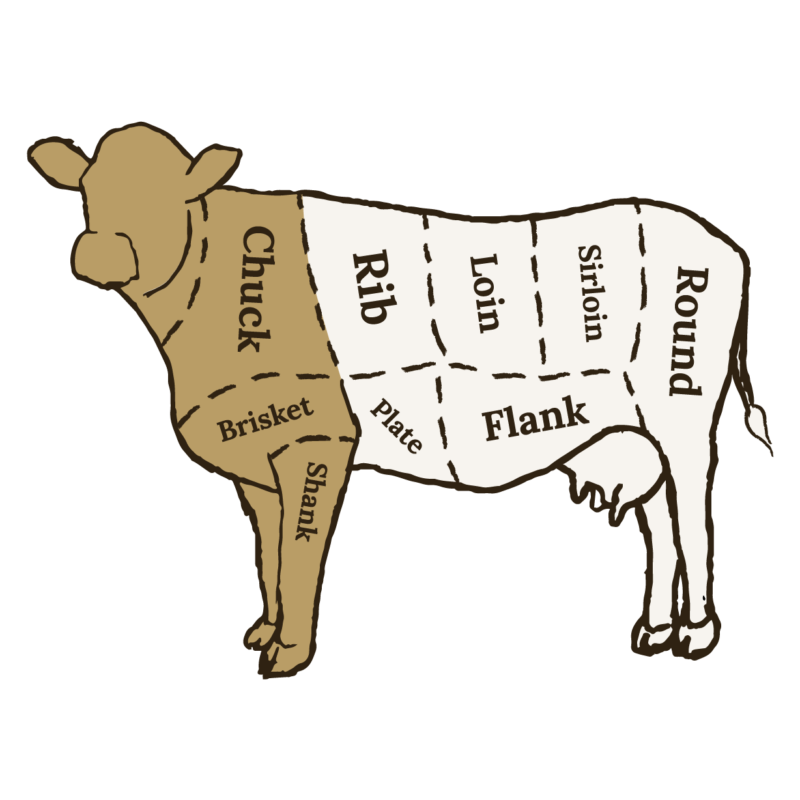
Estimating Cow Meat Volume
Estimating the volume of meat from a whole cow helps decide the freezer size needed. The process begins with knowing the average weight of a cow. Then, calculate the usable meat yield. Finally, consider bones and waste to get a true estimate.
Average Weight Of A Whole Cow
The weight of a whole cow varies by breed and age. Most cows weigh between 1,000 and 1,800 pounds. The average live weight often used for calculations is around 1,200 pounds. This number sets the base for estimating meat volume.
Usable Meat Yield
Not all the cow’s weight turns into meat. Usable meat yield is usually 40% to 60% of the live weight. For example, a 1,200-pound cow may provide around 480 to 720 pounds of meat. This includes steaks, roasts, and ground meat.
Bone And Waste Considerations
Bones, fat, and trimmings reduce the final meat volume. Bones make up about 15% to 20% of the carcass weight. Waste from trimming and cooking also takes away about 10%. These factors lower the total freezer space needed.
Credit: mytxkitchen.com
Freezer Size Options
Choosing the right freezer size is key to storing a whole cow properly. Different freezer types offer various sizes and features. Knowing these options helps find the best fit for your needs.
Chest Freezers
Chest freezers are popular for large meat storage. They open from the top and have wide space inside. These freezers keep cold air locked in well. They usually come in sizes from 5 to 25 cubic feet. For a whole cow, a chest freezer with 20+ cubic feet is often needed. They use less energy and are good for long-term storage.
Upright Freezers
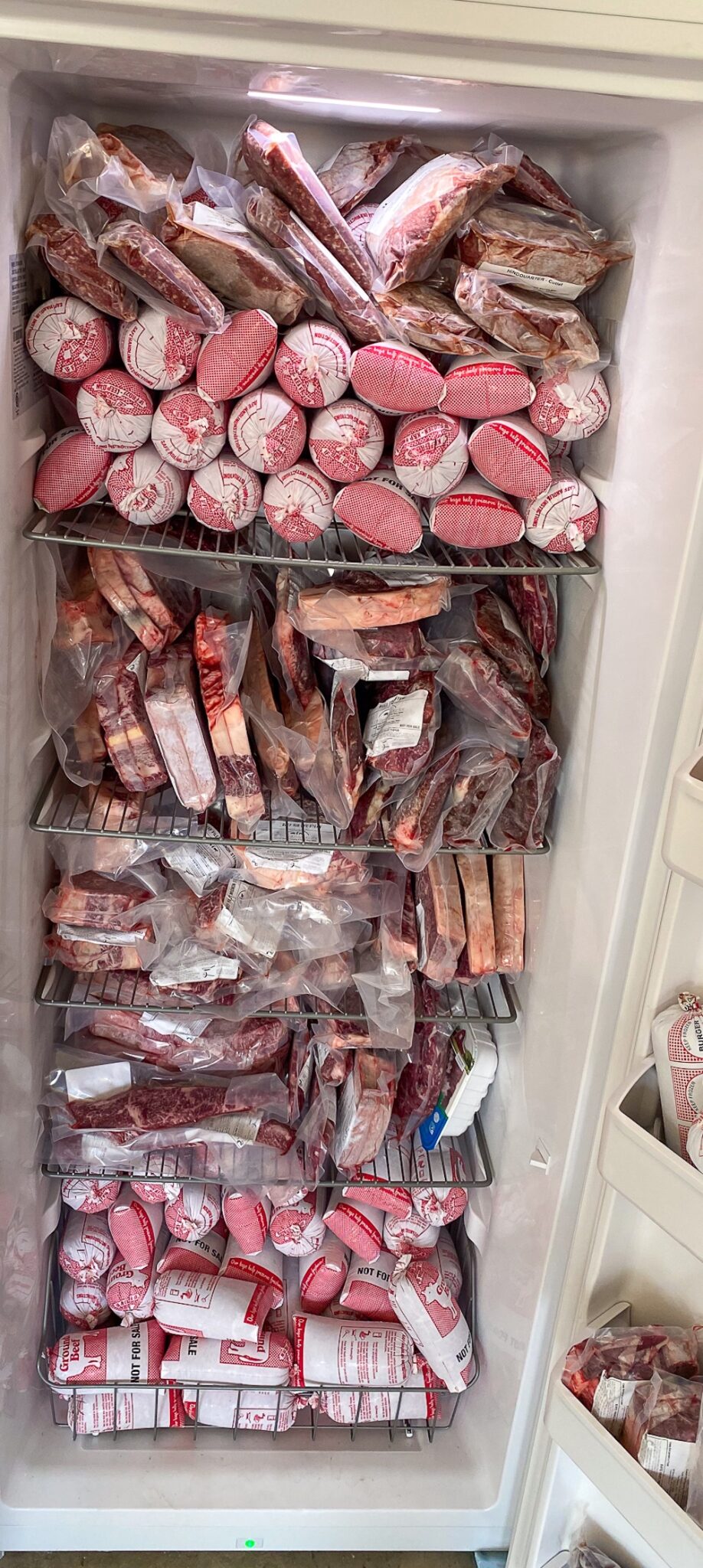
Upright freezers stand like a fridge with front doors. They have shelves and drawers, making organization easier. Sizes range from 10 to 30 cubic feet or more. A larger upright freezer can fit most beef cuts from a whole cow. They take up less floor space but may lose cold air when opened. Upright freezers allow quick access to meat packages.
Commercial Freezers
Commercial freezers are designed for heavy use and large capacity. These freezers often hold 30 cubic feet or more. They have strong insulation and fast cooling. Commercial freezers fit big amounts of meat from a whole cow with ease. They are more expensive but ideal for serious meat storage. These freezers work well for farms and butcher shops.
Calculating Required Freezer Capacity
Calculating the right freezer size is key when storing a whole cow. The total meat weight must translate into space inside your freezer. It’s not just about fitting the meat but also ensuring it stays fresh and safe.
Start by understanding how much space your meat will need. Then think about airflow to keep the temperature even. Lastly, add extra room for packaging materials that take up space too.
Converting Meat Weight To Volume
Meat weight alone doesn’t show how much space it occupies. You need to convert weight into volume. Typically, one pound of beef equals about 0.018 cubic feet. Multiply your total pounds by this number to get the volume in cubic feet.
Example: A 600-pound cow yields about 10.8 cubic feet of meat. This helps estimate the freezer size needed for all the cuts.
Allowing Space For Air Circulation
Air must circulate inside the freezer to keep meat cold and prevent spoilage. Leave at least 10% extra space beyond the meat volume. This gap helps cold air flow and keeps the temperature steady.
Without enough air space, the freezer works harder and may cause uneven freezing.
Extra Room For Packaging
Packaging adds bulk to the stored meat. Wraps, boxes, and trays take up more space than just the meat alone. Reserve about 15% more freezer volume for packaging materials.
Plan for sturdy packaging that protects the meat but doesn’t waste space. This ensures your freezer holds all the meat safely and efficiently.

Credit: elkinscattleco.com
Storage Tips For Whole Cow Meat
Storing a whole cow’s meat requires careful planning to keep it fresh and safe. Proper storage helps avoid freezer burn and spoilage. It also makes it easier to find the cuts you need.
Organizing and packing the meat correctly saves space and keeps your freezer tidy. Follow these tips to maintain quality and extend the shelf life of your beef.
Packaging Methods
Use airtight packaging to protect the meat from air and moisture. Vacuum sealing is the best option for long-term storage. It keeps the meat fresh and prevents freezer burn.
If vacuum sealing is not available, wrap the meat tightly in plastic wrap. Then cover it with aluminum foil or place it in heavy-duty freezer bags. Remove as much air as possible before sealing.
Divide the meat into meal-sized portions. This makes thawing easier and reduces waste.
Labeling And Organization
Label each package with the cut type and date of freezing. Use waterproof markers or printed labels for clarity. Clear labels help you use older meat first.
Organize the freezer by grouping similar cuts together. Store steaks, roasts, ground beef, and stew meat in separate sections. Use bins or shelves to keep packages neat and accessible.
Freezer Maintenance
Keep your freezer at a steady temperature of 0°F (-18°C) or lower. Check the temperature regularly to ensure proper freezing. Avoid opening the freezer door too often.
Defrost your freezer when ice builds up more than a quarter inch. Clean the interior regularly to prevent odors and bacteria. Proper maintenance extends the life of your freezer and stored meat.
Budgeting For Freezer Purchase
Buying a freezer for storing a whole cow requires careful budgeting. It is important to balance size, cost, and efficiency. A freezer that is too small will not fit all the meat. Too large, and you might spend more than needed. Understanding costs and benefits helps make the right choice.
Cost Vs. Size Comparison
Freezers come in many sizes and prices. Larger freezers cost more upfront. A chest freezer around 20 cubic feet suits most whole cows. Prices can range from $500 to $1,500 depending on brand and features. Smaller freezers save money but may not hold all the meat. Think about how much space you need before buying.
Energy Efficiency Considerations
Energy use affects your monthly bills. Look for freezers with good energy ratings. Energy-efficient models may cost more initially but save money over time. Check the Energy Star label for guidance. Proper insulation and a tight seal help keep energy costs low. A freezer with steady temperature control protects meat quality and reduces waste.
Long-term Investment Benefits
Buying a freezer is a long-term decision. A good freezer lasts 10 to 15 years or more. It protects your meat and reduces trips to the store. Storing a whole cow can save money on meat over time. A durable freezer adds value to your home and lifestyle. Plan your budget to include maintenance and energy costs for lasting use.
Alternatives To Freezing A Whole Cow
Freezing a whole cow requires a very large freezer, which not everyone has. There are other ways to store or manage the meat without needing one giant freezer. These alternatives help save space and keep the meat fresh. They also allow sharing costs and storage efforts with others.
Splitting Meat Among Multiple Freezers
Divide the meat into smaller portions to fit several freezers. Use home freezers or those at friends’ and family members’ houses. Label each package clearly to avoid confusion. This method reduces the need for one huge freezer. It also spreads storage responsibilities among several people.
Using Cold Storage Facilities
Rent space at a cold storage facility for large quantities of meat. These places keep meat frozen at the right temperature. They offer flexible rental plans based on how long you need storage. Cold storage helps if you lack enough freezer space at home. It is a safe and reliable option for large meat storage.
Sharing With Community
Join a local meat-buying group or community share program. Buy a whole cow together and split the meat among members. Each person gets a smaller portion to store in their freezer. This lowers individual costs and freezer space needs. Sharing builds community ties and reduces waste.
Frequently Asked Questions
How Big Is A Freezer For A Whole Cow?
A freezer for a whole cow should be at least 20-25 cubic feet. This size fits large cuts and keeps meat properly frozen. It ensures efficient storage for a full cow without overcrowding.
What Freezer Type Suits Storing A Whole Cow?
Chest freezers are ideal for storing a whole cow. They offer more usable space and maintain consistent temperatures. Upright freezers work but may have less room for bulky cuts.
How Long Can Beef Last In A Freezer?
Beef can last 6 to 12 months in a freezer. Proper packaging and maintaining a consistent temperature below 0°F preserves quality and prevents freezer burn.
Can A Standard Home Freezer Hold A Whole Cow?
Most standard home freezers are too small for a whole cow. A dedicated large chest freezer with 20+ cubic feet is recommended for full cow storage.
Conclusion
Choosing the right freezer size saves space and keeps meat fresh. A whole cow needs a large freezer, often 20 cubic feet or more. Consider the cuts and how you will store them. Good organization helps find meat quickly and reduces waste.
Think about future needs before buying a freezer. This way, you avoid running out of space or buying a second unit. A proper freezer keeps your beef safe and tasty for months. Simple planning makes storing a whole cow easier and stress-free.