Thinking about buying half a cow is exciting—you’ll have plenty of fresh, delicious meat ready whenever you want. But before you say yes, you need to ask yourself an important question: How big of a freezer do you really need?
Choosing the right freezer size can save you time, money, and hassle. If your freezer is too small, you’ll struggle to fit all that meat in, and if it’s too big, you’ll waste space and energy. Keep reading, and you’ll discover exactly what size freezer works best for your half cow, so you can store your meat safely and enjoy every bite without any stress.

Credit: elkinscattleco.com
Half Cow Meat Volume
Understanding the volume of meat from half a cow helps plan freezer space wisely. Knowing the weight and types of cuts clarifies storage needs. This section breaks down the average weight, usable meat, and common cuts.
Average Weight Of Half A Cow
Half a cow usually weighs between 250 to 350 pounds. This weight is the hanging weight after butchering. It does not include bones and fat removed during processing.
The exact weight depends on the cow’s size and breed. Younger or smaller cows yield less meat. Larger breeds provide more meat to store.
Usable Meat Yield
Usable meat from half a cow is about 60% to 65% of the hanging weight. Bones, fat, and trimmings reduce the final amount. For example, a 300-pound hanging weight yields roughly 180 to 195 pounds of meat.
This meat is ready to freeze and cook. It includes steaks, roasts, ground beef, and other cuts. Expect some variation depending on butchering style.
Types Of Cuts Included
Half a cow offers a variety of meat cuts. These include:
- Steaks like ribeye, sirloin, and T-bone
- Roasts such as chuck and round
- Ground beef from trimmings
- Short ribs and stew meat
- Brisket and flank
This variety provides many cooking options. It also affects how you organize freezer space.
Freezer Size Options
Choosing the right freezer size is key for storing half a cow. Freezer size options vary based on design and space. Each type offers unique benefits for meat storage. Consider your available space and how you want to organize your meat.
Chest Freezers
Chest freezers provide large storage capacity with efficient use of space. They keep cold air inside when opened, saving energy. Their wide opening helps store bulky meat cuts easily. Ideal for long-term storage and bulk freezing. Require floor space but offer excellent insulation.
Upright Freezers
Upright freezers look like refrigerators with shelves inside. They help organize meat with clear compartments. Easier to access items without digging through piles. Smaller footprint, good for tight spaces. Slightly less energy efficient than chest freezers.
Combination Freezers
Combination freezers combine features of chest and upright models. They offer flexible storage with both shelves and deep compartments. Useful for mixed storage needs and different meat cuts. Provide moderate energy efficiency and space usage. A versatile option for half cow storage.
Calculating Freezer Capacity
Figuring out the right freezer size for storing half a cow can feel overwhelming. You want to avoid both cramming your meat into a too-small space and wasting energy with an oversized freezer. Understanding how to calculate freezer capacity gives you confidence and helps you make the best choice for your needs.
Cubic Feet Needed
Half a cow typically yields between 100 to 150 pounds of meat. On average, you’ll need about 1.2 to 1.5 cubic feet of freezer space for every 35 pounds of packaged meat.
- For 100 pounds, plan for roughly 3.5 to 4.5 cubic feet.
- For 150 pounds, aim for 5 to 6.5 cubic feet.
Think about how much meat you realistically want to store and add a bit extra for comfort. Have you ever tried stuffing a freezer only to find some packages don’t fit? Giving yourself a margin saves frustration down the line.
Space For Packaging
Meat doesn’t just take up its own volume; packaging adds bulk too. Vacuum-sealed packs shrink space, but butcher paper or plastic wrap can increase it.
Consider these packaging factors:
- Vacuum-sealed meat takes less space and stays fresh longer.
- Loose wrapping requires more room and can cause freezer burn.
- Labeling and organizing packages also need space to keep things tidy.
If you’re new to processing meat, think about how you’ll package it. Will you rely on vacuum sealing, or will you wrap with paper? This choice impacts how much freezer space you’ll actually need.
Allowing For Air Circulation
Air circulation is crucial for maintaining consistent freezing temperatures. Packing your freezer too tightly blocks airflow and can cause uneven freezing or spoilage.
Keep these tips in mind:
- Leave at least 1 to 2 inches of space between packages.
- Do not stack meat directly against freezer walls.
- Arrange packages so air can flow freely around them.
Have you noticed frost build-up in your freezer? It’s often a sign that airflow is restricted. Planning space for circulation helps your meat stay fresh longer and your freezer run more efficiently.
Packaging And Storage Tips
Storing half a cow requires more than just finding the right freezer size—it demands smart packaging and organization. Proper storage keeps your meat fresh longer and makes meal prep easier. Let’s break down some practical tips to help you manage your frozen beef efficiently.
Vacuum Sealing Benefits
Vacuum sealing removes air, which slows down freezer burn and preserves the meat’s quality. It also saves space by compressing the packages, allowing you to fit more in your freezer. I once stored steak in regular plastic bags and noticed freezer burn in a month, but vacuum-sealed cuts stayed fresh for months.
Besides extending shelf life, vacuum sealing also keeps flavors locked in. You can marinate your meat before sealing, and the marinade will infuse better during freezing. Have you considered how much less waste you’d have with vacuum sealing?
Labeling And Dating
Clear labels are your best friend when dealing with half a cow. Write the cut type and date on each package to avoid guessing what’s inside or how long it’s been frozen. I’ve found that forgetting to label leads to tossing good meat simply because I didn’t know its age.
Use permanent markers or printable labels designed for freezing temperatures. Organize packages by date so you use the oldest cuts first. This simple habit saves money and reduces food waste.
Optimal Meat Arrangement
Arranging your meat properly in the freezer helps maintain consistent temperatures and easy access. Lay flat packages on top of each other to maximize space and stack heavier cuts on the bottom. Avoid stuffing the freezer too tightly; air needs to circulate to keep everything evenly frozen.
Consider grouping similar cuts together in bins or baskets to quickly grab what you need. Have you tried rotating your stock like a mini grocery store? It makes meal planning faster and keeps your freezer organized.
Energy Efficiency And Cost
Choosing the right freezer size for storing half a cow is not just about space—it’s also about how much energy it consumes and the cost involved. A larger freezer might seem convenient, but it could lead to higher electricity bills. On the other hand, a smaller freezer may save energy but might not hold all your meat comfortably, which could affect quality and freshness.
Power Consumption By Size
Freezers come in various sizes, and their power consumption varies accordingly. A 7-cubic-foot freezer might use around 200-300 kWh per year, while a 20-cubic-foot model can consume over 600 kWh annually. This means doubling the freezer size can more than double your energy use.
Think about how often you open the freezer too. Frequent openings let cold air out, making the freezer work harder. If you store half a cow, a freezer with a capacity of 15 to 20 cubic feet often strikes a good balance, offering enough space without unnecessary energy waste.
Cost Vs. Capacity Tradeoffs
Investing in a bigger freezer means higher upfront and running costs. A larger unit costs more to buy and to run monthly. However, if the freezer is too small, you risk overcrowding your meat, which can lead to uneven freezing and spoilage, ultimately costing you more.
Consider your budget and how much meat you plan to store. Sometimes spending a bit more upfront on an energy-efficient model pays off in lower electricity bills. Look for freezers with Energy Star ratings—they use less power and save money over time.
Maintenance Tips
Keeping your freezer in top shape improves energy efficiency and extends its life. Regularly defrost manual-defrost freezers to prevent ice buildup, which forces the freezer to use more electricity. Clean the coils at least twice a year to help the compressor run smoothly.
Seal leaks by checking the door gasket for cracks or tears. A tight seal keeps cold air in and reduces energy waste. Have you checked your freezer’s seal lately? Small maintenance steps can make a big difference in your monthly energy bill.
Common Freezer Brands
Choosing the right freezer brand can make a big difference when storing half a cow. Reliable brands offer efficient cooling, ample space, and durability. Knowing which brands stand out helps you pick a freezer that fits your needs and budget.
Top Chest Freezer Brands
Chest freezers are popular for their large capacity and energy efficiency. Brands like Frigidaire, GE, and Whirlpooloften lead the pack. They provide models with spacious interiors, adjustable temperature controls, and sturdy lids that keep cold air locked in.
Frigidaire’s chest freezers are known for their reliability and quiet operation. GE offers models with fast freeze options, which is handy when you add large amounts of meat. Whirlpool balances price and performance well, giving you value without sacrificing quality.
Popular Upright Freezers
Upright freezers save floor space and offer easier access to items thanks to their shelving. Brands like Samsung, LG, and Haierhave strong offerings here. They focus on sleek design and smart features like frost-free operation and digital controls.
Samsung’s upright freezers come with adjustable shelves, making organization simple. LG models often include smart diagnostics that help spot issues early. Haier provides budget-friendly options without compromising on essential features.
Warranty And Support
Warranty coverage can be a deal-breaker when investing in a large freezer. Most trusted brands offer at least a one-year warranty on parts and labor, with some extending to five years on the compressor. This gives you peace of mind if something goes wrong.
Customer support quality varies widely. Brands like Frigidaire and GE have extensive service networks and responsive helplines. Before buying, check reviews for service experiences—quick repairs and easy part replacements save time and frustration.
Additional Storage Solutions
Storing half a cow requires more than just one freezer. Exploring extra storage options helps manage large meat quantities easily. These solutions keep meat fresh and organized.
Using Multiple Freezers
Multiple freezers split the meat load, reducing overcrowding. Small chest freezers work well alongside upright ones. This setup helps separate cuts by type or use. It also prevents frequent door openings, preserving cold air. Consider placing freezers in different rooms to save space.
Cold Storage Alternatives
Besides freezers, cold storage rooms offer extra space. These insulated rooms keep temperatures stable for long periods. They suit those with large meat supplies or limited freezer space. Some use coolers or ice chests for short-term storage. Always monitor temperature to avoid spoilage.
Seasonal Storage Considerations
Season affects freezer efficiency and storage needs. Cooler months reduce energy costs for freezing. Plan meat storage before hot seasons to avoid freezer overload. Rotate meat regularly to use older cuts first. Maintain freezer temperature around 0°F (-18°C) for best quality.
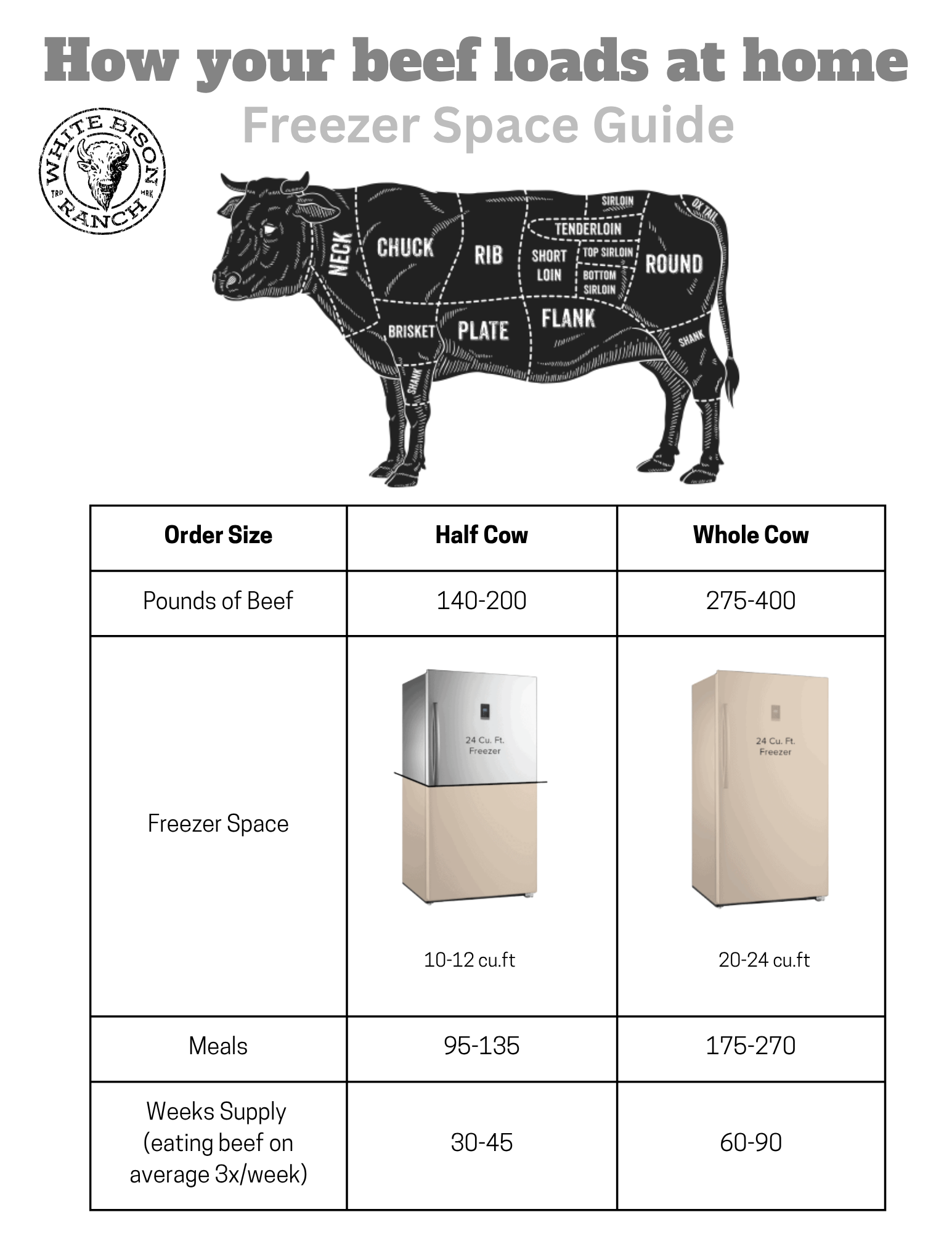
Credit: www.whitebison-ranch.com

Credit: www.reddit.com
Frequently Asked Questions
How Much Freezer Space Is Needed For Half A Cow?
You need about 20 to 25 cubic feet of freezer space for half a cow. This size accommodates all the cuts and allows proper air circulation for efficient freezing.
Can A Standard Chest Freezer Fit Half A Cow?
Yes, a large chest freezer, typically 20 to 25 cubic feet, can fit half a cow. It provides enough room for meat storage and easy access.
What Type Of Freezer Is Best For Half A Cow?
A chest freezer is best for storing half a cow. It maintains consistent temperatures and maximizes space for large meat portions.
How Long Can Half A Cow Be Stored In A Freezer?
Half a cow can be stored in a freezer for 6 to 12 months. Proper packaging and temperature control are essential for preserving quality.
Conclusion
Choosing the right freezer is crucial for storing half a cow. It ensures meat stays fresh and safe. A 14-20 cubic feet freezer is ideal. It offers ample space for your beef. Consider your space and budget. These factors influence your decision.
Prioritize energy-efficient models. They save money in the long run. Also, organize the meat well. This helps in easy access and prevents waste. Enjoy your delicious beef all year round. Proper storage makes a big difference.