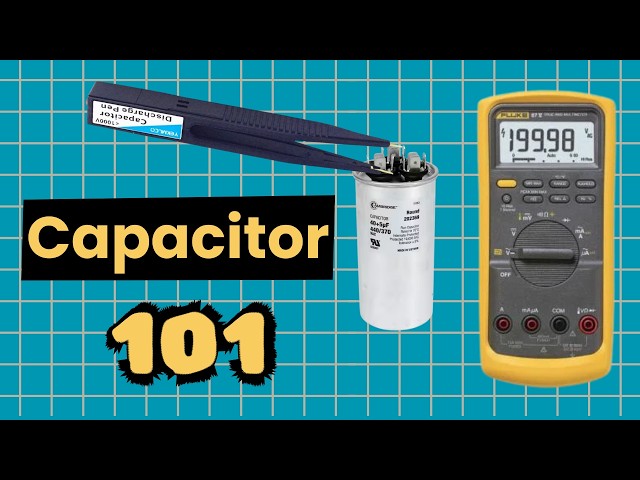
If you’ve ever worked on your air conditioner, you know that the capacitor plays a key role in keeping it running smoothly. But did you know that a charged capacitor can hold dangerous electricity even when the power is off?
Knowing how to safely discharge your air conditioner capacitor is crucial before you start any repairs. You’ll learn simple, step-by-step methods to discharge the capacitor quickly and safely. By the end, you’ll feel confident and ready to handle this important task without risking injury or damage.
Keep reading to protect yourself and keep your AC working perfectly.
Why Discharge The Capacitor
An air conditioner capacitor stores electrical energy. This energy helps start and run the AC motor. Before working on the AC, you must release this stored energy.
Discharging the capacitor keeps you safe from electric shocks. It also prevents damage to the AC parts and tools.
Risks Of A Charged Capacitor
A charged capacitor holds high voltage. Touching it can cause a strong electric shock. This shock can injure or even be fatal.
A sudden discharge can also damage the AC parts. It may burn the motor or control board. Tools can be harmed too.
- Electric shock risk to people
- Damage to air conditioner components
- Damage to tools used for repair
- Unexpected sparks causing fire hazards
When To Discharge
Discharge the capacitor before any repair or replacement. Always do this before touching wires or parts connected to it.
Discharging is needed after the AC is unplugged. Wait a few minutes to allow some discharge, then safely release any remaining charge.
- Before repairing or replacing AC parts
- After unplugging the air conditioner
- Before testing electrical circuits
- When the capacitor looks swollen or damaged

Credit: www.reddit.com
Tools Needed
Discharging an air conditioner capacitor requires the right tools for safety and accuracy.
Using proper tools helps prevent electric shock and damage to the capacitor.
Insulated Screwdriver
An insulated screwdriver protects you from electric shock while working on capacitors.
It has a plastic or rubber handle that stops electricity from passing through.
Multimeter
A multimeter measures electrical charge and confirms if the capacitor is fully discharged.
- Set the multimeter to the correct voltage range.
- Touch the probes to the capacitor terminals.
- Check for any remaining charge before handling.
Protective Gear
Wear protective gear to keep safe from sparks and electric shock during discharge.
| Protective Gear | Purpose |
| Safety glasses | Protect eyes from sparks |
| Insulated gloves | Prevent electric shock |
| Long-sleeve clothing | Shield skin from accidental contact |
Preparing For Discharge
Discharging an air conditioner capacitor is important for safety. It stops the stored electricity before working on the unit.
Follow simple steps to prepare for discharging the capacitor. These steps help avoid shocks and damage.
Power Off The Unit
Turn off the air conditioner before starting. This cuts power and reduces risk of electric shock.
Unplug the unit or switch off the circuit breaker. Confirm there is no power running to the AC.
Locate The Capacitor
Find the capacitor inside the AC unit. It usually looks like a small metal can.
The capacitor is often near the compressor or fan motor. Check the service panel or cover to access it.
Identify Terminals
Look at the capacitor terminals to know where to discharge. Terminals are metal tabs on top of the capacitor.
- Most capacitors have two or three terminals
- Terminals are labeled with letters like C, HERM, and FAN
- The “C” terminal is the common connection point
- Use the labels to know where to place tools for discharge

Credit: www.youtube.com
Discharge Process
Discharging an air conditioner capacitor is important before handling it. Capacitors store electrical energy. This energy can cause shocks if not released safely.
Follow the right steps to discharge the capacitor. This will keep you safe and protect your equipment.
Safety Precautions
Always wear insulated gloves and use tools with insulated handles. Make sure the air conditioner is unplugged from power. Avoid touching metal parts directly.
- Turn off power supply before starting
- Wear safety glasses to protect your eyes
- Use insulated tools for discharge
- Work in a dry area to avoid electric shock
Step-by-step Discharge
Use a resistor or a screwdriver with an insulated handle to discharge the capacitor. Connect the terminals carefully to let the stored energy flow out.
- Unplug the air conditioner from the power source.
- Locate the capacitor inside the unit.
- Hold the insulated screwdriver and touch both terminals of the capacitor.
- Hold for a few seconds to allow the capacitor to discharge.
- Use a multimeter to check if voltage is zero.
Double Checking Discharge
Always confirm the capacitor is fully discharged before working on it. Use a multimeter to measure voltage across the terminals.
| Voltage Range | Action |
| Above 5 volts | Discharge again |
| 0 to 5 volts | Safe to handle |
Testing The Capacitor After Discharge
After you discharge an air conditioner capacitor, you must test it to see if it still works. Testing helps you know if the capacitor is good or needs replacement.
Using a multimeter is the easiest way to test the capacitor’s condition. It checks if the capacitor holds the right charge and works properly.
Using A Multimeter
First, set your multimeter to the capacitance testing mode. If your multimeter does not have this mode, use the resistance (ohms) mode instead.
Connect the multimeter probes to the capacitor terminals. Make sure to touch only the metal parts of the probes to the capacitor leads.
- Turn off the air conditioner and unplug it.
- Discharge the capacitor safely before testing.
- Set multimeter to capacitance or resistance mode.
- Touch probes to capacitor terminals firmly.
- Read the measurement shown on the multimeter.
Interpreting Results
Compare the multimeter reading with the capacitor’s rated value. This value is usually printed on the capacitor label in microfarads (µF).
If the reading is close to the rated value, the capacitor is good. A much lower or zero reading means the capacitor is bad and should be replaced.
- Reading near rated value: Capacitor works well.
- Reading much lower than rated: Capacitor is weak.
- Reading zero or no change: Capacitor is bad.
Common Mistakes To Avoid
Discharging an air conditioner capacitor is important for safety. Many people make errors that can cause injury or damage. Knowing what to avoid keeps you safe and your AC working well.
This guide lists common mistakes when discharging capacitors. Avoid these to do the job correctly and safely.
Not Turning Off The Power
One big mistake is forgetting to switch off the AC power before working on the capacitor. The capacitor can still hold a charge that can shock you.
Using Incorrect Tools
Using the wrong tools can cause short circuits or damage the capacitor. Always use insulated tools designed for electrical work.
- Use a screwdriver with an insulated handle
- Choose a resistor rated for capacitor discharge
- Avoid metal objects without insulation
Touching Capacitor Terminals Directly
Never touch the terminals with your hands. Capacitors can hold a high voltage even after the AC is off. Always use the right tools to discharge.
Discharging Without Checking Voltage
Failing to measure the capacitor’s voltage before and after discharge is risky. You might think it is safe when it still holds a charge.
| Action | Why Avoid |
| Not turning off power | Risk of electric shock |
| Using uninsulated tools | Can cause short circuits |
| Touching terminals by hand | Dangerous electric shock |
| Skipping voltage check | False sense of safety |
When To Call A Professional
Discharging an air conditioner capacitor can be dangerous if you do not have the right skills. It involves handling electrical parts that store high voltage.
Knowing when to call a professional can keep you safe and protect your air conditioner from damage.
Signs You Should Not Discharge It Yourself
If you see any of these signs, it is best to call a trained technician to handle the capacitor discharge safely.
- You have no experience with electrical repairs.
- You do not have insulated tools for electrical work.
- The capacitor shows physical damage like bulging or leaking.
- You feel unsure about the process or safety steps.
- The capacitor is part of a complex HVAC system.
Risks Of Discharging Capacitors Incorrectly
Incorrect discharge can cause serious injury or damage. Professionals understand these risks and know how to avoid them.
| Risk | Possible Outcome |
|---|---|
| Electric shock | Severe injury or death |
| Damage to capacitor | Malfunction or system failure |
| Damage to tools or equipment | Additional repair costs |
| Improper disposal | Environmental hazards |
Benefits Of Hiring A Professional
A professional uses the right tools and follows safety rules. This helps avoid injury and protects your air conditioning system.
- They safely discharge the capacitor.
- They inspect the unit for other issues.
- They use proper disposal methods for old parts.
- They offer advice on maintenance and repair.
How To Find A Reliable Technician
Look for technicians with good reviews and proper licenses. Ask about their experience with air conditioner repairs.
- Check online reviews on trusted websites
- Ask for recommendations from friends or family
- Confirm they have insurance and certification
- Get a clear estimate before work starts

Credit: www.youtube.com
Frequently Asked Questions
What Is An Air Conditioner Capacitor?
An air conditioner capacitor stores electrical energy to start and run the unit. It ensures the compressor and fan motor work efficiently. Over time, capacitors can wear out or fail, impacting the air conditioner’s performance. Regular maintenance and timely replacement are crucial for optimal operation.
Why Discharge A Capacitor Before Servicing?
Discharging a capacitor before servicing prevents electrical shock and equipment damage. Capacitors hold high voltage even after power is off. Safely discharging it ensures a safe environment for maintenance. Always use proper tools and follow safety guidelines when handling capacitors to avoid accidents.
How Can You Safely Discharge A Capacitor?
To safely discharge a capacitor, first turn off the power. Use an insulated screwdriver to bridge the capacitor terminals. This action releases stored charge. Ensure proper safety gear, such as gloves and goggles, is worn. Always refer to the air conditioner’s manual for specific instructions.
What Tools Are Needed For Discharging?
You’ll need an insulated screwdriver and safety gear like gloves and goggles. These tools help ensure safe handling of the capacitor. The insulated screwdriver discharges the stored energy, while the safety gear protects against potential shocks. Always follow safety guidelines when working with electrical components.
Conclusion
Discharging an air conditioner capacitor is a simple safety step. Always turn off power before starting. Use a screwdriver with an insulated handle to discharge. Touch the capacitor terminals carefully and briefly. This prevents electric shocks and protects you. Taking these steps makes repairs safer and easier.
Remember, safety comes first with electrical work. Keep your tools ready and work slowly. Now, you can handle capacitor discharge with confidence. Stay safe and maintain your air conditioner well.