Have you ever wondered how much hot water your dishwasher uses every time you run a cycle? You might be surprised to learn that this common household appliance could be impacting both your water bill and the environment more than you think.
Understanding the amount of hot water your dishwasher uses can help you make smarter choices, potentially saving money and conserving precious resources. We’ll dive into the details of dishwasher water usage, uncovering surprising facts that might change the way you think about dishwashing.
Discover how you can optimize your dishwasher’s efficiency and contribute to a more sustainable home. Keep reading to find out just how many gallons of hot water your dishwasher uses and how you can make a difference.
Dishwasher Water Usage Basics
Understanding dishwasher water usage helps manage household water bills. It also supports eco-friendly choices at home. Dishwashers use hot water to clean dishes effectively. Knowing the amount used per cycle informs smarter use and appliance choice.
Average Gallons Per Cycle
Most dishwashers use about 4 to 6 gallons of water per cycle. Newer models tend to use less, around 3 to 4 gallons. Older dishwashers can use up to 10 gallons per cycle. Energy-efficient models reduce water use without losing cleaning power. Using the dishwasher fully loaded maximizes water efficiency.
Factors Affecting Water Consumption
- Dishwasher age: Older machines use more water and energy.
- Cycle type: Heavy or pots and pans cycles consume more water.
- Soil level: Heavily soiled dishes may need extra rinsing.
- Load size: Running a half-full dishwasher wastes water.
- Water pressure and temperature also impact water use.

Credit: www.idlershome.com
Hot Water Temperature And Its Impact
The temperature of hot water plays a key role in dishwasher performance. It affects cleaning power and water usage. Hot water helps dissolve grease and food particles quickly. The right temperature ensures dishes come out spotless without wasting energy.
Setting the water too low can leave dishes dirty. Too high can waste energy and damage dishes. Finding the right balance improves washing results and saves water and power.
Recommended Temperature Settings
Experts suggest setting your water heater between 120°F and 140°F. This range cleans well and prevents scalding risks. Most dishwashers work best at about 120°F to 130°F.
- Below 120°F may not remove tough stains.
- Above 140°F wastes energy and can harm dishes.
- Check your dishwasher’s manual for specific temperature advice.
Energy Efficiency Considerations
Hot water temperature directly impacts energy use. Higher temperatures require more energy to heat water. Lower temperatures save energy but may reduce cleaning quality.
Modern dishwashers often have built-in heaters to boost water temperature. This can reduce your home’s overall energy use by avoiding very high water heater settings.
- Use dishwasher’s eco or energy-saving modes.
- Lower the water heater temperature if your dishwasher heats water internally.
- Regularly maintain your dishwasher for efficient water and energy use.
Comparing Dishwashers To Hand Washing
Choosing between a dishwasher and hand washing affects water use and energy. Both clean dishes but differ in water consumption and time. Understanding these differences helps save water and energy at home.
Water Usage Differences
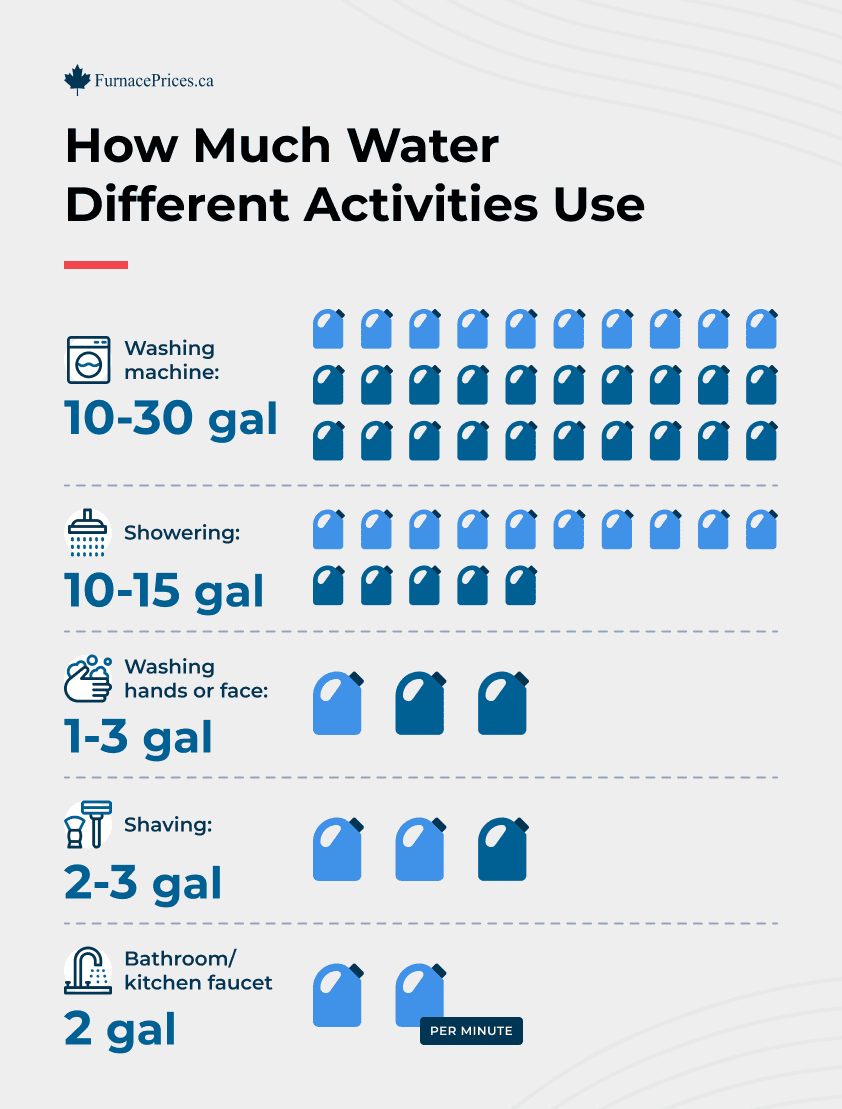
Dishwashers use about 3 to 5 gallons of hot water per cycle. Older models may use up to 10 gallons. Hand washing can use 8 to 27 gallons, depending on how you wash.
Running water continuously while washing by hand increases water use. Filling a basin and washing dishes saves more water. Modern dishwashers are designed to be water efficient and use less water overall.
Pros And Cons Of Each Method
- Dishwasher Pros:Uses less water with modern machines, saves time, sanitizes dishes well.
- Dishwasher Cons:Higher electricity use, initial cost of the machine, needs full loads for efficiency.
- Hand Washing Pros:No electricity needed, simple, good for small loads or quick cleaning.
- Hand Washing Cons:Often uses more water, can take longer, may not clean as well without hot water.
Credit: www.furnaceprices.ca
Ways To Reduce Water Usage
Reducing water usage in dishwashers helps save money and conserve resources. Small changes in how you use your dishwasher make a big difference over time. Choosing the right model and using it wisely cuts down on hot water consumption significantly.
Energy Star Rated Models
Energy Star rated dishwashers use less water and energy. These models are tested to meet strict efficiency standards. They often use 3.5 gallons or less per cycle. Choosing an Energy Star dishwasher lowers water bills. It also reduces your home’s environmental impact.
Efficient Loading Tips
- Load dishes tightly but avoid overcrowding.
- Place larger items on the sides or bottom rack.
- Group similar items together to improve water flow.
- Rinse dishes lightly only if very dirty.
- Run the dishwasher only when full to save water.
Proper loading helps water reach every dish. This reduces the need for extra rinsing or cycles.
Using Eco Or Quick Wash Cycles
Eco and quick wash cycles use less water and energy. Eco cycles run longer but use lower temperatures and less water. Quick wash cycles clean lightly soiled dishes fast. Both options reduce hot water use compared to normal cycles. Choose these cycles to save water without losing cleaning power.
Measuring Your Dishwasher’s Water Use
Measuring your dishwasher’s water use helps control water bills and conserve resources. Knowing exactly how much water your dishwasher consumes can guide you to use it more efficiently. Simple tools and careful tracking provide clear insights into your appliance’s water habits.
Using Water Meters
Attach a water meter to the dishwasher’s water supply line. The meter records the exact gallons used during each wash cycle. Readings before and after a cycle show the water amount consumed. Digital water meters offer easy reading and accurate measurements. This method provides precise data for water use per load.
Tracking Utility Bills
Monitor your monthly water bills to estimate dishwasher water use. Compare bills with dishwasher usage patterns to spot changes. Note the number of dishwasher cycles run each month. Subtract water use when the dishwasher is off for accurate estimates. This method offers a general overview without extra equipment.

Credit: menumoments.com
Frequently Asked Questions
How Many Gallons Of Hot Water Does A Dishwasher Use Per Cycle?
A typical dishwasher uses about 4 to 6 gallons of hot water per cycle. This amount varies based on the model and cycle type. Efficient dishwashers use less water, helping save energy and reduce utility bills.
Does Dishwasher Water Usage Affect Energy Costs?
Yes, dishwasher water usage directly impacts energy costs. Heating water consumes energy, so using less hot water lowers your electricity or gas bills. Energy-efficient dishwashers optimize water and energy use to reduce overall expenses.
Can Using A Dishwasher Save More Water Than Hand Washing?
Generally, dishwashers use less water than hand washing. Modern dishwashers are designed to be water-efficient, using 3 to 6 gallons per load. Hand washing often consumes more water due to continuous rinsing, making dishwashers a better eco-friendly choice.
What Factors Influence Dishwasher Hot Water Consumption?
Dishwasher hot water use depends on model efficiency, cycle selection, and load size. Eco or quick cycles use less water, while heavy-duty cycles consume more. Properly loading the dishwasher also optimizes water use and improves cleaning performance.
Conclusion
Dishwashers use between 4 to 6 gallons of hot water per cycle. This amount depends on the model and efficiency. Newer dishwashers tend to use less water. Saving water also saves energy and money. Running full loads helps reduce water use.
Choosing the right dishwasher can make a big difference. Understanding water use helps you make smarter choices. Small changes lead to bigger savings over time. Keep this in mind when buying or using your dishwasher.