
Are you tired of your fishing line twisting and tangling every time you cast? Attaching a swivel to your fishing line is the simple fix you need.
It keeps your line straight and your bait moving naturally, making your fishing experience smoother and more successful. In this guide, you’ll learn exactly how to attach a swivel quickly and securely, even if you’re a beginner. Keep reading to master this essential fishing skill and boost your chances of landing that big catch!

Credit: www.youtube.com
Choosing The Right Swivel
Attaching a swivel to your fishing line helps prevent line twists. Picking the right swivel makes your fishing easier and more effective.
Swivels come in different types, materials, and sizes. Knowing these helps you choose the best one for your fishing needs.
Types Of Swivels
There are several types of swivels designed for different fishing styles. Each type has unique features that suit certain conditions.
- Barrel Swivels: Simple and strong, good for most fishing
- Ball Bearing Swivels: Rotate smoothly, great for heavy lines
- Three-Way Swivels: Connects three lines, used for multi-hook setups
- Snap Swivels: Have a clip for quick lure changes
Materials And Sizes
Swivels come in different materials and sizes. Choose based on the type of fish and water you fish in.
- Materials: Brass, stainless steel, and nickel are common
- Brass swivels resist corrosion but are less strong
- Stainless steel swivels are strong and rust-resistant
- Sizes range from very small for light fishing to large for heavy fishing
- Pick size based on your fishing line strength and fish size
Preparing The Fishing Line
Before attaching a swivel, ensure your fishing line is ready. A well-prepared line can improve your fishing experience.
Let’s focus on selecting the right line strength and handling the line properly.
Selecting Line Strength
Choosing the correct line strength is crucial for success. It depends on the type of fish you aim to catch.
- Light lines for small fish
- Medium lines for moderate size fish
- Heavy lines for large fish
Trimming And Handling The Line
Proper trimming and handling ensure no tangles or snags. Use sharp scissors for clean cuts.
Store extra line in a dry, cool place to maintain quality. Avoid direct sunlight.
Popular Knot Techniques
Attaching a swivel to your fishing line makes your setup flexible. Using the right knot keeps the swivel secure.
Here are popular knots that work well with swivels. They are strong and easy to tie.
Improved Clinch Knot
The improved clinch knot is common for tying swivels. It holds tight and is simple to learn.
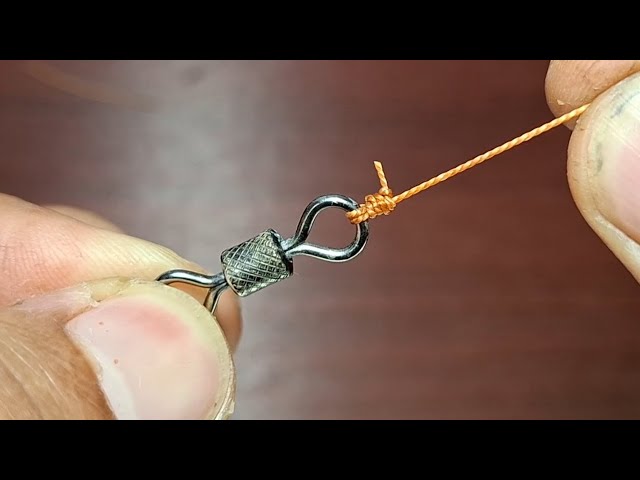
Pass the line through the swivel eye, then twist it around the line five times. Next, thread the loose end through the small loop near the swivel eye. Finally, pull it tight and trim the excess line.
- Pass line through swivel eye
- Wrap line around itself five times
- Thread loose end through small loop
- Tighten knot firmly
- Cut extra line
Palomar Knot
The Palomar knot is very strong and easy to tie. It works well with braided and monofilament lines.
Double about six inches of line and pass it through the swivel eye. Tie a loose overhand knot with the doubled line. Pass the swivel through the loop, then pull both ends to tighten. Trim the tag end.
- Double six inches of line
- Pass doubled line through swivel eye
- Tie loose overhand knot
- Pass swivel through loop
- Pull ends to tighten
- Trim excess line
Uni Knot
The uni knot is versatile and strong. It is easy to adjust before tightening.
Pass the line through the swivel eye and double back. Make a loop alongside the doubled line. Wrap the tag end around both lines five times. Pass the tag end through the loop and pull tight. Trim the tag end.
- Pass line through swivel eye
- Double line back to form loop
- Wrap tag end around lines five times
- Pass tag end through loop
- Pull knot tight
- Cut excess line
Step-by-step Knot Tying
Attaching a swivel to your fishing line is easy if you follow the right steps. A good knot keeps your line strong and secure.
This guide will help you tie the knot clearly and simply. Use it to connect your swivel without trouble.
Threading The Swivel
First, take the end of your fishing line. Pass it through the eye of the swivel carefully.
Make sure the line goes all the way through. Leave enough line to tie the knot easily.
Forming The Knot
Hold the swivel and make a loop with the tag end of the line. Wrap the tag end around the standing line five times.
Pass the tag end back through the loop near the swivel eye. This forms the basic knot shape.
- Make a loop near the swivel eye
- Wrap the tag end around the main line five times
- Insert the tag end back through the loop
Securing And Tightening
Moisten the knot with water or saliva. Pull the standing line slowly to tighten the wraps around the loop.
Pull the tag end to secure the knot fully. Trim the extra tag end close to the knot to finish.
- Wet the knot before tightening
- Pull the main line gently to tighten
- Secure the knot by pulling the tag end
- Cut the excess line near the knot
Testing Knot Strength
After attaching a swivel to your fishing line, testing the knot strength is vital. This ensures your knot will hold under pressure while fishing.
Use simple methods to check if the knot is secure. This helps prevent losing fish or gear due to knot failure.
Pulling Techniques
Pull the fishing line firmly but steadily to test the knot. Avoid sudden jerks that can break a good knot.
- Hold the swivel with one hand.
- Pull the line with your other hand slowly.
- Increase pressure until you feel resistance.
- Watch for any slipping or loosening.
- Repeat a few times to confirm strength.
Signs Of Weakness
Look for these signs to know if the knot is weak:
| Sign | What It Means |
| Line slips through knot | Knot not tight enough |
| Swivel moves freely | Knot not secure |
| Line frays near knot | Line damage or poor tying |
| Knot loosens after pulling | Knot may fail under stress |
Common Mistakes To Avoid
Attaching a swivel to your fishing line needs care. Mistakes can cause lost fish or broken gear.
Learn the common errors to keep your setup strong and reliable.
Overtightening
Many anglers tighten the knot or swivel too much. This can damage the fishing line or the swivel itself.
Overtightening reduces the line’s strength and may cause it to snap under pressure.
Incorrect Threading
Threading the line through the swivel incorrectly is a common mistake. It weakens the connection and causes twists.
- Make sure the line passes through the swivel eye smoothly.
- Avoid crossing the line over itself.
- Check that the swivel rotates freely after tying.
Using Damaged Line
Using old or damaged fishing line can lead to quick failure. Even a small nick or abrasion reduces line strength.
| Damage Type | Effect on Line |
| Frayed spots | Weak points that break easily |
| Sun damage | Line becomes brittle and cracks |
| Kinks or twists | Reduces smooth movement and strength |
Maintaining Your Swivel And Line
Attaching a swivel to your fishing line helps reduce line twist. Keeping both the swivel and line in good shape improves fishing success.
Proper care of your swivel and line extends their life. It also keeps your tackle working smoothly in the water.
Cleaning After Use
Saltwater and dirt can damage your swivel and line. Cleaning them after each trip stops rust and wear.
Rinse your swivel and line with fresh water. Use a soft cloth to wipe away any grime.
- Soak the swivel briefly in fresh water
- Gently dry with a clean cloth
- Check the line for dirt or salt deposits
- Store in a dry place after cleaning
Regular Inspections
Inspect your swivel and line often for damage. Look for cracks, rust, or weak spots.
Replace parts that show wear. Using damaged gear can lead to lost fish.
- Check swivel for signs of rust or stiffness
- Look for frays or cuts on the fishing line
- Test the swivel’s rotation to ensure it moves freely
- Replace any damaged component immediately

Credit: www.wikihow.com
Credit: www.youtube.com
Frequently Asked Questions
How Do I Tie A Swivel To Fishing Line?
To tie a swivel, use a strong knot like the improved clinch knot. Thread the line through the swivel eye, wrap it around the line 5-7 times, and pull tight. This secures the swivel and prevents line slippage.
Why Use A Swivel In Fishing Line Setup?
A swivel prevents line twisting and tangling when reeling in fish. It allows free rotation between the line and lure. This improves casting and reduces line damage, making fishing more efficient and enjoyable.
What Type Of Swivel Is Best For Fishing?
Choose a swivel size based on your target fish and line strength. Barrel swivels work well for most setups. Ball-bearing swivels offer smoother rotation for heavy or fast fish.
Can I Attach A Swivel Without Knots?
Knots are the most secure way to attach swivels. Some anglers use snap swivels, which clip on quickly but may be less secure. Knots provide a reliable, strong connection for fishing lines.
Conclusion
Attaching a swivel to your fishing line is simple and quick. Use the right knot to keep it secure. A good knot prevents line twists and tangles. Practice tying the knot a few times to get better. This small step helps improve your fishing experience.
Try it on your next fishing trip and see the difference. Fishing becomes easier and more enjoyable with a properly attached swivel. Keep your line strong and your catch steady.