If you’ve ever watched someone fly fishing and wondered how they make those smooth, graceful casts, you’re not alone. Learning how to cast a fly fishing rod might seem tricky at first, but with the right steps, you can master it faster than you think.
Imagine standing by the water, feeling the line glide through the air, and knowing you’re about to catch your next big fish. In this guide, you’ll discover simple, clear instructions to help you cast like a pro. Ready to improve your skills and enjoy fly fishing even more?
Let’s get started!

Credit: www.youtube.com
Choosing The Right Fly Rod
Choosing the right fly rod is important for a good fishing experience. The rod must match the type of fishing you want to do. It also affects how easy and fun casting will be.
This guide helps you pick the best fly rod. You will learn about rod types, matching rods to fishing styles, and how to select the right length and weight.
Types Of Fly Rods
Fly rods come in many styles. Each type suits a certain kind of fishing. Some rods are made for small streams. Others work well in big rivers or saltwater.
- Ultra-light rods: Best for small fish and calm waters.
- Light rods: Good for most freshwater fishing.
- Medium rods: Strong enough for bigger fish and rough waters.
- Heavy rods: Made for large fish and saltwater fishing.
Matching Rod To Fishing Style
Your fishing style tells what rod you need. If you like casting long distances, pick a rod with more power. For short casts, a lighter rod works better. Think about the fish you want to catch and the water you fish in.
| Fishing Style | Rod Power | Typical Use |
| Small stream fishing | Light | Trout and small fish |
| River fishing | Medium | Various freshwater fish |
| Saltwater fishing | Heavy | Large fish like tarpon |
Selecting The Proper Rod Length And Weight
Rod length affects how far you can cast. A shorter rod is easier to control in tight spaces. A longer rod helps cast farther in open water. The rod weight matches the line weight and fish size.
- Rod Length: Usually between 7 to 10 feet.
- Rod Weight: Ranges from 1 to 12, based on fish and line.
- Match rod weight to line weight for best casting.
- Heavier rods handle bigger fish and stronger winds.
Essential Gear For Fly Casting
Fly fishing requires the right gear for a successful day on the water. Using the appropriate equipment makes casting easier and more enjoyable.
Let’s look at the essential items you need for effective fly casting. These include fly lines, reels, and attire.
Fly Lines And Leaders
Fly lines and leaders are crucial for casting. They help deliver the fly to the target accurately.
- Floating lines are great for beginners.
- Weight-forward lines help with distance.
- Leaders taper gradually for smooth energy transfer.
Reels And Backing
The reel holds the line and provides drag for fighting fish. Backing adds line length and strength.
| Reel Type | Features |
| Single-action | Simple and reliable |
| Automatic | Quick line retrieval |
| Large arbor | Faster line pick-up |
Proper Fishing Attire And Accessories
Wearing suitable clothing and accessories keeps you comfortable and safe while fishing.
Essential attire includes:
- Waders for keeping dry.
- A hat for sun protection.
- Polarized sunglasses to reduce glare.
Basic Casting Techniques
Fly fishing needs good casting skills. Learning the basics helps you cast farther and more accurately.
This guide covers grip, stance, forward cast, and back cast for beginners.
Grip And Stance
Hold the rod with a relaxed but firm grip. Your thumb should rest on top of the rod handle.
Stand with your feet shoulder-width apart. Face sideways to the target with your body balanced.
- Use your dominant hand to hold the rod
- Keep your wrist straight and relaxed
- Bend your knees slightly for stability
- Keep your eyes on the water or target
The Forward Cast
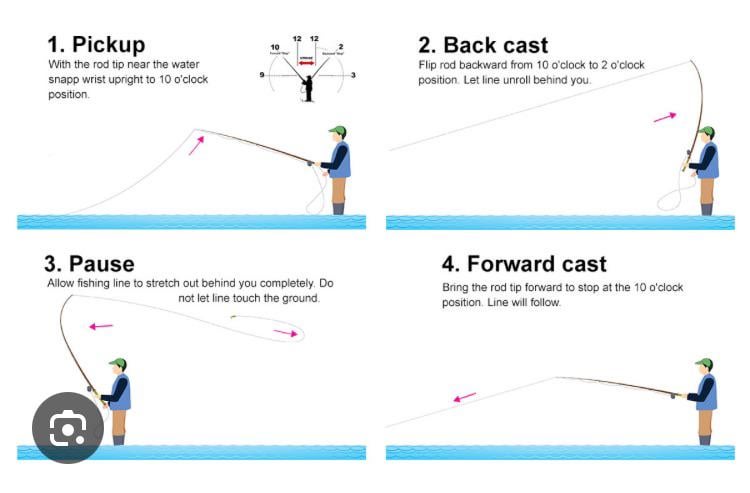
Start with the rod tip low and behind you. Lift the rod smoothly to bring the line forward.
Stop the rod sharply at about 10 o’clock. This pause lets the line shoot out over the water.
- Raise the rod steadily from behind
- Accelerate the rod forward
- Stop quickly to let the line fly
- Watch the line land softly on the water
The Back Cast
The back cast prepares the line to move forward. Lift the rod tip to about 1 o’clock behind you.
Pause sharply to load the rod with energy. This helps the line stretch out properly.
- Start with the rod low in front
- Lift the rod tip backward smoothly
- Stop suddenly to load the rod
- Keep your wrist firm but flexible
Improving Casting Accuracy
Casting accuracy is important in fly fishing. It helps you place the fly where fish are. Good accuracy means less disturbance in water.
Improving your casting takes practice and focus. Learn simple tips to aim better and control your cast.
Targeting Techniques
Look carefully at where you want to cast. Pick a small spot on the water as your target. This helps you focus your cast.
Use your eyes to guide the rod tip toward the target. Keep your movements smooth and controlled to hit the spot.
- Choose a clear, visible spot on the water
- Watch your fly line as it moves
- Adjust your aim after each cast
Controlling Line Speed
Line speed affects how far and accurate your cast is. Too fast or too slow line speed can cause poor accuracy.
Practice smooth acceleration and deceleration of the rod. This helps the line land softly and accurately on the water.
- Start the cast with a gentle rod movement
- Increase speed smoothly in the middle of the cast
- Stop the rod quickly but smoothly at the end
Adjusting For Wind Conditions
Wind can push your line off target. Notice wind direction and strength before casting.
Cast slightly upwind or lower your line to reduce wind effects. Use shorter casts if wind is strong.
- Face into the wind if possible
- Use a lower rod angle for strong wind
- Make shorter casts to stay accurate
Advanced Casting Methods
Advanced casting methods help anglers improve their accuracy and distance. These techniques take practice but can make fishing more effective. Learning different casts lets you adapt to changing fishing conditions.
Below are key methods used by experienced fly fishers. Each method suits different situations on the water. Try them one by one to build your skills.
Roll Cast
The roll cast is perfect when you have little room behind you. It uses the water’s resistance to load the rod. This cast helps avoid obstacles like trees or walls.
To do a roll cast, start with the line in the water. Lift the rod smoothly until the line forms a loop behind. Then, push the rod forward to send the fly out.
Double Haul Cast
The double haul cast increases line speed and distance. You pull the line with your non-rod hand during both the back and forward casts. This adds power to the cast.
- Start with a smooth back cast.
- Pull the line with your hand to add tension.
- Pause briefly to let the line straighten.
- On the forward cast, pull the line again for extra power.
- Release the line to let the fly fly toward the target.
Mending The Line
Mending the line helps control the drift of the fly. It moves the line to reduce drag caused by the current. Proper mending keeps the fly natural in the water.
| Type of Mend | When to Use | How to Mend |
|---|---|---|
| Upstream Mend | Current pulls line downstream | Lift rod tip upstream after the cast |
| Downstream Mend | Line drags over rocks or weeds | Drop rod tip downstream to slacken line |
| Reach Mend | Corrects line angle mid-cast | Move rod tip sideways to reposition line |

Credit: www.youtube.com
Common Mistakes And Fixes
Fly fishing is a skill that takes time to learn. Many anglers face common problems while casting. Fixing these issues makes fishing more fun and effective.
Below are common mistakes and how to fix them. Understanding these helps you improve your casting quickly.
Overcasting And Undercasting
Overcasting happens when you cast too far. This wastes energy and can cause line tangles. Undercasting means casting too short. This limits your reach and fishing area.
To fix overcasting, slow down your cast. Use smooth, controlled movements. For undercasting, increase your rod speed and pull the line back more before casting.
- Keep your wrist firm but relaxed
- Use your whole arm, not just your wrist
- Watch the line and adjust your power
- Practice short and long casts separately
Line Tangles And How To Avoid Them
Line tangles are common and can ruin your cast. They happen if the line twists or loops during casting or retrieving. Tangled lines waste time and can break.
To avoid tangles, keep your line straight. Check for twists before casting. Use smooth, even pulls when retrieving. Let the line fall naturally to the water.
- Regularly check line for twists
- Use a quality fly line and reel
- Keep line taut but not tight
- Practice good line control during casts
Maintaining Rod And Line
Keeping your rod and line clean helps them last longer. Dirt and salt can damage parts. Proper care keeps your gear working well.
After each fishing trip, rinse your rod and line with fresh water. Dry them fully before storing. Store your rod in a safe place to avoid damage.
- Rinse rod and line with fresh water
- Dry completely before storage
- Store rod in a rod case or rack
- Check line for wear and replace if needed
Practice Drills To Build Skill
Fly fishing takes patience and practice. Using drills helps you improve your casting technique step by step. These exercises focus on control, distance, and adapting to different conditions.
Try each drill several times. This builds muscle memory and makes casting easier and more accurate over time.
Short Distance Casting
Start practicing by casting short distances. This helps you focus on smooth rod movements and line control. Aim to keep the line straight and avoid slack.
- Cast to targets 10 to 15 feet away
- Focus on keeping the rod tip steady
- Practice stopping the rod sharply to form a tight loop
- Repeat casts to the same spot for accuracy
Distance Casting Exercises
Once comfortable with short casts, work on increasing your distance. Use these drills to add power while keeping control.
| Exercise | Focus | Tip |
| Double Haul | Increase line speed | Pull line during forward and back cast |
| Overhead Cast | Maximize distance | Use smooth acceleration, stop sharply |
| Roll Cast | Cast without back space | Lift line and roll forward |
Casting In Different Environments
Practice casting in varied settings to prepare for real fishing conditions. This helps you adjust to wind, obstacles, and water currents.
Try these environment drills:
- Cast with a light wind blowing across your casting path
- Practice casting under low branches or near bushes
- Simulate casting from a boat or uneven ground
- Adjust your casting angle to avoid snags

Credit: www.youtube.com
Frequently Asked Questions
How Do You Properly Hold A Fly Fishing Rod?
Hold the rod with a relaxed but firm grip. Place your thumb on top of the rod handle. Keep your wrist flexible to allow smooth casting motions.
What Is The Best Casting Technique For Beginners?
Start with the basic overhead cast. Use smooth, controlled back and forward motions. Focus on timing and line control to improve accuracy.
How Far Should You Cast A Fly Fishing Rod?
Cast distance depends on your skill and fishing spot. Beginners should aim for 20-30 feet. Practice to increase distance gradually.
When Is The Right Time To Release The Line?
Release the line during the forward cast. Let the rod tip stop before the line unrolls. This ensures better line control and accuracy.
Conclusion
Casting a fly fishing rod takes practice and patience. Start slow and focus on your movements. Keep your wrist steady and use your arm to cast. Watch your line carefully and adjust your speed. With time, your casts will become smoother and more accurate.
Enjoy the process and have fun by the water. Fly fishing is about relaxing and connecting with nature. Keep practicing, and you will see great results soon.