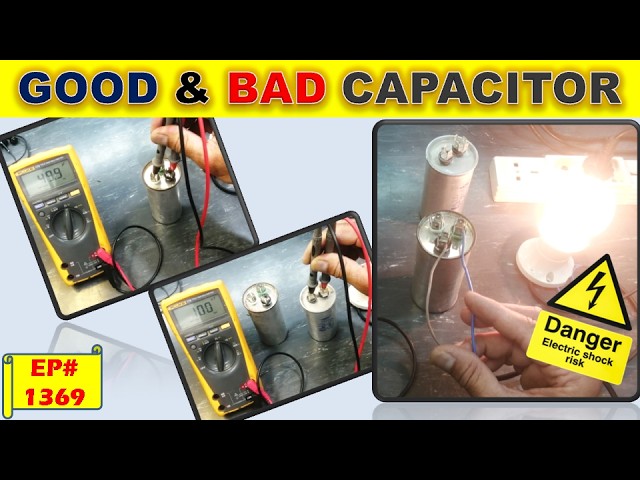
Is your air conditioner acting up, making strange noises, or failing to start? The problem might be your AC capacitor—a small but crucial part that helps your unit run smoothly.
Knowing how to check your air conditioner capacitor can save you time, money, and the hassle of unexpected breakdowns. In this guide, you’ll learn simple steps to test your capacitor safely and effectively. Keep reading to take control of your AC’s health and avoid costly repairs.
Signs Of A Faulty Capacitor
A faulty capacitorcan cause several issues in an air conditioner. Common symptoms include:
- The AC takes longer to start or won’t start at all.
- Fans run slowly or stop working.
- Strange noises like humming or buzzing sounds.
- AC keeps turning on and off repeatedly.
- Warm air blows instead of cool air.
These signs show that the capacitor may be weak or dead. This can hurt AC performanceby making it less efficient and increasing power use. A bad capacitor also puts extra strain on other parts, which can cause bigger problems.
Tools Needed For Testing
A multimeteris essential for testing an air conditioner capacitor. It measures electrical values like voltage, current, and capacitance. Choose a multimeter with a capacitance test function. This helps check if the capacitor holds the correct charge.
Screwdriversare needed to open the AC unit and access the capacitor. Use insulated screwdrivers for safety. Wearing safety gearlike gloves and safety glasses is important. It protects you from electric shock and sharp parts.
- Multimeter with capacitance mode
- Insulated screwdrivers
- Safety gloves
- Safety glasses
Safety Precautions
Always turn off the powerto the air conditioner before checking the capacitor. This stops any chance of electric shock. Capacitors can hold a charge even when power is off. Discharge the capacitorby using a screwdriver with an insulated handle to connect the terminals. This safely releases stored electricity.
Wear protective glovesand safety glassesto protect your hands and eyes. Never touch capacitor terminals with bare hands. Use tools with insulated handles only. Check for any signs of damage or leaks on the capacitor before handling.
- Power must be off at the breaker panel.
- Discharge capacitor with insulated screwdriver.
- Wear gloves and safety glasses.
- Do not touch terminals directly.
- Inspect capacitor for damage or leaks.

Credit: www.youtube.com
Locating The Capacitor
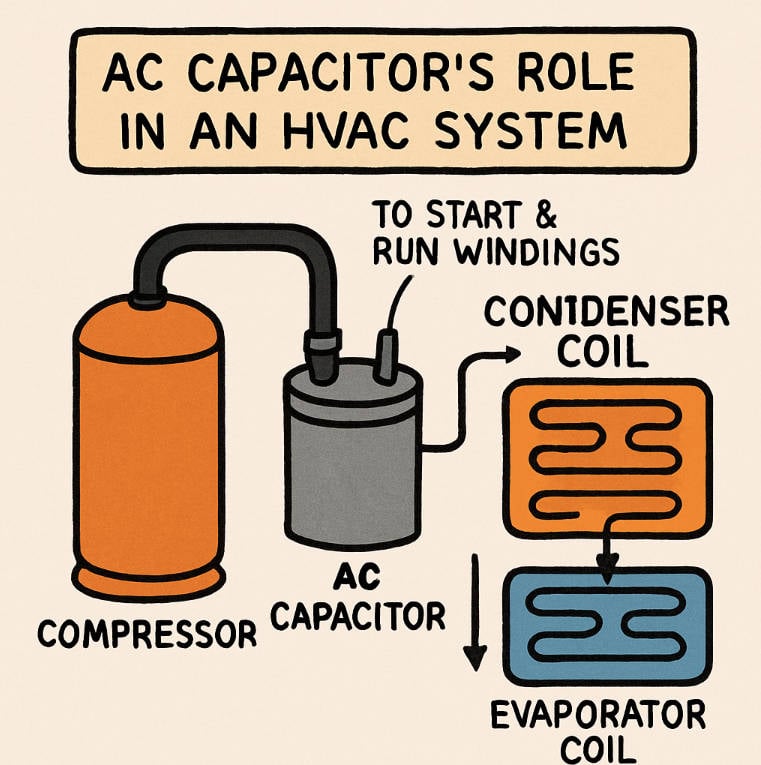
The capacitor is usually found inside the outdoor unit of the air conditioner. Open the access panel to spot a small cylindrical or oval-shaped component. It is often mounted near the compressor or fan motor.
Accessing The Ac Unit
Turn off the power to the air conditioner first. This ensures safety while working. Remove the outer panel of the unit carefully. The capacitor is usually found near the compressor or fan motor. It is inside the metal box or near the wiring. Use a screwdriver if needed to open the panel. Avoid touching any wires directly. Look for a cylindrical or oval-shaped component.
Identifying The Capacitor
The capacitor often has two or three terminals on top. It may have labels like “C,” “F,” or “H.” The size varies but is usually about the size of a soda can. It may have printed values like microfarads (µF) and voltage. The casing is often metal or plastic. Check for signs of damage like bulges or leaks. These signs mean the capacitor may need replacement.
Testing The Capacitor With A Multimeter
First, unplug the air conditioner for safety. Set the multimeter to the capacitance mode, usually marked as “μF”. If your multimeter lacks this mode, use the ohms setting instead. Discharge the capacitor by touching its terminals with an insulated screwdriver. This avoids false readings and shocks.
To measure capacitance, connect the multimeter probes to the capacitor terminals. Polarity does not matter for non-polarized capacitors. The multimeter will show the capacitance value. Compare this with the capacitor’s rating printed on its side.
| Reading | Meaning |
|---|---|
| Close to rated value | Capacitor is good and working properly |
| Much lower than rated value | Capacitor is weak or failing |
| No reading or infinite | Capacitor is open or damaged |
| Zero or very low | Capacitor is shorted and must be replaced |
Credit: www.bettlink.com
Replacing A Faulty Capacitor
Selecting the right replacement capacitoris very important. Check the capacitor’s voltage ratingand microfarad (µF) valueprinted on its side. Match these numbers exactly with the old capacitor. Using the wrong size can damage your air conditioner.
First, turn off the powerto the air conditioner. This step keeps you safe.
Next, discharge the capacitorby touching its terminals with a screwdriver that has an insulated handle. This removes stored electricity.
Then, remove the wiresconnected to the old capacitor. Remember or take a picture of where each wire goes.
Take out the old capacitor from its bracket or holder.
Put the new capacitor in place and connect the wirescorrectly.
Finally, turn the power back onand test your air conditioner to see if it works well.
Preventing Capacitor Issues
Regular checks help keep the capacitorin good shape. Clean dust and dirt from the unit often. Check for any signs of wear, like bulging or leaking parts. Tighten loose wires to avoid poor connections. Use a multimeterto test the capacitor’s charge if you know how.
Unusual noises or the AC not starting well can mean capacitor issues. Watch for longer cooling timesor the fan running slow. Flickering lights near the unit might signal electrical problems. If the AC turns off suddenly, the capacitor may be failing. Spotting these early keeps your system safe and working well.

Credit: www.youtube.com
Frequently Asked Questions
How Do I Identify A Faulty Ac Capacitor?
To identify a faulty AC capacitor, look for signs like bulging, leaking, or rusting. A multimeter can also check its capacitance. If the AC unit struggles to start, it might be due to a bad capacitor. Always ensure safety by turning off the power before inspection.
What Tools Do I Need To Test An Ac Capacitor?
To test an AC capacitor, you’ll need a multimeter and safety gloves. The multimeter measures the capacitance to determine if the capacitor is functioning correctly. Make sure to discharge the capacitor first. Proper tools ensure accurate testing and prevent any electrical hazards.
Can I Replace An Ac Capacitor Myself?
Yes, you can replace an AC capacitor yourself if you’re comfortable with electrical tasks. Ensure the power is off and follow safety precautions. Use a multimeter to confirm the capacitor’s failure. Consider consulting a professional if you’re unsure, as incorrect handling can cause damage.
What Causes An Ac Capacitor To Fail?
AC capacitors fail due to overheating, electrical surges, or age-related wear. Overheating is often caused by continuous operation in high temperatures. Electrical surges from storms or power grid fluctuations can also damage capacitors. Regular maintenance helps prevent premature failure and ensures optimal performance.
Conclusion
Checking your air conditioner capacitor helps keep your unit running well. A simple test can save you from bigger problems later. Always turn off power before you start any check. Using a multimeter gives accurate results fast. If the capacitor looks damaged or tests bad, replace it soon.
Regular checks can extend your air conditioner’s life. Stay safe and keep cool all year long.