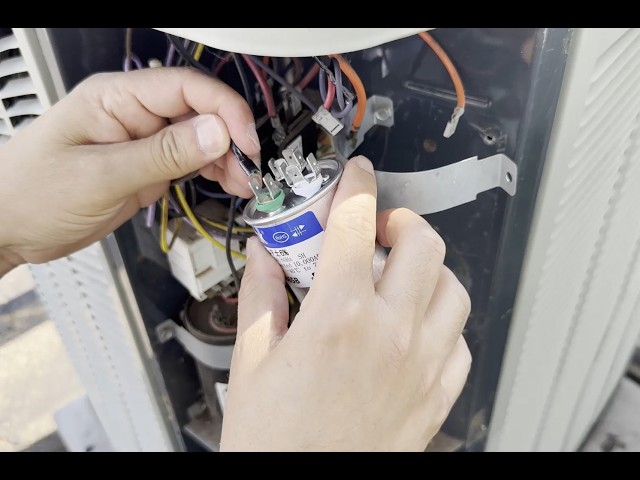
Are you struggling with your air conditioner not starting or running properly? The problem might be your capacitor.
Knowing how to connect an air conditioner capacitor can save you time and money on repairs. In this guide, you’ll learn simple, step-by-step instructions to safely connect your capacitor and get your AC back to working like new. Keep reading—you’ll find tips that anyone can follow, even if you’re not an expert.
Your comfort is just a few easy steps away!

Credit: www.reddit.com
Safety Precautions
Always turn off the powerto the air conditioner before starting. This helps prevent electrical shocks and injuries. Use protective gearlike insulated gloves and safety glasses to keep safe. Make sure the work area is dry and free from any water.
Double-check there is no power flowby using a voltage tester or multimeter. This ensures the unit is completely off. Never touch the capacitor terminals until you confirm no electricity is present. Safety is the top priority.

Credit: www.reddit.com
Tools And Materials Needed
Basic toolsinclude a screwdriver, multimeter, needle-nose pliers, and wire strippers. These help in safely handling and testing the capacitor.
Capacitor typesvary by size and function. Common types are start capacitorsand run capacitors. Each type has specific ratings and labels to check before connecting.
| Capacitor Type | Use | Common Rating |
|---|---|---|
| Start Capacitor | Helps motor start | 70-120 microfarads |
| Run Capacitor | Keeps motor running | 5-50 microfarads |
- Additional supplies:electrical tape, wire connectors, and safety gloves.
- Always use insulated tools to avoid shocks.
- Label wires before disconnecting for easy reconnection.
Locate The Capacitor
Start by turning off the power to the air conditioner. This is important for safety. Find the outdoor unit, usually a large metal box near your home. Remove the access panel by unscrewing it carefully.
Inside, look for a small, cylindrical or oval component with multiple wires connected. This is the capacitor. It often has a label with microfarad (µF) ratings and voltage. The capacitor stores electrical energy to help start the motor.
- Check for three terminals marked “C” (common), “FAN,” and “HERM.”
- The capacitor is usually near the compressor and fan motor.
- It can be single or dual run type.
Discharge The Capacitor
Discharging the capacitoris very important before working on an air conditioner. Capacitors store electrical energyeven when the power is off. This stored energy can cause electric shocksthat are dangerous.
Safe discharge methods include using a resistoror a screwdriver with an insulated handleto short the capacitor terminals. A resistor is safer because it lets the charge leave slowly and without sparks.
- Wear insulated glovesand safety glasses.
- Turn off power to the air conditioner.
- Use a multimeterto check if the capacitor is charged.
- Connect the resistor across the capacitor terminals for a few seconds.
- Check the voltage again with the multimeter to confirm the discharge.
Identify Terminals
Air conditioner capacitors have different terminals. Each terminal has a labelthat shows its function. Common labels include Cfor common, HERMfor the compressor, and FANfor the fan motor. These labels help you connect wires correctly.
Matching the capacitor ratings is very important. The ratings show the microfarads (µF)and voltage levels. Using a capacitor with the wrong rating can cause damage or poor performance. Always check the label on the capacitor and match it with the AC unit’s specifications.
| Terminal Label | Description |
|---|---|
| C (Common) | Connects to the power source or common wire |
| HERM (Compressor) | Connects to the compressor motor |
| FAN | Connects to the fan motor |
Connect The Capacitor
Identify the terminals on the capacitor carefully. Usually, they are labeled as “C” (Common), “FAN,”and “HERM”. Connect the wire from the compressor to the “HERM”terminal. Attach the fan motor wire to the “FAN”terminal. The “C”terminal is the common point for both.
Use needle-nose pliers or your fingers to push the connectors firmly onto the capacitor terminals. Ensure they fit tightly to avoid loose connections.
- Check that wires are not frayed or damaged.
- Secure wires with electrical tape if necessary.
- Do not force connectors onto the wrong terminals.
- Double-check terminal labels before finalizing.
Secure connections prevent shorts and ensure the air conditioner works well. Loose wires may cause the unit to fail or spark.
Test The Connection
First, reapply powerto the air conditioner by switching the circuit breaker back on or plugging it in. This step helps restart the system after capacitor replacement.
Next, check AC functionalityby turning on the unit. Listen for the compressor and fan starting up smoothly. A well-connected capacitor usually results in normal motor operation.
If the AC does not start or sounds strange, double-check all capacitor wires for secure connections and correct placement. Loose or wrong connections can prevent the unit from working properly.
Troubleshooting Tips
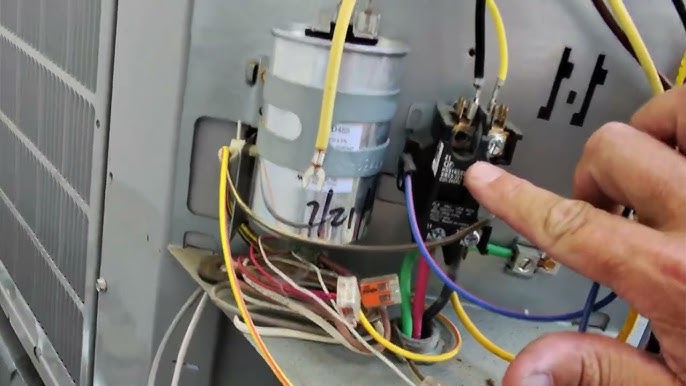
Common connection errorsinclude mixing up terminals or loose wires. Capacitors usually have three terminals: “C” (common), “FAN,” and “HERM” (compressor). Connecting wires to the wrong terminal can cause the AC to fail or damage parts. Always match wire colorsto terminal labels. Loose connections can lead to sparks or overheating. Tighten all screws firmly but avoid over-tightening, which may break the terminals.
When to replace the capacitor:If the AC struggles to start or makes a buzzing sound, the capacitor might be weak. Also, look for any bulging, leaks, or corrosionon the capacitor. A capacitor that fails a simple multimeter test needs replacement. Old capacitors often lose capacity over time and cause poor cooling performance. Replacing it can restore the AC’s smooth operation quickly.
Credit: www.youtube.com
Frequently Asked Questions
What Is An Air Conditioner Capacitor?
An air conditioner capacitor is a small, cylindrical component that stores and releases electrical energy. It helps in starting and running the compressor and fan motor. Capacitors come in different types and sizes, and they ensure your air conditioner operates efficiently.
How Do I Identify Capacitor Terminals?
Identifying capacitor terminals is essential for proper connection. Capacitors typically have two or three terminals labeled as “HERM”, “FAN”, and “C”. “HERM” connects to the compressor, “FAN” to the fan motor, and “C” is the common terminal.
Why Is My Air Conditioner Capacitor Important?
Your air conditioner capacitor is crucial for starting and running the compressor and fan motor. Without it, your air conditioner may fail to start or run inefficiently. Regular maintenance ensures optimal performance and longevity of your cooling system.
How To Safely Discharge A Capacitor?
To safely discharge a capacitor, first turn off the power supply. Use an insulated screwdriver to short the terminals. This releases any stored energy. Always wear protective gloves and eyewear for safety during this process.
Conclusion
Connecting an air conditioner capacitor is simple with the right steps. Always turn off the power before starting work. Check the capacitor type and wire labels carefully. Secure connections tightly to avoid problems later. A well-connected capacitor helps your AC run smoothly.
Take your time and follow safety rules. This small task can save you money and keep your home cool. Practice makes the process easier over time. Stay safe and enjoy a comfortable space all year.