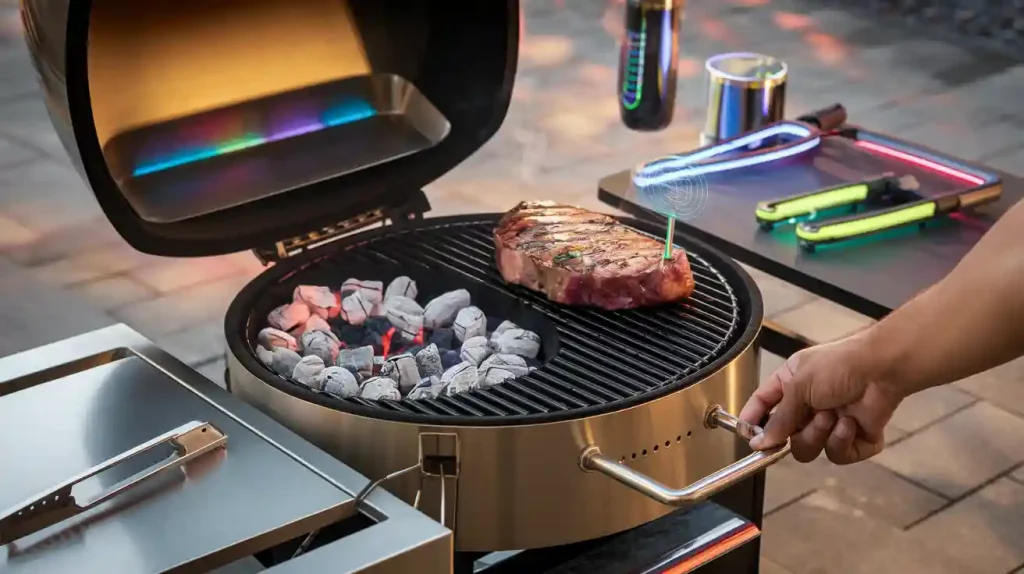
Mastering the temperature on your charcoal grill can transform your cooking from good to unforgettable. If you’ve ever struggled with food burning on the outside while staying raw inside, or if you want that perfect smoky flavor without guesswork, this guide is for you.
You’ll learn simple, practical tips to control your grill’s heat like a pro—no fancy gadgets needed. Keep reading, and discover how to take full control of your charcoal grill temperature every time you fire it up.
.jpg)
Credit: www.bbqspitrotisseries.com.au
Choosing The Right Charcoal
Controlling the temperature of your charcoal grill starts with the charcoal you select. The right charcoal helps you keep steady heat for better grilling results.
This guide covers the types of charcoal and why quality and size matter for temperature control.
Types Of Charcoal
You can choose between lump charcoal and briquettes. Each burns differently and affects temperature control.
- Lump Charcoal:Made from pure wood, it lights fast and burns hotter. It produces less ash but burns unevenly.
- Briquettes:Made from compressed charcoal dust and additives. They burn evenly and last longer but produce more ash.
Quality And Size Matters
Good quality charcoal burns longer and cleaner. The size of charcoal pieces also changes how heat spreads in the grill.
| Charcoal Quality | Effect on Grill | Notes |
|---|---|---|
| High Quality | Steady heat, less smoke | Burns fully with minimal ash |
| Low Quality | Uneven heat, more smoke | Contains fillers, produces excess ash |
| Large Pieces | Longer burn time, slower heat release | Good for slow cooking |
| Small Pieces | Quick heat, short burn | Best for fast grilling |
Setting Up Your Grill
Controlling the temperature of a charcoal grill is essential for perfect grilling. Proper setup is key to achieving the desired heat levels.
Learn how to arrange charcoal and use a chimney starter to manage heat zones effectively.
Arranging Charcoal For Heat Zones
Creating heat zones on a charcoal grill helps cook different foods at the right temperature. You can have a hot zone for searing and a cooler zone for slower cooking.
To arrange the charcoal, place more coals on one side of the grill for high heat. Spread a thin layer on the other side for low heat.
- High heat zone: for meats needing a quick sear
- Medium heat zone: for veggies and delicate foods
- Low heat zone: for slow-cooking items
Using A Charcoal Chimney Starter
A charcoal chimney starter helps light coals quickly and evenly. It avoids the need for lighter fluid, which can affect taste.
Fill the chimney with charcoal and place crumpled paper underneath. Light the paper to ignite the coals above. Wait for the top coals to turn gray before pouring them into the grill.
- Fill the chimney with charcoal
- Place paper underneath and light it
- Wait until coals are gray before using
Adjusting Airflow
Controlling the temperature of a charcoal grill depends largely on how you adjust airflow. Air helps the charcoal burn hotter or cooler. Knowing how to manage vents will keep your food cooking just right.
There are two main vents on most charcoal grills: bottom vents and top dampers. Each plays a key role in controlling airflow and heat. Let’s look at how to use them effectively.
Controlling Bottom Vents
Bottom vents let air enter the grill. More open vents mean more oxygen for the charcoal. This makes the fire burn hotter and faster. Closing the vents reduces oxygen, cooling the grill down.
To raise the heat, open the bottom vents wide. To lower the heat, close them partially or fully. Watch the charcoal and adjust vents as needed to keep the temperature steady.
- Open vents fully for high heat
- Partially close vents for medium heat
- Close vents mostly for low heat
- Always keep some vent open to avoid smothering fire
Managing Top Dampers
Top dampers control how air and smoke leave the grill. Opening them lets hot air escape, which keeps the fire burning. Closing them traps heat and smoke inside, adding flavor but lowering airflow.
Adjust top dampers to control temperature and smoke flow. Open dampers help increase heat. Closing dampers slows the fire and creates more smoke. Balance the top and bottom vents for best results.
- Open top dampers for hotter fire and less smoke
- Partially close for steady heat and more smoke flavor
- Close dampers only slightly to avoid fire suffocation

Credit: www.amazon.com
Monitoring Grill Temperature
Controlling the temperature of a charcoal grill is important for cooking food properly. Watching the heat helps you avoid burning or undercooking.
There are several ways to check the temperature while grilling. Use the right method to keep the heat steady.
Using Built-in Thermometers
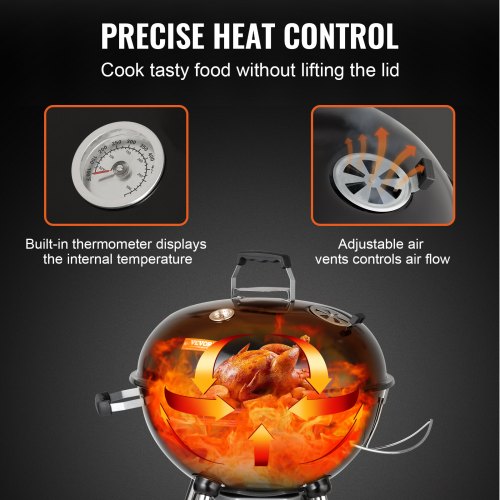
Many charcoal grills come with built-in thermometers on the lid. These devices show the air temperature inside the grill.
Check the thermometer often to see if the temperature stays in the right range for your recipe. Keep the lid closed to get an accurate reading.
Employing Infrared Thermometers
Infrared thermometers measure the surface temperature of the grill grate or food without touching them. They give quick and exact readings.
- Aim the thermometer at the grill surface
- Press the trigger to get the temperature
- Use this reading to move food or adjust charcoal
Using Hand Test For Heat Levels
The hand test is a simple way to estimate grill heat by feeling the warmth above the grate. Hold your hand about five inches over the coals.
| Heat Level | Hand Distance Time | Use For |
| High Heat | 1-2 seconds | Searing steaks, burgers |
| Medium Heat | 3-4 seconds | Chicken, pork chops |
| Low Heat | 5-6 seconds | Slow cooking, smoking |
Techniques To Control Heat
Controlling heat is key to good grilling with charcoal. You can cook food evenly and avoid burning.
Here are simple ways to manage the temperature on your charcoal grill. Try each to find what works best.
Adding Charcoal During Cooking
Adding charcoal helps keep the heat steady for long cooking sessions. It raises the temperature when it starts to drop.
- Use fresh charcoal for better burning.
- Add small amounts at a time to avoid flare-ups.
- Place new charcoal on the hot side of the grill.
- Wait for the new coals to ash over before cooking near them.
Using Water Pans To Regulate Temperature
Water pans add moisture and help keep the grill temperature steady. They absorb and release heat slowly.
| Benefit | Description |
| Temperature Control | Stabilizes heat by absorbing excess heat. |
| Moisture | Keeps food from drying out during cooking. |
| Smoke Flavor | Allows smoke to pass over water for better taste. |
Adjusting Grill Lid Position
Changing the lid position controls airflow and heat. Opening the lid lowers heat by letting smoke escape.
- Keep the lid closed for high heat and fast cooking.
- Open the lid slightly to reduce temperature.
- Remove the lid to cool the grill quickly.
- Adjust vents on the lid to control airflow.
Credit: www.vevor.com
Maintaining Consistent Temperature
Keeping a steady temperature is key to good grilling. It helps cook food evenly and prevents burning.
Controlling your charcoal grill temperature can be easy with the right steps. Small changes make a big difference.
Avoiding Frequent Lid Opening
Opening the grill lid often lets heat escape. This causes the temperature to drop and rise repeatedly.
Keep the lid closed as much as possible. Use the grill light or a thermometer to check food without opening.
- Plan your cooking time before opening the lid
- Use a thermometer with a remote probe
- Only open the lid to turn or check food when needed
Managing Fuel Consumption
Use the right amount of charcoal to keep heat steady. Too little charcoal means low heat. Too much causes flare-ups.
Arrange charcoal evenly to spread heat well. Add more charcoal slowly if the fire gets weak.
- Start with enough charcoal for the cooking time
- Spread charcoal in a single layer for even heat
- Add small amounts of charcoal to keep steady heat
Dealing With Wind And Weather
Wind can cool the grill and change the fire. Use windbreaks to protect your grill from strong wind.
Check weather before grilling. Cold or rainy days need more charcoal or longer cooking time to keep heat steady.
- Place grill in a sheltered spot
- Use a grill cover when not cooking
- Adjust air vents to control airflow and heat
Troubleshooting Common Issues
Controlling the temperature on a charcoal grill can be tricky. Many people face problems that affect cooking results.
This guide helps you fix common temperature issues. You will learn how to adjust heat for better grilling.
Grill Too Hot
If your grill gets too hot, food may burn outside while staying raw inside. This happens when too much air reaches the coals.
Close the vents slightly to reduce oxygen flow. Spread the charcoal out to lower the heat. Use fewer coals next time.
- Close bottom and top vents partially
- Spread coals thinly across the grill
- Remove some coals if heat is very high
- Use a water spray to cool hot spots
Grill Too Cool
A cool grill can slow cooking and cause food to stick. This happens when there is not enough airflow or charcoal is old.
Open the vents fully to increase air. Add fresh charcoal and wait for it to ash over before cooking. Avoid using damp charcoal.
- Open both vents wide
- Add fresh, dry charcoal
- Let charcoal turn white-gray before cooking
- Do not add water or wet wood
Uneven Cooking
Uneven cooking happens when some parts of the grill are hotter than others. Food may burn on one side and be undercooked on the other.
Create heat zones by piling more coals on one side. Use the hot side for searing and the cooler side for slow cooking.
- Arrange coals in a two-zone setup
- Place food on the cooler side to finish cooking
- Move food often to avoid burning
- Use a lid to keep heat even
Tips For Perfect Grilling Results
Controlling the temperature on a charcoal grill is key for great food. Knowing how to manage heat helps you cook meat and vegetables just right.
This guide shows simple tips for preheating, using heat zones, and resting meat to improve your grilling.
Preheating The Grill
Start by lighting your charcoal and letting it burn until covered with white ash. This usually takes 15 to 20 minutes.
Preheating helps the grill reach the right temperature and prevents food from sticking to the grates.
Using Heat Zones For Different Foods
Create two heat zones on your grill. One side should have hot coals for direct cooking. The other side should have fewer coals for indirect cooking.
- Place thin or quick-cooking foods over the hot zone.
- Use the cooler zone for thicker cuts or foods that need slow cooking.
- Move food between zones to control cooking speed and avoid burning.
Resting Meat Before Serving
After grilling, let your meat rest for a few minutes. This lets juices settle and improves flavor.
| Type of Meat | Resting Time |
| Steak | 5 minutes |
| Chicken | 10 minutes |
| Pork | 7 minutes |
Frequently Asked Questions
How Do I Adjust Airflow To Control Grill Temperature?
Adjust the vents to regulate oxygen flow. Open vents increase heat; closing them lowers temperature. Control both bottom and top vents for best results.
What Is The Ideal Charcoal Arrangement For Temperature Control?
Use a two-zone setup with coals on one side for direct heat. Keep the other side empty for indirect cooking and temperature control.
How Often Should I Add Charcoal During Grilling?
Add charcoal every 45 minutes to maintain heat. Use fresh coals when the fire starts to die down to keep temperature steady.
Can Water Pans Help In Controlling Grill Temperature?
Yes, water pans stabilize temperature and add moisture. Place a water pan above coals for indirect cooking to prevent flare-ups and maintain heat.
Conclusion
Controlling charcoal grill temperature takes patience and practice. Adjust the air vents to change heat quickly. Move coals closer or farther to control cooking zones. Use a thermometer to check the grill’s heat. Keep the lid closed to hold temperature steady.
Small changes can make a big difference in cooking results. With time, you’ll feel more confident managing your grill’s heat. Enjoy grilling with better control and tastier meals every time. Keep trying, and grilling will become easier and more fun.