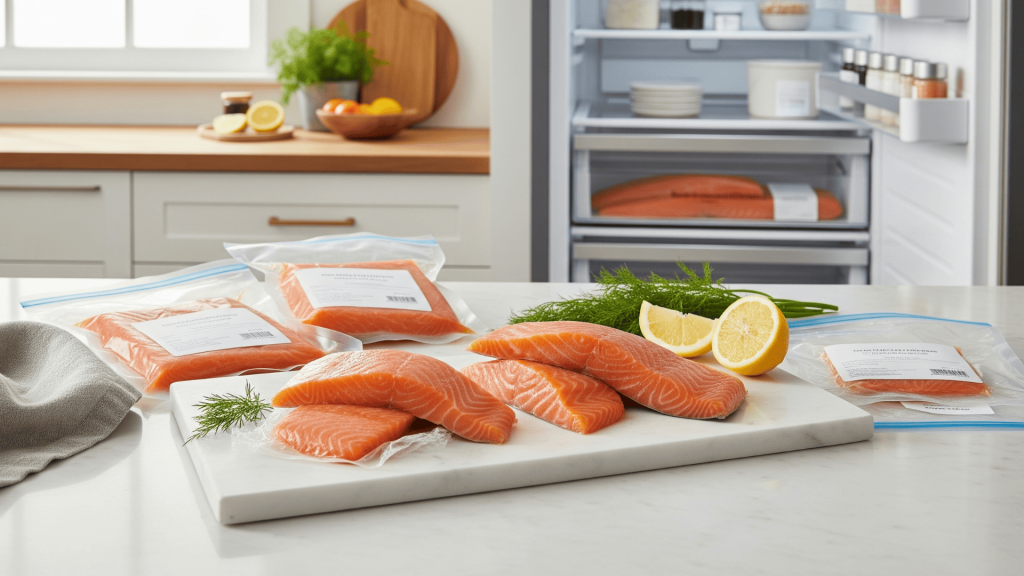
Do you love salmon but find yourself struggling with how to store it without losing its fresh taste? If you don’t have a vacuum sealer, don’t worry!
You’re not alone, and you’ve come to the right place. Freezing salmon without a vacuum sealer is easier than you might think, and mastering this skill can save you money and reduce food waste. Imagine having perfectly preserved salmon ready to cook any time you want, whether it’s a weekday dinner or a special occasion.
We’re going to share simple yet effective techniques that will keep your salmon fresh and delicious for months. Ready to unlock the secrets to preserving salmon like a pro? Let’s dive in!

Credit: knowseafood.com
Choosing Fresh Salmon
Choosing fresh salmon is key to preserving flavor and texture during freezing. Fresh fish freezes better and tastes better after thawing. The process starts at the market, where quality matters most. Selecting the right fillets and checking freshness signs ensures the best results.
Selecting Quality Fillets
Pick fillets that look moist but not wet. Avoid any with brown or dull spots. The flesh should be firm and bounce back when pressed. Bright pink or orange colors show healthy fish. Thicker cuts freeze well and stay juicy after thawing. Avoid thin or ragged pieces that dry out quickly.
Checking For Freshness Indicators
Fresh salmon smells like the sea, never fishy or sour. Clear, bright eyes on whole fish show freshness. Gills should be red or pink, not brown or gray. The skin must shine and feel slippery, not sticky. Look for tight scales that don’t fall off easily. Always trust your senses to pick the freshest salmon.
Preparing Salmon For Freezing
Preparing salmon properly before freezing is key to maintaining its fresh taste and texture. Taking time to clean and portion the fish ensures you won’t waste any part later. Plus, it makes thawing quicker and easier when you want to cook.
Cleaning And Portioning
Start by rinsing your salmon under cold water to remove any surface impurities. Pat it dry with paper towels to avoid excess moisture, which can cause freezer burn.
Think about how you plan to use the salmon after freezing. Cutting it into meal-sized portions now saves you from defrosting more than you need. Use a sharp knife to slice through the flesh cleanly, keeping pieces uniform in size for even freezing and thawing.
- Rinse gently under cold water
- Dry thoroughly with paper towels
- Cut into portions based on your typical meal size
Removing Skin And Bones
Removing the skin is optional but often preferred, especially if you want to save freezer space or avoid a rubbery texture after thawing. Slide a thin, flexible knife between the skin and flesh, holding the skin firmly as you cut.
Check carefully for any pin bones by running your fingers along the fillet. Use kitchen tweezers to pull out any you find; leaving them in can be unpleasant when eating later.
- Use a flexible knife to separate skin gently
- Feel for pin bones and remove with tweezers
- Skin removal helps save space and improve texture
Have you noticed a difference in taste or texture when you freeze salmon with the skin on versus off? Your personal preference can guide this step and make your frozen salmon experience better.
Wrapping Techniques Without Vacuum Sealer
Freezing salmon without a vacuum sealer might seem tricky, but the right wrapping techniques can keep your fish fresh and flavorful. The key is to minimize air exposure and prevent freezer burn. Here’s how you can wrap your salmon effectively using simple household items.
Using Plastic Wrap
Start by patting your salmon dry with paper towels. This removes excess moisture that can cause ice crystals to form. Then, wrap the salmon tightly in plastic wrap, pressing firmly to eliminate any air pockets.
Wrap it multiple times for extra protection. This method creates a snug barrier that helps keep your salmon’s texture intact. Have you ever noticed freezer-burned fish? Proper plastic wrapping can prevent that harsh dryness.
Aluminum Foil Method
Aluminum foil is another great option to shield your salmon from air. Begin by wrapping the plastic-wrapped fish in a layer of heavy-duty aluminum foil. Make sure to cover every inch to block out light and air.
This double-layer approach is especially useful if you plan to freeze your salmon for a longer period. The foil adds a sturdy outer shell that guards against damage. Do you have foil left over from cooking? It can serve double duty here!
Freezer-safe Bags
Freezer-safe bags are convenient and affordable. After wrapping your salmon in plastic wrap or foil, slide it into a freezer-safe ziplock bag. Press out as much air as possible before sealing.
Consider using a straw to suck out the remaining air if you don’t have a vacuum sealer. These bags are designed to withstand freezing temperatures and help maintain the fish’s quality. Have you tried squeezing out air from bags before? It’s a simple trick that makes a big difference.
Removing Air Without A Vacuum Sealer
Removing air from your salmon packaging is key to preventing freezer burn and maintaining freshness. Without a vacuum sealer, this might seem tricky, but there are simple and effective ways to do it using items you probably already have at home. These techniques help you pack salmon tightly, limiting air exposure and keeping your fish tasting great even after weeks in the freezer.
Water Displacement Method
This method uses water pressure to push air out of a sealed bag. Place your salmon fillet inside a resealable plastic bag, then seal it almost all the way, leaving just a small gap open.
Slowly lower the bag into a bowl or sink filled with water, allowing the water to push the air toward the opening. Once most of the air is out, seal the bag completely.
Be careful not to let water enter the bag. This technique is simple and surprisingly effective for removing air without special equipment.
Pressing Out Air Manually
If you don’t want to use water, you can manually press out the air from the bag. Put your salmon in a resealable bag and press down on the bag starting at the bottom, pushing the air up toward the opening.
Once most of the air is out, quickly seal the bag. You may want to repeat this process a couple of times to ensure minimal air remains.
Try to work quickly to avoid letting air back in. This hands-on method takes a bit of practice but works well when you want to freeze salmon without extra tools.
Freezing Tips For Best Results
Freezing salmon without a vacuum sealer takes a bit of care to keep your fish fresh and flavorful. Small details like how you package and store the salmon can make a big difference in taste and texture later on. Let’s look at some practical tips that help you get the best results every time.
Labeling And Dating Packages
Always label and date your salmon packages before putting them in the freezer. This simple step helps you keep track of how long the fish has been stored, so you don’t accidentally eat salmon that’s past its prime.
Use a permanent marker on freezer bags or masking tape on containers. Write the type of fish, the portion size, and the freezing date clearly. It might seem small, but it saves you from guesswork later.
Optimal Freezing Temperature
Your freezer should be set at 0°F (-18°C) or lower to keep salmon safe and fresh. Temperatures above this can cause the fish to lose quality faster and increase the risk of spoilage.
Check your freezer’s temperature with an appliance thermometer if you’re unsure. Consistent cold keeps the salmon’s texture intact and prevents freezer burn, even without vacuum sealing.
Storage Duration Guidelines
Frozen salmon stays best for about 3 to 6 months. Beyond that, it can lose flavor and develop freezer burn, even if it looks okay.
If you freeze salmon in smaller portions, you’ll only thaw what you need, reducing waste and maintaining quality. Have you noticed how thawing just the right amount makes cooking easier and more enjoyable?

Credit: www.yahoo.com
Thawing Frozen Salmon Safely
Thawing frozen salmon safely is key to preserving its flavor and texture while preventing foodborne illnesses. How you thaw your salmon affects both taste and safety, so it’s worth taking the time to do it right. Let’s look at some reliable ways to thaw your frozen salmon without risking its quality or your health.
Refrigerator Thawing
Thawing salmon in the refrigerator is the safest and most foolproof method. Place the wrapped salmon on a plate or dish to catch any drips and let it thaw slowly overnight or for about 12-24 hours, depending on the size.
This slow thawing keeps the fish at a safe temperature below 40°F (4°C), preventing bacteria from growing. Have you noticed how salmon retains its firm texture when thawed this way? That’s because the cold temperature helps maintain moisture and freshness.
Cold Water Thawing
If you need your salmon thawed faster, cold water thawing is a great alternative. Seal the salmon tightly in a plastic bag to avoid water contact, then submerge it in a bowl of cold water.
Change the water every 30 minutes to keep it cold, and your salmon should thaw within 1-2 hours. This method works well when you’re short on time but still want to keep the fish fresh and safe.
Avoiding Room Temperature Thawing
Thawing salmon at room temperature might seem convenient, but it’s risky. Leaving fish out for too long allows bacteria to multiply rapidly on the surface, increasing the chance of food poisoning.
Even if the inside is still frozen, the outer layers can reach unsafe temperatures. Ask yourself— is a few minutes saved worth the risk to your health? It’s better to plan ahead and choose safer thawing methods.
Common Mistakes To Avoid
Freezing salmon without a vacuum sealer is doable, but it’s easy to slip up and end up with disappointing results. Avoiding common mistakes can save you from wasted food and a less tasty meal later. Let’s look at some pitfalls that can ruin your frozen salmon and how you can steer clear of them.
Refreezing Thawed Salmon
One big mistake is refreezing salmon after it has thawed. Each time you thaw and refreeze, the fish loses moisture and texture. This makes your salmon dry and less flavorful.
Have you ever noticed frozen salmon turning mushy after refreezing? That’s why it’s better to only thaw what you plan to eat. If you need to freeze in portions, divide the salmon before freezing the first time.
Improper Wrapping
Wrapping salmon poorly lets air reach the fish, causing freezer burn and off-flavors. Using just plastic wrap or a flimsy bag is not enough to keep it fresh.
Try wrapping the salmon tightly in plastic wrap first, then place it in a sturdy freezer bag or airtight container. Removing excess air helps keep the texture and flavor locked in longer.
Have you ever found your salmon smelling “off” after freezing? That’s usually because air got in during storage.
Ignoring Freezer Burn Signs
Freezer burn looks like dry, discolored patches on your salmon. It happens when moisture escapes, leaving the fish tough and tasteless.
Don’t ignore these signs—freezer burn won’t improve with cooking. If you spot it early, you can trim off the affected parts before cooking, but prevention is the best approach.
Ask yourself, do you check your frozen fish regularly? Keeping an eye on your freezer stock helps you catch problems before they ruin your meal.

Credit: wdfw.medium.com
Frequently Asked Questions
How Do I Freeze Salmon Without A Vacuum Sealer?
Wrap salmon tightly in plastic wrap, then aluminum foil. Place in a freezer-safe bag, remove excess air, and seal. Label with date and freeze immediately to maintain freshness.
Can I Freeze Salmon In Ziplock Bags?
Yes, use heavy-duty ziplock bags. Remove as much air as possible before sealing. Double-bagging helps prevent freezer burn and preserves salmon quality longer.
How Long Can Salmon Stay Frozen Without Vacuum Sealing?
Salmon can stay frozen for up to 3 months without vacuum sealing. Proper wrapping and storage help maintain taste and texture during this time.
What Is The Best Way To Prevent Freezer Burn On Salmon?
Wrap salmon tightly in plastic wrap and aluminum foil. Use airtight freezer bags and remove excess air. Store at a consistent freezing temperature below 0°F (-18°C).
Conclusion
Freezing salmon without a vacuum sealer is simple and effective. Use plastic wrap and airtight bags to keep fish fresh. Remove as much air as possible before sealing. Label the package with the date to track freshness. Store salmon flat in the freezer to save space.
This method helps maintain taste and texture well. You can enjoy your salmon anytime without special tools. Try these easy steps for safe and tasty frozen fish. Keep your salmon ready for cooking whenever you want.