
Have you ever started a recipe only to realize you don’t have the right measuring cup? Maybe you need 2/3 cup but your set is missing that exact size.
Don’t worry—you can still get it right without the perfect tool. Knowing how to measure 2/3 cup without a measuring cup saves you time and stress in the kitchen. Keep reading, and you’ll discover simple tricks that make your cooking and baking easier, even when your tools aren’t perfect.
You’re just moments away from mastering this handy skill!
Common Kitchen Items As Measuring Tools
Not all kitchens have every measuring cup. You can still measure 2/3 cup with items you use daily.
Using common tools helps you cook and bake without extra gadgets.
Using Spoons For Approximate Measurement
Spoons can be handy for measuring small amounts. A tablespoon is about 1/16 cup.
- Use 10 tablespoons to get close to 2/3 cup (since 2/3 cup = 10 tablespoons plus 2 teaspoons).
- Tablespoons and teaspoons work well for dry and liquid ingredients.
- Level off each spoon to keep measurement accurate.
Utilizing Glassware And Mugs
Many glasses and mugs have known volumes. They can help measure 2/3 cup.
| Container | Approximate Volume | How to Measure 2/3 Cup |
| Standard Coffee Mug | 12 ounces (1.5 cups) | Fill about half the mug |
| Drinking Glass | 8 ounces (1 cup) | Fill two-thirds of the glass |
| Small Glass | 4 ounces (0.5 cup) | Fill one full glass plus half of it |
Household Containers And Their Volumes
Other containers around the house can help. Knowing their volume makes measuring easy.
- Yogurt cups usually hold 6 ounces. Fill one and add half for 2/3 cup.
- Jam jars or small food containers often show volume on the label.
- Use water to fill the container and then pour into your mixing bowl.
- Mark containers with permanent marker to measure 2/3 cup for future use.
Visual Estimation Techniques
Measuring 2/3 cup without a measuring cup can be easy. Using visual tricks helps you estimate amounts quickly.
This guide explains simple ways to measure 2/3 cup using objects, containers, and your hands.
Comparing To Familiar Objects
Use everyday items to imagine how much 2/3 cup looks like. This helps you guess volume without tools.
- Two-thirds of a standard coffee mug usually equals about 2/3 cup.
- A tennis ball is close in size to 2/3 cup of dry ingredients.
- About half a baseball plus a small handful matches 2/3 cup.
- Two-thirds of a small juice glass is a good visual cue.
Marking Levels On Containers
Use clear containers to mark levels for 2/3 cup. This method helps for future use and accurate measuring.
| Container Size | Mark for 2/3 Cup |
|---|---|
| 1 cup jar | Fill up to 2/3 of the height |
| 3/4 cup measuring cup | Fill almost full, slightly below the top |
| 8 oz glass | Fill about 5.3 oz (two-thirds of 8 oz) |
Using Hand Measurements
Your hands can help estimate 2/3 cup, especially for dry ingredients like flour or sugar.
- A cupped hand usually holds about 1/3 cup.
- Two cupped hands together equal about 2/3 cup.
- A palm (without fingers) holds roughly 1/4 cup.
- Fill two palms and add a little more for 2/3 cup.
Simple Mathematical Approaches
Measuring 2/3 cup without a measuring cup is easy using math. You can use fractions and smaller measures to get the right amount.
This guide explains simple ways to measure 2/3 cup using common kitchen tools and math tricks.
Dividing Full Cups Into Fractions
You can divide a full cup into smaller parts to get 2/3 cup. Since 2/3 means two parts out of three equal parts, you can split one cup this way.
- Fill a 1-cup container fully.
- Divide the cup into three equal parts mentally or by marking.
- Use two of these parts to measure 2/3 cup.
Combining Smaller Measurements
Combine smaller known measurements to reach 2/3 cup. This method works with common measuring spoons or cups.
| Measurement | Amount |
| 1/3 cup + 1/3 cup | 2/3 cup total |
| 1/2 cup + 2 tablespoons + 2 teaspoons | Approx. 2/3 cup |
| 1/4 cup + 1/4 cup + 1/6 cup | 2/3 cup total |
Converting Cups To Other Units
You can convert 2/3 cup to tablespoons or milliliters for easier measuring.
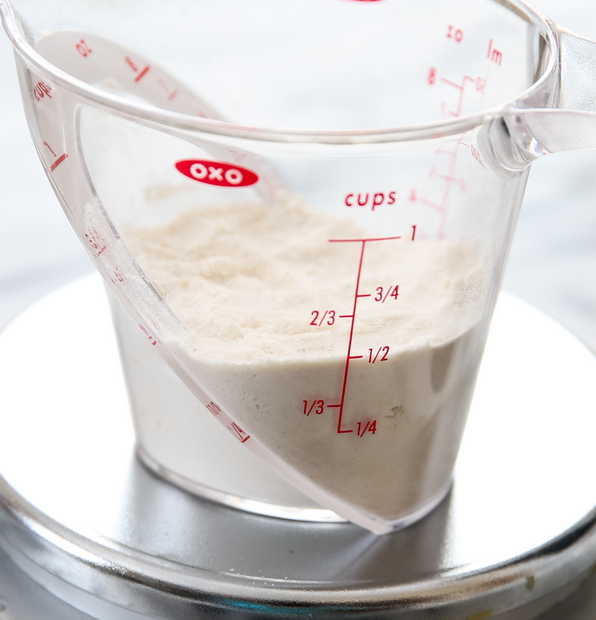
- 2/3 cup equals 10 tablespoons plus 2 teaspoons.
- 2/3 cup is about 158 milliliters.
- Use tablespoons or milliliters if you have these tools instead of cups.
Credit: kirbiecravings.com
Creative Hacks For Accuracy
Measuring 2/3 cup without a measuring cup can be tricky. You can use everyday items to get close to the right amount. These hacks help you stay accurate in the kitchen.
Try these simple and clever methods to measure 2/3 cup easily. Each uses items you probably already have at home.
Using Ice Cube Trays
Ice cube trays are great for measuring liquids or small amounts of dry ingredients. Most trays hold about 1 ounce per cube. To get 2/3 cup, you can fill the right number of cubes.
- Check how much one ice cube holds (usually 1 ounce).
- Remember 2/3 cup equals about 5.3 ounces.
- Fill 5 full ice cubes and a little more from the sixth cube.
- Pour these cubes into your mixing bowl or container.
Employing Food Packaging Labels
Some food packages show volume or weight in cups. You can use these labels to help measure 2/3 cup.
| Food Item | Package Volume | How to Measure 2/3 Cup |
| Milk Carton | 1 cup = 240 ml | Pour about 160 ml (two-thirds of 240 ml) |
| Yogurt Tub | 1 tub = 1 cup | Fill the tub about two-thirds full |
| Soup Can | 1 can = 2 cups | Fill half the can, then add one-third more |
Repurposing Bottles And Jars
Clear bottles and jars often have volume marks. You can use these marks or estimate 2/3 cup with the container’s total volume.
Here are some quick tips for bottles and jars:
- Find the total volume on the label (for example, 3 cups).
- Divide the container into three equal parts.
- Fill two parts to get 2/3 cup.
- Use a permanent marker to mark the 2/3 cup level for future use.
Tips For Consistency And Precision
Measuring 2/3 cup without a measuring cup can be tricky. You need clear tips to keep your cooking precise every time.
Using simple tricks helps you get consistent results. This improves your recipes and reduces errors.
Leveling Ingredients Properly
Always level your ingredients to avoid extra or missing amounts. Use a flat edge like a knife to smooth the top.
Fill your container slightly over the mark, then scrape off the excess. This method keeps your measurements exact.
- Use a spoon to fill ingredients lightly
- Do not pack ingredients unless the recipe says so
- Use the back of a knife to level off the top
Adjusting For Ingredient Density
Different ingredients have different densities. For example, flour is light, while brown sugar is dense and sticky.
Adjust your volume based on how dense your ingredient is. This helps you get the right amount even without a cup.
- Fluff flour before measuring to avoid packing
- Press brown sugar firmly to fill gaps
- Use smaller scoops for heavier ingredients
Recording Custom Measurements
Write down how you measure 2/3 cup without a cup. This helps you repeat the process with the same results.
Keep notes on tools used and adjustments made. This creates a personal guide for your kitchen.
- Note the container size used for scooping
- Record how you leveled the ingredient
- Mark any changes for ingredient type or density
Credit: kirbiecravings.com

Credit: littlesproutslearning.co
Frequently Asked Questions
How Can I Measure 2/3 Cup Without A Measuring Cup?
You can use everyday kitchen items to estimate 2/3 cup. A standard tablespoon holds about 1/16 cup. Therefore, you would need approximately 10 and 2/3 tablespoons to make 2/3 cup. Alternatively, fill a standard cup two-thirds full as an approximation.
What Household Items Can Substitute Measuring Cups?
Common items like spoons, mugs, or drinking glasses can substitute measuring cups. A tablespoon can measure 1/16 cup, while a standard mug may hold about one cup. Use these items to approximate measurements when measuring cups aren’t available.
How Do I Use Tablespoons For Measuring?
Using tablespoons, you can measure 2/3 cup by using approximately 10 and 2/3 tablespoons. Each tablespoon is about 1/16 cup. This method provides a simple way to measure without a cup, ensuring your recipe remains accurate.
Can I Use A Mug To Measure Ingredients?
Yes, you can use a mug to measure ingredients. A typical mug holds around one cup. To measure 2/3 cup, fill the mug about two-thirds full. While not exact, it’s a convenient method when measuring cups are unavailable.
Conclusion
Measuring 2/3 cup without a cup is simple and quick. Use common items like spoons or smaller cups to get close. Practice helps you become confident in estimating amounts. Cooking and baking do not always need exact tools. Trust your eyes and enjoy making food your way.
This skill saves time and avoids extra cleanup. Keep these tips in mind next time you cook. You can still create tasty meals without special measuring tools.