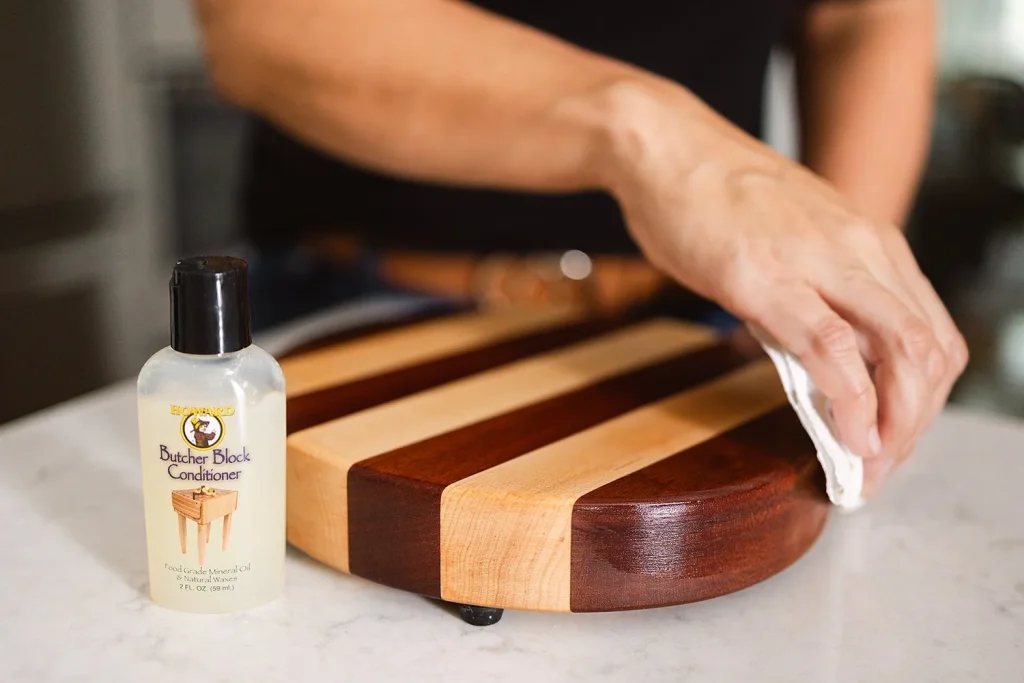
Your cutting board is one of the most used tools in your kitchen, but have you ever stopped to think about how to keep it in top shape? Using mineral oil on your cutting board is a simple step that can make a huge difference in its durability and appearance.
If you want to protect your board from cracks, stains, and bacteria, this guide will show you exactly how to apply mineral oil the right way. Keep reading, and you’ll learn the easy tips and tricks to keep your cutting board looking new and lasting longer.
Choosing The Right Mineral Oil
Mineral oil keeps your cutting board safe and clean. It prevents wood from drying and cracking.
Picking the right mineral oil is important. It helps protect your board and your food.
Food-grade Vs. Non-food-grade Oils
Food-grade mineral oil is safe for use with food surfaces. Non-food-grade oils may contain harmful chemicals.
Only use food-grade mineral oil on cutting boards. It keeps your kitchen safe and clean.
- Food-grade oils meet safety standards for human contact
- Non-food-grade oils can cause health risks
- Food-grade oils are odorless and tasteless
Benefits Of Pure Mineral Oil
Pure mineral oil soaks into wood and seals it. This stops water and dirt from damaging the board.
It also keeps wood looking fresh and smooth. Pure mineral oil does not go rancid over time.
- Protects wood from moisture
- Prevents cracks and splits
- Safe for food contact
- Does not spoil or smell bad
Common Misconceptions
Some people think vegetable oils work as well. Vegetable oils can go bad and smell bad.
Others believe all mineral oils are the same. Only food-grade, pure mineral oil is safe for cutting boards.
- Vegetable oils can spoil and cause odors
- Non-food-grade mineral oils may be toxic
- Pure mineral oil lasts longer and protects better

Credit: www.amazon.com
Preparing Your Cutting Board
Before applying mineral oil, you must prepare your cutting board. Proper preparation keeps the wood safe and clean. It also helps the oil soak in better.
Two key steps for preparation are cleaning and drying, and sanding rough surfaces. Each step makes your board ready for oiling.
Cleaning And Drying
Wash your cutting board with warm water and mild soap. Use a soft sponge to remove food particles and stains. Avoid soaking the board in water.
- Rinse the board well to remove soap.
- Dry the board completely with a clean towel.
- Let it air dry standing up to avoid moisture buildup.
- Do not use a dishwasher; it can damage the wood.
Sanding Rough Surfaces
If your board feels rough or has small scratches, sanding will smooth it. Use fine-grit sandpaper for the best results.
| Sandpaper Grit | Use |
| 120-150 | Remove deep scratches and rough areas |
| 220-320 | Finish with a smooth surface |
After sanding, wipe the board with a damp cloth to remove dust. Let it dry before applying mineral oil.
Applying Mineral Oil
Mineral oil keeps your cutting board safe and looking good. It helps stop wood from drying out and cracking. Regular oiling can extend your board’s life.
Use food-grade mineral oil made for kitchen use. This guide shows you how to apply it properly.
Tools Needed
- Food-grade mineral oil
- Clean, lint-free cloth or paper towels
- Plastic or silicone brush (optional)
- Clean workspace
- Gloves (optional)
Step-by-step Application
- Wash and dry your cutting board completely.
- Pour a small amount of mineral oil onto the surface.
- Use a cloth or brush to spread oil evenly over all sides.
- Let the oil soak into the wood for at least 20 minutes.
- Wipe off any excess oil with a clean cloth.
- Allow the board to dry overnight before use.
How Much Oil To Use
| Board Size | Amount of Mineral Oil |
|---|---|
| Small (up to 8×10 inches) | 1 to 2 tablespoons |
| Medium (up to 12×18 inches) | 2 to 4 tablespoons |
| Large (over 18 inches) | 4 to 6 tablespoons |

Credit: www.amazon.ca
Frequency Of Oil Treatments
Keeping your cutting board well-oiled helps it last longer. Regular oil treatments protect the wood from drying out and cracking. The frequency depends on how often you use your board.
Oiling also keeps the surface smooth and safe for food preparation. Let’s explore signs that show your board needs oiling and tips for seasonal care.
Signs Your Board Needs Oiling
Watch for these signs to know when your board needs a fresh coat of mineral oil:
- The wood looks dry or dull
- Water beads disappear quickly instead of sitting on the surface
- Small cracks or splits appear on the board
- The surface feels rough or uneven
- Food stains soak into the wood easily
Seasonal Maintenance Tips
Oiling your cutting board regularly each season keeps it in good shape. Here is a simple guide for seasonal care:
| Season | Maintenance Tips | Frequency |
|---|---|---|
| Spring | Clean deeply and apply mineral oil to repair winter dryness | Once |
| Summer | Oil after heavy use to prevent cracks from heat and dryness | Every 4-6 weeks |
| Fall | Prepare board for colder months with a fresh oil coat | Once |
| Winter | Oil if the board feels dry due to indoor heating | Every 6-8 weeks |
Additional Care Tips
Mineral oil keeps your cutting board strong and looking good. Proper care helps the board last longer. Follow these tips to protect your board from damage.
These care steps are easy to do and make a big difference. Learn how to avoid water damage, use beeswax for protection, and store your board correctly.
Avoiding Water Damage
Water can cause wood to crack or warp. Avoid soaking your cutting board in water. Clean it with a damp cloth and dry it right away. Do not put it in the dishwasher.
- Wash board with mild soap and warm water
- Rinse quickly and do not soak
- Dry board with a towel immediately after washing
- Stand board upright to air dry completely
Using Beeswax For Extra Protection
Beeswax adds a strong layer that seals the wood. It helps keep moisture out and keeps the board smooth. Apply beeswax after the mineral oil dries.
- Rub a small amount of beeswax on the board surface
- Use a soft cloth to spread evenly
- Let the wax sit for a few hours or overnight
- Buff the board with a clean cloth to shine
Proper Storage Practices
Store your cutting board in a dry place. Avoid spots near heat or direct sunlight. Keep the board upright or flat with good air flow.
| Storage Tip | Why It Helps |
| Keep board upright | Allows air to dry both sides |
| Store in cool, dry place | Prevents warping and cracking |
| Avoid direct sunlight | Stops wood from drying out too fast |
| Do not stack heavy items on board | Keeps board shape intact |
Troubleshooting Common Issues
Mineral oil helps protect cutting boards but issues can still happen. Stains, odors, cracks, and splits may appear over time.
Fixing these problems early keeps your board safe and looking good. Follow simple tips to solve common troubles.
Dealing With Stains And Odors
Stains and odors often come from food and moisture. Cleaning and oiling your board regularly can prevent them.
- Sprinkle coarse salt on the board and scrub with a lemon half to remove stains.
- Use a mixture of baking soda and water as a paste to absorb odors. Let sit for 10 minutes, then rinse.
- Avoid soaking the board in water to stop odors and mold growth.
- Apply mineral oil after cleaning to seal the surface and block stains and smells.
Repairing Cracks And Splits
Cracks and splits can let bacteria grow. Fix small cracks quickly to avoid bigger damage.
| Issue | Cause | Repair Method |
| Small cracks | Drying or impact | Fill with food-safe wood glue and clamp until dry |
| Splits | Excessive moisture changes | Sand edges smooth and reapply mineral oil |
| Deep cracks | Neglect or heavy damage | Replace the board if repair is unsafe |

Credit: www.slightlycrookedworkshop.com
Frequently Asked Questions
What Is Mineral Oil For Cutting Boards?
Mineral oil is a food-safe oil used to protect cutting boards. It helps prevent cracking and warping by sealing the wood. Regular application maintains the board’s longevity and appearance.
How Often Should I Oil My Cutting Board?
It’s recommended to oil your cutting board once a month. This regular maintenance keeps the wood hydrated and prevents damage. More frequent use might require additional applications.
How Do I Apply Mineral Oil To A Cutting Board?
Clean the board thoroughly, then apply a generous amount of mineral oil. Use a clean cloth to spread it evenly. Let the oil soak in for several hours, then wipe off excess.
Can I Use Any Oil On My Cutting Board?
No, not all oils are suitable. Use only food-grade mineral oil. Other oils can go rancid or damage the wood. Avoid vegetable or olive oil for this purpose.
Conclusion
Keeping your cutting board oiled protects it from cracks and stains. Apply mineral oil regularly to keep the wood fresh and smooth. This simple step helps your board last longer and stay safe for food. Clean the board well before oiling to avoid trapping dirt.
Let the oil soak in fully for best results. With a little care, your cutting board will stay strong and beautiful. A well-maintained board makes cooking more enjoyable every day. Easy to do, worth the effort.