Moving your washer and dryer can feel like a huge challenge, especially when you don’t have a dolly. You might worry about damaging your floors, straining your back, or getting stuck halfway through.
But what if you could move these heavy appliances safely and easily without special equipment? You’ll discover simple, practical tips that make the job much less stressful. Keep reading, and you’ll learn how to protect your home and yourself while moving your washer and dryer like a pro.
Prepare Your Space
Moving a washer and dryer without a dolly needs careful planning. Preparing your space helps make the process safer and easier.
Clear paths, check measurements, and protect your floors and walls before moving the appliances.
Clear The Pathway
Remove any furniture, rugs, or obstacles along the route. This makes moving the washer and dryer smooth and prevents accidents.
Make sure the pathway is wide enough and free from anything that could cause tripping or damage.
Measure Doorways And Hallways
Measure the width of doorways and hallways. Ensure the washer and dryer can fit through without getting stuck.
- Measure the appliance width and height
- Compare with doorway and hallway sizes
- Plan for turning corners or tight spaces
Protect Floors And Walls
Cover floors with blankets or cardboard to avoid scratches. Use corner protectors or padding on walls near the moving path.
- Use thick blankets or cardboard on floors
- Apply padding on wall corners and edges
- Lift appliances carefully to prevent damage
Gather Necessary Tools
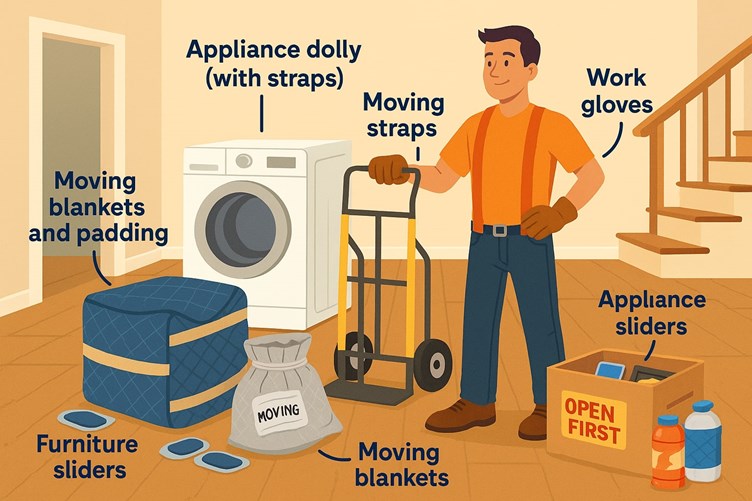
Moving a washer and dryer without a dolly can be tricky. You need the right tools to make it easier and safer. This guide helps you prepare for the move with simple tools.
Gathering these tools before you start will protect your floors and reduce the chance of injury. Read on to learn about useful alternatives to a dolly.
Use Moving Straps
Moving straps help you lift and carry heavy appliances with less effort. They wrap around the washer or dryer and give you better control.
- Choose straps with padded handles for comfort.
- Secure the straps tightly around the appliance.
- Work with a partner to share the load evenly.
- Lift with your legs, not your back, to avoid injury.
Grab Furniture Sliders
Furniture sliders make it easy to move heavy machines across floors. They reduce friction and protect your flooring from scratches.
| Type of Slider | Best For | Floor Compatibility |
| Felt Sliders | Wood Floors | Hardwood, Laminate |
| Plastic Sliders | Carpeted Floors | Low-pile Carpet |
| Rubber Sliders | Tile Floors | Tile, Vinyl |
Place sliders under each corner of the appliance. Push gently and move the washer or dryer to its new spot.
Consider A Hand Truck Alternative
If you do not have a dolly, a hand truck can help move your washer or dryer. It offers better support and balance during the move.
- Secure the appliance with straps to the hand truck.
- Keep the appliance tilted back slightly for balance.
- Move slowly to avoid tipping or damage.
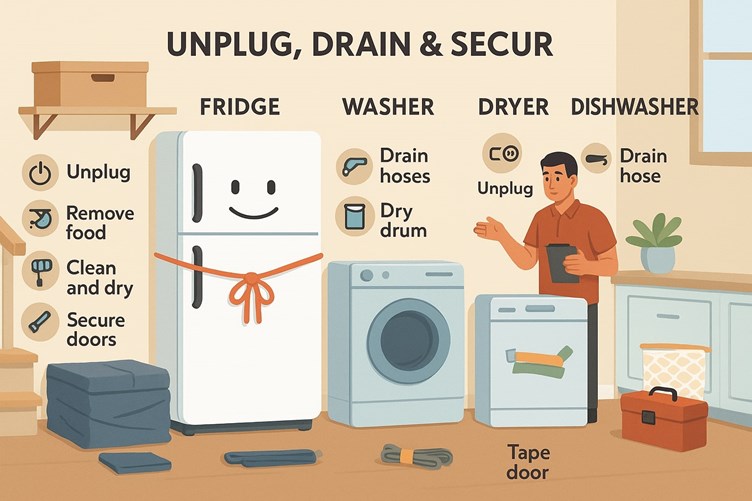
Disconnect And Secure Appliances
Moving your washer and dryer without a dolly needs care. Disconnecting and securing them prevents damage. Follow clear steps to prepare the appliances safely.
This guide covers turning off water and power, draining washer hoses, and wrapping loose parts. Each step helps protect your machines and your home.
Turn Off Water And Power
Always stop the water and electricity before moving your washer and dryer. This avoids leaks and electric shocks. Locate the main water valve and power switch for each appliance.
- Turn off the water supply valves behind the washer.
- Unplug the washer and dryer from the power outlets.
- Check if the dryer uses gas. If yes, close the gas valve carefully.
Drain Washer Hoses
Removing water from the hoses prevents spills during the move. Drain each hose fully to keep your floor dry and avoid damage to the appliance.
- Place a bucket or towel under the hose ends.
- Disconnect hoses from the back of the washer.
- Let water drain completely into the bucket.
- Check the hoses for cracks or leaks before moving.
Wrap And Tape Loose Parts
Loose parts can break or get lost during moving. Secure these parts to keep everything together and safe.
| Loose Part | How to Secure |
|---|---|
| Washer power cord | Wrap neatly and tape to the back of the washer |
| Dryer vent hose | Fold and tape it to the dryer |
| Water hoses | Wrap together and tape to the washer |
| Instruction manuals | Place in a plastic bag and tape to the appliance |

Credit: www.youtube.com
Lift Safely With A Partner
Moving a washer and dryer can be challenging without a dolly. It is crucial to lift safely with a partner to prevent injury. This guide will help you manage the task effectively.
By following these steps, you can ensure that both you and your partner stay safe while moving these heavy appliances.
Use Proper Lifting Techniques
Proper lifting techniques are essential for avoiding injury. Always bend your knees, keep your back straight, and lift with your legs.
- Stand close to the washer or dryer.
- Bend at your knees, not your waist.
- Keep the load close to your body.
- Lift with your legs, not your back.
- Communicate with your partner before lifting.
Coordinate Movements
Coordination with your partner is key to moving appliances smoothly. Make sure you both know the plan before starting.
Take Breaks To Avoid Injury
Taking breaks is important to avoid strain and fatigue. Resting helps maintain strength and focus during the move.
| Activity | Recommended Break Time |
| Lifting | 5 minutes every 15 minutes |
| Moving | 10 minutes every 30 minutes |
| Loading | 5 minutes every 10 minutes |
Slide And Roll Methods
Moving a washer and dryer without a dolly can be tricky. Slide and roll methods make it easier.
These techniques reduce the risk of damage to your appliances and floors.
Use Furniture Sliders Underneath
Furniture sliders help glide heavy items across floors. Place them under each corner of your appliance.
- Lift each corner of the washer or dryer slightly.
- Slide a furniture slider under each lifted corner.
- Ensure the sliders are positioned evenly.
Roll On Towels Or Blankets
Towels or blankets provide a smooth surface to roll appliances. They protect both the floor and the machine.
Move Slowly And Carefully
Patience is key when moving heavy appliances. Quick moves can cause damage.
| Action | Reason |
| Move Slowly | Prevents slipping |
| Check Alignment | Ensures balance |
| Take Breaks | Reduces fatigue |
Credit: www.imoving.com
Navigating Stairs And Tight Spaces
Moving a washer and dryer without a dolly can be hard. Stairs and tight spaces make it tougher. You need to be careful and plan well.
This guide shows how to move these heavy machines safely. It focuses on lifting, using spotters, and planning each step.
Lift With Extra Support
Always lift the washer and dryer with help. Use strong friends or family to share the weight. This prevents injury and damage.
Keep your back straight and bend your knees. Lift slowly and carefully. Hold the machine close to your body for balance.
Use Spotters For Guidance
Spotters watch and guide while you move the machines. They help avoid bumps and falls. Spotters keep an eye on stairs and tight corners.
- One spotter leads in front to check the path
- One spotter stays behind to help with balance
- Spotters give clear signals for stopping or turning
Plan Each Step Ahead
Think about each step before moving. Check the stairs and narrow spaces for obstacles. Clear the path to make it easier.
Talk with your helpers about the plan. Decide who moves first and where to rest if needed. Take breaks to avoid tiredness.
Reinstall And Test Appliances
After moving your washer and dryer without a dolly, you need to reinstall them carefully. Proper setup helps your appliances work well and last longer.
Follow simple steps to reconnect, level, and test your appliances before using them fully.
Reconnect Water And Power
Start by reconnecting the water hoses to the washer’s back. Make sure the hot and cold hoses are attached to the right valves.
Plug in both washer and dryer into grounded power outlets. Avoid using extension cords to prevent electrical issues.
- Attach water hoses tightly to prevent leaks
- Check that hoses are not twisted or bent
- Use proper electrical outlets for each appliance
- Ensure power cords are secure and undamaged
Level The Appliances
Leveling your washer and dryer keeps them stable during use. It reduces noise and stops shaking or moving.
Use a bubble level on top of each appliance. Adjust the feet by turning them clockwise or counterclockwise until the appliance is even.
- Check front-to-back and side-to-side levels
- Tighten lock nuts on feet after adjustment
- Make small adjustments to avoid wobbling
Run A Test Cycle
Run a short wash cycle to check the washer. Watch for leaks, unusual noises, or vibrations.
For the dryer, run a drying cycle with a few damp clothes. Check that it heats up and spins properly.
- Listen for any strange sounds during operation
- Look for water leaks around hoses and connections
- Make sure the dryer drum turns smoothly
- Confirm that the dryer heats as expected
Credit: www.nationalremovalist.com.au
Safety Tips And Common Mistakes
Moving a washer and dryer without a dolly can be tricky. You must be careful to avoid injuries and damage.
This guide shares safety tips and common mistakes to help you move these heavy appliances safely.
Avoid Overexertion
Washers and dryers are heavy. Trying to lift them alone can cause serious injury. Always ask for help.
Use your legs, not your back, to lift. Keep your back straight and bend at the knees.
- Lift with your legs, not your back
- Work with a partner to share the weight
- Take breaks if you feel tired
Prevent Floor Damage
Moving heavy machines can scratch or dent floors. Protect your floor before moving the appliances.
Use thick blankets or cardboard under the washer and dryer to avoid damage when sliding them.
- Place blankets or cardboard under appliances
- Lift slightly when moving instead of dragging
- Check the floor path for obstacles
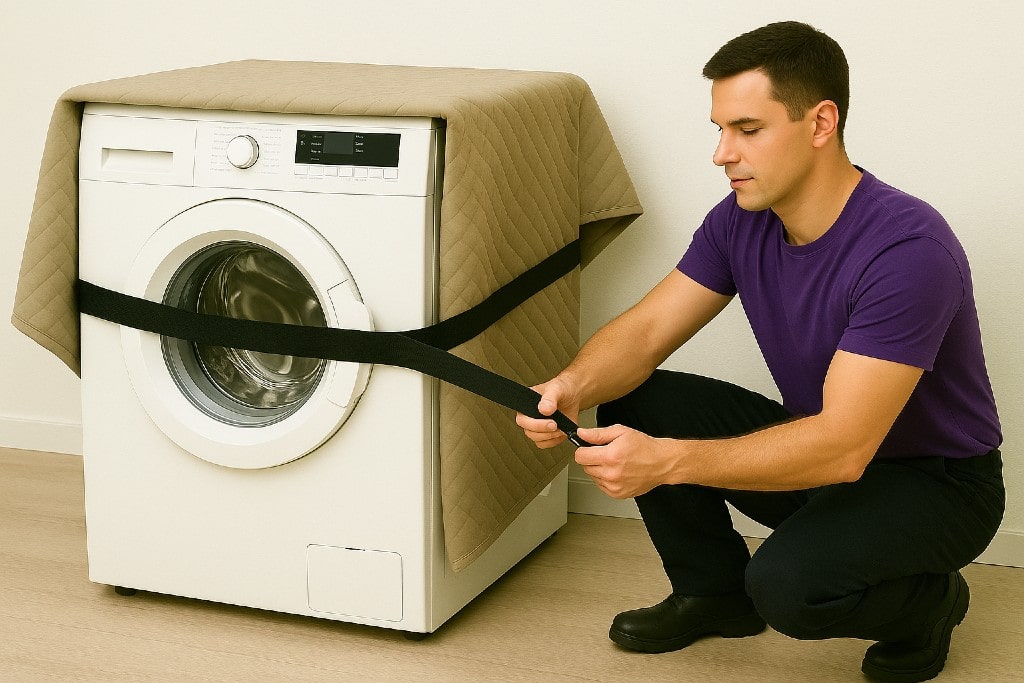
Secure Appliances During Transport
Washers and dryers have parts that can move during transport. Secure them to prevent damage.
Use straps or ropes to hold the appliances in place. Keep them upright to avoid leaks or issues.
- Tie appliances down with strong straps
- Keep washers and dryers upright while moving
- Remove loose items from inside the machines
Frequently Asked Questions
How Can I Move A Washer Without A Dolly?
To move a washer without a dolly, use furniture sliders or thick blankets. Lift carefully with a partner and slide it gently across smooth floors to avoid damage.
What Tools Help Move A Dryer Safely Without A Dolly?
Use furniture sliders, blankets, or a hand truck for moving a dryer safely. Always unplug and secure cords before lifting or sliding the appliance.
Is It Possible To Move Washer And Dryer Alone?
Moving a washer and dryer alone is risky due to weight and size. It’s safer to have at least one helper to prevent injury and damage.
How Do I Protect Floors When Moving Washer Without Dolly?
Place thick blankets or furniture sliders under the washer’s feet to protect floors. Move slowly to avoid scratches, dents, or scuff marks on hardwood or tile.
Conclusion
Moving a washer and dryer without a dolly is doable with care and planning. Use blankets or sliders to protect floors and appliances. Ask a friend for help to make lifting safer. Take your time to avoid damage or injury.
Small steps lead to a smooth move. Following these tips keeps your appliances safe and your home intact. Keep safety first, and the task will feel easier than you think.