Are you ready to improve your fishing skills and catch more fish? Knowing how to put a hook on a fishing line is one of the most important steps to get started.
It might seem tricky at first, but with the right technique, you’ll be able to tie a strong, secure knot quickly and confidently. In this guide, you’ll learn simple, step-by-step instructions that anyone can follow. Keep reading, and soon you’ll be prepared to make every cast count!
Credit: www.beadinggem.com
Choosing The Right Hook
Picking the right hook is key for fishing success. The hook helps catch and hold the fish safely.
Different hooks fit different fish and fishing styles. Learn how to choose the best one.
Types Of Fishing Hooks
Fishing hooks come in many shapes and styles. Each type works better for some fish or bait.
- J-Hooks: Classic shape, good for many fish
- Circle Hooks: Reduce fish injury, good for catch and release
- Treble Hooks: Three points, used with lures
- Siwash Hooks: Single hook, often replace treble hooks
- Bait Hooks: Designed to hold live or cut bait well
Choose a hook type that matches your bait and fishing goal.
Matching Hook Size To Fish
Hook size matters. A hook that is too big or small can lose fish or scare them away.
Match the hook size to the fish you want to catch. Small fish need smaller hooks.
| Fish Size | Hook Size Range |
|---|---|
| Small fish (bluegill, perch) | Size 8 to 14 |
| Medium fish (bass, trout) | Size 4 to 8 |
| Large fish (catfish, pike) | Size 1/0 to 5/0 |
Use the right hook size to improve your catch rate and keep fish safe.

Credit: www.reddit.com
Selecting The Fishing Line
Choosing the right fishing line is important to catch fish easily. The line must be strong and fit your fishing style.
This guide helps you pick the best fishing line by looking at strength, material, and thickness.
Line Strength And Material
Fishing lines come in different strengths and materials. Strength tells you how much weight the line can hold before breaking.
- Monofilament lines are flexible and cheap.
- Fluorocarbon lines are less visible underwater.
- Braided lines are very strong and thin.
- Choose strength based on the fish size you want to catch.
Line Thickness Considerations
Thickness affects how the line moves and its strength. Thin lines cast farther and are less visible.
| Thickness (inches) | Strength (lbs) | Best Use |
| 0.008 – 0.012 | 2 – 6 | Small fish, light tackle |
| 0.013 – 0.018 | 6 – 12 | Medium fish, general use |
| 0.019 – 0.025 | 12 – 25 | Large fish, heavy tackle |
Preparing The Line
Getting your fishing line ready is the first step to a successful fishing trip. A well-prepared line ensures that your hook stays secure and your catch doesn’t slip away.
In this guide, we will walk through the essential steps in preparing your line, from cutting it to moistening it for knotting.
Cutting The Line To Length
Cutting your line to the right length is important for control and efficiency. It should not be too long or too short.
- Measure the length of the line you need.
- Use sharp scissors or a line cutter to make a clean cut.
- Double-check the length for your fishing needs.
Moistening The Line For Knotting
Moistening the line helps in creating tight knots. It reduces friction and prevents the line from weakening.
Popular Knots For Hook Tying
Tying a strong knot is key to keeping your hook secure. Different knots work better with certain lines and hooks. Learning a few popular knots helps improve your fishing success.
Here are three common knots used by anglers to tie hooks to fishing lines. Each knot has its own way to make a reliable connection.
Improved Clinch Knot
The Improved Clinch Knot is simple and strong. It works well with most fishing lines and hooks. This knot is good for small to medium-sized fish.
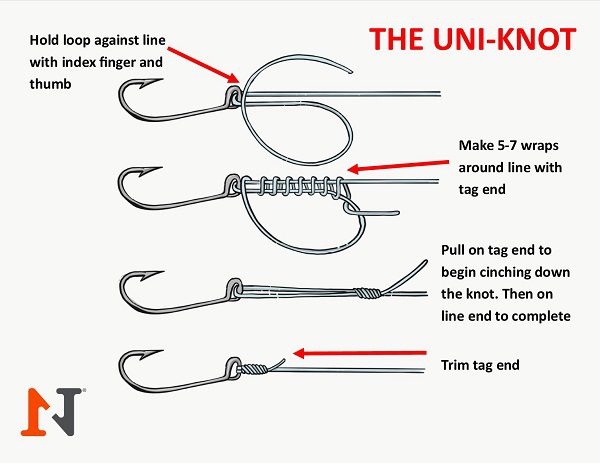
- Thread the line through the hook eye.
- Wrap the tag end around the main line 5 to 7 times.
- Pass the tag end through the small loop near the eye.
- Then pass it through the big loop just made.
- Pull tight and trim the extra line.
Palomar Knot
The Palomar Knot is very strong and easy to tie. It keeps the hook straight and holds well under pressure. Use it with braided or monofilament lines.
| Step | Action |
| 1 | Double about 6 inches of line and pass through the hook eye. |
| 2 | Tie a loose overhand knot with the doubled line. |
| 3 | Pass the hook through the loop of the overhand knot. |
| 4 | Pull both ends to tighten the knot snugly. |
Snell Knot
The Snell Knot is popular for attaching hooks in line with the shank. It is strong and keeps the hook point up for better hooking.
Use this simple guide to tie a Snell Knot:
- Pass the tag end through the hook eye from front to back.
- Lay the tag end along the hook shank.
- Wrap the tag end around the shank and main line 6 to 8 times.
- Pull the tag end to tighten the wraps down.
- Trim the excess line close to the knot.
Step-by-step Knot Tying
Putting a hook on a fishing line is easy if you know the right knot. The knot must be strong to hold the fish.
This guide shows simple steps to tie a knot that secures the hook well.
Threading The Hook
First, pass the end of the fishing line through the eye of the hook. Make sure the line goes all the way through.
Pull about six inches of line through the eye to have enough to work with when tying the knot.
Forming The Knot
Hold the hook and the main line in one hand. Take the tag end and wrap it around the main line five times.
- Make a loop by bringing the tag end over the main line.
- Wrap the tag end around the main line inside the loop.
- Repeat the wrapping five times for a strong knot.
- Pass the tag end through the loop near the hook eye.
- Pull the tag end slightly to start tightening the knot.
Securing And Tightening
Moisten the knot with water or saliva. This stops friction and helps the knot tighten smoothly.
| Action | Tip |
|---|---|
| Tighten the knot | Pull the main line slowly to avoid slipping. |
| Check the knot | Make sure the coils are neat and snug. |
| Trim the tag end | Cut close but leave a small tail to prevent slipping. |
Your hook is now tied firmly to the line. Check the knot before fishing to avoid losing fish.

Credit: www.youtube.com
Checking Knot Strength
After tying a hook to your fishing line, it is important to check the knot strength. A strong knot prevents the hook from slipping off.
Testing the knot ensures your fishing line stays secure during casting and catching fish.
Testing For Slippage
Pull the fishing line hard near the knot to test its hold. If the knot moves or loosens, it is slipping.
Try pulling the line several times to check if the knot stays tight under pressure.
- Hold the hook firmly
- Pull the line away from the hook
- Look for any movement in the knot
- Repeat pulls to ensure knot stability
Re-tying If Necessary
If the knot slips or feels weak, cut it off and re-tie the hook. Use a simple knot like the improved clinch knot.
Make sure to moisten the line before tightening the knot. This prevents damage and helps the knot hold better.
- Cut the old knot off
- Thread the line through the hook eye
- Wrap the line around itself 5-7 times
- Pass the line through the loop near the eye
- Moisten and pull the knot tight
Tips For Hook Placement
Placing the hook correctly on a fishing line helps catch fish better. It also keeps your bait secure and natural-looking.
Follow simple tips to set the hook right. This makes fishing easier and more fun.
Positioning For Baiting
Place the hook so the bait looks real and moves well in the water. The hook should hold the bait firmly but not hide it.
For live bait, hook it through parts that keep it alive longer. For soft bait, insert the hook to keep it straight and natural.
- Hook through the lips or back for live bait
- Insert hook along the body for soft bait
- Make sure the hook point is visible
- Avoid piercing the bait too deep
Avoiding Line Twists
Line twists happen when the hook or bait spins in the water. Twists can cause tangles and weak spots in the line.
Use the right knot and position the hook to reduce spinning. This keeps the line smooth and strong.
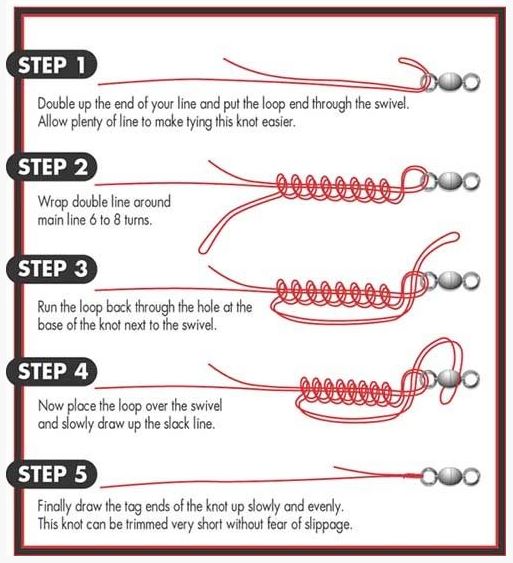
- Use swivels to stop line twisting
- Attach the hook with strong, simple knots
- Check the hook placement to prevent spinning
- Keep the line tight but not too tight
Frequently Asked Questions
How Do I Tie A Hook To A Fishing Line?
To tie a hook, use the improved clinch knot. Thread the line through the hook eye, wrap it five times, then thread back through the loop and tighten. This knot is strong and reliable for most fishing situations.
What Is The Best Knot For Fishing Hooks?
The improved clinch knot and Palomar knot are best. They provide strong, secure connections between line and hook. Both knots are easy to tie and widely used by anglers worldwide.
How Tight Should The Fishing Knot Be?
The fishing knot should be tight enough to hold the hook firmly. Pull the line slowly to avoid breaking. A snug knot ensures the hook won’t slip during casting or catching fish.
Can I Use Any Fishing Line To Tie Hooks?
Yes, but choose line strength based on fish size. Monofilament, fluorocarbon, and braided lines work well. Match the line type and test strength for the best fishing experience.
Conclusion
Putting a hook on a fishing line is simple with practice. Take your time to tie the knot tightly. Check the hook and line for any damage before fishing. Use the right knot to keep the hook secure. This skill helps catch more fish and makes fishing fun.
Keep practicing to improve your technique each time. Soon, it will become second nature. Enjoy your fishing trips with confidence and success.