Are you struggling to get your fishing line to sink just right? Knowing how to put weights on a fishing line can make all the difference between a slow day and a great catch.
The right weight helps your bait reach the perfect depth, stays steady in the water, and improves your chances of hooking fish. In this guide, you’ll learn simple, effective ways to add weights to your line, whether you’re fishing in a calm lake or a fast-moving river.
Keep reading, and soon you’ll be casting with confidence and catching more fish.
Choosing The Right Weights
Adding weights to your fishing line helps control the bait depth and casting distance. Picking the right weights makes fishing easier and more effective.
This guide explains different types of fishing weights, their sizes, and materials. These factors help you choose the best weights for your fishing needs.
Types Of Fishing Weights
Fishing weights come in many shapes and styles. Each type works best in certain fishing situations and water conditions.
- Split Shot:Small, round weights that clip onto the line. Good for light fishing and fine adjustments.
- Sinker:Bullet-shaped weights. Ideal for deep water and strong currents.
- Egg Sinkers:Oval weights with a hole through the center. They slide freely on the line, helping prevent fish from feeling resistance.
- Bank Sinkers:Heavy weights with a flat bottom. They hold the bait steady in fast currents or rough water.
- Pyramid Sinkers:Pointed weights that dig into the sand. Useful for surf fishing and windy conditions.
Weight Sizes And Their Uses
Choosing the right size depends on water depth, current strength, and bait weight. Using too heavy or too light weight can reduce fishing success.
| Weight Size | Best Use |
|---|---|
| 1/16 oz to 1/8 oz | Calm water, light bait, small fish |
| 1/4 oz to 1/2 oz | Moderate currents, medium bait, average depth |
| 3/4 oz and above | Strong currents, deep water, heavy bait |
Materials And Durability
Weights are made from different materials. The choice affects their durability and environmental impact.
Lead:Traditional and dense, but toxic to wildlife if lost in water.
Tungsten:Denser and smaller than lead. More expensive but eco-friendlier.
Steel and Brass:Durable and non-toxic but less dense, so larger sizes are needed.
Plastic-coated:Protects the weight and reduces line damage.

Credit: mysterytacklebox.com
Preparing Your Fishing Line
Adding weights to your fishing line helps control the bait depth. It also improves casting distance and accuracy.
Before putting weights on the line, you need to prepare it properly. This includes choosing the right line and checking its condition.
Selecting The Line Type
Choose a fishing line that matches the fish you want to catch. Different lines have different strengths and stretch levels.
Monofilament lines are flexible and easy to handle. Braided lines are stronger but less stretchy. Fluorocarbon lines are nearly invisible underwater.
- Monofilament: good for beginners and light fishing
- Braided: best for heavy fish and long casts
- Fluorocarbon: ideal for clear water and shy fish
Measuring And Cutting The Line
Measure enough line to reach your fishing spot and allow for knots and weights. Add extra length to avoid running out.
Use sharp scissors or a line cutter to make a clean cut. A clean cut helps prevent the line from fraying or weakening.
- Measure line based on fishing distance and reel size
- Cut line straight across for a clean end
- Keep extra line for tying knots and adding weights
Checking Line Strength
Check the line for any damage before adding weights. Look for frays, nicks, or weak spots that may cause breaks.
Test the line strength by pulling it gently but firmly. Replace the line if it feels weak or damaged in any area.
- Inspect the entire length of the line
- Remove damaged sections before use
- Use a line with strength matching your target fish
Attaching Weights To The Line
Adding weights to your fishing line helps the bait sink to the right depth. It also improves casting distance and stability in the water.
Different types of weights attach to the line in various ways. Choose the right type based on your fishing needs and water conditions.
Using Split Shot Weights
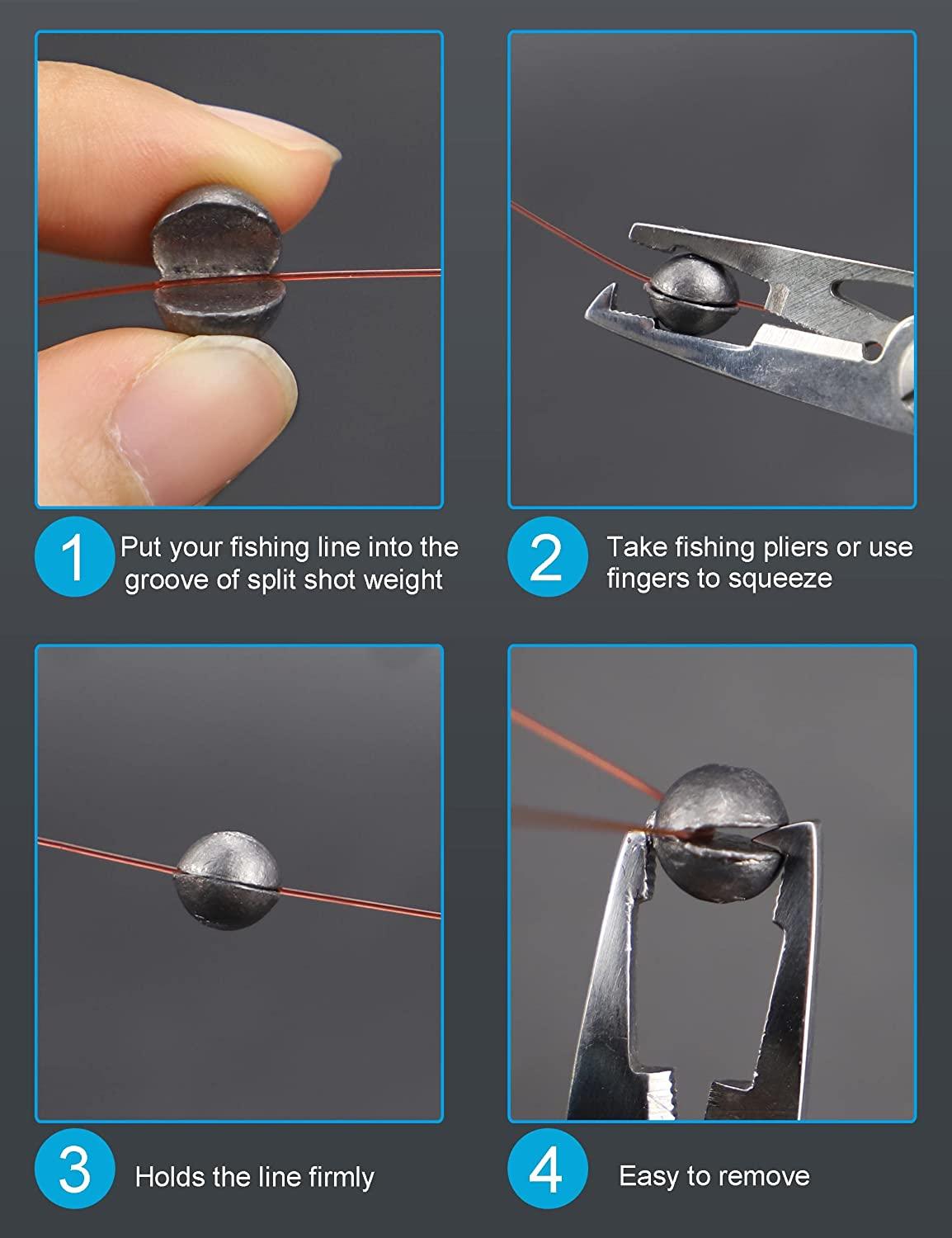
Split shot weights are small and easy to pin onto the fishing line. They pinch the line to stay in place and add a little weight without bulk.
To use a split shot, open it slightly with pliers. Place it on the line where you want the weight. Then squeeze it tight to hold firmly.
- Choose a split shot size that matches your needed weight
- Pinch it on 6 to 12 inches above the hook
- Use pliers for a secure grip
Adding Bullet Weights
Bullet weights have a pointed shape and slide onto the line easily. They are great for fishing in weeds and grass because they help the rig move smoothly.
Slide the bullet weight onto the line before tying your hook or lure. The narrow end faces the hook to reduce snags and improve casting.
- Pick a bullet weight size suitable for your rig
- Slide the weight onto the line before the hook
- Attach your hook or lure after the weight
Securing Sliding Sinkers
Sliding sinkers move freely on the line and help detect bites better. They usually require a small stopper knot or bead to keep them from sliding too far.
Thread the sliding sinker onto the line. Then add a bead and tie a stopper knot above it. This setup lets the sinker slide but stops it near the hook.
- Slide the sinker onto the main fishing line
- Add a plastic or glass bead next to the sinker
- Tie a stopper knot above the bead
- Attach the hook or rig below the stopper knot

Credit: www.youtube.com
Adjusting Weight Placement
Placing weights on a fishing line affects how your bait moves in water. Proper weight placement helps catch more fish and improves your fishing experience.
Adjusting where the weights sit on the line changes your fishing style and success. This guide explains how to place weights for different needs.
Positioning For Different Fishing Techniques
Different fishing methods need weights in various positions. Putting weights close to the hook or farther up the line changes bait action and depth.
- Bottom fishing:Place weights near the hook to keep bait near the lake or river bottom.
- Float fishing:Put weights above the float to balance it and keep bait suspended at the right depth.
- Drift fishing:Spread weights along the line to control the drift speed and keep bait natural.
- Casting:Add weights farther from the hook to improve casting distance and control.
Balancing Weight For Casting Distance
Good weight balance helps you cast farther without losing control. Adding the right amount and placing it well improves your throw and bait reach.
| Weight Placement | Effect on Casting |
| Close to hook | Less casting distance, better bait control |
| Mid-line | Balanced distance and control |
| Far from hook | Longer casting distance, less control |
Avoiding Line Damage
Weights can hurt your fishing line if placed wrong. Avoid knots and sharp edges that cut or weaken the line.
Tips to protect your line from damage:
- Use rubber sleeves or beads between weights and knots
- Choose smooth weights without sharp parts
- Check your line often for wear or cuts
- Replace weights that show rust or roughness
Casting Tips With Weighted Lines
Adding weights to your fishing line can improve your casting experience. Weighted lines help control how far and where your bait lands.
This guide covers simple tips to improve accuracy, increase distance, and handle wind and current with weighted lines.
Improving Casting Accuracy
Weighted lines give better control over your cast. Use lighter weights for short, precise casts. Heavier weights help when aiming at specific spots.
- Choose the right weight for your target distance.
- Keep your rod tip steady during the cast.
- Practice smooth and even casting motions.
- Adjust your stance to improve aim.
Maximizing Distance
Heavier weights help your bait travel farther. Use a strong rod and fast casting speed to boost distance.
| Weight Size | Ideal Casting Distance |
| 1/8 oz | Up to 30 feet |
| 1/4 oz | 30 to 50 feet |
| 1/2 oz | 50 to 80 feet |
| 3/4 oz | 80+ feet |
Always match your weight to the rod’s rating to avoid damage. Cast smoothly to keep the line tight and straight.
Handling Wind And Current
Wind and current can push your bait off course. Use heavier weights to keep the line steady in tough conditions.
- Use weights heavier than normal for better control.
- Cast slightly upstream or into the wind.
- Keep your line tight to feel resistance.
- Adjust your casting angle to compensate for drift.
Credit: www.gosupps.com
Maintenance And Safety
Putting weights on a fishing line helps control the bait’s depth. Proper care keeps your gear safe and lasts longer.
Always follow safety tips to avoid accidents with fishing weights. Regular checks can prevent line damage.
Removing Weights After Fishing
Remove weights carefully to avoid tangling or breaking the line. Use pliers if weights are stuck.
- Hold the line steady before removing weights.
- Slide weights off gently without sharp pulls.
- Check for any damage near the weight attachment point.
- Store weights in a safe container to avoid loss.
Inspecting Line For Wear
Regularly check your fishing line for signs of wear or damage. This prevents unexpected breaks during fishing.
| Signs of Wear | What to Do |
| Frays or cuts | Cut out damaged section |
| Discoloration | Replace line if weak |
| Stiff or brittle spots | Replace line completely |
Safe Handling Of Weights
Handle fishing weights with care to avoid injury or damage. Keep them away from children and pets.
- Wear gloves when attaching or removing weights.
- Keep weights organized in a tackle box.
- Do not throw weights; place them gently.
- Check weights for cracks before use.
Frequently Asked Questions
What Types Of Weights Work Best For Fishing Lines?
Split shot, egg sinkers, and bullet weights are popular choices. Each suits different fishing conditions and target species. Choose based on water depth, current strength, and lure type for optimal casting and bait presentation.
How Do I Attach Weights To My Fishing Line?
Pinch split shot weights onto the line using pliers, about 6-12 inches above the hook. For other weights, thread the line through the weight’s hole or use a sliding rig. Secure placement ensures better casting and bait control.
Why Is Weight Placement Important On A Fishing Line?
Proper weight placement controls bait depth and movement. Placing weights too close or far from the hook affects lure action and bite detection. Correct positioning improves cast distance and increases your chances of catching fish.
Can I Use Multiple Weights On One Fishing Line?
Yes, using multiple weights helps reach deeper waters or counter strong currents. However, balance is key to avoid scaring fish or reducing bait movement. Adjust the number and size based on fishing conditions and target species.
Conclusion
Putting weights on a fishing line is simple. It improves your fishing success. Choose the right type and size of weight. Attach it securely to your line. Balance is key. Too much weight can scare fish. Too little won’t sink your bait.
Practice makes perfect. Experiment with different weights. Notice how fish react. Fishing is about patience and learning. Enjoy the process. With time, you’ll find what works best. Happy fishing!