
Is your car’s air conditioner not cooling like it used to? You’re not alone.
Many drivers face this problem, especially during hot days. The good news is, you don’t always need to rush to a mechanic or spend a lot of money. You can learn how to refill your car air conditioner yourself, saving time and cash.
In this guide, you’ll discover simple steps to bring back that refreshing cool air inside your car. Keep reading—you’ll be surprised how easy it is to get your AC working like new again!
Signs Your Ac Needs Refill
Your car air conditioner needs enough refrigerant to cool properly. Over time, the AC may lose refrigerant and stop working well.
Here are common signs that show your AC needs a refill to keep your car cool and comfortable.
Reduced Cooling Performance
If your car’s AC blows warm or less cold air, it may need a refrigerant refill. This happens when the refrigerant level is low.
- Air feels warmer than usual
- Cooling takes longer than before
- Fan runs but air is not cold
Unusual Noises
Strange sounds coming from the AC system can mean trouble. Low refrigerant causes the compressor to work harder, making noise.
Common noises include:
- Hissing or bubbling sounds
- Loud clicking or rattling
- Whining from the compressor
Visible Leaks
Leaks in the AC system let refrigerant escape. You might see oil or dye stains near the AC hoses or compressor.
| Leak Location | What to Look For |
| Hoses | Wet spots, oil stains, or cracks |
| Compressor | Oily residue or colored dye marks |
| Connections | Signs of moisture or refrigerant dye |

Credit: www.youtube.com
Tools And Materials Required
Refilling your car air conditioner needs the right tools and materials. Using proper items helps keep the system working well.
Below are key items you need to gather before starting the refill process.
Refrigerant Types
Choose the correct refrigerant type for your car model. Most modern cars use R134a or R1234yf refrigerants.
| Refrigerant | Common Use | Note |
| R134a | Older vehicles | Still widely used |
| R1234yf | Newer vehicles | More eco-friendly |
| R12 | Very old cars | Phased out due to ozone damage |
Safety Gear
Wear safety gear to protect yourself during the refill. Refrigerants can cause cold burns and harm if handled wrongly.
- Safety glasses to protect your eyes
- Gloves to shield your hands from cold and chemicals
- Long sleeves to avoid skin contact
- Respirator mask if working in a poorly ventilated area
Additional Equipment
You need some tools and devices to refill the air conditioner efficiently and safely.
- Refrigerant recharge hose with gauge
- Vacuum pump to remove air and moisture
- Manifold gauge set to monitor pressure
- Leak detector to find leaks before refilling
- Thermometer to check temperature changes
Preparing Your Car
Before refilling your car’s air conditioner, you need to prepare the vehicle carefully. Proper preparation ensures safety and makes the process easier.
Follow simple steps to get your car ready for the AC refill. These steps help avoid damage and ensure correct refilling.
Park In A Safe Area
Find a flat and stable surface to park your car. Avoid busy roads or places with heavy traffic to stay safe.
Make sure the area has enough light so you can see the AC parts clearly. This will help you work more efficiently.
Turn Off The Engine
Switch off your car’s engine before starting the refill. This prevents accidents and protects the car’s electrical system.
Also, turn off the air conditioner and all other electrical accessories to avoid any interference during the refill.
Locate The Ac Service Ports
Look under the hood to find the AC service ports. These ports are where you connect the refill hose to add refrigerant.
There are usually two ports: one for low pressure and one for high pressure. Use the low-pressure port for refilling.
- Low-pressure port: larger, often with a cap labeled “L” or “Low”
- High-pressure port: smaller, usually labeled “H” or “High”
Checking Refrigerant Level
Checking the refrigerant level in your car’s air conditioner is important. It helps keep the system working well.
You need the right tools and know how to read the pressure gauges. This guide explains the key steps.
Using Pressure Gauges
Pressure gauges measure the refrigerant pressure inside the AC system. You attach them to the service ports.
- Locate the low and high pressure ports under the hood.
- Connect the low pressure gauge to the low side port.
- Connect the high pressure gauge to the high side port.
- Make sure the engine and AC are running during the test.
- Read the pressure values on both gauges.
Interpreting Readings
Pressure readings show if the refrigerant level is correct. Values change with temperature and engine speed.
| Pressure Gauge | Normal Range (psi) | Indicates |
| Low Side | 25 – 45 | Proper refrigerant charge |
| Low Side | Below 25 | Low refrigerant level |
| High Side | 200 – 250 | Proper refrigerant charge |
| High Side | Above 250 | Possible system blockage |
| High Side | Below 200 | Low refrigerant or compressor issue |
Refilling The Ac System
Refilling your car’s air conditioner helps it cool better. This process adds refrigerant to the AC system.
Follow safe steps to connect, add refrigerant, and monitor pressure levels.
Connecting The Recharge Hose
Find the low-pressure port on your car’s AC system. This is where you attach the recharge hose.
- Locate the port near the larger AC line
- Remove the protective cap carefully
- Attach the recharge hose firmly to avoid leaks
- Make sure the connection is secure before adding refrigerant
Adding Refrigerant Slowly
Open the refrigerant can valve slowly. Add refrigerant in small amounts to avoid overcharging.
- Hold the can upright
- Press the valve gently to release refrigerant
- Pause often to let the system adjust
- Check the temperature inside the car
- Stop adding when the air feels cool enough
Monitoring Pressure Levels
Check the AC system pressure with a gauge. Proper pressure keeps the system safe and efficient.
| Pressure (psi) | System Status |
| Below 25 | Too low – add refrigerant |
| 25 to 45 | Normal operating range |
| Above 45 | Too high – risk of damage |

Credit: www.englishclub.com
Testing The Ac After Refill
After refilling your car air conditioner, testing is important. It makes sure the system works well and cools the car properly.
Follow these simple checks to confirm the AC is performing as expected. Each step helps spot any problems early.
Turning On The Ac
Start by turning on the car engine. Then switch the AC to the highest cooling setting. Set the fan to maximum speed for quick results.
Wait a few minutes to let the system stabilize. The air should start feeling cooler from the vents.
Checking Cooling Efficiency
Measure how well the AC cools by comparing the air temperature at the vents with the outside temperature. Use a simple digital thermometer for accuracy.
- Hold the thermometer near the AC vent.
- Record the temperature after one minute of running.
- Check the outside temperature separately.
- Calculate the difference between inside vent and outside air.
A good AC system should cool the air by at least 15 degrees Fahrenheit below outside temperature.
Listening For Abnormal Sounds
Pay close attention to sounds coming from the AC system. Strange noises may indicate leaks or compressor problems.
| Sound Type | Possible Cause |
| Hissing | Refrigerant leak |
| Grinding | Compressor issue |
| Rattling | Loose parts |
| Clicking | Electrical problem |
Safety Tips And Precautions
Refilling a car air conditioner needs care and attention. Safety is important to protect yourself and the vehicle. Follow rules to avoid harm from refrigerants and tools.
This guide covers key safety tips. Learn how to handle refrigerants, avoid overfilling, and dispose of materials safely.
Handling Refrigerants Safely
Refrigerants can be harmful if not handled well. Always wear gloves and eye protection. Work in a well-ventilated area to avoid breathing in gases.
- Use proper tools made for refrigerants
- Do not inhale refrigerant vapors
- Keep refrigerants away from heat and flames
- Store refrigerants in sealed containers
- Follow instructions on refrigerant labels
Avoiding Overfilling
Too much refrigerant can damage the air conditioner system. It lowers cooling efficiency and may cause leaks or compressor failure.
| Risk | Effect | Prevention |
|---|---|---|
| Overpressure | System damage | Use correct charge amount |
| Reduced cooling | Less comfort | Check pressure gauges |
| Leaks | Environmental harm | Inspect for leaks regularly |
Disposing Of Materials Properly
Dispose of empty refrigerant cans and used parts safely. Do not throw them in regular trash. Follow local rules for hazardous waste.
- Take empty cans to recycling centers
- Use certified disposal services for refrigerants
- Do not release refrigerants into the air
- Keep disposal area clean and safe
When To Seek Professional Help
Refilling your car air conditioner can save money and time. Yet, some problems need expert care. Knowing when to call a professional keeps your AC working well.
Some issues are more than just low refrigerant. These often require tools and skills you may not have. Read on to learn signs that you need help from a mechanic.
Persistent Cooling Issues
If your car AC keeps losing cool air after a refill, it may have a leak or other problem. Simple refills may not fix it for long.
- AC blows warm or only slightly cool air
- Cooling drops quickly after a refill
- Strange noises when AC is on
- Visible leaks or oily spots near AC components
These signs mean the AC system needs a detailed check. A professional can find leaks, test pressure, and repair parts.
Complex Ac System Problems
Car AC systems have many parts working together. Some issues are too complex for DIY fixes. A professional has the tools to diagnose and fix these problems.
| Problem | Possible Cause | Why Call a Pro |
| Compressor failure | Worn or damaged compressor | Needs special tools to replace |
| Electrical issues | Blown fuses or wiring faults | Requires electrical testing |
| Blocked expansion valve | Contaminants or ice buildup | Needs system flushing |
| Faulty pressure switch | Sensor malfunction | Needs precise calibration |
Trying to fix these problems without experience can damage your AC system. Professionals ensure safe and correct repairs.
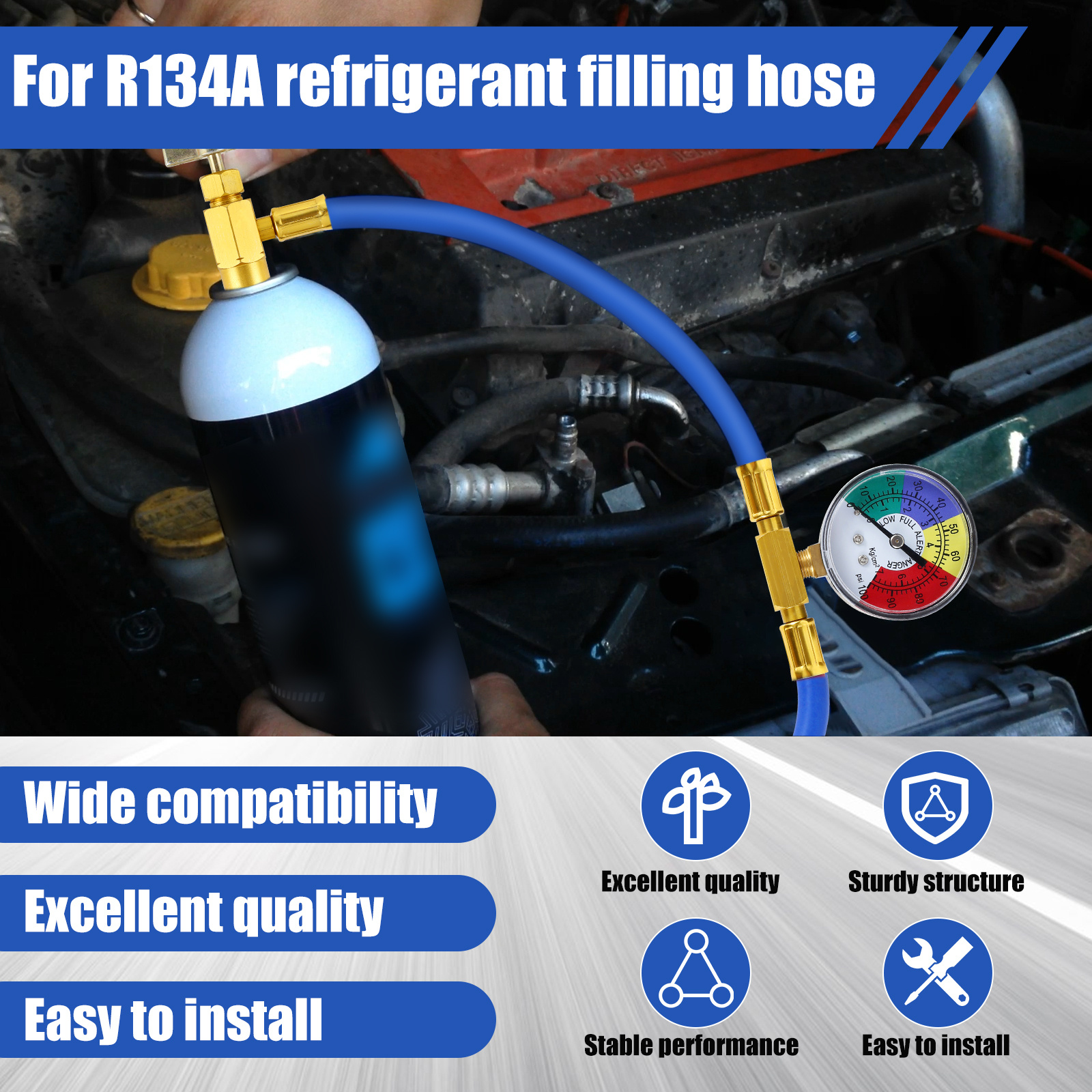
Credit: www.temu.com
Frequently Asked Questions
How Often Should I Refill Car Air Conditioner Refrigerant?
Refill your car AC refrigerant every 1-2 years or when cooling weakens. Regular checks prevent leaks and maintain efficiency. Proper refrigerant levels ensure optimal cooling and protect the compressor from damage.
Can I Refill Car Ac Refrigerant By Myself?
Yes, you can refill your car AC refrigerant if you have the right tools and follow safety instructions. However, improper handling may cause damage or leaks. Consider professional help if unsure or if your system has complex issues.
What Type Of Refrigerant Does My Car Air Conditioner Need?
Check your car’s owner manual or the label under the hood for the correct refrigerant type. Most modern cars use R-134a or R-1234yf. Using the wrong refrigerant can damage the AC system and reduce cooling performance.
How Do I Know If My Car Ac Needs A Refill?
Signs include weak cooling, warm air from vents, and unusual noises. A noticeable drop in air conditioner performance often indicates low refrigerant. Regular inspections help detect leaks and maintain proper refrigerant levels.
Conclusion
Refilling your car air conditioner keeps it cool and fresh. Check the pressure regularly to avoid problems. Use the right refrigerant type for your vehicle. Follow safety steps carefully during the refill process. Clean the system to improve air flow and comfort.
A well-maintained AC saves money and energy. Stay cool on hot days with proper care. Simple steps make a big difference in performance. Keep your car comfortable all year round.