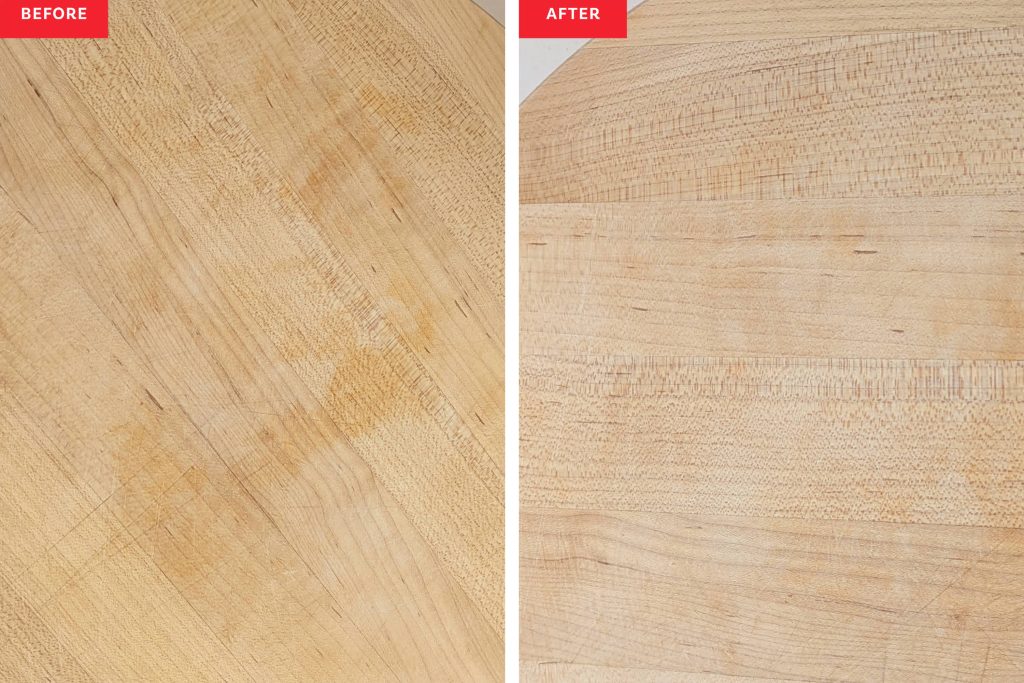
Your cutting board is one of the busiest tools in your kitchen, but are you sure it’s really clean? Wood cutting boards can hold onto bacteria and germs if not properly sanitized.
You might think washing with soap and water is enough, but there’s more you need to know to keep your board safe and your food healthy. You’ll discover simple, effective ways to sanitize your wooden cutting board, protect your family from harmful bacteria, and extend the life of your favorite kitchen companion.
Keep reading—you’ll never look at your cutting board the same way again.
Credit: www.thekitchn.com
Choosing The Right Cleaning Supplies
Cleaning wooden cutting boards needs care to keep them safe and long-lasting.
Using the right supplies helps remove germs without damaging the wood.
Safe Sanitizers For Wood
Some sanitizers clean well and do not harm wood boards. Avoid harsh chemicals.
- White vinegar: Kills bacteria and is gentle on wood.
- Hydrogen peroxide: Use a 3% solution to sanitize surfaces.
- Salt and lemon: Natural scrubbers that remove stains and germs.
- Soap and warm water: Basic cleaning before sanitizing.
Tools Needed For Cleaning
| Tool | Purpose |
| Soft sponge or cloth | Clean without scratching wood |
| Scrub brush | Remove stuck-on food particles |
| Plastic scraper | Gently lift tough residue |
| Spray bottle | Apply sanitizing solutions evenly |
| Dry towel | Dry board to prevent warping |
Preparing The Cutting Board
Before you sanitize your wooden cutting board, you need to prepare it properly. Preparing helps remove dirt and food bits that can cause bacteria to grow.
Taking time to prepare the board ensures that the cleaning process works well. It also helps keep your board safe to use for food.
Removing Food Residue
First, scrape off any leftover food using a plastic scraper or a spatula. Avoid metal tools to prevent damaging the wood.
Next, rinse the board with warm water to wash away small particles. This step removes loose food that can hide bacteria.
- Use a plastic scraper to remove stuck bits
- Rinse with warm water to clear particles
- Do not soak the board at this stage
Drying Before Cleaning
After rinsing, dry the board with a clean towel or cloth. Removing water helps prevent wood damage and warping.
Let the board air dry for a few minutes. A dry surface allows cleaning products to work better during sanitizing.
- Pat the board dry with a clean towel
- Allow air drying for 5 to 10 minutes
- Do not leave it soaking wet before cleaning
Cleaning Techniques
Wood cutting boards need regular cleaning to stay safe and last longer. Proper cleaning removes germs and food smells.
Use natural and simple ways to clean your wooden board. These techniques keep the wood healthy and clean.
Using Soap And Water
Wash your cutting board with warm water and mild soap after every use. This removes food particles and dirt.
Rinse well and dry the board with a clean towel. Always dry the board standing up to avoid moisture.
Applying Vinegar And Baking Soda
Sprinkle baking soda on the board to lift stains and odors. Then spray white vinegar on top for cleaning.
Let the mixture bubble for a few minutes. Scrub with a brush or cloth, rinse with water, and dry well.
- Baking soda removes stains and bad smells
- Vinegar kills bacteria naturally
- Use this treatment once a week for fresh boards
Lemon And Salt Method
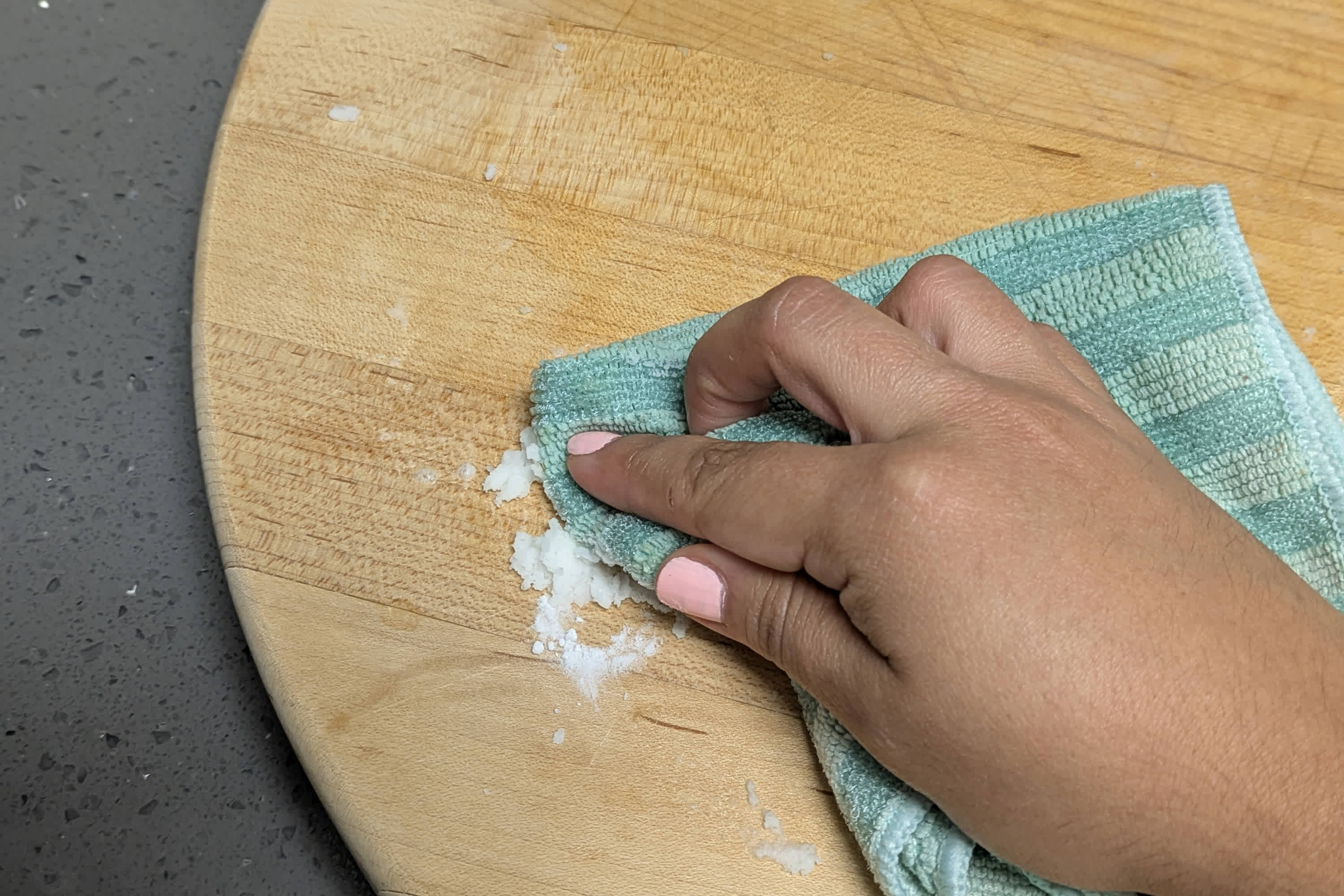
Cut a lemon in half and sprinkle coarse salt on the board. Rub the lemon over the salt in circles to scrub.
The lemon juice and salt clean and disinfect the wood. Rinse with water and dry the board completely.

Credit: homewithgraceandjoy.com
Sanitizing The Board
Keeping your wooden cutting board clean is very important. It helps stop germs from spreading.
Sanitizing removes bacteria that regular washing might miss. Use safe and effective ways to clean it well.
Using Hydrogen Peroxide
Hydrogen peroxide kills many germs on wood surfaces. It is a good option to sanitize cutting boards.
Pour 3% hydrogen peroxide directly on the board. Let it sit for a few minutes, then wipe clean with a cloth.
- Use fresh hydrogen peroxide for best results
- Do not rinse immediately to allow it to work
- Store board in a dry place after cleaning
Diluted Bleach Solution
Diluted bleach is a strong sanitizer for wooden boards. It kills bacteria quickly and deeply.
Mix one tablespoon of bleach with one gallon of water. Apply the solution to the board and wait five minutes.
- Use gloves to protect your hands
- Rinse the board well after sanitizing
- Dry the board completely to avoid damage
Natural Alternatives
Natural items like vinegar and lemon also clean cutting boards. They are safer and eco-friendly options.
Wipe the board with white vinegar or rub lemon juice on it. Let it sit for a few minutes, then rinse and dry.
- Vinegar kills many types of bacteria
- Lemon juice helps remove odors and stains
- Use coarse salt for scrubbing if needed
Drying And Maintaining The Board
Keeping your wooden cutting board dry is key to stopping bacteria growth. Proper care helps the board last longer and stay safe for food use.
This guide covers how to dry, oil, and maintain your wooden cutting board the right way.
Proper Air Drying
After cleaning, dry your cutting board with a towel. Then, stand it upright or lean it against a surface to let air reach all sides. Do not lay it flat to dry.
- Dry with a clean cloth after washing
- Stand the board on its edge
- Keep it in a well-ventilated area
- Avoid stacking while wet
- Do not put the board in a dishwasher
Oiling The Wood
Oiling your board keeps the wood from cracking and warping. Use food-safe mineral oil or a special cutting board oil. Apply the oil evenly and let it soak in overnight.
Re-oil your board once a month or when the wood looks dry.
Regular Maintenance Tips
| Task | How Often | Why |
| Clean after each use | Every time | Remove food residue |
| Dry properly | After every wash | Prevent mold and warping |
| Oil the board | Monthly | Keep wood healthy |
| Inspect for cracks | Monthly | Avoid bacteria build-up |
| Sand rough spots | As needed | Maintain smooth surface |

Credit: www.youtube.com
Avoiding Common Mistakes
Sanitizing a wooden cutting board is important to keep it safe. Many people make simple mistakes that can damage the board. Avoid these errors to keep your board clean and long-lasting.
This guide will cover two common mistakes to avoid. Follow the tips to protect your wooden cutting board from harm.
Avoiding Soaking
Soaking a wooden cutting board in water can cause damage. Water can seep into the wood and weaken it. This leads to warping and cracking over time.
- Do not leave your board submerged in water.
- Wash with warm, soapy water quickly and rinse well.
- Dry the board immediately with a clean towel.
- Allow it to air dry standing up or on a rack.
Preventing Cracks And Warping
Wood cracks and warps if it dries unevenly or gets too dry. Temperature changes can also harm the wood. Keep your board healthy by following these tips.
| Cause | How to Prevent |
| Drying too fast or unevenly | Dry board upright in a well-ventilated area |
| Excessive heat or sunlight | Keep board away from direct heat and sun |
| Wood drying out | Regularly oil the board with food-safe mineral oil |
| Cutting with too much force | Use gentle cutting motions to reduce wood stress |
Frequently Asked Questions
How Often Should I Sanitize A Wooden Cutting Board?
Sanitize your wooden cutting board after each use to prevent bacteria buildup. Regular cleaning ensures food safety. Use a solution of vinegar or diluted bleach. This practice helps maintain a hygienic kitchen environment.
Can Vinegar Be Used To Sanitize Wooden Boards?
Yes, vinegar is effective for sanitizing wooden cutting boards. It naturally kills bacteria without harsh chemicals. Simply spray or wipe the board with vinegar. Let it sit for a few minutes, then rinse with water.
What Natural Methods Sanitize Cutting Boards?
Use lemon and salt for natural sanitation. Sprinkle salt, then rub with a cut lemon. This method cleans and disinfects effectively. Rinse thoroughly with water afterward for best results.
Is Bleach Safe For Wooden Cutting Boards?
Bleach is safe if used correctly. Dilute a small amount with water, and wipe the board. Rinse thoroughly after application to avoid residue. Ensure it’s only an occasional cleaning method to prevent wood damage.
Conclusion
Sanitizing a wooden cutting board keeps your kitchen safe and clean. Use simple steps like soap, hot water, and vinegar. Dry the board well to stop germs from growing. Regular care helps your cutting board last longer. Clean boards prevent food contamination and protect your health.
Small habits make a big difference in kitchen safety. Keep your cutting board fresh and ready for every meal. Easy to do, important to remember.