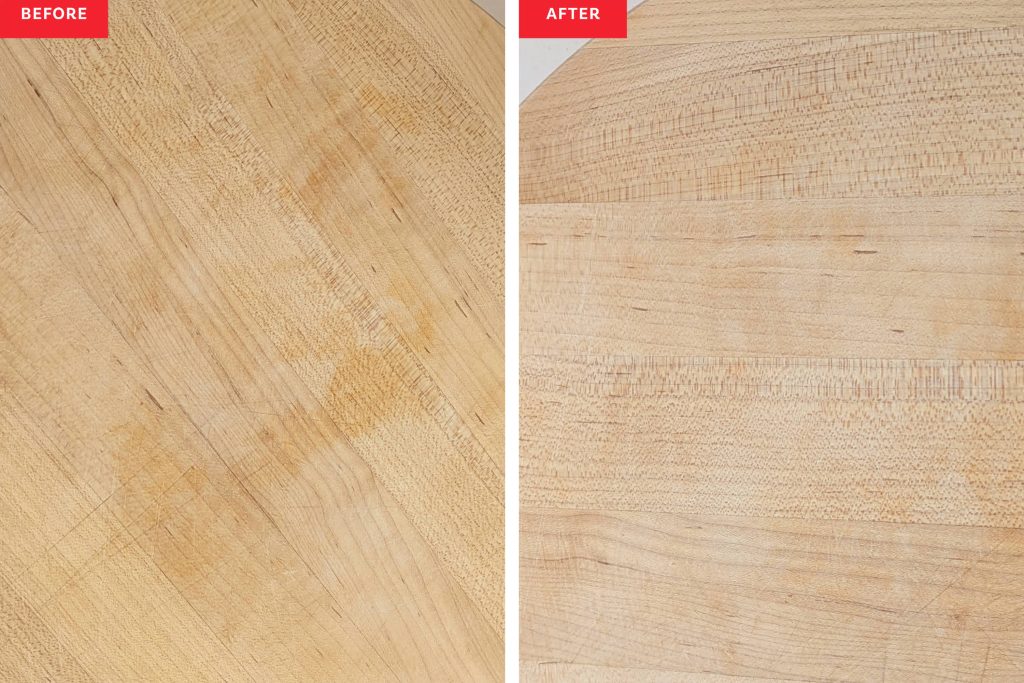
Your wood cutting board is a kitchen essential, but it can also hide bacteria that might make you sick. Knowing how to properly sanitize your wood cutting board keeps your food safe and your kitchen clean.
You’ll discover simple, effective ways to kill germs without damaging your board. Follow these easy steps, and you’ll feel confident every time you chop, slice, or dice. Ready to protect your health and extend the life of your cutting board?
Let’s get started.
Choosing The Right Cleaning Supplies
Cleaning a wood cutting board needs safe and effective supplies. Using the right products keeps the board clean without damage.
Wood boards can absorb harsh chemicals. It is important to pick sanitizers and tools that protect the wood.
Safe Sanitizers For Wood
Some sanitizers clean wood boards well and do not harm the surface. Avoid bleach or strong chemicals that dry out wood.
White vinegar and hydrogen peroxide are good options. They kill germs and are safe for wood.
- White vinegar: natural and kills bacteria
- Hydrogen peroxide: disinfects without damage
- Salt: can scrub and remove stains
- Lemon juice: freshens and kills germs
Tools Needed For Cleaning
Use soft tools that clean well but do not scratch wood. Avoid metal scrubbers or rough brushes.
A few simple tools help keep your board clean and safe to use.
- Soft sponge or cloth for gentle cleaning
- Plastic scrub brush for stuck food
- Scraper to remove tough bits
- Spray bottle for applying sanitizers
- Dry towel for drying board after cleaning
Preparing The Cutting Board
Cleaning your wood cutting board is important to keep it safe for food. Preparing it well helps remove germs and stains.
Start by clearing the board of any leftover food bits. This makes the next cleaning steps easier and more effective.
Removing Food Residue
Use a scraper or a spatula to gently remove stuck-on food pieces. Avoid using metal tools that can damage the wood.
If the residue is soft, wipe it away with a damp cloth. This helps get rid of most leftover bits before rinsing.
- Use a plastic scraper for stuck food
- Wipe with a wet cloth for soft residue
- Remove all visible food particles
Initial Rinse Techniques
Rinse the cutting board under warm running water. This helps wash away loose food and dirt.
Do not soak the board. Too much water can cause the wood to crack or warp over time.
- Use warm water, not hot
- Rinse both sides of the board
- Keep rinsing time short
Deep Cleaning Methods
Wood cutting boards need regular deep cleaning to stay safe and last longer. Dirt and bacteria can hide in the wood pores.
Using natural items helps clean your board without damage. This guide shows three easy ways to sanitize wood cutting boards deeply.
Using Vinegar And Hydrogen Peroxide
Vinegar kills many germs and is safe for wood. Hydrogen peroxide removes bacteria and light stains.
Spray vinegar on the board and let it sit for a few minutes. Then, apply hydrogen peroxide to the same area. Wipe clean with a damp cloth.
- Use white vinegar for best results
- Apply 3% hydrogen peroxide solution
- Do not mix vinegar and peroxide together
- Wipe well and air dry after cleaning
Applying Baking Soda Paste
Baking soda is a gentle abrasive that cleans and deodorizes wood boards. It helps remove stuck-on food and stains.
Make a paste by mixing baking soda with water. Rub the paste into the board using a sponge or cloth. Let it sit for 10 minutes, then rinse well.
- Mix 3 parts baking soda with 1 part water
- Use circular motions to scrub the board
- Rinse thoroughly to remove residue
- Dry the board completely before storing
Lemon And Salt Scrub
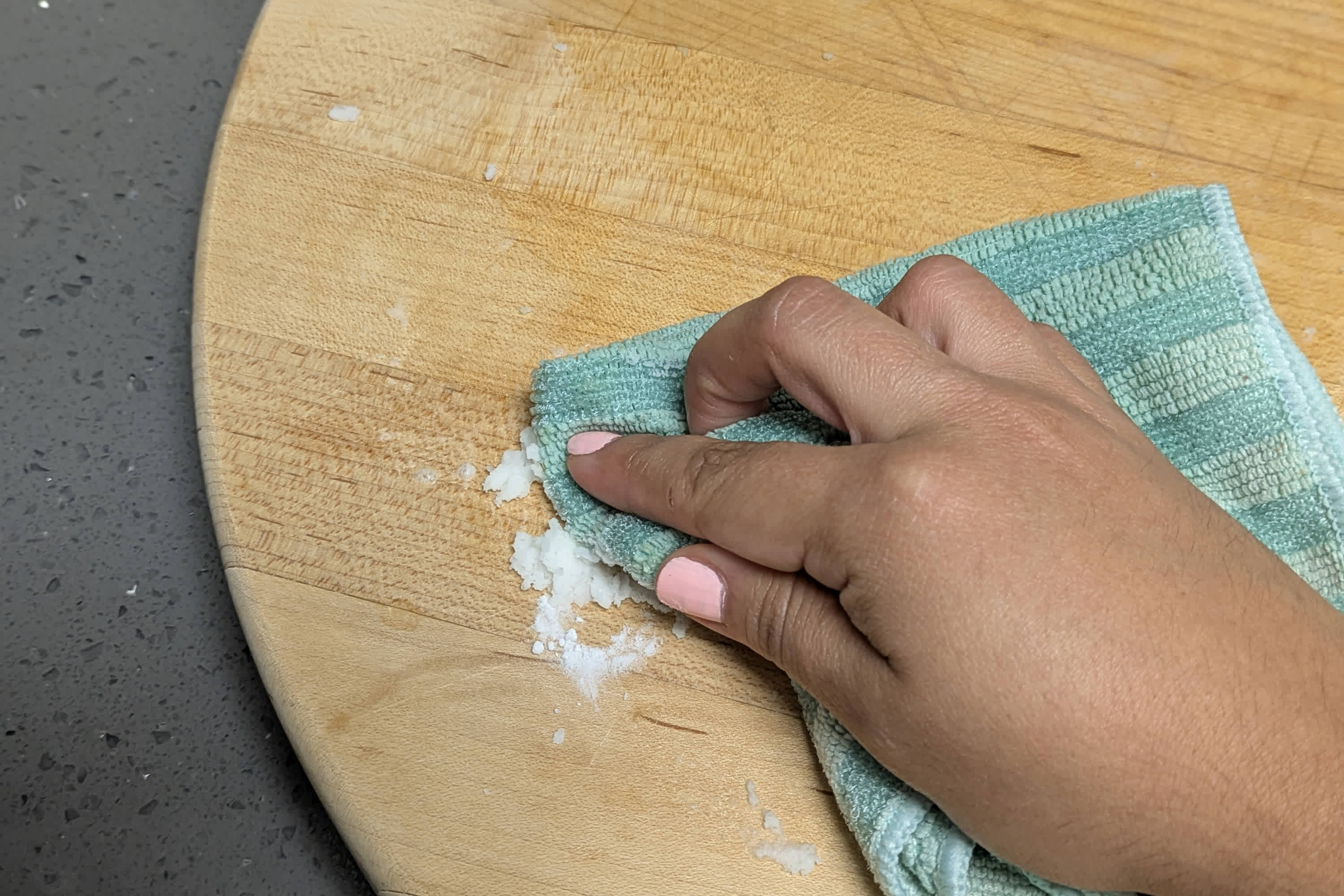
Lemon and salt work together to clean and brighten wood cutting boards. Salt scrubs away grime, and lemon kills bacteria.
Cut a lemon in half and dip the cut side into coarse salt. Rub the lemon over the board, squeezing gently to release juice. Rinse and dry well.
- Use coarse salt like kosher or sea salt
- Work the lemon juice into the wood surface
- Let the board sit for a few minutes after scrubbing
- Rinse with warm water and dry fully
Credit: www.thekitchn.com
Sanitizing The Board
Keeping your wood cutting board clean is important to avoid germs. Sanitizing removes harmful bacteria that washing might miss.
Use the right methods to keep your board safe for food preparation. This guide explains how to sanitize properly.
Effective Sanitizing Solutions
Several safe solutions can clean your wood board well. Choose one that fits your needs and is easy to use.
- White vinegar: a natural disinfectant that kills many bacteria
- Hydrogen peroxide: effective at removing germs without staining
- Bleach solution: dilute bleach to avoid damage, use carefully
- Lemon juice and salt: natural and mild for daily cleaning
Proper Application And Contact Time
Applying sanitizer correctly is key. The solution must stay on the board long enough to work.
| Sanitizing Solution | Recommended Contact Time | Notes |
| White vinegar | 5 minutes | Spray or wipe, then rinse with water |
| Hydrogen peroxide (3%) | 3 minutes | Pour or spray, let air dry |
| Bleach solution (1 tablespoon bleach per gallon water) | 2 minutes | Rinse well to remove bleach taste |
| Lemon juice and salt | 2–3 minutes | Scrub surface, then rinse |
Drying And Maintenance
Keeping your wood cutting board dry and well-maintained helps it last longer. Proper drying stops mold and warping.
Regular care with oil keeps the wood strong and prevents cracks. This guide covers drying and conditioning tips.
Best Drying Practices
Dry your wood cutting board immediately after washing. Leaving it wet can cause damage and bacteria growth.
- Wipe off excess water with a clean towel.
- Stand the board upright or lean it against a wall.
- Allow air to circulate around the board for faster drying.
- Do not leave the board flat on a wet surface.
- Avoid drying in direct sunlight or near heat sources.
Regular Conditioning With Oil
Oiling your board keeps the wood from drying out and cracking. Use food-safe mineral oil or cutting board oil.
| Conditioning Task | Frequency | Details |
| Apply oil | Once a month | Rub oil evenly over the board surface |
| Let oil soak | At least 2 hours | Allow the wood to absorb the oil fully |
| Remove excess | After soaking | Wipe off any extra oil with a cloth |
| Deep conditioning | Every 6 months | Use beeswax or a board conditioner for extra protection |

Credit: homewithgraceandjoy.com
Preventing Bacteria Build-up
Wood cutting boards can harbor bacteria if not cleaned properly. It is important to sanitize them to keep your kitchen safe.
Regular cleaning and careful use help stop bacteria from growing on the wood surface.
Cleaning Frequency
Clean your wood cutting board after every use. This stops bacteria from building up over time.
Deep clean the board once a week with a sanitizer to kill hidden germs.
- Wash with hot, soapy water after each use
- Rinse well and dry completely
- Use a vinegar or diluted bleach solution weekly for sanitizing
Avoiding Cross-contamination
Use separate boards for raw meat and vegetables. This stops bacteria from spreading between foods.
Clean boards well before switching to a new type of food. This lowers the risk of cross-contamination.
- Mark boards for specific uses
- Wash boards immediately after contact with raw meat
- Keep boards dry to prevent bacteria growth
Signs To Replace Your Cutting Board
Wood cutting boards can last a long time if you take care of them. But over time, they may get damaged or unsafe. It is important to know when to replace your cutting board.
Using a damaged or old cutting board can cause health problems. Look for signs that show your board needs to be replaced.
Damage Indicators
Wood boards can crack, warp, or develop deep cuts. These damages let bacteria hide inside the wood. They are hard to clean and can make your food unsafe.
- Deep grooves or knife marks that do not go away after cleaning
- Cracks or splits in the wood surface
- Warping that makes the board uneven
- Discoloration or dark stains that do not clean off
- Loose or damaged edges
Health Risks Of Old Boards
Old cutting boards can hold harmful bacteria inside cracks and cuts. This can cause foodborne illnesses. Bacteria like Salmonella and E. coli can grow on dirty boards.
Using an old board can also cause cross-contamination. This happens when bacteria spread from one food to another. It is dangerous, especially with raw meat and vegetables.
- Increased risk of food poisoning
- Cross-contamination between raw and cooked foods
- Hard to clean surfaces that trap germs
- Possible mold growth in deep cuts

Credit: www.youtube.com
Frequently Asked Questions
How Often Should I Sanitize My Wood Cutting Board?
Sanitize your wood cutting board after each use, especially after cutting raw meat. This prevents bacteria buildup. Regular cleaning with hot soapy water is essential. For deeper sanitation, use a vinegar solution or diluted bleach weekly. Keeping your board dry helps maintain its condition and prevents bacteria growth.
Can I Use Bleach On Wood Cutting Boards?
Yes, you can use diluted bleach to sanitize wood cutting boards. Mix one tablespoon of bleach with a gallon of water. Apply the solution to the board and let it sit for a few minutes. Rinse thoroughly with water. Ensure the board is completely dry before storing to prevent warping.
Is Vinegar Effective For Sanitizing Wood Boards?
Vinegar is effective for sanitizing wood cutting boards. Its acetic acid content kills bacteria and deodorizes. Simply spray undiluted white vinegar on the board, let it sit for a few minutes, then rinse. Vinegar is a natural and safe alternative to harsh chemicals.
Can I Sanitize With Lemon And Salt?
Yes, lemon and salt can sanitize your wood cutting board effectively. Sprinkle coarse salt on the board and scrub with half a lemon. This combination cleans and deodorizes. Rinse with hot water and dry thoroughly. Lemon’s acidity and salt’s abrasiveness work together to remove bacteria and stains.
Conclusion
Sanitizing your wood cutting board keeps it safe and clean. Use simple steps like washing with soap and water. Dry the board well to stop germs from growing. You can also use natural cleaners like vinegar or lemon. Regular cleaning helps your board last longer and stay fresh.
A clean board means safer meals for you and your family. Keep your kitchen healthy with easy care habits. Small efforts make a big difference every day.