When you’re out on a hike or camping trip, knowing how to secure your sleeping bag to your backpack can make all the difference. You want your gear to stay put, stay dry, and be easy to carry—without adding extra hassle.
If your sleeping bag swings around or gets wet, it can slow you down and ruin your comfort. This guide will show you simple, effective ways to attach your sleeping bag so it stays safe and stable. Keep reading to learn how to carry your sleeping bag like a pro and make every step of your adventure smoother.
Credit: www.henrycountyymca.org
Choosing The Right Sleeping Bag
Selecting a good sleeping bag makes your outdoor trip comfortable. It helps you stay warm and saves space in your backpack.
Think about the bag’s material, weight, size, and how well it compresses. These factors affect how easy it is to carry and use.
Material And Weight Considerations
Sleeping bags come in different materials that affect warmth and weight. Choose a bag that fits your trip’s climate and length.
- Down:Lightweight and packs small. Keeps warmth well but costs more.
- Synthetic:Less expensive and dries faster. It is heavier and bulkier.
- Hybrid:Combines down and synthetic for balance.
Check the bag’s weight to avoid carrying too much. Lightweight bags are best for long hikes.
Size And Compression Options
Size affects comfort and packing. Make sure the bag fits your height and allows movement.
| Size Type | Description | Benefit |
|---|---|---|
| Regular | Fits most adults | Good balance of comfort and weight |
| Long | Extra length for tall people | More comfort for tall users |
| Wide | Extra width for more room | Better for side sleepers |
Compression sacks help reduce bag size for easy storage on your backpack. Some bags come with built-in compression features.
Selecting Backpack Attachment Points
Securing your sleeping bag to your backpack makes carrying easier. Choosing the right attachment points keeps your gear safe and balanced.
Backpacks have many straps and loops. Knowing which ones to use helps you attach your sleeping bag correctly.
Identifying Straps And Loops
Look for wide straps on the bottom or sides of your backpack. These straps often have buckles or clips for gear attachment.
Loops are small fabric rings sewn onto the pack. They can hold straps or carabiners to secure your sleeping bag.
- Compression straps tighten gear to the pack
- Load lifter straps adjust pack balance
- Gear loops attach extra items with clips
- Buckle straps hold bulky gear firmly
Using Gear Loops Effectively
Thread straps or cords through gear loops to secure your sleeping bag. This prevents it from swinging or falling off.
Use carabiners on gear loops for quick attachment and removal. Make sure the sleeping bag stays tight against your pack.
- Attach sleeping bag compression sack to loops
- Use adjustable straps to tighten the bag
- Check loops for wear before use
- Balance weight by securing on both sides
Packing Techniques For Stability
Securing your sleeping bag to your backpack keeps your gear stable. It helps balance your load and makes hiking easier.
Using the right packing techniques prevents your sleeping bag from shifting while you walk. This saves energy and improves comfort.
Rolling And Compressing The Sleeping Bag
Start by laying your sleeping bag flat and rolling it tightly from the feet to the head. This reduces its size and makes it easier to carry.
Use a compression sack to squeeze out extra air. This keeps the bag compact and stable during your hike.
- Lay the sleeping bag flat and smooth out wrinkles
- Roll tightly to remove air pockets
- Place the rolled bag in a compression sack
- Tighten straps evenly on the sack
Positioning For Balance
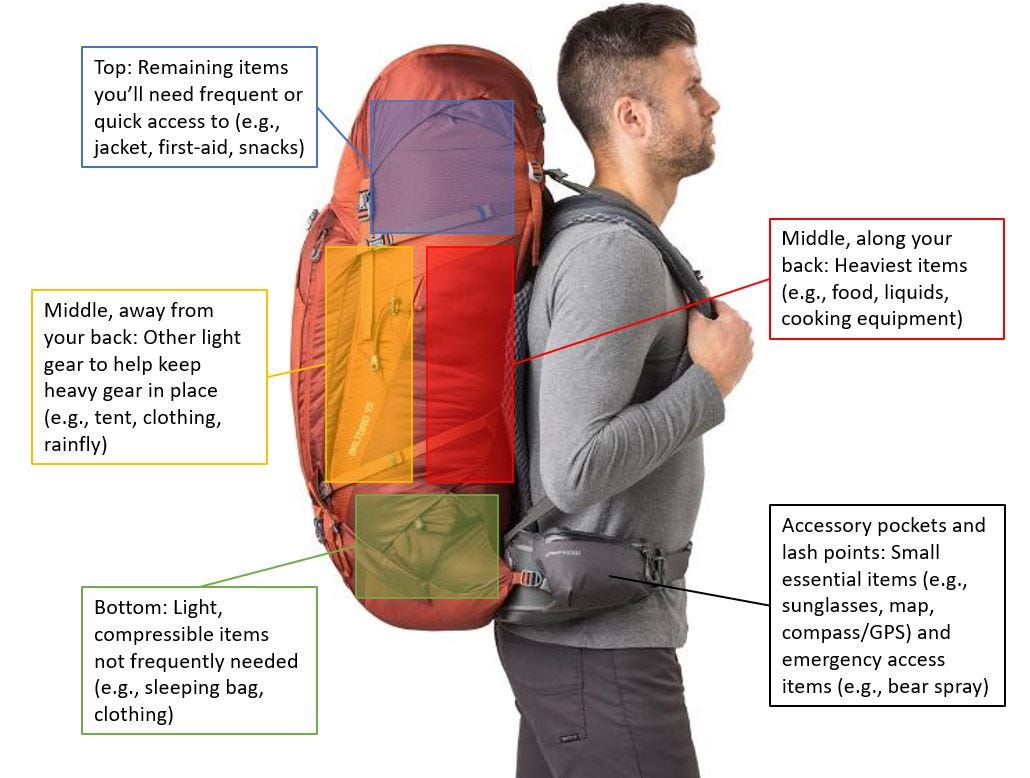
Attach the sleeping bag low on your backpack to keep your center of gravity stable. This helps prevent tipping or swaying.
Secure the bag using side straps or bottom loops. Make sure it fits snugly without hanging loose or blocking access to other gear.
- Place sleeping bag near the base of the pack
- Use backpack straps or external loops to hold it firmly
- Avoid placing the bag too high or unevenly
- Check stability before starting your hike

Credit: www.reddit.com
Securing The Sleeping Bag Outside The Pack
Carrying a sleeping bag outside your backpack saves space inside. It also makes the bag easy to reach. Securing it properly keeps it safe and stable during your trip.
There are simple ways to attach your sleeping bag to the outside of your pack. Using straps or cords helps keep it tight and balanced.
Using Compression Straps
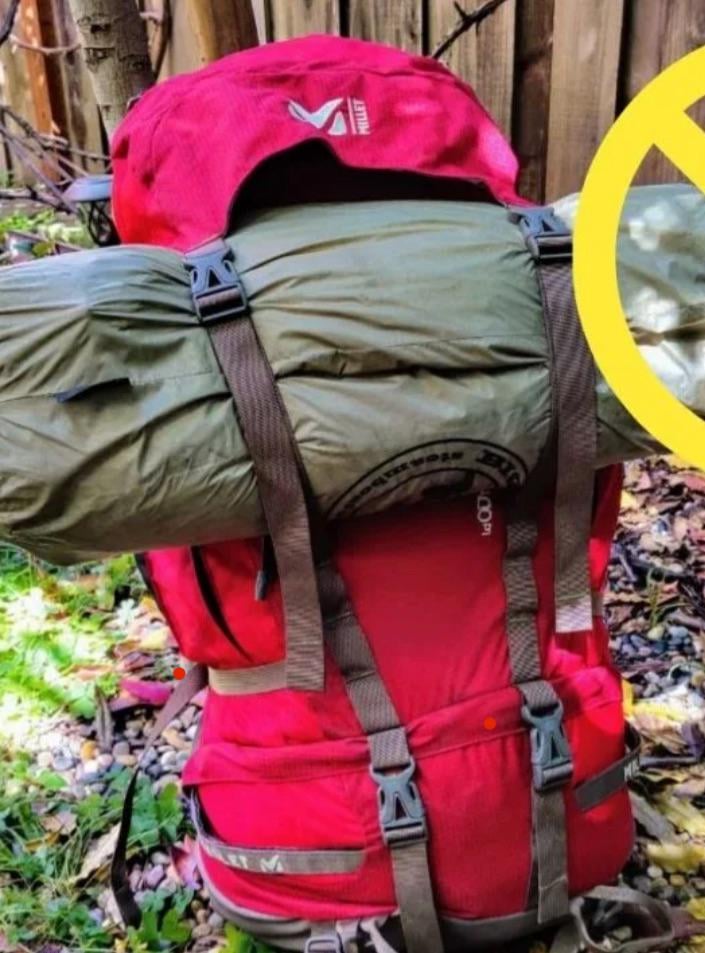
Compression straps help hold the sleeping bag firmly outside the pack. They wrap around the bag and the pack to keep the bag from moving. Most backpacks have built-in compression straps for this purpose.
Make sure the straps are tight but not too tight to damage the bag. Place the sleeping bag in a stuff sack before attaching it for extra protection.
- Place sleeping bag at bottom or side of the pack
- Wrap compression straps over the bag and under the pack frame
- Tighten straps evenly to avoid shifting
- Check straps during the hike to keep them secure
Employing Bungee Cords And Carabiners
Bungee cords add flexibility when securing a sleeping bag outside your pack. They stretch around the bag and attach to loops or straps on the pack. Carabiners can clip the bag to these loops for extra hold.
This method works well if your pack lacks compression straps. It also allows quick removal of the sleeping bag without unstrapping everything.
- Wrap bungee cords around the sleeping bag tightly
- Clip carabiners through the cords and pack loops
- Use multiple cords for better stability
- Ensure cords are secure but not too tight to damage fabric
Inside The Backpack: Pros And Cons
Securing your sleeping bag inside the backpack can keep it safe and dry. It also helps keep your gear organized during hikes.
But, placing the sleeping bag inside has both benefits and drawbacks. Knowing these can help you pack better for your trip.
Maximizing Space
Putting the sleeping bag inside the backpack uses the main space for your largest item. This keeps the bag compact and easy to carry.
However, it can limit space for other gear. You must pack carefully to fit everything without squishing important items.
- Compress the sleeping bag with a stuff sack to save space.
- Place heavier items at the bottom, sleeping bag on top.
- Use small pockets for lightweight items around the sleeping bag.
Protecting From Moisture
Inside the backpack, your sleeping bag is less exposed to rain and dirt. This helps keep it dry and clean during travel.
If your backpack leaks or gets wet, the sleeping bag can still be at risk. Using a waterproof bag inside adds extra protection.
- Use a dry sack or plastic bag to keep the sleeping bag dry.
- Check backpack seams and zippers for water resistance.
- Store wet gear separately to avoid moisture spreading.
Waterproofing And Weather Protection
Securing your sleeping bag to your backpack is important. Waterproofing ensures it stays dry. Weather protection helps during unexpected conditions. Let’s explore some methods to protect your sleeping bag.
These methods include using dry bags, stuff sacks, rain covers, and protective layers. Each offers unique benefits for your sleeping bag.
Dry Bags And Stuff Sacks
Dry bags keep your sleeping bag dry. They are waterproof and seal tightly. Use these to protect your sleeping bag from rain and water.
Stuff sacks compress your sleeping bag. This makes it smaller and easier to carry. Choose stuff sacks that are also water-resistant.
- Choose the right size for your sleeping bag
- Ensure the sack is made of waterproof material
- Check for a tight closure to keep water out
Rain Covers And Protective Layers
Rain covers shield your backpack and sleeping bag from rain. They fit over your backpack like a raincoat. This prevents water from reaching your sleeping bag.
Protective layers offer extra defense. These layers can be tarps or ponchos. They provide an additional barrier against the elements.
| Protective Layer Type | Benefit |
| Rain Covers | Easy to use and quick to deploy |
| Tarps | Versatile and can cover larger areas |
| Ponchos | Dual-use for both you and your gear |
Safety Tips During Hiking
Securing your sleeping bag to your backpack is important for a safe hike. It keeps your gear stable and easy to carry.
Loose or damaged attachments can cause accidents or loss of gear. Follow these tips to keep your sleeping bag safe.
Checking Attachment Security Regularly
Check your sleeping bag straps and clips often during the hike. Tighten any loose parts to avoid slipping or falling off.
- Stop every hour to inspect the attachment points.
- Look for worn or broken straps and replace if needed.
- Make sure clips snap firmly and do not move easily.
- Adjust straps to keep the bag close to your backpack.
- Test the stability by gently shaking your pack.
Avoiding Snags And Damage
Keep your sleeping bag safe from tears by avoiding sharp objects on your trail. Watch out for branches and rocks near your pack.
| Danger | How to Avoid |
| Sharp branches | Keep your pack away from bushes and trees |
| Rough rocks | Place your backpack on smooth surfaces when resting |
| Snagging straps | Use strap covers or tuck straps inside when possible |
| Heavy impact | Do not drop or drag your backpack on hard ground |

Credit: www.reddit.com
Alternative Carrying Methods
Carrying a sleeping bag on your backpack can be done in many ways. Some methods keep the bag outside the pack. This saves space inside for other gear.
Using different carrying methods helps balance weight. It also makes your sleeping bag easy to reach at camp.
Using External Gear Holders
Many backpacks have external gear holders. These include straps, loops, and bungee cords. You can use them to attach your sleeping bag securely.
Wrap your sleeping bag tightly and use the holders to fasten it. This keeps the bag stable and stops it from swinging while you walk.
- Use compression straps to hold the sleeping bag firmly.
- Attach the bag to side or bottom loops on the backpack.
- Make sure the bag is balanced to avoid discomfort.
Attaching To Trekking Poles
Trekking poles can carry a sleeping bag outside your pack. You can tie the bag to the poles using straps or cords.
This method frees up space in your pack. It also keeps the sleeping bag dry and easy to grab when needed.
- Fold the sleeping bag tightly into a small bundle.
- Use straps or cords to attach the bag to the poles.
- Secure the poles to your backpack or carry them by hand.
Frequently Asked Questions
How Do I Attach A Sleeping Bag To My Backpack?
Use compression straps or external loops on your backpack. Roll the sleeping bag tightly and secure it with straps. Attach it to the bottom or side where straps allow. This keeps the bag compact and prevents movement while hiking.
What Is The Best Position For A Sleeping Bag On A Backpack?
The best position is usually at the bottom or sides of the backpack. This balances weight and avoids compressing other gear. Attaching externally saves internal space and keeps your sleeping bag easily accessible.
Can I Use A Stuff Sack To Secure My Sleeping Bag?
Yes, a stuff sack helps compress and protect your sleeping bag. It reduces volume and makes attachment easier. Use compression sacks for better packing and to keep your sleeping bag dry and clean.
Should I Waterproof My Sleeping Bag Before Attaching It?
Waterproofing is recommended to protect your sleeping bag from rain and moisture. Use a waterproof cover or dry bag before securing it externally. This ensures your sleeping bag stays dry and maintains its insulation.
Conclusion
Securing your sleeping bag to your backpack keeps it safe and dry. Use straps or cords to tie it tightly. Place it where it won’t block your view or balance. Check the knots before you start walking. This small step helps you travel light and ready.
Enjoy your outdoor adventure without worries about your gear. Stay organized, and your journey becomes much easier. Simple actions make a big difference on the trail.