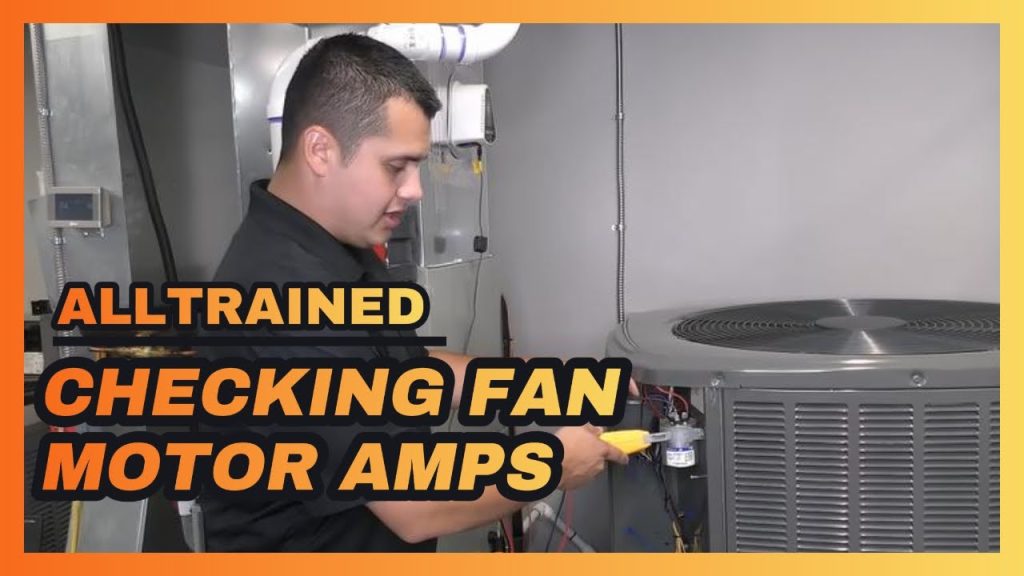
Is your air conditioner making strange noises or not cooling properly? The fan motor might be the culprit.
Knowing how to test your air conditioner fan motor can save you time and money on repairs. In this guide, you’ll learn simple steps to check if your fan motor is working right. By the end, you’ll feel confident handling basic tests yourself and avoid unnecessary service calls.
Keep reading to find out how to keep your AC running smoothly.

Credit: thecoolingco.com
Tools Needed
Testing an air conditioner fan motor needs some special tools. These tools help check the motor safely and correctly.
Using the right tools makes the test easier. It also helps find problems faster and prevents damage.
Multimeter
A multimeter measures electrical values like voltage and resistance. It helps check if the fan motor is working well.
With a multimeter, you can test the motor windings for continuity. It shows if any part is broken or shorted.
Screwdriver Set
A screwdriver set is needed to open the air conditioner panel. It lets you reach the fan motor safely.
Different screws may need different screwdrivers. Having a set saves time and avoids damage to screws.
Insulation Tape
Insulation tape protects wires after testing the motor. It keeps wires from touching and causing shorts.
Use good quality tape to cover any exposed wires. This keeps the motor safe and working well.
Safety Gear
Safety gear protects you from electric shocks and injuries. Always wear gloves and safety glasses when testing.
- Insulated gloves stop electric shocks
- Safety glasses protect your eyes
- Wear closed shoes to avoid injuries
- Work in a dry area to stay safe
Safety Precautions
Testing an air conditioner fan motor requires care to avoid accidents. Safety is the top priority before starting any work.
Follow these safety steps to protect yourself and ensure a safe testing process.
Turn Off Power
Always switch off the power supply to the air conditioner before testing the fan motor. This prevents electric shock and equipment damage.
- Locate the circuit breaker or fuse for the air conditioner.
- Turn off the circuit breaker or remove the fuse.
- Use a voltage tester to confirm power is off.
Wear Protective Equipment
Wear proper safety gear to protect against injuries while working on the fan motor.
- Wear insulated gloves to avoid electric shock.
- Use safety glasses to protect your eyes from debris.
- Wear long sleeves and closed shoes to avoid cuts and scrapes.
Avoid Water Contact
Keep the fan motor and testing area dry. Water and electricity together can cause serious injury.
| Do | Don’t |
|---|---|
| Dry your hands before handling equipment. | Work on the fan motor if it is wet. |
| Use a dry cloth to clean parts. | Spray water near electrical components. |
| Test in a dry, well-lit area. | Test outdoors in rain or damp weather. |
Locate The Fan Motor
Testing the air conditioner fan motor starts with finding its exact location. Knowing where the motor sits helps you check it safely and correctly.
This guide covers how to access the unit and identify the fan motor easily. Follow the steps to locate the motor before testing it.
Accessing The Unit
First, turn off the power to the air conditioner for safety. Then, remove the outer panel or cover of the unit to see inside.
- Switch off the AC power at the breaker box.
- Use a screwdriver to remove screws holding the panel.
- Gently lift or slide off the cover to expose the components.
- Place the panel and screws somewhere safe.
Identifying The Motor
The fan motor is usually near the fan blades inside the unit. It is a cylindrical part connected to the fan shaft.
| Feature | Description |
|---|---|
| Shape | Cylindrical, metal body |
| Location | Near fan blades, inside the unit |
| Connections | Wires connected to power and control board |
| Mounting | Fixed with screws or brackets |

Credit: www.youtube.com
Visual Inspection
Testing an air conditioner fan motor starts with a visual inspection. This step helps find obvious problems. It can save time before using tools.
Look closely at the fan motor and its parts. Check for damage, dirt, and wiring issues. These can cause the motor to stop working.
Check For Damage
Look at the fan motor for cracks or broken parts. Damaged parts can stop the motor from working right.
Also, check the fan blades. Bent or cracked blades can cause noise and poor airflow.
- Look for cracks on the motor casing
- Check fan blades for bends or breaks
- Notice any loose or missing screws
Look For Dirt And Debris
Dirt and dust can block the fan motor. This makes it work harder and may cause it to fail.
Remove any leaves, dust, or spider webs around the motor and fan blades. Keep the area clean for better performance.
- Clean dust from fan blades and motor
- Clear leaves or debris near the motor
- Use a soft brush or cloth for cleaning
Inspect Wiring
Check the wires connected to the fan motor. Loose or damaged wires can cause the motor to stop working.
Look for cracked insulation or burnt spots on the wires. Make sure all connections are tight and secure.
- Look for frayed or cracked wire insulation
- Check for burnt or darkened wire areas
- Ensure wire connections are tight and clean
Testing Motor Continuity
Checking the continuity of an air conditioner fan motor helps find electrical problems. Continuity means the motor windings are not broken.
This guide shows how to test motor continuity using a multimeter. Follow the steps carefully for accurate results.
Set Multimeter To Ohms
Turn on your multimeter and set it to the ohms (Ω) setting. This measures resistance in the motor windings.
If your multimeter has multiple ohm ranges, pick the lowest one for better accuracy.
Measure Resistance
Disconnect power to the air conditioner before testing. Remove the motor wires to avoid false readings.
- Touch one multimeter probe to one motor terminal.
- Touch the other probe to the other terminal.
- Read the resistance value on the multimeter display.
- Repeat for all pairs of terminals if the motor has multiple wires.
Interpret Results
| Resistance Reading | Meaning |
| Low (a few ohms) | Motor windings are good |
| Infinite or very high | Broken winding or open circuit |
| Zero or near zero | Short circuit inside motor |
If readings show a broken or shorted winding, the motor needs repair or replacement.
Testing Motor Windings
Testing the air conditioner fan motor windings helps find electrical problems. It shows if the motor will run correctly or not.
You need a multimeter to check the windings. Testing involves checking for shorts and open circuits.
Identify Windings
The fan motor has three windings: start, run, and common. Each winding connects to different motor parts.
Look at the motor’s wiring diagram or label to find these windings. This helps you test the right wires.
- Start winding helps the motor start
- Run winding keeps the motor running
- Common winding connects to both start and run
Check For Shorts
Shorts happen when the winding wires touch each other or the motor frame. This can cause the motor to fail.
Set your multimeter to the lowest ohms setting. Test between each winding and the motor frame.
- Touch one probe to the winding terminal
- Touch the other probe to the motor metal frame
- If the meter shows low resistance, there is a short
- Repeat for all windings
Check For Open Circuits
Open circuits occur if a winding wire is broken inside. The motor will not run if there is an open circuit.
Set the multimeter to the lowest ohms setting. Measure resistance between winding terminals.
- Check resistance between start and common terminals
- Check resistance between run and common terminals
- High or infinite resistance means an open circuit
- Normal readings are low resistance values
Testing Capacitor Function
The capacitor is a small part that helps the fan motor start and run. Testing it shows if it works well or needs a change.
Checking the capacitor is safe and simple with a few tools. Follow these steps to test it properly.
Locate Capacitor
The capacitor is inside the air conditioner near the fan motor or compressor. It looks like a small metal can or cylinder.
Turn off the power before opening the unit. Look for a box or cover that holds the capacitor and fan motor wires.
- Unplug the AC or switch off the breaker
- Remove the unit cover carefully
- Find the metal can with wires connected
Discharge Capacitor
A capacitor holds electric charge even after power is off. Discharge it to avoid shock or damage.
Use a screwdriver with an insulated handle to touch both terminals together. This will release the stored electricity safely.
- Wear safety gloves and glasses
- Hold screwdriver by insulated handle
- Touch both capacitor terminals with the screwdriver
- Wait a few seconds to fully discharge
Measure Capacitance
Use a multimeter with a capacitance setting to check the capacitor’s value. This shows if it works well or is weak.
Remove the capacitor wires, connect the meter leads to terminals, and read the value on the screen. Compare it to the number on the capacitor label.
- Set multimeter to capacitance mode
- Disconnect capacitor from AC wires
- Connect meter probes to capacitor terminals
- Read the capacitance value on the meter
- Check if value matches capacitor label (within 6% tolerance)
Manual Motor Spin Test
Testing your air conditioner fan motor by hand helps find problems fast. This test shows if the motor spins well or if it has issues.
Use this manual spin test before calling a technician. It saves time and can prevent bigger damage.
Spin The Fan Blades
Turn the fan blades gently with your hand. The blades should move freely without much force.
If the blades are hard to turn, the motor might be stuck or damaged. Look for dirt or rust that blocks movement.
Listen For Unusual Noises
As you spin the blades, listen carefully for strange sounds. Grinding, squealing, or rattling noises can mean trouble.
These sounds often point to worn bearings or loose parts inside the motor.
Check For Smooth Rotation
The fan blades should spin smoothly without jerks or stops. Smooth rotation means the motor is likely working well.
If the blades stop suddenly or feel rough, the motor may need repair or replacement.
Reassemble And Power On
After testing the air conditioner fan motor, you need to put everything back together. This step makes sure the motor runs safely and correctly.
Follow these instructions to reassemble the unit and turn on the power. Watch the motor to see if it works well.
Secure Components
Make sure all parts are in their correct places. Tighten screws and fasten any loose wires carefully.
Check that the fan blades are attached firmly and the motor mounts are secure. Loose parts can cause noise or damage.
- Replace fan blades on the motor shaft
- Tighten screws on the motor housing
- Reconnect all electrical wires
- Secure the motor to its mount
Restore Power
Turn the power back on at the main breaker or fuse box. Make sure the air conditioner has power supply before testing.
Check the circuit breaker and reset it if needed. Power should reach the motor without interruption.
- Switch on the main breaker
- Reset any tripped fuses
- Confirm power at the air conditioner
Observe Motor Operation
Watch the fan motor as it starts running. Listen for unusual sounds like grinding or squealing.
Ensure the fan spins smoothly and at the right speed. Check for vibrations that may show a problem.
- Fan blades should spin steadily
- No loud or strange noises
- No excessive shaking or wobbling
- Motor should run without stopping

Credit: www.youtube.com
When To Call A Professional
Testing an air conditioner fan motor can help find small problems early. Some issues need a professional’s help to fix safely and correctly.
Knowing when to call an expert saves time and prevents damage. It also keeps you safe from electrical risks.
Persistent Issues
If the fan motor stops working again after you fix it, call a professional. Persistent problems may show a deeper issue.
Experts can find hidden faults that are hard to see. They have tools to test parts thoroughly.
Complex Repairs
Some repairs need special skills and tools. Complex work like replacing the motor or wiring is best done by a pro.
A professional can fix these problems without causing more damage. They follow safety rules and industry standards.
Safety Concerns
Working with electricity can be dangerous. If you feel unsure or see sparks, smoke, or burning smells, stop and call a professional.
- Electric shock risk
- Fire hazards
- Proper handling of refrigerants
- Using the right safety gear
Frequently Asked Questions
How Do I Test An Air Conditioner Fan Motor?
To test an AC fan motor, first turn off power. Use a multimeter to check motor windings for continuity. Inspect the capacitor and motor bearings. Listen for unusual noises during operation. Replace the motor if it shows no continuity or runs poorly.
What Tools Are Needed To Test A Fan Motor?
You need a multimeter, screwdriver, and a capacitor tester. A clamp meter can measure current draw. Safety gloves and goggles are recommended. These tools help diagnose electrical and mechanical issues in the fan motor accurately.
How Can I Tell If The Fan Motor Is Faulty?
Signs include no fan movement, strange noises, or overheating. The motor may hum but not spin. High current draw or burnt smell also indicate faults. Testing with a multimeter confirms electrical failure or winding damage.
Is It Safe To Test The Fan Motor Myself?
Yes, if you follow safety precautions carefully. Always turn off power at the breaker before testing. Use insulated tools and wear protective gear. If unsure, consult a professional to avoid electric shock or injury.
Conclusion
Testing your air conditioner fan motor is simple with these steps. Regular checks help maintain its efficiency. A well-functioning fan motor ensures cool air flows smoothly. Clean and inspect it to prevent costly repairs. Notice any unusual sounds or poor performance?
It might be time for a check-up. Understanding basic maintenance can save time and money. Keep your home comfortable and your air conditioner running well. Remember, a little attention goes a long way in keeping your AC in top shape.
Stay cool, stay informed, and enjoy a refreshing indoor climate.