Are you tired of struggling with tangled lines or hooks that just won’t stay put? Knowing how to tie a hook on a fishing rod the right way can make all the difference between a frustrating day and a successful catch.
Whether you’re a beginner or just want to sharpen your skills, this simple guide will show you step-by-step how to secure your hook quickly and confidently. Keep reading, and you’ll soon be ready to cast with ease and reel in your next big catch!

Credit: mysterytacklebox.com
Choosing The Right Hook
Picking the right fishing hook is important for a good catch. The hook must fit the type of fish and bait.
A proper hook helps you catch fish without losing them. Learn about hook types and sizes before you tie one.
Types Of Fishing Hooks
There are many fishing hooks for different fishing styles. Each type works better for certain fish and bait.
- J-Hook: Classic shape, good for many fish types
- Circle Hook: Curved design, reduces fish injury
- Treble Hook: Three points, often used with lures
- Siwash Hook: Long shank, used for artificial baits
- Octopus Hook: Short shank, good for live bait
Choosing the right type helps you catch fish easier and keeps the bait secure.
Matching Hook Size To Fish
Hook size matters for catching different fish. A small hook works for small fish and bait.
Big fish need bigger hooks to hold their weight and mouth size. Using the right size hook improves your catch rate.
- Size 8 to 12: Small fish like panfish and trout
- Size 4 to 6: Medium fish like bass and perch
- Size 1 to 2: Large fish like catfish and pike
- Size 1/0 to 5/0: Very large fish like salmon and muskie
Credit: www.beadinggem.com
Selecting Fishing Line
Choosing the right fishing line is crucial for a successful fishing experience. There are different types of fishing lines available, and each has its own benefits.
Understanding the differences can help you make an informed decision. Let’s explore some of the key factors.
Monofilament Vs Fluorocarbon
Monofilament and fluorocarbon lines are popular choices among anglers. They each have unique characteristics that make them suitable for different fishing conditions.
- Monofilament:It’s flexible and easy to handle. Great for beginners.
- Fluorocarbon:Nearly invisible underwater. Best for clear water fishing.
Line Strength And Thickness
Line strength and thickness are important factors to consider. They determine how well your line performs and its durability.
| Type | Strength | Thickness |
| Monofilament | High | Medium |
| Fluorocarbon | Higher | Thin |
Consider these aspects when selecting your line. The right choice can make fishing more enjoyable.
Preparing The Line And Hook
Tying a hook on a fishing rod needs careful preparation. This helps the hook stay secure and catch fish well.
Start by getting the fishing line and hook ready. Proper steps make your fishing easier and safer.
Cutting The Line
Cut the fishing line to the right length before tying it to the hook. Use sharp scissors or a line cutter.
Make a clean, straight cut. Avoid frayed ends because they can weaken the knot or slip out.
- Choose a length that fits your fishing needs
- Use sharp tools for a clean cut
- Cut straight without fraying the line
Moistening The Line
Before tying, wet the line with water or saliva. This lowers friction and prevents damage to the line.
Moistening helps the knot tighten smoothly. It stops the line from breaking or weakening when you pull the hook tight.
Step-by-step Knot Techniques
Tying a hook on a fishing rod is a basic skill every angler needs. Using the right knot keeps your hook secure while fishing.
This guide shows how to tie three common knots. Each knot is strong and easy to learn.
Improved Clinch Knot
The Improved Clinch Knot is popular for attaching hooks to fishing line. It is strong and simple.
Start by threading the line through the hook eye. Wrap the tag end around the main line five times.
- Pass the tag end through the small loop near the hook eye
- Then, pass it back through the big loop you just made
- Pull the tag end and main line slowly to tighten the knot
- Trim the excess tag end
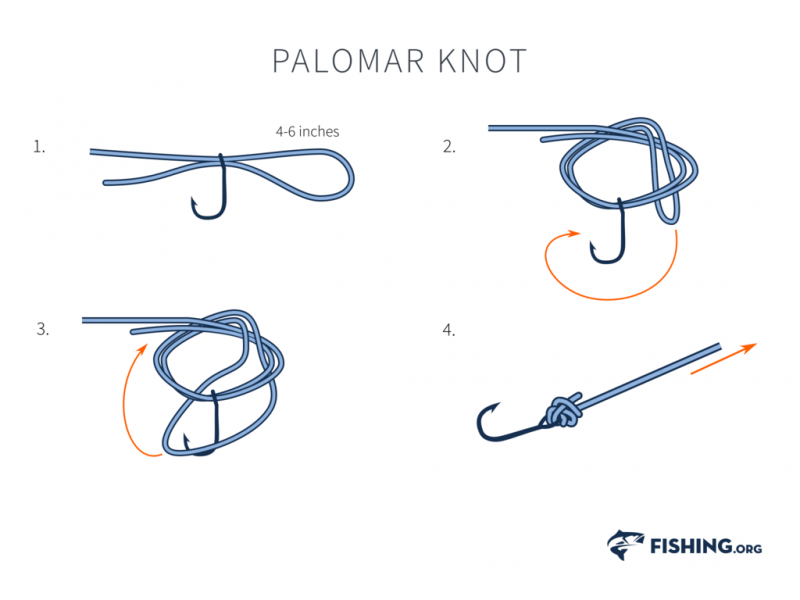
Palomar Knot
The Palomar Knot is very strong and easy to tie. It works well with braided and monofilament lines.
Double about 6 inches of line and pass it through the hook eye. Tie a loose overhand knot with the doubled line.
- Pass the hook through the loop of the overhand knot
- Pull both the standing line and tag end to tighten
- Make sure the knot snugly fits the hook eye
- Trim the tag end close to the knot
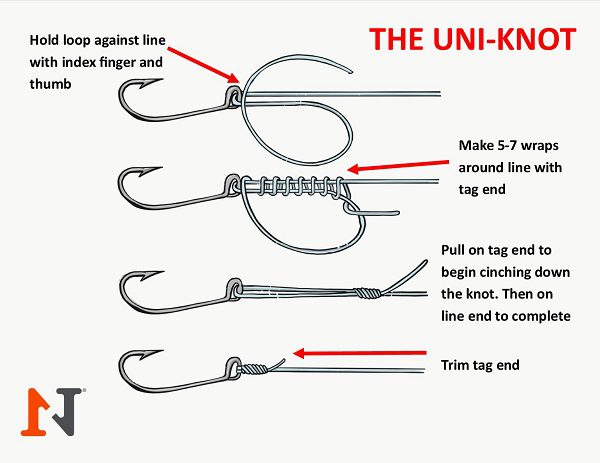
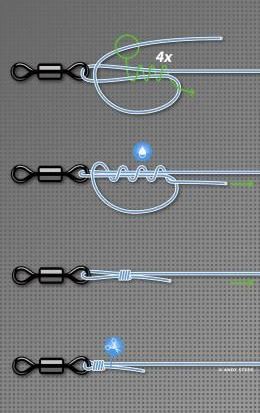
Uni Knot
The Uni Knot is versatile and easy to adjust. It works well for hooks, lures, and swivels.
Pass the line through the hook eye and double it back forming a loop. Wrap the tag end around the doubled line five times.
- Pass the tag end through the loop near the hook eye
- Moisten the knot and pull the tag end to tighten the coils
- Slide the knot down to the hook eye
- Pull the main line to secure the knot
- Trim the tag end
Tips For Stronger Knots
Tying a strong knot on your fishing rod is key to catching fish. A good knot holds tight and does not break easily.
Below are tips to make your knots stronger and more reliable on the water.
Avoiding Line Damage
Damaged fishing line weakens your knot and can cause it to fail. Protect your line by following these tips.
- Use sharp scissors to cut the line cleanly.
- Moisten the line with water or saliva before tightening knots.
- Avoid pulling knots too hard without lubrication.
- Keep your knots away from rough surfaces or sharp edges.
- Check the line for nicks or frays before tying.
Testing Knot Strength
Always test your knot before fishing. This step helps confirm it will hold under pressure.
| Test Method | How to Do It | Why It Helps |
| Pull Test | Pull the knot firmly by hand until it feels tight. | Checks if the knot will slip or come undone. |
| Line Stretch | Stretch the line near the knot gently to see if it weakens. | Reveals any damage or weak spots. |
| Water Test | Wet the knot and tighten again before testing strength. | Prevents heat from friction damaging the line. |
Credit: medium.com
Common Knot Mistakes
Tying a hook on a fishing rod is simple but needs care. Small mistakes can make the knot weak.
Knowing common errors helps you tie stronger knots that hold well.
Twisting And Overlapping
Twisting the line or overlapping loops causes knots to slip or break. It reduces knot strength.
Keep the line straight and loops neat. Avoid crossing the line over itself too many times.
- Do not twist the line before wrapping
- Make clean, even loops around the hook eye
- Check the knot before tightening to avoid overlaps
Insufficient Tightening
Not pulling the knot tight enough makes it loose and weak. The knot may come undone when fishing.
Pull the line firmly to set the knot. Wet the line slightly before tightening to reduce friction.
- Moisten the line before tightening
- Pull the tag end and main line firmly
- Check the knot for firmness before fishing
Maintaining Your Fishing Gear
Taking care of your fishing gear helps it last longer. Proper maintenance keeps your equipment ready for every trip.
Checking your knots and replacing worn parts are key steps. These actions prevent losing fish and gear damage.
Checking Knots Regularly
Knots can weaken over time from water and use. Check them often to avoid unexpected breaks while fishing.
- Look for frayed or loose ends in your knots.
- Retie knots that seem weak or damaged.
- Use strong knots like the improved clinch or Palomar knot.
- Test knots by pulling hard before casting.
Replacing Worn Hooks And Lines
Hooks and lines wear out and lose strength after use. Replace them to keep your fishing successful and safe.
| Item | Signs to Replace | Why Replace |
|---|---|---|
| Hooks | Bent points, rust, dullness | Sharp hooks catch better and prevent fish loss |
| Fishing line | Frays, discoloration, stiffness | Strong lines avoid breaks and tangles |
Frequently Asked Questions
How Do I Tie A Hook To A Fishing Rod?
To tie a hook, thread the line through the hook eye. Use a secure knot like the improved clinch knot. Pull tight and trim excess line. This ensures the hook stays firmly attached during fishing.
What Is The Best Knot For Tying A Hook?
The improved clinch knot is the best for tying hooks. It’s strong, easy to tie, and reliable. This knot holds well under pressure and prevents the line from slipping off the hook.
How Tight Should I Tie The Fishing Hook Knot?
Tie the knot snug but avoid over-tightening. A tight knot prevents slipping but too much pressure can weaken the line. Pull firmly until the knot is secure and the hook doesn’t move.
Can I Use Any Fishing Line To Tie A Hook?
Yes, you can use monofilament, fluorocarbon, or braided lines. Each line type requires slightly different knot techniques. Choose a line suitable for your fishing style and adjust knot tying accordingly.
Conclusion
Tying a hook on a fishing rod is a simple skill. Practice the steps slowly and carefully. A strong knot keeps your hook secure. This helps catch more fish and avoid losing bait. Remember to check your knot before fishing each time.
With patience, tying hooks becomes easy and quick. Keep trying, and enjoy your fishing trips more. Small efforts lead to better results on the water. You are ready to fish with confidence now.