
Are you tired of your fishing line slipping off the reel just when you’re about to cast? Knowing how to tie your fish line to the reel properly can save you from frustration and lost catches.
Whether you’re a beginner or just need a quick refresher, this guide will show you simple, step-by-step methods to secure your line every time. Keep reading, and you’ll gain the confidence to set up your gear fast and start fishing without any hassle.
Your next big catch is closer than you think!
Credit: www.epicflyrods.com
Choosing The Right Line And Reel
Choosing the right fishing line and reel is key for a good fishing experience. The line and reel must work well together.
This guide covers types of fishing lines and how to match the line with your reel for best results.
Types Of Fishing Lines
Fishing lines come in several types. Each has different strength, stretch, and visibility in water.
- Monofilament:Stretchy and easy to handle. Good for beginners.
- Fluorocarbon:Nearly invisible underwater. Best for clear water fishing.
- Braid:Very strong with little stretch. Works well for heavy cover.
- Wire:Used for fishing sharp-toothed fish. Very durable but visible.
Matching Line To Reel
Matching the fishing line to your reel is important. The reel must hold the line properly and handle its strength.
| Reel Type | Best Line Type | Notes |
| Spinning Reel | Monofilament or Fluorocarbon | Easy to cast and good for light to medium lines. |
| Baitcasting Reel | Braid or Monofilament | Handles heavy lines and strong fish well. |
| Spincast Reel | Monofilament | Simple to use, best for beginners and light fishing. |
| Fly Reel | Special Fly Line | Designed for fly fishing lines only. |
Preparing The Line And Reel
Tying a fish line to your reel starts with good preparation. Proper setup helps the line stay strong.
Take time to check your reel and line before you begin. This makes the process easier and safer.
Inspecting The Reel
Look closely at your reel for any damage or dirt. Clean reels work better and last longer.
Check if the spool turns smoothly. If it feels stuck or rough, fix it before tying the line.
- Remove old line and debris
- Check the drag system for smoothness
- Make sure the bail arm moves freely
- Look for cracks or wear on the spool
Cutting The Line
Use sharp scissors or a line cutter to cut your fishing line. A clean cut helps tie strong knots.
Cut a length of line that fits your reel spool well. Avoid using too much or too little line.
- Measure enough line to fill the spool
- Cut the line straight across
- Remove any frayed or damaged sections
- Keep the line dry before tying it
Attaching The Line To The Reel
Knowing how to attach the fishing line to the reel is important. It helps you fish without the line slipping off.
This guide shows simple steps to connect the line to your fishing reel. Follow each part carefully for a secure hold.
Threading The Line
Start by pulling the fishing line from the spool. Pass it through the rod guides and to the reel.
Thread the line through the reel’s line guide or spool opening. Make sure it goes under the spool lip if needed.
- Open the bail arm if using a spinning reel
- Pull enough line to work with easily
- Keep the line tight while threading
Securing The Line
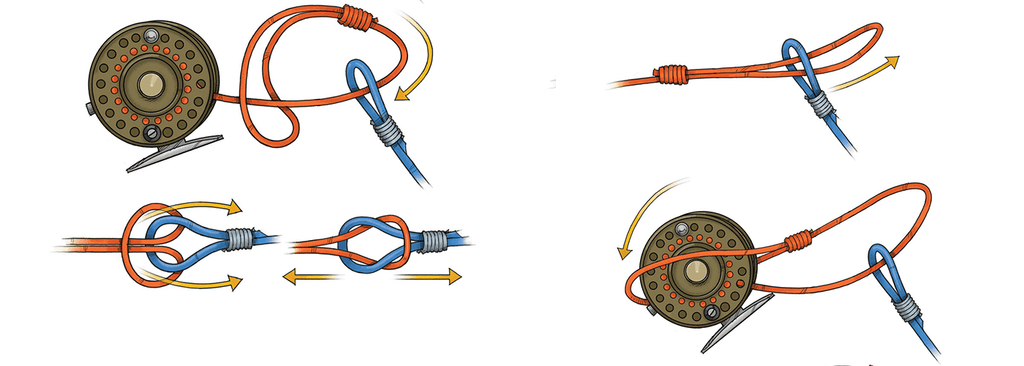
Wrap the line around the spool once or twice. Tie a secure knot to hold the line in place.
Use a strong knot like the arbor knot. Pull the knot tight and trim any extra line close to it.
- Wrap line around spool
- Tie a firm knot (arbor knot works well)
- Pull tight to secure the knot
- Trim excess line near the knot
- Close the bail arm if open

Credit: www.reddit.com
Tying Strong Knots
Tying a strong knot is important to keep your fishing line secure. A good knot helps prevent the line from slipping or breaking.
Here are three popular knots that anglers use to tie their fishing line to the reel. Each knot offers strength and reliability.
Improved Clinch Knot
The Improved Clinch Knot is a simple and strong knot. It works well with most fishing lines and is easy to tie.
- Thread the line through the reel eye.
- Wrap the tag end around the standing line 5 to 7 times.
- Pass the tag end through the small loop near the reel eye.
- Then pass it back through the big loop you just made.
- Wet the knot and pull tight.
Palomar Knot
The Palomar Knot is very strong and works well with braided lines. It keeps most of the line’s strength after tying.
Follow these steps to tie the Palomar Knot:
- Double about 6 inches of line and pass it through the reel eye.
- Tie a loose overhand knot with the doubled line.
- Pass the loop over the reel and hook.
- Pull on both ends to tighten the knot securely.
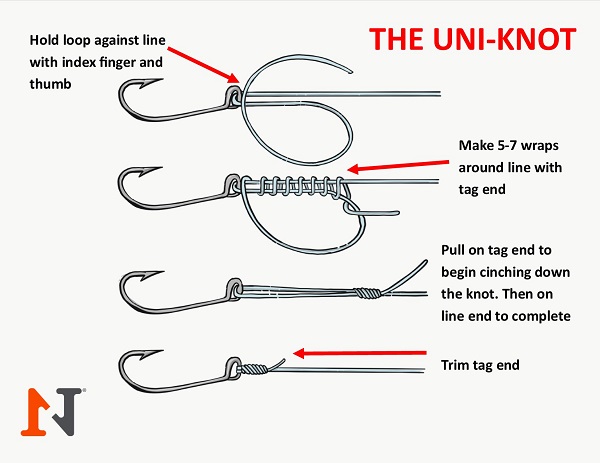
Uni Knot
The Uni Knot is versatile and easy to tie. It works well for connecting line to reel or for joining two lines.
| Step | Action |
| 1 | Pass the line through the reel eye and double back. |
| 2 | Make a loop by laying the tag end against the doubled line. |
| 3 | Wrap the tag end around the doubled line 5 times. |
| 4 | Pull the tag end to tighten the coils snugly. |
| 5 | Slide the knot down to the reel eye and pull tight. |
Testing Knot Strength
After tying your fish line to the reel, it is important to test the knot strength. This ensures the knot will hold during fishing.
Two main ways to check your knot are the tug test and visual inspection. Both help avoid losing fish or line damage.
Tug Test
The tug test checks if the knot is tight and secure. You pull firmly on the line to see if the knot holds.
- Hold the reel in one hand.
- Pull the line with the other hand hard but controlled.
- Feel if the knot slips or loosens.
- Repeat the test a few times for safety.
- If the knot slips, retie it and test again.
Visual Inspection
Look closely at the knot to spot any problems. A good knot looks neat and tight without loose ends.
| What to Check | Signs of a Good Knot | Signs of a Weak Knot |
|---|---|---|
| Tightness | Line wraps are firm and close | Loose loops or gaps |
| Ends | Ends trimmed close to knot | Long, frayed, or uneven ends |
| Position | Knot sits near reel spool | Knot moves along the line |
Credit: n1outdoors.com
Tips For Maintaining Your Line And Knots
Keeping your fishing line in good shape helps you catch more fish. Proper care stops your line from breaking or tangling. Learning how to keep your knots tight and your line smooth is important for every angler.
This guide shares simple tips on replacing your line regularly and avoiding twists. Follow these steps to keep your fishing gear ready for the water.
Regular Line Replacement
Fishing line gets weaker over time from sun, salt, and use. Replace your line often to avoid sudden breaks. Check your line for cracks, discoloration, or stiffness before every trip.
- Replace braided line every 6 months
- Change monofilament line after 3 to 4 fishing trips
- Use fresh line if it feels rough or looks damaged
- Store your line in a cool, dark place to extend life
- Remove old line from your reel before adding new line
Avoiding Line Twists
Line twists cause tangles and weak spots. They happen when the line spins as you reel in. Fixing twists helps your line last longer and works better.
| Tip | How to Do It |
|---|---|
| Use a swivel | Attach a swivel between the line and lure to stop twisting |
| Check your reel | Make sure the spool spins smoothly without wobbling |
| Let line out carefully | When casting, let the line flow freely to avoid loops |
| Reel in slowly | Keep tension on the line while reeling to reduce twists |
| Untwist line manually | If twists form, let the line hang and untwist by hand |
Frequently Asked Questions
How Do I Choose The Right Fishing Line?
Choosing the right fishing line depends on your target species and fishing environment. Consider line strength, type (monofilament, fluorocarbon, or braided), and diameter. Monofilament is versatile, fluorocarbon is invisible underwater, and braided offers strength. Match your line to your reel and fishing conditions for optimal performance.
What Tools Are Needed To Tie Fishing Line To A Reel?
To tie fishing line to a reel, you need a fishing line, reel, scissors, and sometimes a knot-tying tool. Scissors help trim excess line for a neat finish. A knot-tying tool can make the process easier for beginners.
What Is The Best Knot For Attaching Line To A Reel?
The Arbor Knot is commonly used for tying fishing line to a reel. It provides a secure and reliable connection. This knot is easy to tie and ensures your line is firmly attached, preventing slippage during casting and retrieval.
Why Does My Fishing Line Keep Slipping?
Fishing line may slip due to incorrect knot tying or reel tension. Ensure the knot is tight and secure. Check reel tension and adjust as needed. Using the right knot and maintaining proper tension can prevent line slippage, enhancing your fishing experience.
Conclusion
Tying your fish line to the reel is simple with practice. Use the right knot and tighten it well. Check the line for any slips before fishing. A secure line helps avoid losing fish or gear. Keep your tools ready and stay patient.
Soon, this task will feel easy and quick. Enjoy your fishing trips with confidence and good preparation.