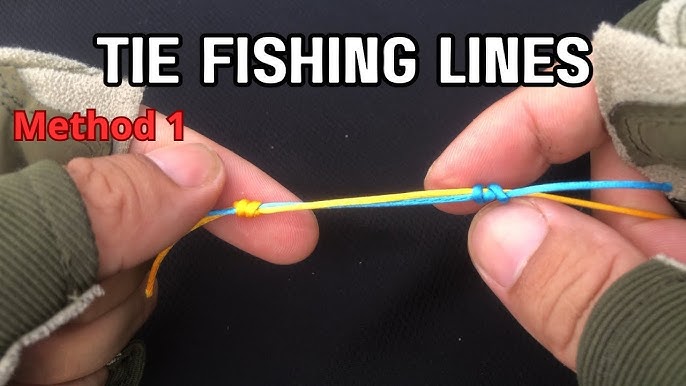
Tying two fishing lines together might seem tricky, but it’s a skill every angler needs. Whether you’re joining different types of lines or just adding extra length, knowing the right knots can save your catch and prevent frustrating breaks.
In this guide, you’ll discover simple, reliable methods to connect your lines quickly and securely. Get ready to boost your fishing game with easy steps you can master today. Keep reading to learn how to make your fishing setup stronger and more effective.

Credit: www.youtube.com
Types Of Fishing Knots
Tying two fishing lines together is important for many fishing situations. Using the right knot keeps your line strong and secure.
There are many types of fishing knots. Each knot has a different use and strength. It is good to know a few common knots.
Importance Of Choosing The Right Knot
Choosing the right knot helps prevent your line from breaking. A strong knot keeps the fish on the hook.
The wrong knot can slip or weaken the line. This can cause you to lose your catch or gear.
Common Knots For Tying Lines
Some knots work better for tying two lines together. They are easy to learn and very strong.
- Blood Knot: Good for lines of similar size. It holds well and is smooth.
- Double Uni Knot: Works well for different line sizes. It is strong and reliable.
- Albright Knot: Great for tying heavy lines to light lines. It is tough and neat.
- Sheet Bend: Simple knot for quick use. Best for lines of different thickness.
Double Uni Knot
The Double Uni Knot is a popular way to tie two fishing lines together. It works well for lines of different thicknesses and materials.
This knot is strong and easy to tie. Many anglers use it for joining braided line to monofilament or fluorocarbon.
Step-by-step Instructions
Start by overlapping the two line ends side by side. Leave enough length to work with.
Take the first line end and wrap it around the second line 4 to 6 times. Pass the tag end through the loop near the lines.
Pull the wraps tight but do not close the knot yet. Repeat the same wraps with the second line end around the first line.
Pass the second line’s tag end through its loop. Now pull both standing lines slowly to tighten each knot.
Make sure the knots slide together neatly. Trim the tag ends close to the knots to finish.
Advantages Of Using Double Uni
This knot works well with different types of fishing lines. It holds strong even under heavy tension.
The Double Uni Knot is easy to tie and untie. It does not weaken the line much, keeping its strength.
- Strong and reliable connection
- Works with lines of different thickness
- Minimal line weakening
- Easy to tie and untie
- Knot stays neat and compact
Blood Knot
The blood knot is a popular fishing knot. Anglers use it to join two lines of similar size. It holds well and keeps the line strong.
This knot is common when tying fluorocarbon or monofilament lines. It helps keep the line smooth and easy to cast.
Simple Guide To Tying
To tie a blood knot, start by overlapping two line ends. Wrap one line around the other five to seven times. Then, wrap the other line around the first line the same number of times. Pass the ends back through the middle loop. Pull both lines tight to secure the knot.
- Overlap the two line ends for about 6 inches.
- Wrap the first line around the second 5-7 times.
- Wrap the second line around the first 5-7 times.
- Thread both tag ends back through the center loop.
- Moisten the knot to reduce friction.
- Pull both standing lines carefully to tighten the knot.
- Trim the tag ends close to the knot.
Best Uses For Blood Knot
The blood knot works best for joining lines of similar diameter. It is strong and keeps the line smooth for casting.
| Use | Details |
| Fly Fishing | Joining tippet to leader |
| Saltwater Fishing | Connecting main line to leader |
| Freshwater Fishing | Joining lines without thick knots |
| Light to Medium Lines | Works best with lines 4 to 20 lb test |
Albright Knot
The Albright Knot is a popular fishing knot used to join two lines of different thickness or material. It is strong and reliable, making it a good choice for connecting a heavy leader to a lighter main line.
This knot works well for both monofilament and braided lines. It is easy to tie and holds up under pressure during fishing.
How To Tie Albright Knot
Follow these steps to tie the Albright Knot securely:
- Make a loop with the thicker line or leader.
- Pass the thinner line through the loop from the bottom.
- Wrap the thinner line around both strands of the loop 10 to 12 times.
- Thread the thinner line back through the loop in the same direction it came out.
- Moisten the knot with water or saliva to reduce friction.
- Pull both ends slowly to tighten the knot securely.
- Trim the tag ends close to the knot.
Benefits In Fishing Scenarios
| Benefit | Explanation |
| Strong Connection | Holds tightly between lines of different sizes and materials. |
| Versatile Use | Works well with monofilament, fluorocarbon, and braided lines. |
| Easy to Tie | Simple steps make it accessible for beginners and experts. |
| Good Knot Profile | Slender shape passes easily through rod guides and reels. |
| Resists Slipping | Secure wraps prevent the knot from coming loose under tension. |
Surgeon’s Knot
The surgeon’s knot is a popular fishing knot. It joins two lines firmly and reliably.
This knot is easy to tie and holds tight under pressure. Many anglers trust it for connecting lines.
Procedure For Tying
Follow these steps to tie a surgeon’s knot properly:
- Overlap the two line ends by about 6 inches.
- Make a simple overhand knot with both lines together.
- Pass the line ends through the loop one more time.
- Pull the knot tight, keeping tension on both lines.
- Moisten the knot before fully tightening it.
- Trim the tag ends close to the knot.
When To Use Surgeon’s Knot
The surgeon’s knot works best in these situations:
- Joining two lines of similar thickness
- Connecting lines of different materials
- Needing a quick and strong knot
- Fishing in cold or wet conditions
- When a knot needs to slide easily at first
| Line Type | Recommended Use |
| Monofilament | Good for most fishing setups |
| Fluorocarbon | Works well with fluorocarbon leaders |
| Braid | Effective but can slip if not moistened |

Credit: www.youtube.com
Tips For Secure Knots
Tying two fishing lines together needs care to keep the knot strong. A secure knot stops your lines from slipping or breaking.
Using the right technique and checking the knot helps you fish with confidence. Good knots hold well under pressure.
Testing Knot Strength
After tying, pull the knot hard to check its strength. It should hold firm without slipping or loosening.
Test the knot with the same force you expect from a fish. This practice avoids surprises during fishing.
- Pull the lines slowly and steadily
- Look for any slipping or gaps
- Retie the knot if it feels weak
- Wet the knot before tightening for better grip
Avoiding Common Mistakes
Many anglers tie knots too quickly or skip steps. This weakens the connection between lines.
Failing to wet the line before tightening can cause friction that damages the line. Also, using the wrong knot type can reduce strength.
- Don’t rush when tying knots
- Always wet the lines before pulling tight
- Choose knots suitable for your line type
- Trim excess ends close to the knot
- Practice tying knots regularly to improve skill
Materials And Tools
Tying two fishing lines together is a useful skill for anglers. It helps connect lines of different types or lengths.
Choosing the right materials and tools makes knot tying easier and stronger. This guide explains what you need.
Choosing The Right Fishing Line
Pick fishing lines that fit your fishing style and conditions. Lines come in different materials and strengths.
Monofilament is flexible and easy to tie. Fluorocarbon sinks and is less visible underwater. Braided lines are strong and thin.
- Match line strength to the fish you want to catch
- Use similar line types for better knot strength
- Consider the water clarity and depth
Essential Tools For Knot Tying
Some tools help you tie fishing lines more easily and securely. Keep them ready before you start.
Good tools make knots tighter and reduce damage to the line.
- Sharp scissors or line clippers to cut lines cleanly
- Needle-nose pliers to pull tight knots
- A knot-tying tool for beginners
- A small container with water or saliva to wet the knot

Credit: www.wikihow.com
Frequently Asked Questions
What Is The Best Knot To Tie Two Fishing Lines?
The best knot for tying two fishing lines is the Double Uni Knot. It is strong, reliable, and easy to tie. This knot works well for lines of different diameters and maintains good line strength.
How Do You Tie Two Fishing Lines Of Different Thickness?
Use the Double Uni Knot to tie lines of different thickness. It securely joins lines without slipping. Make sure to wet the knot before tightening to reduce friction and increase knot strength.
Can I Tie Two Fishing Lines Without A Knot?
Tying two fishing lines without a knot is not recommended. Knots provide the necessary grip and strength. Using proper knots ensures your lines stay connected under tension and prevents line breakage.
How Strong Is A Double Uni Knot For Fishing Lines?
The Double Uni Knot retains about 85-90% of the line’s original strength. It is one of the strongest knots for joining two lines. Proper tying and wetting increase its reliability during fishing.
Conclusion
Tying two fishing lines is a key skill for anglers. Practice the knots shown here to join lines firmly. Choose the right knot for your line type and fishing style. Strong, well-tied knots help catch more fish and avoid losing gear.
Keep trying until you feel confident with each knot. Simple steps make fishing easier and more fun. Remember, patience and practice build your fishing success.