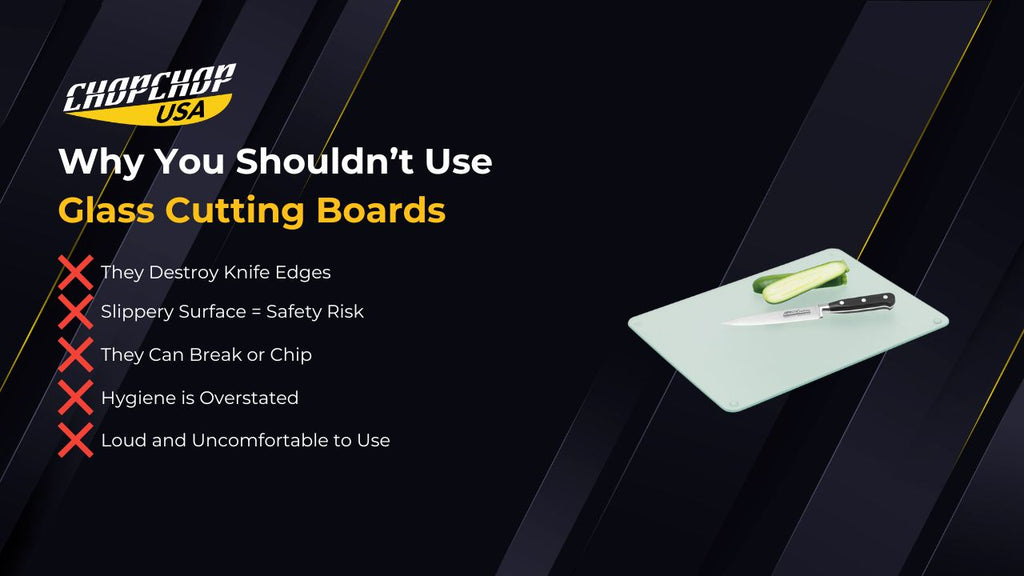
Are you thinking about using a glass cutting board in your kitchen but wondering if it’s really safe? You’re not alone.
Many people ask if glass boards can harm their knives or if they might be a risk for food safety. Before you make a choice, it’s important to understand how glass cutting boards work and what you need to watch out for.
Keep reading, and you’ll discover the surprising facts that could change the way you prep your meals forever. Your kitchen safety and cooking experience depend on it.

Credit: www.amazon.ca
Safety Features Of Glass Cutting Boards
Glass cutting boards are popular in many kitchens. They offer a sturdy surface for cutting foods. Knowing their safety features helps you decide if they fit your needs.
This article explains the material makeup of glass boards and why their surface is safe. It also covers how they resist bacteria better than some other boards.
Material Composition
Glass cutting boards are made from tempered glass. Tempered glass is strong and less likely to break. It can handle sharp knives without deep scratches.
- Tempered glass resists heat and cold
- It does not absorb liquids
- The surface stays smooth and easy to clean
Non-porous Surface Benefits
Glass boards have a non-porous surface. This means they do not have tiny holes where food particles can hide. Non-porous surfaces prevent stains and odors from building up.
| Feature | Glass Cutting Board | Wood Cutting Board |
| Surface Type | Non-porous | Porous |
| Stain Resistance | High | Low |
| Odor Retention | Low | High |
| Ease of Cleaning | Easy | Moderate |
Resistance To Bacteria
Because glass boards have a smooth and sealed surface, bacteria cannot enter them easily. They clean well with soap and water, reducing bacteria risks.
Key points about bacteria resistance:
- Non-porous surface blocks bacteria growth
- Easy to sanitize with common cleaning methods
- Less chance of cross-contamination

Credit: www.amazon.ca
Potential Risks Of Glass Cutting Boards
Glass cutting boards look clean and modern in kitchens. They are easy to wash and do not absorb stains.
Still, glass cutting boards come with some risks. It is important to know these before choosing one.
Knife Damage And Dulling
Glass cutting boards are very hard and smooth. This can harm your knives quickly. The sharp edges of knives hit the hard glass surface and wear down.
- Knives lose sharpness faster on glass.
- Cutting on glass can cause chips on knife edges.
- Replacing or sharpening knives often can be costly.
Slippery Surface Concerns
Glass cutting boards can be slippery. This makes cutting unsafe. Wet or oily hands increase the risk of slipping.
- Place a damp cloth under the board to stop slipping.
- Keep the board dry before cutting.
- Use a glass board with a textured surface for more grip.
Risk Of Cracking Or Shattering
Glass boards can crack or break if dropped or hit hard. This risk is higher with thin or low-quality glass.
| Cause | Effect |
| Heavy impact | Cracks or breaks the glass |
| Extreme temperature change | May cause shattering |
| Sharp knife hits edge | Can chip or crack the board |
Comparing Glass With Other Cutting Boards
Choosing the right cutting board affects your kitchen safety and food preparation. Glass boards differ from wood, plastic, and bamboo in many ways.
This article compares glass cutting boards to wood, plastic, and bamboo options. Learn how each type works for safety and use.
Wood Vs Glass
Wood cutting boards are gentle on knives and have natural antibacterial properties. Glass boards are harder and more durable but can dull knives quickly.
- Wood absorbs some liquid, reducing slip risks.
- Glass is non-porous and easy to clean.
- Wood boards may crack or warp if not cared for.
- Glass boards can break if dropped.
Plastic Vs Glass
Plastic cutting boards are lightweight and affordable. Glass boards resist stains and odors better but are less forgiving on knife edges.
| Feature | Plastic | Glass |
| Weight | Light | Heavy |
| Knife Friendly | Yes | No |
| Cleaning | Dishwasher Safe | Easy to Clean |
| Durability | Can Scar | Hard, May Break |
| Stain Resistance | Moderate | High |
Bamboo Vs Glass
Bamboo boards are eco-friendly and harder than most woods. Glass boards do not absorb liquids but can cause knives to dull fast.
- Bamboo is renewable and less prone to bacteria.
- Glass is non-porous and dishwasher safe.
- Bamboo requires oiling to stay in good shape.
- Glass boards may chip or crack with heavy use.
Expert Tips For Using Glass Cutting Boards
Glass cutting boards are popular for their sleek look and easy cleaning. Many wonder if they are safe to use daily.
This guide shares expert advice on cleaning, cutting, and caring for glass boards to keep them safe and lasting longer.
Proper Cleaning Techniques
Cleaning glass cutting boards is simple but important for safety. Use warm, soapy water and rinse well.
- Wash after every use to prevent bacteria build-up
- Use a soft sponge to avoid scratches
- Sanitize with vinegar or a mild bleach solution occasionally
- Dry the board completely before storing
Safe Cutting Practices
Glass boards can be hard on knives and slippery. Follow these tips to stay safe and protect your tools.
- Use a sharp knife to reduce slipping
- Cut slowly and carefully to avoid accidents
- Avoid chopping bones or very hard foods
- Keep the board dry to prevent slipping
- Consider placing a damp cloth under the board for stability
Maintenance And Longevity
Proper care extends the life of your glass cutting board. Avoid damage by handling it right.
| Maintenance Tip | Reason |
| Do not use metal scrapers | Prevents surface scratches |
| Store flat and dry | Stops warping or cracking |
| Replace when chipped | Chips can harbor bacteria and cut hands |
| Use for light cutting tasks | Preserves knife edge and board surface |
When To Avoid Glass Cutting Boards
Glass cutting boards look clean and stylish in any kitchen. But they are not always the best choice. Some tasks and cooking styles need a different cutting board material.
Knowing when to avoid glass boards can help keep your knives sharp and your kitchen safe. Let’s look at two main situations where glass boards are not ideal.
High Volume Cooking Needs
Cooking for many people means cutting a lot of ingredients fast. Glass cutting boards can slow you down. They are hard and slippery, which makes cutting many items tiring and unsafe.
- Glass boards cause knives to slip easily.
- They can dull knives quickly with heavy use.
- Cleaning glass boards after lots of use takes extra time.
- They do not absorb impacts, so they can crack or chip.
Heavy-duty Cutting Tasks
Heavy-duty cutting means chopping bones, thick meats, or hard vegetables. Glass boards are not strong enough for this. They can break and damage your knives.
| Task | Glass Board Suitability |
| Chopping bones | Not safe – may crack board |
| Cutting thick meat | Not recommended – dulls knives |
| Slicing soft vegetables | Acceptable |
| Light fruit cutting | Safe |

Credit: www.amazon.ca
Frequently Asked Questions
Are Glass Cutting Boards Safe For Everyday Use?
Glass cutting boards are safe for everyday use but can dull knives faster. They are non-porous and hygienic, reducing bacterial buildup. However, they may cause knife slips due to their slick surface, so caution is needed during cutting.
Do Glass Cutting Boards Damage Kitchen Knives?
Yes, glass cutting boards can damage kitchen knives. Their hard, unforgiving surface dulls blades quicker than wood or plastic. Regular sharpening is needed to maintain knife edges if you use glass boards frequently.
Can Glass Cutting Boards Break Or Chip Easily?
Glass cutting boards can break or chip if dropped or hit hard. Tempered glass is more durable but not unbreakable. Handle with care to avoid accidents and potential injury from broken glass pieces.
How Hygienic Are Glass Cutting Boards Compared To Wood?
Glass cutting boards are more hygienic than wood because they don’t absorb juices or bacteria. They are easy to clean and dishwasher safe, ensuring thorough sanitation after each use.
Conclusion
Glass cutting boards have their pros and cons. They look stylish and resist scratches. Yet, they can dull knives quickly. Some people worry about safety. Glass can break or chip. Always check for damage before use. Use proper technique to protect your fingers.
For some, they work well. Others prefer different materials. Consider your needs and kitchen habits. Choose a cutting board that fits your lifestyle. Safety and practicality should guide your decision. Always handle glass with care. Enjoy safe and happy cooking!