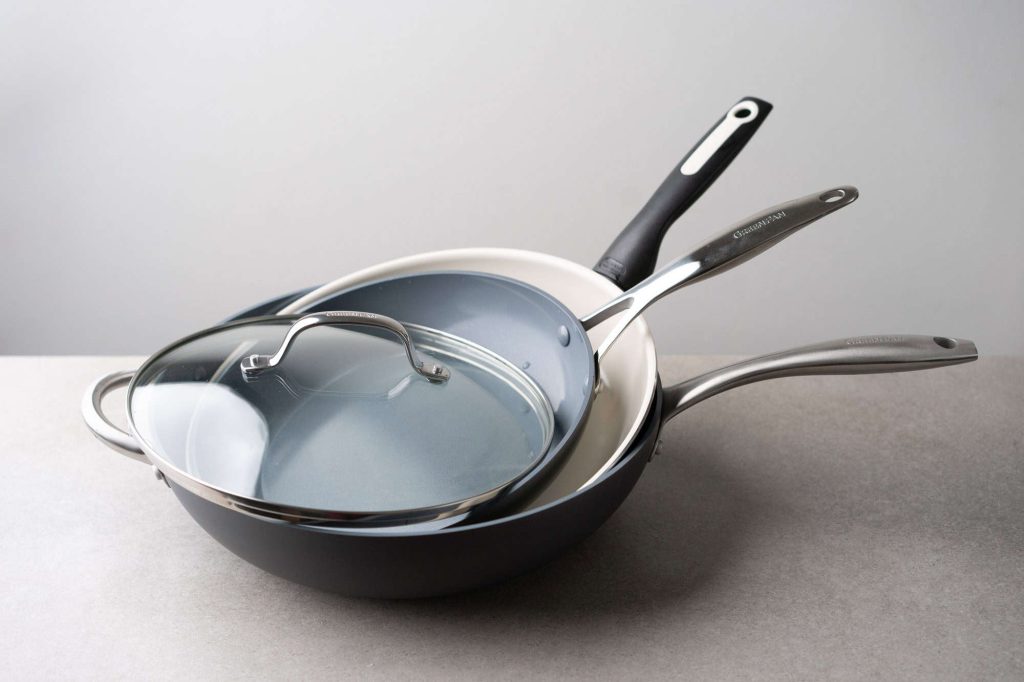
You’ve probably heard a lot about Greenpan and its promise of healthy, non-toxic cookware. But you might still be wondering—is Greenpan actually safe for you and your family?
After all, when it comes to what touches your food, safety can’t be an afterthought. You’ll discover the truth behind Greenpan’s materials, how it stands up to everyday cooking, and whether it lives up to its reputation. Keep reading to find out if Greenpan is the smart choice for your kitchen.

Credit: www.amazon.ca
Greenpan Material And Coating
Greenpan cookware uses a special material and coating to keep cooking safe. It aims to give you a good non-stick experience without harmful chemicals.
Understanding its ceramic coating and what it means for your health helps you decide if Greenpan is right for your kitchen.
Ceramic Non-stick Technology
Greenpan uses a ceramic non-stick coating made from natural minerals. This coating allows food to slide off easily while cooking. It heats evenly and is free from metals that can cause health risks.
The ceramic layer is applied over an aluminum base, which helps with fast and even heat distribution. This design makes cooking simple and cleanup quick.
Absence Of Pfas And Pfoa
Greenpan cookware does not contain PFAS or PFOA. These chemicals are often used in traditional non-stick coatings but can harm health over time.
- PFAS stands for per- and polyfluoroalkyl substances.
- PFOA is perfluorooctanoic acid, a type of PFAS.
- Both chemicals may release toxins when heated.
- Greenpan avoids these substances completely.
Durability And Scratch Resistance
Greenpan’s ceramic coating is designed to resist scratches and last longer than some other coatings. It holds up well to daily use with proper care.
| Feature | Details |
| Scratch Resistance | Good, but avoid metal utensils |
| Cleaning | Use soft sponges only |
| Lifespan | Several years with proper use |
| Heat Tolerance | Up to 450°F (232°C) |

Credit: www.amazon.ca
Health Impact Of Greenpan Cookware
Greenpan cookware claims to be a safer alternative to traditional non-stick pans. It uses a ceramic coating instead of chemicals like PFOA and PFAS. This article looks at the health effects of using Greenpan cookware.
We will explore chemical emissions when heated, risks compared to other non-stick pans, and user reports on safety and performance.
Chemical Emissions When Heated
When cookware heats up, it can release chemicals into the air and food. Greenpan uses Thermolon ceramic coating, which is free from toxic substances like PFOA and PFAS. These chemicals are often found in traditional non-stick coatings.
- Greenpan’s ceramic coating does not emit harmful fumes at normal cooking temperatures.
- It can tolerate heat up to 450°C (842°F) without breaking down.
- Traditional non-stick pans may release toxic fumes if overheated above 300°C (572°F).
- Cooking at moderate temperatures with Greenpan reduces chemical risks.
Potential Risks Compared To Traditional Non-stick
| Risk Factor | Greenpan Cookware | Traditional Non-Stick Cookware |
|---|---|---|
| Chemical Coating | Ceramic-based, free of PFOA/PFAS | PTFE coating, may contain PFOA/PFAS |
| Heat Resistance | Up to 450°C (842°F) | Safe up to 260-300°C (500-572°F) |
| Toxic Emissions | Minimal at cooking temperatures | Possible toxic fumes if overheated |
| Durability | May chip or wear over time | More prone to scratching and flaking |
User Experiences And Reports
Many users report that Greenpan cookware feels safer to use. They like the non-stick surface without the smell or fumes of traditional pans. Some note the coating can wear off after heavy use.
- Users say food cooks evenly and cleans easily.
- Some mention the ceramic coating may chip after a year or two.
- Most feel no health issues related to Greenpan use.
- A few recommend avoiding very high heat to protect the coating.
Environmental Considerations
GreenPan cookware is known for its non-toxic ceramic coating. This section looks at its impact on the environment. We focus on materials, production, and waste issues.
Understanding these factors helps shoppers make better choices. It also shows if GreenPan is truly eco-friendly.
Sustainability Of Materials Used
GreenPan uses natural materials in its ceramic coating. This reduces chemicals that harm the earth. The base metals include aluminum, which is recyclable and light.
- Ceramic coating made from sand and minerals
- Free from PTFE and PFOA chemicals
- Aluminum core for efficient heat use
- Handles often made from recycled materials
Manufacturing Process Impact
The production of GreenPan tries to cut down energy use. It avoids toxic chemicals in the coating process. This lowers pollution and health risks for workers.
| Process Stage | Environmental Focus | Impact |
|---|---|---|
| Raw Material Sourcing | Use of natural minerals | Less chemical pollution |
| Coating Application | No PTFE or PFOA | Safer air quality |
| Assembly | Energy-efficient methods | Lower carbon emissions |
Recyclability And Waste
GreenPan products can be recycled, but this depends on local facilities. The aluminum base is recyclable. Ceramic coatings do not break down easily, so they add to landfill waste.
- Aluminum core is widely recyclable
- Ceramic coating is durable but non-biodegradable
- Proper disposal helps reduce landfill waste
- Packaging often uses recycled cardboard
Credit: www.organicauthority.com
Comparing Greenpan With Other Cookware
Greenpan cookware uses a ceramic non-stick coating. It is often compared to other types of pans. This helps buyers decide which suits their kitchen needs.
This article looks at Greenpan versus Teflon pans, stainless steel, and cast iron. We also review price and performance.
Greenpan Vs Teflon Coated Pans
Both Greenpan and Teflon pans offer non-stick surfaces. Greenpan uses a ceramic coating, while Teflon uses PTFE. Greenpan claims its coating is free from harmful chemicals that Teflon might release if overheated.
- Greenpan can handle higher temperatures without damage.
- Teflon pans may degrade if overheated above 500°F (260°C).
- Greenpan coating is more scratch-resistant but not indestructible.
- Teflon pans are usually lighter and heat up quickly.
- Both require care to avoid scratching and reduce wear.
Greenpan Vs Stainless Steel And Cast Iron
Stainless steel and cast iron do not have non-stick coatings. They offer different cooking experiences compared to Greenpan.
| Feature | Greenpan | Stainless Steel | Cast Iron |
|---|---|---|---|
| Non-stick Surface | Yes, ceramic coating | No | No |
| Heat Retention | Moderate | Moderate | High |
| Weight | Light to medium | Light to medium | Heavy |
| Maintenance | Gentle cleaning needed | Dishwasher safe | Seasoning required |
| Durability | Good but coating wears | Very durable | Very durable |
Price And Performance Balance
Greenpan offers a mid-range price point. It balances cost with ease of use and safety features.
- Greenpan costs more than basic Teflon pans but less than some cast iron sets.
- It provides non-stick benefits without some chemical risks of Teflon.
- Stainless steel and cast iron last longer but need more skill and care.
- Greenpan is a good option for easy cooking and cleaning.
Tips For Safe Use And Maintenance
GreenPan cookware offers a non-toxic alternative for cooking. To keep it safe and long-lasting, proper care is important.
Follow simple steps for heating, cleaning, and maintaining your pan. This will help you cook safely and extend the pan’s life.
Proper Heating Techniques
Use medium or low heat to protect the pan’s coating. Avoid high heat, which can damage the surface.
- Preheat the pan slowly before adding food.
- Do not heat an empty pan for a long time.
- Use cooking oil or butter to prevent sticking.
- Avoid using metal utensils to stop scratches.
Cleaning And Care Instructions
Clean your GreenPan carefully to keep the coating intact. Use gentle methods to avoid damage.
| Cleaning Method | Recommended |
| Dishwasher | Not recommended |
| Hand wash with mild soap | Yes |
| Abrasive scrubbers | No |
| Soft sponge or cloth | Yes |
Extending Pan Lifespan
Use these tips to make your GreenPan last longer and stay safe for cooking.
- Store pans carefully to avoid scratches.
- Use wooden or silicone utensils only.
- Do not stack pans without protection.
- Allow the pan to cool before washing.
- Replace the pan if the coating peels or wears off.
Frequently Asked Questions
Is Greenpan Cookware Non-toxic?
Yes, GreenPan cookware is non-toxic and free from harmful chemicals like PFOA and PTFE. It uses Thermolon, a ceramic non-stick coating, ensuring safe cooking. This makes it a healthier alternative to traditional non-stick cookware, reducing the risk of exposure to toxic fumes.
What Materials Are Used In Greenpan?
GreenPan primarily uses Thermolon, a ceramic-based non-stick coating. It’s made without PFAS, PFOA, lead, or cadmium. The base materials typically include aluminum, which provides even heat distribution. This combination ensures a safer cooking experience, promoting healthier meals without compromising on performance.
How Durable Is Greenpan Cookware?
GreenPan cookware is designed for durability, withstanding typical kitchen use. Its Thermolon coating is scratch-resistant, enhancing longevity. However, using metal utensils or high heat may reduce its lifespan. Proper care, like hand washing and using silicone or wooden utensils, can prolong its durability.
Can Greenpan Be Used On All Stovetops?
Yes, most GreenPan cookware is compatible with all stovetops, including induction. It features a durable base that ensures even heat distribution. However, it’s important to check specific product details, as some models may not be suitable for induction. Always refer to the manufacturer’s guidelines for best results.
Conclusion
GreenPan uses ceramic non-stick coating without harmful chemicals. It heats evenly and cleans up easily. Many users find it a safer choice than traditional pans. Still, proper care is key for lasting safety and performance. Avoid overheating to keep the coating intact.
Overall, GreenPan offers a good option for safer cooking. It blends convenience with healthier materials. Consider your cooking habits before choosing any cookware. Safe cooking starts with smart choices in the kitchen.