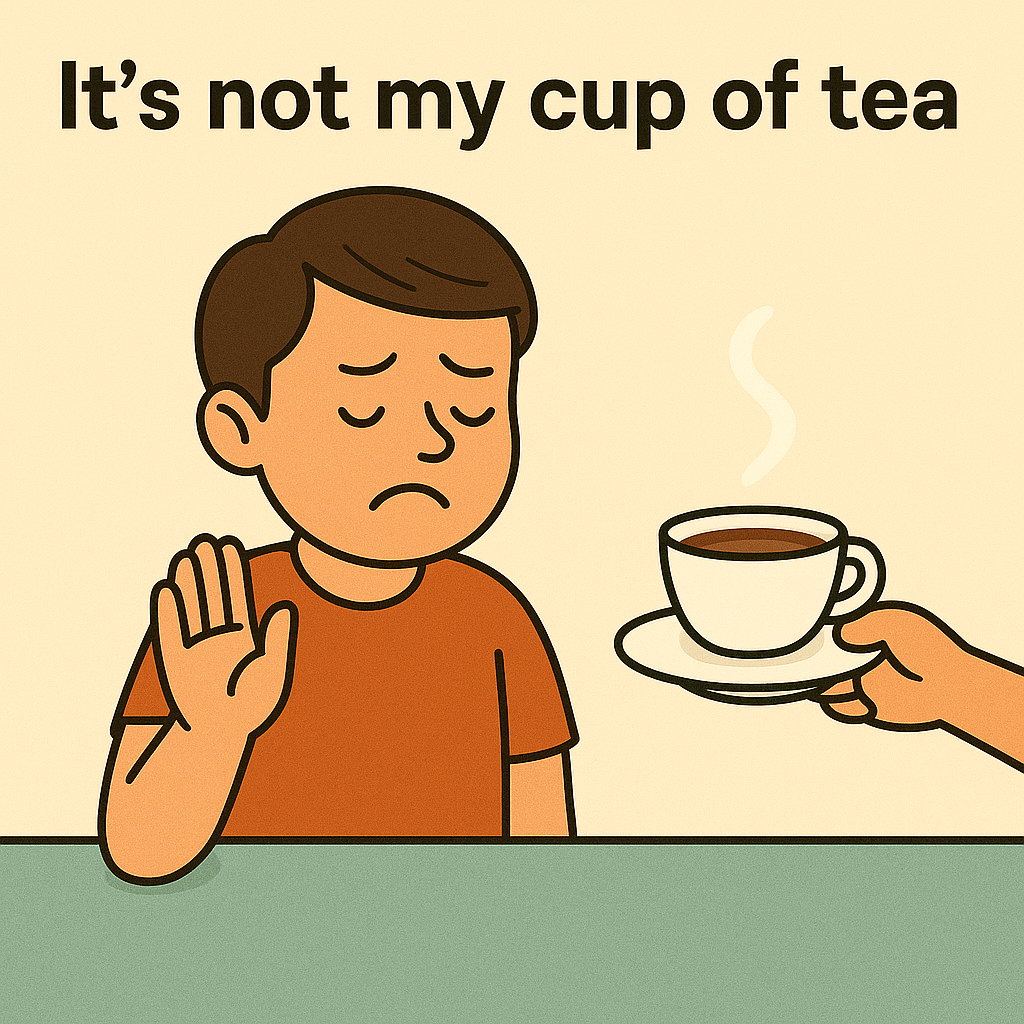
Have you ever heard someone say, “That’s not my cup of tea,” and wondered what it really means? Maybe you’ve used it yourself without thinking twice.
But why tea? And why does this phrase perfectly capture the feeling of something not being quite right for you? If you want to understand this common expression clearly—and maybe even use it confidently—keep reading. By the end, you’ll see why this simple phrase speaks volumes about your likes, dislikes, and personal taste.
Ready to discover the story behind “not my cup of tea”? Let’s dive in!

Credit: www.threads.com
Origin Of The Phrase
The phrase “not my cup of tea” means something is not liked or preferred. It is a common way to say you do not enjoy or agree with something.
This expression uses the idea of tea, a popular drink, to show personal taste. It suggests that just like people have different tastes in tea, they also have different likes and dislikes.
Early Use In British Culture
The phrase started in Britain, where tea drinking is very common. It first appeared in the early 1900s. People used it to talk about their personal tastes politely.
Tea was a daily drink for many, so saying something was “not my cup of tea” was an easy way to say it was not to one’s liking.
Popularization In The 20th Century
The phrase became popular in the 1920s and 1930s. Writers and speakers used it in books and conversations. It helped people express dislike without being rude.
Since then, the phrase spread beyond Britain and is now used in many English-speaking countries.
Why Tea?
Tea was a common drink in British homes. Everyone had their own preferred way of drinking tea. This made tea a good example for personal choice.
- Tea drinking was part of daily life
- People had different tastes in tea
- The phrase shows personal preference clearly
Credit: kidminds.org
Literal Vs Figurative Meaning
The phrase “not my cup of tea” is common in English. It can be confusing because it has both a literal and a figurative meaning.
Understanding the difference helps you use the phrase correctly in daily talk.
Literal Meaning
Literally, “not my cup of tea” means you do not like a cup of tea. It refers to the actual drink.
If someone offers you tea and you say this, you mean you do not want tea.
Figurative Meaning
Figuratively, “not my cup of tea” means you do not like something in general. It is about preferences.
People use this phrase to say they do not enjoy an activity, food, or idea.
- Watching horror movies is not my cup of tea.
- Jazz music is not my cup of tea.
- Running long distances is not my cup of tea.
Common Usage In Daily Life
The phrase “not my cup of tea” means something is not liked or preferred. People use it to say they do not enjoy or want something.
This expression is common in everyday talk. It helps share personal dislikes politely.
Talking About Food And Drinks
People often say “not my cup of tea” when they do not like a certain food or drink. It is a soft way to say no without offending someone.
For example, if someone does not like coffee, they might say, “Coffee is not my cup of tea.”
Sharing Opinions On Hobbies
This phrase is useful when talking about hobbies or activities. If a person does not enjoy a hobby, they can say it is not their cup of tea.
For instance, someone may say, “Golf is not my cup of tea,” to show they do not like playing golf.
Describing Preferences In Entertainment
People use this phrase to describe tastes in movies, music, or books. It helps express personal likes without being rude.
An example is, “Horror movies are not my cup of tea,” which means the person does not enjoy that genre.
Expressing Feelings About Social Situations
Sometimes, people use “not my cup of tea” to talk about social events or settings they dislike. It shows they prefer other ways to spend time.
For example, “Big parties are not my cup of tea,” means the person prefers quieter gatherings.
Cultural Variations And Similar Expressions
The phrase “Not my cup of tea” means something is not liked or preferred. Different cultures have their own ways to say this idea.
Knowing similar expressions helps understand how people share dislikes or disinterest around the world.
British Expression: Not My Cup Of Tea
This phrase comes from Britain. It shows that someone does not enjoy or want something. It is polite and common in daily talk.
People use it to say they prefer other things without offending anyone.
American Expression: Not My Thing
In the US, people often say “not my thing” to mean the same idea. It is casual and direct.
It shows personal dislike or lack of interest in an activity or topic.
French Expression: Ce N’est Pas Ma Tasse De Thé
The French use a phrase very similar to the English one: “Ce n’est pas ma tasse de thé.” It means “not my cup of tea.”
It shows how this idea travels and fits different languages.
Japanese Expression: 興味がない (kyōmi Ga Nai)
In Japan, people say “Kyōmi ga nai,” which means “I have no interest.”
This phrase clearly shows dislike or lack of interest without using metaphors.
Spanish Expression: No Es Lo Mío
Spanish speakers often say “No es lo mío,” meaning “It’s not my thing.”
It is a simple way to express that something is not liked or preferred.
Similar Expressions In English
- Not my thing
- Doesn’t float my boat
- Not for me
- Not up my alley
These phrases all show dislike or that someone does not want to do something.
Examples In Literature And Media
The phrase “not my cup of tea” means something is not liked or preferred. It is often used to show dislike for hobbies, tastes, or styles.
This phrase appears in many books, movies, and TV shows. Writers use it to show a character’s opinions clearly and simply.
In Jane Austen’s Novels
Jane Austen’s characters often use polite language to express dislike. Saying something is “not my cup of tea” fits well with their polite speech.
For example, a character might say this about a dance or a social event they do not enjoy. It shows their feelings without being rude.
In Modern Tv Shows
Many TV shows use “not my cup of tea” to show a character’s taste quickly. It helps the audience understand what the character likes or dislikes.
For example, a character might say this when offered a food they do not like or when talking about a hobby they find boring.
In Popular Movies
Movies often use this phrase in dialogues to sound natural. Characters use it to refuse something politely or show a difference in opinion.
For example, a character might say it after being invited to a party or asked to try a new activity they dislike.
In Children’s Books
Children’s books use simple phrases like “not my cup of tea” to teach kids about personal preferences. It helps children understand that it is okay to like different things.
Stories may show a character saying this to explain why they do not want to join a game or eat a certain food.
Why People Use This Phrase
The phrase “not my cup of tea” means something is not liked or preferred. People use it to politely say they do not enjoy something.
It is a gentle way to express dislike without sounding rude or harsh. This makes it popular in everyday conversations.
Expressing Personal Preferences
People use this phrase to share their likes and dislikes clearly. It helps others understand what they enjoy or avoid.
Avoiding Direct Negativity
This phrase softens negative opinions. Instead of saying “I hate it,” people say “It’s not my cup of tea” to sound kinder.
Adding A Touch Of Humor
Sometimes, people use this phrase to make their dislike sound light and funny. It shows they are not too serious or angry.
- Shows polite disagreement
- Softens criticism
- Expresses personal taste
- Creates friendly conversation
Cultural Familiarity And Tradition
The phrase comes from British culture where tea is common. Many use it because it feels familiar and easy to understand.
| Reason | Explanation |
| Politeness | Softens negative views |
| Clarity | Shows personal likes or dislikes |
| Humor | Makes dislike less serious |
| Tradition | Common phrase in English speaking |
Alternatives To The Phrase
The phrase “not my cup of tea” means something is not to your liking. You can say it in many ways.
Using different phrases keeps your language fresh and clear. Here are some common alternatives.
Common Phrases With Similar Meaning
These phrases express dislike or lack of interest. They fit well in casual talks.
- Not for me
- Doesn’t float my boat
- Not up my alley
- Not my thing
- Doesn’t do it for me
Formal Alternatives
Use these in formal writing or polite conversations to show you dislike something gently.
- I do not prefer it
- It is not to my taste
- I am not fond of it
- It does not appeal to me
- I find it unappealing
Creative Expressions
These phrases add a creative touch when you want to say something is not enjoyable.
Creative ways to say “Not my cup of tea”:
- Doesn’t tickle my fancy
- Leaves me cold
- Not ringing my bell
- Doesn’t spark joy
- Off my radar
Comparison Table Of Alternatives
| Phrase | Use | Tone |
|---|---|---|
| Not for me | Casual | Neutral |
| It is not to my taste | Formal | Polite |
| Doesn’t float my boat | Casual | Informal |
| Leaves me cold | Creative | Neutral |
| I am not fond of it | Formal | Polite |

Credit: www.threads.com
Frequently Asked Questions
What Does “not My Cup Of Tea” Mean?
The phrase “not my cup of tea” means something that someone does not like or prefer. It indicates a personal dislike or lack of interest in a particular activity, item, or situation. This idiomatic expression is commonly used to express subjective tastes and preferences.
Where Does “not My Cup Of Tea” Originate?
The phrase originated in Britain, where tea is a popular beverage. It was first used in the 19th century. It reflects the idea that just as people have different preferences for tea, they also have different preferences for activities and experiences.
How Do You Use “not My Cup Of Tea” In A Sentence?
To use it, simply state what you don’t prefer. For example, “Rock music is not my cup of tea. ” This indicates that you don’t particularly like rock music, even though others might.
Is “not My Cup Of Tea” A Negative Phrase?
No, it’s not inherently negative. It’s a polite way to express personal preferences without offending others. It’s often used to show that everyone has different tastes and that’s perfectly okay.
Conclusion
The phrase “not my cup of tea” helps express dislikes simply. It shows polite ways to say no or no interest. Using this phrase makes conversations friendly and clear. Now, you can use it in daily talks with ease. Understanding such phrases improves your English skills fast.
Try using it next time you share your opinion. It’s a small step toward sounding more natural in English. Keep learning new phrases to grow your language confidence.