
Have you ever wondered what keeps your air conditioner running smoothly, especially on the hottest days? One small part inside your AC plays a big role in making sure your home stays cool and comfortable.
That part is the air conditioner capacitor. If you don’t know what it is or why it matters, you’re not alone. Understanding this simple but powerful component can save you money, prevent breakdowns, and keep your system working efficiently. Ready to find out what an air conditioner capacitor is and why it’s so important for your comfort?
Let’s dive in.
Air Conditioner Capacitor Basics
Air conditioner capacitors help start and run motors inside AC units. They store and release electrical energy to keep the system working smoothly.
Without capacitors, the motors in your air conditioner would not get the boost they need to run efficiently. Capacitors come in different types, each with a specific role.
Types Of Capacitors In Ac Units
There are mainly three types of capacitors used in air conditioners. Each type supports different parts of the system.
- Start Capacitors:Provide extra power to start the compressor motor.
- Run Capacitors:Help the motors run efficiently after starting.
- Dual Capacitors:Combine start and run functions in one unit.
Capacitor Roles In Cooling Systems
Capacitors play a key role in the cooling system by supporting motor functions. They ensure the compressor and fan motors get the right electrical boost.
| Component | Capacitor Role |
| Compressor Motor | Start and run the motor smoothly |
| Fan Motor | Keep the fan running at steady speed |
| System Efficiency | Reduce energy use and prevent motor damage |

Credit: www.amazon.ca
How Capacitors Work
Air conditioner capacitors store and release electrical energy. They help the AC motor start and run smoothly.
Capacitors work like small batteries. They charge up with electricity and then send it out when needed.
Electric Charge Storage
Capacitors store electric charge by holding opposite charges on two metal plates. The plates are separated by an insulating material called a dielectric.
- When electricity flows in, one plate gains positive charge.
- The other plate gains a negative charge.
- The capacitor holds this charge until the circuit needs it.
- Then it releases the stored energy quickly.
Starting And Running Motors
In air conditioners, capacitors help motors start and keep running. They provide a boost to the motor’s electrical circuit.
| Capacitor Type | Function |
| Start Capacitor | Gives extra power to start the motor |
| Run Capacitor | Helps motor run efficiently |
Signs Of A Faulty Capacitor
Air conditioner capacitors help start the motor and keep it running. A bad capacitor can cause many problems in your AC unit.
Knowing the signs of a faulty capacitor can save you from bigger repairs and keep your home cool.
Common Symptoms In Ac Performance
A faulty capacitor affects how the AC runs. It can cause the unit to work poorly or stop working at all.
Watch for these common symptoms:
- The AC takes longer to start or does not start at all
- The fan or compressor runs slowly or unevenly
- The AC turns off suddenly during operation
- Unusual humming or buzzing noises from the unit
- Warm air blows instead of cool air
Visual Inspection Tips
You can check the capacitor by looking at it carefully. Some signs are easy to spot without special tools.
Look for these visual clues:
- Bulging or swollen top on the capacitor
- Leaks or oily residue around the capacitor
- Burn marks or discoloration on the casing
- Loose or corroded terminals and wires
- Cracks or physical damage on the capacitor body

Credit: www.amazon.ca
Testing Capacitors Safely
Air conditioner capacitors store electrical energy to help start the motor. Testing them ensures your AC runs smoothly. Safety is important because capacitors hold charge even when power is off.
Always discharge the capacitor before testing to avoid electric shock. Use proper tools and follow steps carefully to test capacitors safely.
Tools Needed For Testing
You need a few tools to test capacitors safely and correctly. These tools help check if the capacitor works or needs replacement.
- Multimeter with capacitance setting
- Insulated screwdriver for discharging
- Safety gloves to protect your hands
- Safety glasses to protect your eyes
- Wire cutters or pliers (optional)
Step-by-step Testing Process
Follow these steps to test the capacitor safely. Take your time and do not skip any step.
- Turn off power to the air conditioner at the breaker box.
- Wear safety gloves and glasses for protection.
- Locate the capacitor inside the AC unit.
- Use an insulated screwdriver to discharge the capacitor by touching both terminals.
- Set your multimeter to the capacitance mode.
- Disconnect the capacitor wires carefully.
- Connect the multimeter probes to the capacitor terminals.
- Read the value shown on the multimeter.
- Compare the reading to the capacitor’s rated value printed on its label.
- If the reading is far from the rated value, the capacitor may be faulty.
Replacing Air Conditioner Capacitors
Air conditioner capacitors store electrical energy to help the motor start and run. Over time, capacitors can wear out and need replacing. Knowing how to replace them safely improves your air conditioner’s performance.
This guide explains how to choose the right capacitor, install it correctly, and follow safety steps during replacement.
Choosing The Right Capacitor
Choosing the correct capacitor is important for your air conditioner’s function. Capacitors come with different ratings and types. You must match the new capacitor to the old one or the manufacturer’s specifications.
| Capacitor Type | Common Uses | Voltage Rating |
| Start Capacitor | Helps motor start | Usually 110-440V |
| Run Capacitor | Keeps motor running | Usually 370-440V |
| Dual Capacitor | Start and run in one unit | Usually 370-440V |
Installation Guidelines
- Turn off the power to the air conditioner at the breaker.
- Discharge the old capacitor by shorting its terminals with an insulated screwdriver.
- Note the wiring connections or take a picture for reference.
- Remove the old capacitor carefully.
- Install the new capacitor, matching the wiring to the correct terminals.
- Secure the capacitor and close the access panel.
- Restore power and test the air conditioner.
Safety Precautions
Safety is key when replacing capacitors. Capacitors hold electric charge even when the power is off. You must handle them with care to avoid shocks or damage.
- Always turn off the main power before starting work.
- Use insulated tools to discharge capacitors.
- Wear rubber gloves and safety glasses.
- Do not touch capacitor terminals directly.
- Follow manufacturer instructions for your air conditioner model.
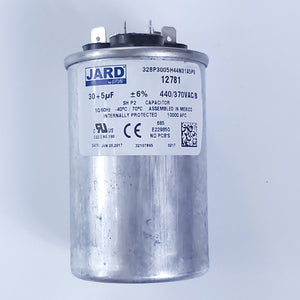
Credit: ottawafurnaceparts.ca
Maintaining Capacitors For Longevity
Air conditioner capacitors store and release energy to start and run the motor. Good maintenance keeps them working longer. It also prevents damage to other parts of the AC unit.
Checking capacitors regularly and protecting them from harsh conditions helps your AC run smoothly. Here are key points to help maintain them well.
Routine Checks
Regular checks find problems before they cause failure. Look for signs of wear or damage. Test the capacitor’s function with a multimeter for correct capacitance.
- Inspect for bulging or leaking parts
- Listen for humming or clicking noises
- Clean dust and dirt around the capacitor
- Check electrical connections for looseness
- Test capacitance every six months
Environmental Factors Affecting Capacitors
Heat, moisture, and vibration reduce capacitor life. Protect your AC unit from these factors to keep capacitors safe.
| Factor | Effect | Protection Method |
| Heat | Speeds up wear | Ensure good ventilation |
| Moisture | Causes corrosion | Use waterproof covers |
| Vibration | Loosens connections | Secure mounting tightly |
When To Call A Professional
Air conditioner capacitors help start and run the system’s motor. Sometimes, these parts fail and cause problems.
Knowing when to call a professional can save time and prevent damage to your AC unit.
Complex Issues Beyond Capacitors
Not all AC problems come from capacitors. Other parts might also fail, causing similar symptoms.
- Electrical wiring problems
- Compressor or motor failure
- Refrigerant leaks
- Thermostat malfunctions
- Clogged air filters or coils
These issues need special tools and knowledge to fix safely and correctly.
Benefits Of Professional Repair
| Benefit | Explanation |
| Safety | Technicians handle electrical parts carefully to avoid shocks or damage. |
| Proper Diagnosis | Experts find the real cause of the problem, not just the symptoms. |
| Quality Repairs | Professionals use correct parts and tools to fix the AC properly. |
| Time-Saving | A trained technician can fix issues faster than a DIY attempt. |
| Prevent Future Problems | Regular check-ups help avoid costly breakdowns later. |
Frequently Asked Questions
What Is The Role Of An Air Conditioner Capacitor?
An air conditioner capacitor stores and releases energy to start the unit’s compressor and fans. It helps regulate the electrical current, ensuring efficient operation. Without a functioning capacitor, the air conditioner might struggle to start or fail to run.
How Do I Know If My Ac Capacitor Is Bad?
Signs of a failing AC capacitor include unusual noises, such as humming, and the unit struggling to start. The air conditioner might also stop blowing cold air or shut off unexpectedly. Regular maintenance can help detect issues early.
Can I Replace An Ac Capacitor Myself?
Replacing an AC capacitor can be dangerous without proper knowledge. Capacitors store high voltage even when the power is off. It’s recommended to hire a qualified technician to ensure safety and proper installation. Always prioritize safety and professional assistance.
How Long Do Ac Capacitors Last?
AC capacitors typically last around 10-15 years, depending on usage and environmental conditions. Regular maintenance can extend their lifespan. Over time, wear and tear may cause them to degrade, affecting the air conditioner’s performance. Monitoring and timely replacement are crucial.
Conclusion
Air conditioner capacitors help your unit start and run smoothly. They store and release energy quickly. Without them, your AC might not work well or could stop. Checking capacitors regularly can save you from costly repairs. Understanding these small parts helps you care for your air conditioner better.
Keep your AC healthy by knowing what makes it tick. Simple steps can keep your home cool and comfortable.