Have you ever noticed your air conditioner suddenly stop working and found ice covering its coils? It’s frustrating, especially when you rely on it to keep your home cool and comfortable.
But why does this happen? What causes an air conditioner to freeze up? Understanding the reasons behind this common problem can save you time, money, and discomfort. You’ll discover the main causes of a frozen air conditioner and simple steps you can take to fix and prevent it.
Keep reading to make sure your AC stays cool and efficient all summer long.

Credit: theacdoctors.com
Common Signs Of A Frozen Ac
Air conditioners can freeze up due to several reasons. It is important to spot the signs early to avoid bigger problems.
Frozen AC units show clear symptoms that affect their performance and safety. Knowing these signs helps you act fast.
Visible Ice Formation
One of the most obvious signs is ice on the AC unit. Ice may form on the coils, pipes, or outside the unit.
The ice looks like frost or thick layers of frozen water. It can block airflow and stop the AC from working properly.
- Ice on evaporator coils inside the unit
- Frozen water droplets on refrigerant lines
- Frost or ice buildup on outdoor compressor
Reduced Cooling Efficiency
A frozen AC cools less effectively. The ice blocks airflow and heat exchange, so the air feels warmer.
You might notice the AC runs longer but does not cool the room well. This wastes energy and raises bills.
- Longer running times with poor cooling
- Rooms stay warm despite AC running
- Increased electricity usage without results
Unusual Noises
Frozen parts inside the AC can cause strange sounds. You may hear banging, gurgling, or hissing noises.
These sounds come from ice blocking moving parts or refrigerant flow. The noises warn you that the unit needs help.
- Banging or knocking from blocked fan blades
- Gurgling sounds from frozen water melting
- Hissing noise from refrigerant leaks or ice
Low Refrigerant Levels
Air conditioners need the right amount of refrigerant to work well. Low refrigerant levels can cause the unit to freeze up. This happens because the cooling process is interrupted.
Understanding how refrigerant affects your air conditioner helps you spot problems early. It also shows why leaks must be fixed quickly.
How Refrigerant Affects Cooling
Refrigerant absorbs heat from inside your home and releases it outside. Low refrigerant means less heat is removed. This causes the evaporator coil to get too cold and freeze.
- Low refrigerant lowers pressure in the system.
- Lower pressure makes the coil temperature drop below freezing.
- Moisture in the air freezes on the coil.
- Ice blocks airflow, reducing cooling power.
Causes Of Refrigerant Leaks
Leaks cause refrigerant to escape, lowering levels in the system. These leaks can happen for several reasons.
| Cause | Description |
| Corrosion | Metal parts wear down and develop holes. |
| Vibration | Parts move and rub, causing small cracks. |
| Poor Installation | Loose fittings allow refrigerant to escape. |
| Wear and Tear | Old systems lose refrigerant over time. |
Poor Airflow Issues
Poor airflow is a common cause of air conditioners freezing up. When air cannot move freely, the system struggles to work properly.
Low airflow lowers the temperature on the coils, causing ice to form. Fixing airflow problems helps prevent freezing.
Clogged Air Filters
Dirty or clogged air filters block air from passing through the system. This reduces airflow and makes the coils colder than they should be.
When air filters are not cleaned or replaced on time, ice can build up on the coils, causing the air conditioner to freeze.
Blocked Vents And Ducts
Vents or ducts that are blocked or closed stop air from flowing properly. This causes uneven cooling and low airflow.
Furniture, dust, or debris can block vents. Ducts can also get crushed or disconnected, which limits airflow and leads to freezing.
- Check for furniture covering vents
- Inspect ducts for damage or disconnection
- Clear dust and debris from vents
Fan Malfunctions
The fan moves air across the coils to keep them cool. If the fan is not working well, airflow drops and ice can form on the coils.
Fan motors can wear out, blades can get dirty, or the fan belt can break. Any of these issues cause poor airflow and freezing problems.
Thermostat And Sensor Problems
Air conditioners can freeze up for many reasons. Two common causes are thermostat and sensor problems. These parts help control the temperature inside your home.
When the thermostat or sensors do not work well, the air conditioner may run too long or not enough. This can cause ice to build up on the coils.
Incorrect Temperature Settings
Setting the thermostat too low can make the air conditioner work harder than needed. This often leads to freezing issues. The system may not get enough warm air to prevent ice.
- Thermostat set below 68°F can cause freezing
- Sudden changes in temperature settings confuse the system
- Leaving the thermostat on “cool” all day may lower coil temperature too much
- Not adjusting settings for outdoor weather may increase freeze risk
Faulty Sensors
Sensors detect the air temperature near the evaporator coil. If sensors fail or move out of position, they give wrong readings. This can stop the air conditioner from working properly.
| Sensor Issue | Effect on Air Conditioner |
| Sensor out of position | Coil gets too cold and freezes |
| Sensor damaged or broken | Incorrect temperature readings |
| Sensor wiring problems | System shuts down or runs too long |
Dirty Evaporator Coils
Air conditioners cool your home by moving heat from inside to outside. Evaporator coils are key parts in this process.
When these coils get dirty, they can cause the air conditioner to freeze up. Dirt blocks airflow and stops proper cooling.
Impact On Heat Exchange
Dirty evaporator coils slow down heat transfer. Dust and grime act like a barrier between air and the coil.
This keeps the coil too cold, causing moisture to freeze on it. The ice buildup blocks airflow even more.
- Less heat moves from air to coil
- Coil temperature drops below freezing
- Ice forms and spreads on coil surface
- Airflow is restricted by ice and dirt
- System works harder and may freeze up
Maintenance Tips
Clean evaporator coils regularly to avoid dirt buildup. This keeps your air conditioner running smoothly.
Check coils at least once a year. Use a soft brush or vacuum to remove dust gently.
- Turn off power before cleaning coils
- Use coil cleaner spray for tough dirt
- Keep air filters clean to reduce dust
- Hire a professional if coils are very dirty
- Schedule regular maintenance to prevent freezing

Credit: serviceplusheatingcooling.ca
Outdoor Unit Concerns
Air conditioners can freeze up due to problems outside the house. The outdoor unit plays a big role in keeping the system running smoothly.
Two common issues are blocked condenser coils and fan problems. These can stop the unit from working right and cause ice to form.
Blocked Condenser Coils
The condenser coils help remove heat from the air. Dirt, leaves, and debris can cover the coils and block airflow. This makes the unit work harder and can cause freezing.
- Dirt and dust build-up
- Leaves and grass clippings
- Bird nests or insect webs
- Nearby plants growing too close
Cleaning the coils regularly keeps the air conditioner working well and stops freeze-ups.
Fan Issues
The fan in the outdoor unit moves air over the coils. If the fan does not work properly, air cannot flow well. This causes the coils to get too cold and freeze.
| Fan Problem | Effect on AC |
| Broken blades | Reduced airflow |
| Motor failure | Fan stops spinning |
| Loose wiring | Fan works intermittently |
| Obstructions | Fan slows down or stops |
Fixing or replacing a bad fan restores airflow. This helps prevent ice from forming on the unit.
Environmental Factors
Air conditioners can freeze up due to many environmental factors. These factors affect how well the system works.
Understanding these causes helps prevent damage and keeps the air conditioner running smoothly.
Extreme Weather Conditions
Very cold weather can cause the air conditioner to freeze. The system is not made to run well in low temperatures.
Freezing outside air makes the coils inside the unit get icy. This stops the air conditioner from working right.
- Cold air lowers coil temperature too much
- Ice blocks airflow and cools the system further
- Snow and ice build-up can damage parts
Humidity Levels
High humidity means more moisture in the air. This moisture can freeze on the coils of the air conditioner.
When moisture turns into ice, it blocks air and stops cooling. This causes the air conditioner to freeze up.
- Wet air adds extra moisture to coils
- Ice forms faster in humid conditions
- Reduced airflow causes system to overwork
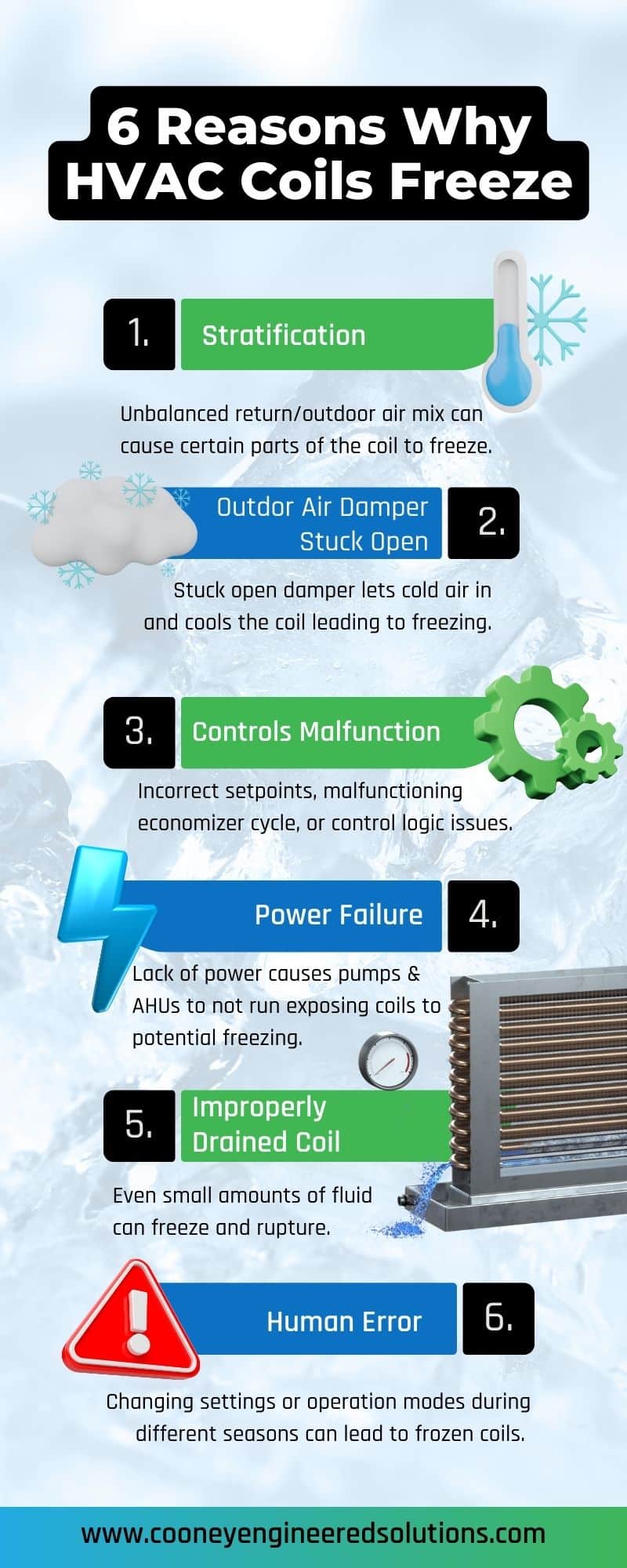
Credit: cooneyengineeredsolutions.com
Preventive Measures
An air conditioner may freeze up due to several reasons. You can prevent this by taking simple steps. Regular care helps keep your system working well.
Preventive measures include regular maintenance and professional inspections. These reduce the risk of freezing and improve cooling.
Regular Maintenance
Doing regular maintenance stops dirt and dust from causing problems. Clean parts help the air conditioner run smoothly and avoid freezing.
- Clean or replace air filters every 1 to 3 months
- Remove debris around outdoor units
- Check refrigerant levels and refill if needed
- Clean evaporator and condenser coils regularly
- Keep vents and ducts clear and unobstructed
Professional Inspections
A professional can find hidden issues before they cause freezing. They check the whole system and fix parts as needed.
| Inspection Task | Purpose |
| Check refrigerant levels | Ensure correct pressure to prevent freezing |
| Test thermostat function | Maintain proper temperature control |
| Inspect electrical components | Prevent power issues that affect performance |
| Examine coils and fins | Remove dirt and improve airflow |
| Evaluate drainage system | Avoid water buildup and ice formation |
Frequently Asked Questions
Why Does My Air Conditioner Freeze Up?
An air conditioner freezes due to restricted airflow or low refrigerant. Dirty filters, blocked vents, or leaks reduce cooling efficiency, causing ice buildup on coils.
How Does Low Refrigerant Cause Freezing?
Low refrigerant lowers pressure in the coils, making them too cold. This causes moisture to freeze on the coils, leading to ice formation and system issues.
Can Dirty Air Filters Cause Ac Freeze?
Yes, dirty filters block airflow over coils, causing them to get too cold. This leads to ice buildup and reduces the AC’s cooling performance.
What Role Does Airflow Play In Ac Freezing?
Poor airflow prevents warm air from reaching coils, causing them to freeze. Proper airflow ensures efficient heat exchange, preventing ice buildup on the unit.
Conclusion
Understanding why air conditioners freeze helps prevent future issues. Regular maintenance is key. Check filters and ducts for clogs. Ensure refrigerant levels are correct. Keep the thermostat settings consistent. Avoid setting it too low. Clean the evaporator coils regularly. Monitor airflow for any blockages.
Address these factors promptly to keep your AC running smoothly. A little attention now prevents bigger problems later. Enjoy a cool home without disruptions. Stay proactive, and your air conditioner will thank you. Remember, a well-maintained unit works efficiently and saves money.
Keep it simple and stay cool!