Have you ever noticed ice forming on your air conditioner and wondered why it’s freezing up? When your AC unit freezes, it can stop cooling your home and cause costly damage.
Understanding what causes this problem can save you from discomfort and expensive repairs. You’ll discover the common reasons behind a frozen air conditioner and learn how to spot the signs early. Keep reading to protect your AC and keep your home cool all summer long.
Common Causes Of Ac Freezing
Air conditioners can freeze up and stop working well. This happens for a few common reasons. Knowing these helps you fix the problem fast.
Freezing can cause damage and make your home uncomfortable. Below are the main causes that lead to AC freezing.
Low Refrigerant Levels
Refrigerant is the liquid that cools the air inside your AC. If the refrigerant level is low, the pressure drops. This causes the coils to get very cold and freeze up.
Leaks in the system or poor maintenance cause low refrigerant. It is important to check the levels regularly and fix leaks quickly.
Dirty Air Filters
Air filters trap dust and dirt. When filters get dirty, airflow inside the AC slows down. This makes the coils colder than normal and leads to freezing.
- Check filters every month during heavy use
- Replace dirty filters with new ones
- Clean washable filters regularly
Blocked Airflow
Blocked airflow means air cannot move freely through the AC system. This may be due to closed vents, blocked ducts, or dirty fans. Without good airflow, the AC freezes up.
| Cause | Effect on Airflow |
|---|---|
| Closed Vents | Reduces air moving through system |
| Dirty Ducts | Blocks air passages |
| Faulty Fans | Stops air circulation |
Faulty Thermostat
A thermostat controls the temperature of your AC. If it is broken or not set right, the AC runs too long or too cold. This causes ice to build on the coils.
Check the thermostat settings and replace old or damaged units to keep the AC working well.

Credit: www.delcohvac.com
Impact Of Frozen Ac On Performance
A frozen air conditioner can cause many problems. Ice buildup stops the AC from working well.
Understanding the effects helps you spot issues early. It keeps your home cool and saves money.
Reduced Cooling Efficiency
Ice blocks the airflow in the AC system. This means less cool air reaches your rooms.
The AC has to work harder to cool the space. This lowers how well the system cools your home.
Increased Energy Consumption
Frozen parts make the AC use more electricity. The system runs longer to reach the set temperature.
This causes higher electric bills. The AC becomes less cost-effective to operate.
- Longer running time
- More power needed to cool
- Higher monthly energy costs
Potential Damage To Components
Ice buildup can harm the AC parts. Frozen coils may crack or leak refrigerant.
The system may stop working and need costly repairs. Ignoring ice can shorten the AC’s life.
- Coil damage
- Refrigerant leaks
- Compressor strain
- Possible system breakdown
Preventing Ac Freeze-ups
Air conditioners can freeze up if they are not working well. This stops cool air from flowing.
Knowing how to prevent freeze-ups helps keep your AC running smoothly and saves money.
Regular Maintenance Tips
Regularly check your AC to catch problems early. Clean the coils and clear debris around the unit.
Schedule yearly professional inspections. These keep your AC parts in good condition.
Checking And Replacing Filters
Dirty filters block air flow. This causes ice to form on the AC coils.
Check filters every month during heavy use. Replace them if they look clogged or dirty.
- Use the right filter size for your AC
- Replace filters every 1 to 3 months
- Keep extra filters on hand
Ensuring Proper Refrigerant Levels
Low refrigerant can cause the AC to freeze. It lowers the pressure inside the coils.
Have a professional check refrigerant levels yearly. They can fix leaks and recharge your system.
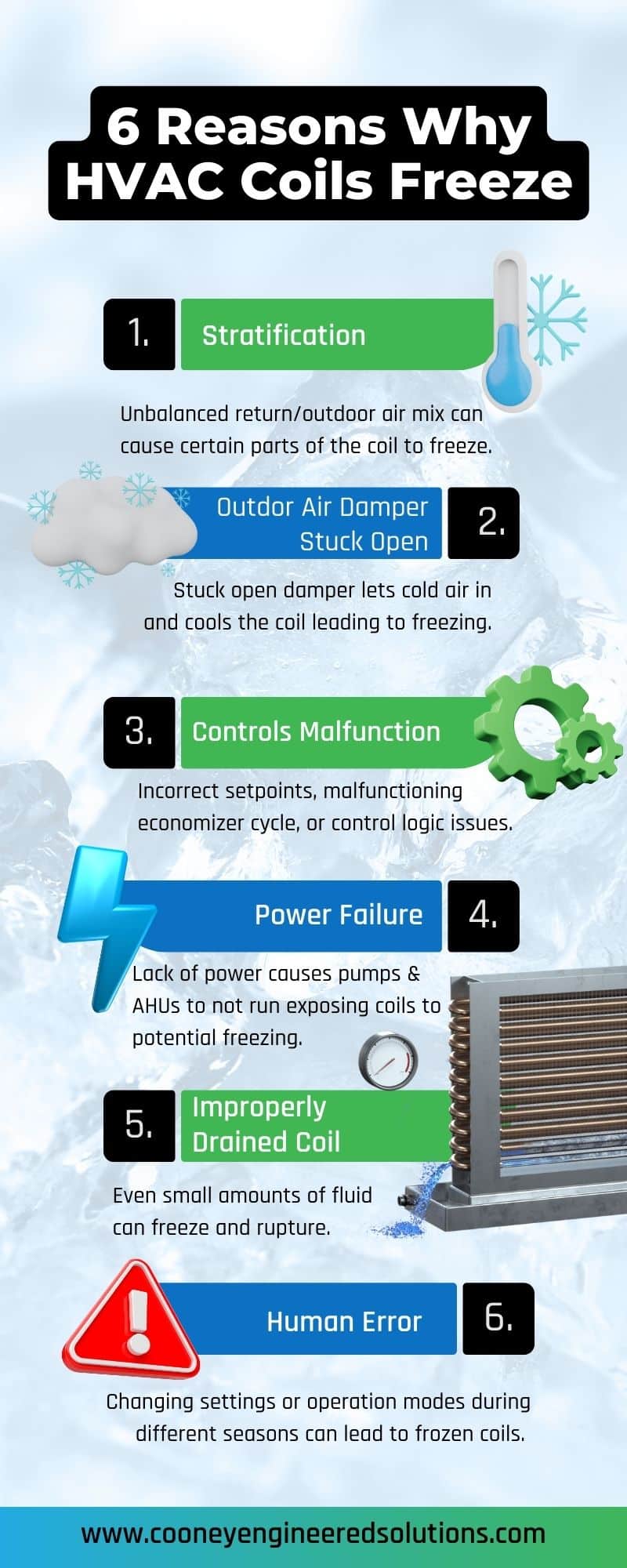
Credit: cooneyengineeredsolutions.com
When To Call A Professional
An air conditioner freezing up is a common problem. It can happen for many reasons like dirty filters or low refrigerant.
Some causes are simple to fix, but others need a professional. Knowing when to call helps protect your AC and home.
Signs Of Serious Issues
If your AC freezes often, it may have a bigger problem. Look for signs that need expert help right away.
Signs include ice build-up, strange noises, and weak airflow. These show the system is not working well.
- Ice covering the coils or pipes
- Unusual sounds like banging or hissing
- Air coming out warm or weak
- Water leaking near the unit
Benefits Of Expert Inspection
Calling a professional helps find hidden problems early. They check the whole system carefully.
Experts can fix issues safely and keep your AC running well. Their tools and skills reach problems you might miss.
- Detect refrigerant leaks
- Clean and inspect coils
- Check electrical parts
- Test airflow and thermostat
Avoiding Costly Repairs
Ignoring a frozen AC can cause big damage. Ice can break parts and lead to expensive fixes.
Regular professional checks stop small problems from growing. This saves money and keeps your home cool.
- Prevent compressor failure
- Avoid frozen coils damage
- Keep energy use low
- Extend the AC lifespan

Credit: serviceplusheatingcooling.ca
Frequently Asked Questions
Why Does My Air Conditioner Freeze Up?
Your air conditioner freezes due to restricted airflow or low refrigerant levels. Dirty filters or blocked vents cause poor airflow. Low refrigerant affects pressure, leading to ice formation on coils.
How Does Low Refrigerant Cause Ac Freezing?
Low refrigerant lowers pressure in the system, causing evaporator coils to get too cold. This temperature drop makes moisture freeze on the coils, resulting in an AC freeze-up.
Can Dirty Filters Make Ac Freeze?
Yes, dirty filters block airflow, forcing the system to work harder. Reduced airflow causes coils to become too cold, leading to ice buildup and freezing of the air conditioner.
Does A Frozen Ac Affect Cooling Efficiency?
Absolutely. A frozen AC reduces cooling efficiency as ice blocks airflow. This makes your unit work harder, increases energy use, and may cause further damage if not fixed.
Conclusion
Air conditioners freeze up mainly due to poor airflow or low refrigerant. Dirty filters and blocked vents stop air from moving well. Low refrigerant means the system can’t cool properly. Fixing these problems helps your AC work smoothly again. Regular cleaning and timely repairs keep freezing away.
Knowing these causes saves you from costly damage later. Stay alert to signs like ice build-up or weak cooling. Simple care keeps your home cool and comfortable all year.