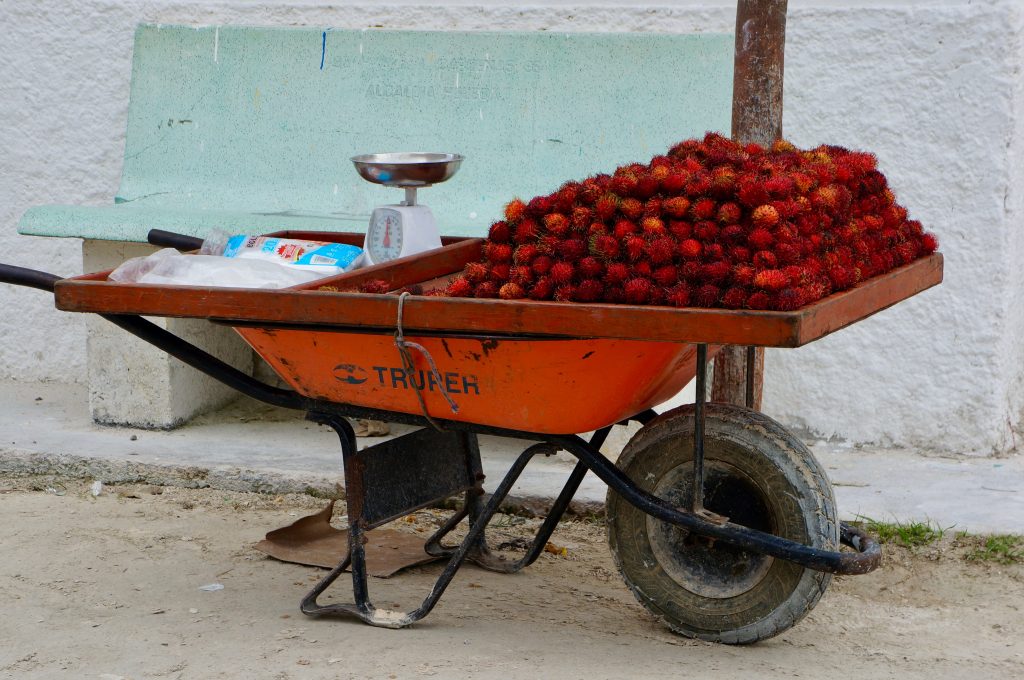
Have you ever wondered why a wheelbarrow makes lifting heavy loads feel so much easier? It’s not just the wheels or the sturdy frame—it’s all about how it works as a lever.
Understanding what class of lever a wheelbarrow belongs to can change the way you think about simple machines and help you use your wheelbarrow more effectively. You’ll discover the secret behind its design and why it’s such a powerful tool for your work.
Keep reading to unlock the surprising science that’s right under your hands every time you push a wheelbarrow.
Types Of Levers
Levers are simple machines that help us lift or move heavy objects. They work by using a rigid bar that pivots on a point called the fulcrum. There are three main types of levers.
Each type is different based on the position of the fulcrum, load, and effort. Understanding these types helps us know how tools like wheelbarrows work.
First-class Levers
In first-class levers, the fulcrum is between the effort and the load. This type can change the direction of the force. A seesaw is a common example.
This lever can either increase force or distance, depending on where you place the fulcrum.
Second-class Levers
Second-class levers have the load between the fulcrum and the effort. This setup always increases force.
- Wheelbarrow
- Nutcracker
- Door
A wheelbarrow is a good example of this lever type. The wheel is the fulcrum, the load is in the bucket, and the effort is applied at the handles.
Third-class Levers
In third-class levers, the effort is between the fulcrum and the load. This type increases the distance moved but requires more effort.
| Lever Part | Position in Third-Class Lever |
|---|---|
| Fulcrum | At one end |
| Effort | Between fulcrum and load |
| Load | At opposite end from fulcrum |
Wheelbarrow As A Lever
A wheelbarrow is a simple machine that helps us carry heavy loads. It works like a lever, making it easier to move things.
Understanding how a wheelbarrow acts as a lever helps us see why it reduces effort and improves work efficiency.
Understanding The Components
A wheelbarrow has three main parts that work like a lever: the fulcrum, the load, and the effort. Each part plays a role in making lifting easier.
- Fulcrum:The wheel at the front acts as the pivot point.
- Load:The weight or material placed in the barrow.
- Effort:The force applied by the person lifting the handles.
Placement Of Fulcrum, Load, And Effort
The placement of these parts determines the class of lever the wheelbarrow represents. The wheel is at the front, the load sits in the middle, and the effort is applied at the handles.
| Component | Position | Description |
|---|---|---|
| Fulcrum | Front (wheel) | The pivot point that the wheelbarrow rotates around. |
| Load | Middle (barrow bed) | The material or weight being carried. |
| Effort | Rear (handles) | The force applied by the user to lift and move the load. |
Mechanical Advantage Of A Wheelbarrow
A wheelbarrow is a simple machine that helps move heavy loads easily. It uses a lever system to reduce the effort needed.
Understanding how the wheelbarrow works can show why it is a useful tool for lifting and carrying heavy items.
Role Of Fulcrum Position
The fulcrum is the pivot point of the lever. In a wheelbarrow, the wheel acts as the fulcrum. Its position affects how much effort you need to lift the load.
When the fulcrum is closer to the load, less effort is needed to lift it. This makes the wheelbarrow easier to use.
Influence Of Effort Arm Length
The effort arm is the part where you apply force. In a wheelbarrow, it is the handles. The longer the handles, the easier it is to lift and move the load.
- Long handles increase the effort arm length.
- A longer effort arm reduces the force needed.
- Short handles make lifting harder.
Impact Of Load Distribution
The load is the weight placed in the wheelbarrow. How you place the load affects balance and effort.
| Load Position | Effect on Effort |
|---|---|
| Close to the wheel (fulcrum) | Less effort needed |
| Far from the wheel | More effort needed |
| Evenly spread load | Better balance and control |

Credit: www.teacherspayteachers.com
Practical Applications
A wheelbarrow is a simple machine that uses a lever to make work easier. It is a second-class lever. This means the load is between the effort and the fulcrum.
Knowing the class of lever helps us understand why wheelbarrows are useful in many tasks. They reduce the effort needed to carry heavy loads.
Gardening And Landscaping
In gardening, wheelbarrows help move soil, plants, and tools. They make it easier to carry heavy or bulky items across the yard.
Landscapers use wheelbarrows to transport rocks, mulch, and other materials. The design helps balance the weight and reduces strain on the user.
- Move soil and compost
- Carry plants and pots
- Transport stones and mulch
- Haul garden tools
Construction And Heavy Lifting
On construction sites, wheelbarrows carry bricks, cement, and debris. They help workers move heavy loads quickly and safely.
They also reduce the risk of injury by allowing a single person to lift and move weight more easily. The wheel acts as the fulcrum, which makes lifting less tiring.
- Transport bricks and blocks
- Carry cement and sand
- Move debris and waste
- Assist in heavy lifting tasks
Comparing Wheelbarrow Leverage To Other Tools
A wheelbarrow is a simple machine that uses a lever to make lifting easier. It belongs to the second class of levers. The wheel acts as the fulcrum, the load is in the middle, and the effort is applied at the handles.
Other tools also use levers, but they may belong to different classes. Comparing wheelbarrows with hand trucks and pallet jacks helps understand how leverage works in these tools.
Hand Trucks
Hand trucks are also second-class levers. The wheels act as the fulcrum at the bottom. The load sits on the platform near the wheels. You apply effort at the handles to lift and move the load.
Like wheelbarrows, hand trucks reduce the force needed to lift heavy objects. The load is between the effort and fulcrum, which makes lifting easier and safer.
- Fulcrum: Wheels
- Load: On the platform near wheels
- Effort: Applied at the handles
Pallet Jacks
Pallet jacks are also second-class levers. The fulcrum is at the wheels under the forks. The load sits on the forks, and you apply effort by pumping the handle to lift the load.
Pallet jacks use hydraulic power to increase leverage. This helps lift heavy pallets with less effort compared to manual lifting.
- Fulcrum: Wheels under the forks
- Load: On the forks
- Effort: Pumping the handle
Innovations In Wheelbarrow Design
The wheelbarrow is a simple machine using a lever to move heavy loads. It is a second-class lever with the load between the wheel and the effort.
Designs have improved to make wheelbarrows easier and safer to use. These changes help reduce strain and increase durability.
Ergonomic Enhancements
Modern wheelbarrows have handles shaped for better grip. This reduces hand and wrist pain during use.
Some models include adjustable handle heights. This allows users of different sizes to work comfortably.
- Soft, non-slip handle covers
- Curved handles to reduce wrist strain
- Adjustable height for user comfort
- Improved balance to reduce effort
Material Advancements
New materials make wheelbarrows lighter and stronger. Steel, aluminum, and heavy-duty plastic are common choices.
Rust-resistant coatings help wheelbarrows last longer outdoors. These materials also require less maintenance.
- Steel frames for strength
- Aluminum for lighter weight
- Plastic tubs to resist rust
- Coatings to prevent corrosion
Benefits Of Using A Wheelbarrow
A wheelbarrow is a simple tool that helps move heavy loads easily. It works like a lever, making work less hard.
Using a wheelbarrow saves time and energy in gardening, construction, and other tasks.
Efficiency In Labor
A wheelbarrow lets one person carry much heavier items than by hand. This tool moves dirt, bricks, or tools faster.
- One trip can carry more weight
- Less time spent moving materials
- Works well on rough or uneven ground
- Reduces the need for extra help
Reduction In Physical Strain
The wheelbarrow’s design lowers the effort needed to lift and carry heavy loads. It shifts weight to the wheel and ground.
| Body Part | Effect of Using Wheelbarrow |
| Back | Less bending and lifting strain |
| Arms | Reduced force needed to carry loads |
| Legs | Supports balance and weight distribution |
| Shoulders | Lower risk of injury from heavy lifting |

Credit: www.youtube.com

Credit: studyx.ai
Frequently Asked Questions
What Class Of Lever Is A Wheelbarrow?
A wheelbarrow is a second-class lever. The load is between the effort and the fulcrum, making it easier to lift heavy objects.
How Does A Wheelbarrow Demonstrate A Second-class Lever?
In a wheelbarrow, the wheel acts as the fulcrum. The load sits in the bucket, and the effort is applied at the handles.
Why Is A Wheelbarrow Considered A Mechanical Advantage Tool?
A wheelbarrow reduces effort by allowing you to lift heavier loads easily. It multiplies force using its lever mechanism efficiently.
What Parts Of The Wheelbarrow Correspond To Lever Components?
The wheel is the fulcrum, the load is in the bucket, and the effort is applied on the handles. This defines the lever class.
Conclusion
A wheelbarrow is a simple machine known as a second-class lever. The load sits between the effort and the fulcrum. This design helps move heavy items with less force. Understanding this lever type shows why wheelbarrows are so useful. They make work easier by using basic physics.
Next time you use one, remember the smart lever inside. Simple tools often use clever ideas. This knowledge can help you see everyday machines in a new way.