
Have you ever stood in the kitchen, staring at your measuring cup, wondering exactly what 1/4 looks like? You’re not alone.
Getting measurements right can be tricky, especially when recipes call for fractions like 1/4. Knowing how to measure this amount correctly can make a big difference in your cooking and baking results. You’ll discover the simple way to identify 1/4 in a measuring cup, so your dishes turn out just the way you want every time.
Keep reading—this small tip could change your kitchen game!

Credit: www.instacart.com
Measuring Cups Basics
Measuring cups help you add the right amount of ingredients. They make cooking and baking easier and more accurate.
One common measurement is 1/4 cup. Knowing what 1/4 means helps you measure properly and get good results.
Types Of Measuring Cups
There are two main types of measuring cups: dry and liquid. Each type is designed for different ingredients.
Dry measuring cups are usually made of plastic or metal. They are meant for flour, sugar, and similar items.
Liquid measuring cups are often made of glass or clear plastic. They have a spout for easy pouring and extra space on top.
- Dry cups come in sets with sizes like 1/4, 1/3, 1/2, and 1 cup
- Liquid cups have measurement marks on the side
- Use the right cup for better accuracy
Common Measurements Markings
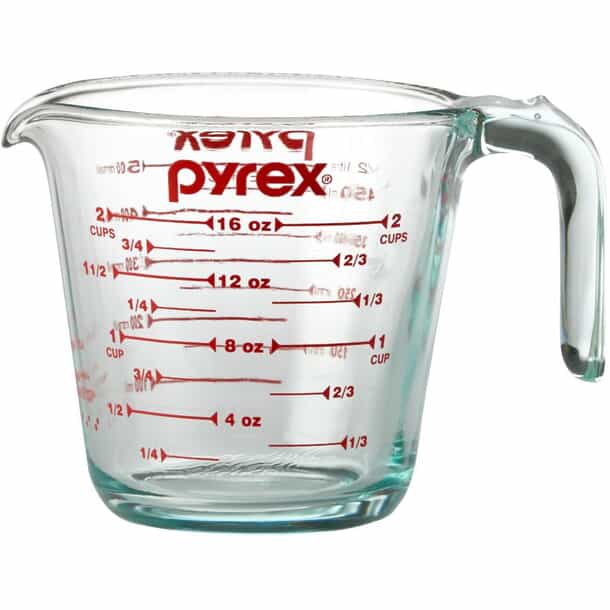
Measuring cups have markings to show different amounts. These help you measure 1/4 cup and other sizes.
The 1/4 cup mark means one quarter of a full cup. It equals 4 tablespoons or 60 milliliters.
| Measurement | Tablespoons | Milliliters (ml) |
|---|---|---|
| 1 cup | 16 tbsp | 240 ml |
| 1/2 cup | 8 tbsp | 120 ml |
| 1/3 cup | 5 tbsp + 1 tsp | 80 ml |
| 1/4 cup | 4 tbsp | 60 ml |
What Does 1/4 Mean
When you see 1/4 on a measuring cup, it shows a fraction. It tells you how much of the whole cup to use.
Understanding this fraction helps you measure ingredients correctly for recipes.
Fraction Explained
The fraction 1/4 means one part out of four equal parts. Imagine dividing a cup into four pieces. One piece is 1/4 of the cup.
This fraction shows a smaller portion of the whole cup to use in cooking or baking.
Equivalent Measurements
The 1/4 cup has the same size as other measurements. Knowing these helps when you don’t have a 1/4 cup measure.
- 1/4 cup equals 4 tablespoons
- 1/4 cup equals 12 teaspoons
- 1/4 cup equals 2 fluid ounces
- 1/4 cup equals about 59 milliliters
Measuring 1/4 Cup Accurately
Measuring 1/4 cup correctly is important for good cooking and baking results. A quarter cup equals four tablespoons or 2 fluid ounces.
Using the right tools and techniques helps avoid mistakes. Follow tips for dry and liquid ingredients to measure 1/4 cup precisely.
Dry Ingredients Tips
Use a dry measuring cup for 1/4 cup of flour, sugar, or other dry items. Scoop the ingredient into the cup and level it off with a straight edge.
Do not pack the ingredient unless the recipe says so. Lightly spoon flour into the cup for best results.
- Fill the cup slightly over the top
- Use a knife to level off the excess
- Avoid shaking the cup to settle the ingredient
Liquid Ingredients Tips
Use a clear liquid measuring cup for 1/4 cup of water, milk, or oil. Place the cup on a flat surface for an accurate read.
Pour liquid slowly to the 1/4 cup mark. Check the level at eye height to avoid errors.
- Use measuring cups with a spout for easy pouring
- Do not guess; read the measurement line carefully
- Wipe spills immediately to keep measurement precise
Tools For Precise Measurement
Measuring ingredients accurately is important in cooking and baking. Using the right tools helps get the exact amount needed.
One common measure is 1/4 cup. Knowing how to measure it correctly makes your recipes turn out better.
Using Standard Measuring Cups
Standard measuring cups are simple and easy to use. They usually come in sets with sizes like 1/4 cup, 1/3 cup, and 1/2 cup.
To measure 1/4 cup, fill the cup to the top and level it off with a flat edge. This gives a precise amount every time.
- Use dry measuring cups for dry ingredients like flour or sugar
- Use liquid measuring cups with a spout for liquids
- Level dry ingredients with a knife for accuracy
Digital Scales And Alternatives
Digital scales measure ingredients by weight. They give very exact results, which is helpful for tricky recipes.
You can convert 1/4 cup into grams or ounces using a scale. This works well for all ingredient types.
- Place a bowl on the scale and zero it out
- Add ingredients until you reach the correct weight
- Use kitchen scales for better precision than cups
- Alternatives include measuring spoons or adjustable cups
Common Mistakes To Avoid
Using a 1/4 measuring cup seems easy, but small errors can affect your recipe. Measuring correctly saves time and ingredients.
Watch out for common mistakes that happen with dry and liquid ingredients. Fixing these helps you cook better meals.
Overpacking Dry Ingredients
Many people pack dry ingredients like flour too tightly into the 1/4 cup. This adds more than the needed amount.
Overpacking changes the recipe’s texture and taste. Always scoop lightly or spoon the ingredient into the cup.
- Use a spoon to fill the cup gently
- Level off the top with a flat edge
- Do not press or shake the cup
Incorrect Liquid Measurement
Pouring liquids into a 1/4 cup at eye level helps avoid mistakes. Measuring on a flat surface gives the best result.
Holding the cup in your hand can cause wrong readings. Read the measurement from the side, not from the top.
- Place the cup on a flat counter
- Bend down to see the liquid level at eye height
- Check that the liquid is exactly at the 1/4 cup mark

Credit: www.amazon.ca
Adjusting Recipes With 1/4 Cup
The 1/4 cup is a common measuring cup size used in many recipes. It helps in adding precise amounts of ingredients.
Knowing how to use the 1/4 cup can make adjusting recipes easier. You can scale ingredients up or down smoothly.
Scaling Ingredients Up Or Down
To increase or decrease a recipe, use the 1/4 cup as a base measure. Multiply or divide the amounts to fit your needs.
For example, if a recipe calls for 1 cup, you can use four 1/4 cups. To halve it, use two 1/4 cups instead.
- Double a 1/4 cup to get 1/2 cup
- Four 1/4 cups equal 1 cup
- Half of 1/4 cup is 2 tablespoons
Substitutions Using 1/4 Cup
The 1/4 cup helps when substituting ingredients in recipes. Use it to measure similar amounts of a substitute.
If you lack an ingredient, use a 1/4 cup to add a replacement that matches the original amount closely.
- Replace 1/4 cup butter with 1/4 cup oil
- Use 1/4 cup yogurt instead of sour cream
- Swap 1/4 cup applesauce for 1/4 cup oil in baking
Credit: www.homehardware.ca
Frequently Asked Questions
What Does 1/4 Cup Mean In Measurements?
1/4 cup is a common measurement in cooking. It equals 4 tablespoons or 2 fluid ounces. This measurement is used to ensure precise ingredient quantities in recipes. Using the correct amount helps achieve the desired taste and texture in your dishes.
How Many Tablespoons Are In 1/4 Cup?
1/4 cup is equal to 4 tablespoons. This conversion is useful when you need a smaller portion. Measuring accurately is important for maintaining the balance and flavor of your recipe.
Can I Use A Regular Spoon For 1/4 Cup?
A regular spoon is not accurate for 1/4 cup. It’s better to use a standard measuring cup. This ensures precision in your cooking and baking, leading to consistent results.
What Is 1/4 Cup In Milliliters?
1/4 cup is approximately 60 milliliters. This conversion is helpful when using recipes with metric measurements. Knowing this can make cooking easier if you prefer using milliliters over cups.
Conclusion
Knowing what 1/4 means in a measuring cup helps in cooking and baking. It equals one quarter of a whole cup or 4 tablespoons. Using the right amount keeps recipes tasty and balanced. Measuring cups show clear marks to make this easy.
Always check the level at eye height for accuracy. This small skill saves time and avoids mistakes. Practice makes measuring simple and quick. Now you can follow recipes with more confidence. Cooking becomes fun and less stressful with clear measurements.