Have you ever wondered what makes your air conditioner start up and keep running smoothly? The secret lies in a small but powerful part called the capacitor.
Without it, your AC unit might struggle to cool your home or even fail to turn on. Understanding what a capacitor does can help you spot problems early and save money on repairs. You’ll discover exactly what a capacitor in an air conditioner is, why it’s so important, and how it affects your comfort.
Keep reading to learn how this tiny component plays a big role in keeping your space cool.

Credit: www.amazon.com
Role Of The Capacitor In Air Conditioning
The capacitorstores and releases energy to start the air conditioner’s motor. It helps the compressor and fan motors run smoothly. Without the capacitor, the motor cannot start or keep running.
Capacitors come in different types, such as start capacitorsand run capacitors. Start capacitors give a big boost to start the motor. Run capacitors keep the motor running efficiently.
- Stores electrical energyto help start motors
- Provides powerfor fan and compressor motors
- Improves motor efficiencyand performance
- Prevents motor damageby stabilizing voltage
Without a good capacitor, the air conditioner may not cool well or might stop working. It is a small part but very important for the AC system.

Credit: www.frhvac.com
Types Of Capacitors Used
Run capacitorshelp the motor run smoothly and keep it efficient. They stay active while the air conditioner is on. These capacitors provide a steady flow of power to the motor.
Start capacitorsgive an extra boost to start the motor. They work only for a short time at the beginning. Once the motor starts, these capacitors stop working.
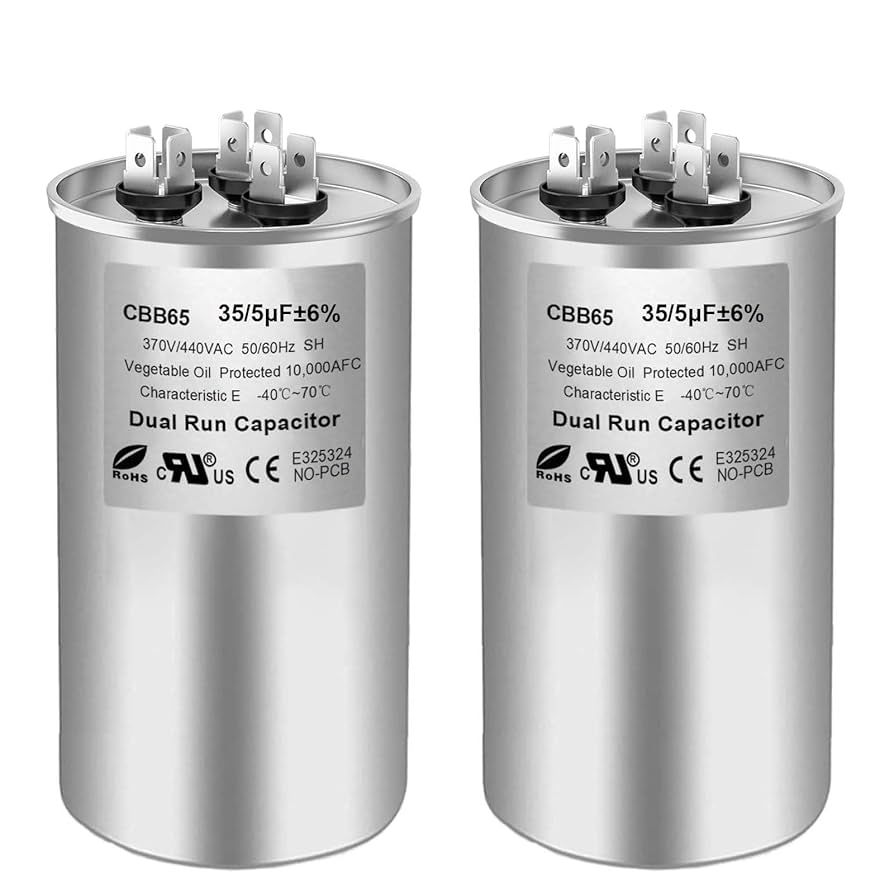
Dual run capacitorscombine the jobs of both run and start capacitors in one unit. They save space and are easy to install. These capacitors help both the fan and compressor motors.
How Capacitors Function
A capacitor in an air conditioner stores electric energyand releases it when needed. It helps keep the voltage stable, so the machine works smoothly.
Capacitors play a key role in starting and running the motor:
- Energy Storage:They hold energy and provide a quick boost for motor startup.
- Voltage Regulation:They keep voltage steady to protect the motor from damage.
- Motor Start and Run:They help the motor start quickly and run efficiently without overheating.
Signs Of A Faulty Capacitor
Unusual noiseslike buzzing or humming can signal a bad capacitor. These sounds come from the motor struggling to start or run properly.
A system that won’t startis a clear sign. The capacitor helps the motor start. If it fails, the air conditioner stays off.
Intermittent operationmeans the AC turns on and off randomly. This happens because the capacitor can’t keep the motor running steadily.
- Buzzing or humming noises
- AC fails to start
- AC runs then stops suddenly
Testing And Diagnosis
Testing a capacitor in an air conditioner helps find faults quickly. Using a multimeteris a common way to test it. First, turn off power to avoid shocks. Remove the capacitor from the unit carefully. Set the multimeter to the capacitance mode. Connect the leads to the capacitor terminals. Read the value shown on the screen. Compare this value with the number on the capacitor label. A big difference means the capacitor is faultyand needs replacement.
Visual inspection is also important. Look for signs like bulging, leaking fluid, or burn marks. These signs mean the capacitor is damaged. A good capacitor looks cleanand flat. If you see any damage, do not use it. Replace it immediately to keep the air conditioner working well.

Credit: www.amazon.com
Replacing A Capacitor
Unplug the air conditionerto avoid electric shock. Use insulated tools only. Wear rubber gloves for extra safety. Discharge the capacitor by touching the terminals with a metal screwdriver that has an insulated handle. Avoid touching capacitor terminals directly. Work in a dry area to prevent slips and shocks.
Locate the capacitor inside the unit. Take a photo or note wire positions before removal. Remove the wires carefully using needle-nose pliers. Take out the old capacitor and replace it with a new one of the same rating.
- Turn off power completely
- Discharge the capacitor safely
- Note wire connections
- Remove old capacitor
- Install new capacitor with matching ratings
- Reconnect wires as before
- Double-check all connections
- Restore power and test the unit
Preventive Maintenance Tips
Regular inspections keep the capacitorin good shape. Check for bulges, leaks, or rust. Also, listen for strange noises from the unit. These signs point to capacitor problems early. Clean the area around the capacitor to avoid dust buildup. Dust can cause the capacitor to overheat and fail.
Professional servicing ensures the capacitor works well. A trained technician tests the microfarad ratingand voltage. They replace weak or broken capacitors promptly. This prevents system breakdownsand saves money. Schedule servicing at least once a year. This keeps the air conditioner running efficientlyand extends its life.
Frequently Asked Questions
What Is The Role Of A Capacitor In An Air Conditioner?
A capacitor stores and releases electrical energy to start and run the AC motor. It helps in smooth operation and efficiency.
How Does A Capacitor Affect Air Conditioner Performance?
A faulty capacitor reduces motor speed and cooling efficiency. It causes the AC to struggle or fail to start properly.
What Are The Types Of Capacitors In Air Conditioners?
Air conditioners typically use start capacitors and run capacitors. Start capacitors provide initial boost; run capacitors support continuous motor operation.
How Can You Tell If An Ac Capacitor Is Bad?
Signs include AC not starting, humming noise, or frequent cycling. Visual bulging or leaking also indicates a failing capacitor.
Conclusion
A capacitor helps your air conditioner start and run smoothly. It stores and releases electrical energy quickly. This small part makes a big difference in performance. Without it, the AC might not work well or could stop completely. Knowing about capacitors can save you time and money.
Regular checks keep your system healthy and cool. So, pay attention to this key component for better comfort all year.