Are you tired of sweating through hot days and nights? Finding the right portable air conditioner can make all the difference in your comfort.
But how do you know what size portable air conditioner you really need? Choosing the wrong size can leave you either freezing or still feeling the heat. You’ll discover simple tips to pick the perfect unit that cools your space efficiently without wasting money or energy.
Keep reading to find out exactly what to look for and make your home a cool haven this season.

Credit: www.popularmechanics.com
Choosing Portable Ac Size
Choosing the right size portable air conditioner is important for comfort. A unit that is too small will not cool well. A unit that is too big will waste energy.
To pick the correct size, you need to consider several factors about your room and space.
Factors Influencing Size
Different things affect the size of portable AC you need. Room size is one of the main factors. Other things like sunlight and number of people also matter.
- Room size and shape
- Ceiling height
- Sunlight exposure
- Number of occupants
- Heat from appliances
Room Dimensions
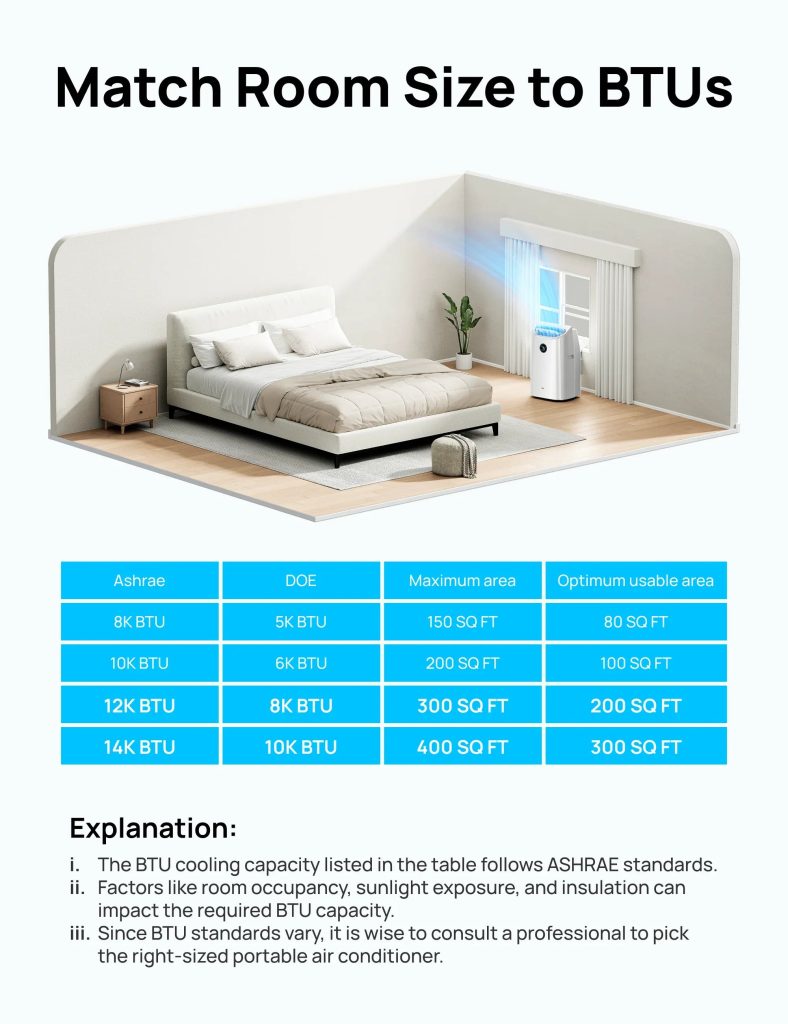
The size of your room is the most important factor. Measure the length and width of the room in feet. Multiply these numbers to get the area in square feet.
The larger the room, the higher the BTU rating your portable AC needs. BTU means British Thermal Units, which shows cooling power.
- Up to 150 sq ft: 5,000 BTU
- 150 to 250 sq ft: 6,000 BTU
- 250 to 350 sq ft: 8,000 BTU
- 350 to 450 sq ft: 10,000 BTU
- 450 to 550 sq ft: 12,000 BTU
Ceiling Height Impact
Ceiling height changes how much air needs cooling. Most BTU charts assume an 8-foot ceiling. Taller ceilings need more cooling power.
If your ceiling is higher than 8 feet, add extra BTUs. For example, a 10-foot ceiling may require 10% more BTUs. This helps the AC cool the larger air volume well.
Cooling Capacity Explained
Choosing the right size portable air conditioner is important. It helps keep your room cool and saves energy.
Cooling capacity tells you how much heat the air conditioner can remove. It is measured in BTUs.
What Is Btu
BTU stands for British Thermal Unit. It measures heat energy.
One BTU is the amount of heat needed to raise one pound of water by one degree Fahrenheit.
Btu And Room Size
The size of your room affects the BTU needed for cooling. Larger rooms need more BTUs.
- Up to 150 sq ft: 5,000 BTU
- 150–250 sq ft: 6,000 BTU
- 250–350 sq ft: 8,000 BTU
- 350–450 sq ft: 10,000 BTU
- 450–550 sq ft: 12,000 BTU
Adjusting For Climate
Climate affects how hard your air conditioner must work. Hotter climates need more cooling power.
- If you live in a hot area, add 10% to the BTU rating.
- In cooler areas, you can reduce BTU by 10%.
- Rooms with high sun exposure may need extra BTUs.
- Shaded rooms might need fewer BTUs.
Calculating Your Needs
Choosing the right size portable air conditioner is important for comfort. You need to figure out how much cooling power your room requires.
This guide helps you calculate your cooling needs by looking at room size, sunlight, and occupants.
Measuring Your Space
First, measure the length and width of your room in feet. Multiply these two numbers to get the total square footage.
For example, a room that is 12 feet long and 10 feet wide has 120 square feet.
Accounting For Sunlight
Rooms with a lot of sunlight need more cooling power. South and west-facing rooms get the most sun.
- If your room is heavily shaded, add 10% to your cooling needs.
- If your room gets a lot of sunlight, add 20% to your cooling needs.
- If your room gets little or no direct sunlight, no extra cooling is needed.
Considering Occupants And Appliances
More people in the room add heat. Appliances and electronics also raise the temperature.
| Factor | Cooling Adjustment |
| Each additional person | Add 600 BTUs |
| Each major appliance | Add 1,000 BTUs |
| Each small appliance or electronic device | Add 500 BTUs |
Common Portable Ac Sizes
Portable air conditioners come in different sizes for various room sizes. Choosing the right size helps cool your space efficiently.
Understanding common portable AC sizes can guide you in picking the best unit for your needs.
Small Units
Small portable AC units usually cool rooms up to 250 square feet. They have a cooling power of about 8,000 to 10,000 BTUs.
These units are lightweight and easy to move. They work well in bedrooms, small offices, or study rooms.
Medium Units
Medium portable air conditioners cool rooms between 250 and 450 square feet. Their cooling power ranges from 10,000 to 14,000 BTUs.
- Ideal for living rooms and medium-sized bedrooms
- Usually come with more features than small units
- Require more space for installation
- May use more electricity than small units
Large Units
Large portable AC units cool spaces larger than 450 square feet. They have cooling power over 14,000 BTUs.
| Size Category | Room Size (sq ft) | BTU Range |
| Small Units | Up to 250 | 8,000 – 10,000 |
| Medium Units | 250 – 450 | 10,000 – 14,000 |
| Large Units | 450+ | 14,000+ |
Energy Efficiency Tips
Choosing the right size portable air conditioner can save energy and money. Energy efficiency helps reduce electricity bills and environmental impact.
Using energy-efficient models and good installation improves cooling without wasting power.
Choosing Energy Star Models
Energy Star certified portable air conditioners use less electricity. They cool rooms well but cost less to run.
Look for the Energy Star label when buying. These models meet strict energy-saving rules.
- Use less power than standard models
- Help reduce greenhouse gas emissions
- Often include energy-saving features
Proper Installation
Correct installation lets the air conditioner work efficiently. Poor setup makes it use more energy.
Seal windows and doors around the unit to stop cool air from escaping. Place the unit where airflow is not blocked.
- Follow the manufacturer’s instructions carefully
- Use window kits that fit tightly
- Avoid placing the unit near heat sources
Maintenance Practices
Regular maintenance keeps your air conditioner efficient. Dirty filters and parts make the unit work harder.
Clean or replace filters every month. Check vents and clear dust or debris around the unit.
- Clean air filters often
- Inspect and clean vents and coils
- Remove debris near the outdoor exhaust
- Check for leaks or damage regularly

Credit: www.forbes.com
Additional Features To Consider
Choosing the right portable air conditioner is about more than just size. Some extra features can improve comfort and convenience. Think about what suits your needs before buying.
This section covers key features like dehumidification, noise levels, and portability. Each plays a role in how well the unit fits your space and lifestyle.
Dehumidification
Many portable air conditioners also act as dehumidifiers. They remove excess moisture from the air, helping to keep rooms dry and comfortable.
- Reduces dampness and mold growth
- Improves indoor air quality
- Helps clothes dry faster
- Can lower cooling costs by reducing humidity
Noise Levels
Noise can affect how you enjoy your room. Look for units with low decibel ratings if you want a quieter environment. Some models list their noise level in decibels (dB).
| Decibel Level | Noise Description |
| 30-40 dB | Very quiet, like a whisper |
| 40-50 dB | Quiet, similar to a library |
| 50-60 dB | Moderate, like a normal conversation |
| 60+ dB | Loud, may disturb sleep or work |
Portability And Design
Since these units are portable, size and weight matter. Design features can make moving and using the unit easier.
- Wheels or casters for smooth movement
- Handles for easy lifting
- Compact size fits small spaces
- Flexible hose length for venting
Avoiding Common Mistakes
Choosing the right size portable air conditioner is important. Picking the wrong size can cause problems.
This guide helps you avoid common mistakes when selecting your air conditioner size.
Oversizing Issues
Buying a too-large air conditioner wastes energy and money. It cools the room too fast.
This fast cooling does not remove humidity well. The room may feel cold but damp.
- Higher energy bills
- Shorter unit lifespan
- Uneven cooling and humidity
Undersizing Problems
A too-small air conditioner will run constantly without cooling enough. This wears out the unit.
It also leads to poor comfort and higher electricity use. The room stays warm and stuffy.
- Constant running
- High electricity bills
- Uncomfortable room temperature
Ignoring Ventilation Needs
Portable air conditioners need proper ventilation to work well. Ignoring this causes poor cooling.
Without venting hot air outside, the unit recirculates warm air. This lowers its efficiency.
- Use window or wall vents
- Seal gaps around vent hoses
- Keep vents clear of obstructions

Credit: www.popularmechanics.com
Frequently Asked Questions
What Factors Determine Portable Air Conditioner Size?
The size depends on room dimensions, insulation, and sun exposure. Measure your space in square feet for accuracy. Consider window placement and room usage. A properly sized unit ensures efficient cooling. Check the BTU rating for the best fit.
How Do Btus Affect Cooling Efficiency?
BTUs measure cooling capacity. Higher BTUs mean more cooling power for larger spaces. A unit with too many BTUs may cool too quickly, causing humidity issues. A unit with too few BTUs will struggle to cool effectively. Choose a BTU rating that matches your room size.
Can A Portable Ac Cool Multiple Rooms?
Portable ACs are designed for single rooms. They struggle to cool multiple rooms effectively. For multiple rooms, consider a central air system or multiple units. Use fans to help circulate air between spaces. This ensures each area maintains a comfortable temperature.
What Is The Best Room Size For 10,000 Btu?
A 10,000 BTU unit is ideal for rooms up to 450 square feet. It’s perfect for bedrooms, small living rooms, or office spaces. Ensure the room is well-insulated for optimal performance. This unit size balances efficiency and energy consumption.
Conclusion
Choosing the right size portable air conditioner keeps your space cool and comfortable. A unit too small will struggle to cool the room. A unit too large wastes energy and costs more. Measure your room’s size before buying. Consider factors like sunlight and insulation.
The right size helps save money and energy. Stay cool without extra noise or power use. Make a smart choice for your home or office. Comfort is just a good size away.