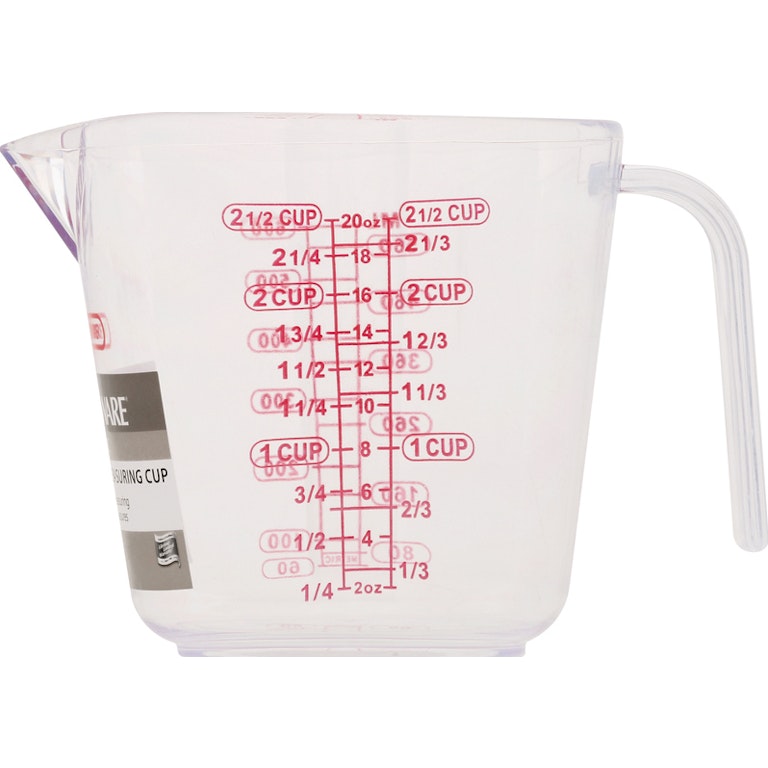
Have you ever stared at your measuring cup, wondering exactly where the 1/3 mark is? It can be tricky when the lines are small or unclear, and guessing can throw off your whole recipe.
Knowing exactly where 1/3 is on your measuring cup can save you time and frustration, helping your cooking or baking turn out just right. Keep reading, and you’ll learn simple tips to find that elusive 1/3 mark quickly and confidently every time.

Credit: www.amazon.com
Finding 1/3 On Measuring Cups
Measuring 1/3 cup can be tricky if you do not know where to look. Most measuring cups have clear markings for common amounts.
This guide will help you find the 1/3 cup mark and explain common measuring cup sizes.
Standard Measuring Cup Sizes
Measuring cups usually come in sets with standard sizes. These sizes make it easy to measure ingredients for recipes.
The most common measuring cups are 1 cup, 1/2 cup, 1/3 cup, and 1/4 cup.
- 1 cup is the largest size in most sets
- 1/2 cup is half of 1 cup
- 1/3 cup is smaller and often marked clearly
- 1/4 cup is one-quarter of 1 cup
Reading Liquid Vs Dry Measurements
Liquid and dry measuring cups look different. Each type helps measure ingredients correctly.
Use liquid measuring cups for water, milk, or oil. Use dry measuring cups for flour, sugar, or grains.
- Liquid cups have a spout for easy pouring
- Dry cups are meant to be filled and leveled off
- Both types often show 1/3 cup mark clearly
- Check the cup’s markings to find 1/3 cup
Common Measuring Cup Markings
Measuring cups show lines and symbols to help you pour the right amount. These markings make baking and cooking easier. Understanding them saves mistakes in recipes.
One important marking is the 1/3 cup. Knowing where it is on your cup helps you measure this amount correctly every time.
Symbols And Lines To Look For
Measuring cups have lines for common fractions like 1/4, 1/3, 1/2, and 1 cup. Some cups also show milliliters or ounces. The 1/3 cup line is usually between 1/4 and 1/2 marks.
- Look for a line labeled “1/3” or a mark between 1/4 and 1/2.
- Clear cups let you see liquid levels easily at eye level.
- Some cups use numbers only, others use fraction symbols.
- Check for units like cups, ounces, or milliliters on the cup.
Variations Between Brands
Different brands may place the 1/3 cup line in slightly different spots. Some cups have bold lines, others have thin lines. The size and shape of cups can also vary.
| Brand | Marking Style | 1/3 Cup Line Position |
|---|---|---|
| Brand A | Bold fraction lines | Clear line between 1/4 and 1/2 |
| Brand B | Numbers only | Number “1/3” printed above line |
| Brand C | Thin lines with metric units | Line near 80 ml mark |
Tips For Accurate Measurement
Measuring 1/3 on a measuring cup can be tricky. Using the right methods helps you get precise amounts.
Accurate measurements improve your cooking and baking results. Small differences can change the texture and taste.
Leveling Techniques
To measure 1/3 cup accurately, fill the cup until the liquid or ingredient reaches the 1/3 line.
- Place the measuring cup on a flat surface.
- Pour slowly to avoid spills.
- Check eye level to see the exact measurement line.
- Use a straight edge, like a knife, to level off dry ingredients.
Using Multiple Cups For Precision
If your measuring cup lacks a 1/3 mark, use smaller cups to add up to 1/3 cup.
| Measurement Needed | How to Measure Using Smaller Cups |
| 1/3 cup | Use 1/4 cup + 1 tablespoon |
| 1/3 cup | Use 3 tablespoons + 1 teaspoon |
| 1/3 cup | Use 5 teaspoons + 1/3 teaspoon |
Alternatives When 1/3 Cup Is Missing
Sometimes, you may not have a 1/3 cup measuring cup in your kitchen. You still need to measure ingredients correctly for your recipe. There are simple ways to measure 1/3 cup without the exact tool.
This guide shows two easy alternatives to measure 1/3 cup. You can use tablespoons or a kitchen scale to get the right amount.
Measuring With Tablespoons
If you do not have a 1/3 cup, use tablespoons instead. One cup equals 16 tablespoons. So, 1/3 cup equals about 5 tablespoons plus 1 teaspoon.
Use this method to measure dry and liquid ingredients. It works well for most recipes.
- 1 cup = 16 tablespoons
- 1/3 cup = 5 tablespoons + 1 teaspoon
- Fill the tablespoon measure five times
- Add one teaspoon to complete 1/3 cup
Using Scale For Accuracy
A kitchen scale gives precise measurement. It helps especially with baking. You need to know the ingredient’s weight for 1/3 cup.
For example, 1/3 cup of flour weighs about 43 grams. Measure the ingredient on the scale to this weight to get 1/3 cup.
| Ingredient | Weight for 1/3 Cup |
|---|---|
| All-purpose flour | 43 grams |
| Sugar | 67 grams |
| Butter (melted) | 76 grams |
| Milk | 79 grams |
Avoiding Common Measurement Mistakes
Measuring ingredients correctly is important for baking success. Using the right amount keeps your recipe balanced.
Finding 1/3 on a measuring cup can be tricky. Learning how to avoid mistakes helps you get better results.
Overfilling
Overfilling the measuring cup means adding too much of an ingredient. This can happen if you fill past the 1/3 mark.
Too much of one ingredient can change the texture and taste of your baked goods. It might make them too dense or wet.
- Check the cup at eye level for accuracy
- Use a flat edge to level off dry ingredients
- Pour slowly to avoid spills
Underfilling
Underfilling means adding less than 1/3 of the ingredient. This often happens if you do not fill the cup to the right line.
Using too little can make your baked goods dry or crumbly. You may also lose flavor or rise.
- Fill the cup slowly to the exact line
- Use a spoon to add dry ingredients carefully
- Double-check the measurement before mixing
Impact On Baking Results
Accurate measuring keeps your recipe balanced. Overfilling or underfilling can cause baking problems.
Wrong measurements may cause cakes to fall, cookies to spread, or bread to be tough. Good measuring helps you bake with confidence.
| Measurement Mistake | Effect on Baking |
| Overfilling 1/3 cup | Too wet or dense texture |
| Underfilling 1/3 cup | Dry or crumbly results |
| Incorrect leveling | Inconsistent taste and rise |

Credit: www.restaurantsupply.com

Credit: www.amazon.com
Frequently Asked Questions
How Do You Find 1/3 On A Measuring Cup?
To find 1/3 on a measuring cup, look for the 1/3 mark between the 1/4 and 1/2 lines. Most cups have clear markings for common fractions. If not, estimate slightly above the 1/4 mark. This will give you a close approximation.
Is 1/3 Cup The Same As 5 Tablespoons?
Yes, 1/3 cup is approximately equal to 5 tablespoons plus 1 teaspoon. This conversion helps when your measuring cup doesn’t have the 1/3 marking. Always double-check with a reliable conversion chart for accuracy.
Can I Use 1/4 Cup Instead Of 1/3 Cup?
Using 1/4 cup instead of 1/3 cup may alter your recipe. 1/3 cup is slightly more than 1/4 cup. Consider adding two tablespoons to your 1/4 cup to approximate 1/3 cup.
What Is The Ml Measurement For 1/3 Cup?
1/3 cup is approximately 80 milliliters (ml). This conversion is handy when using a metric measuring cup. Always double-check with a reliable conversion chart to ensure accuracy in your measurements.
Conclusion
Finding 1/3 on a measuring cup is simple once you know where to look. Most cups have clear lines for common measurements, including 1/3. This mark usually sits between 1/4 and 1/2 cup lines. Measuring ingredients correctly helps recipes turn out just right.
Next time you bake or cook, check your cup carefully. Using the right amount makes a big difference. Keep this tip in mind for easy and accurate cooking every time.