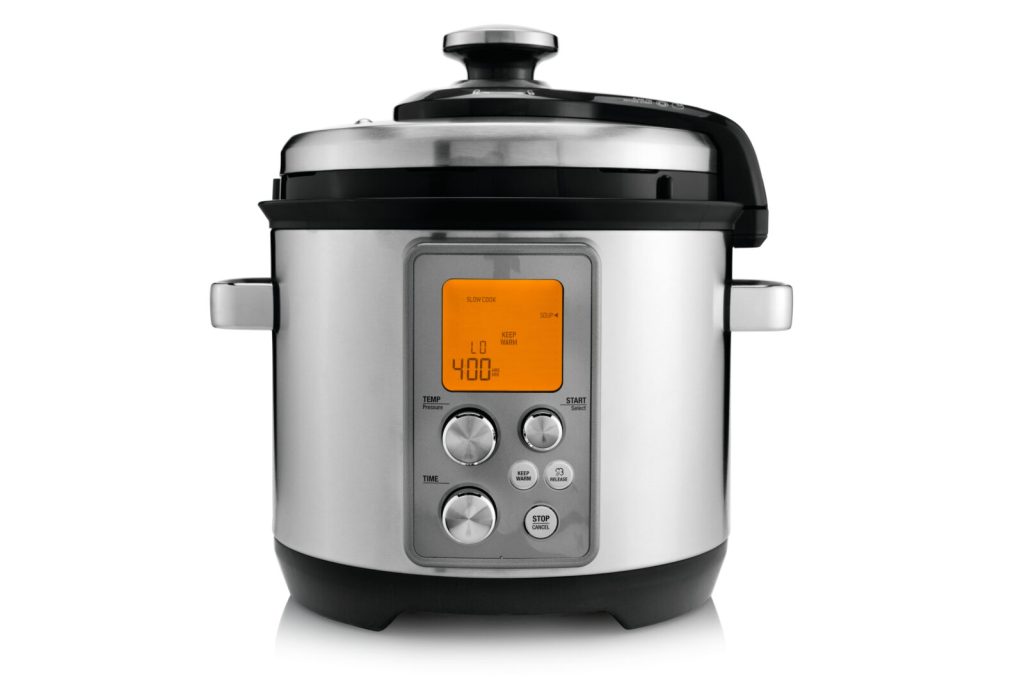
Have you ever wondered why your pressure cooker turns tough ingredients into tender meals in a fraction of the time? If you’re tired of waiting hours for your food to cook, understanding how a pressure cooker speeds up the process can change the way you cook forever.
You’ll discover the simple science behind this kitchen wonder and learn how it saves you time without sacrificing flavor. Keep reading—you’ll never look at cooking the same way again.
How Pressure Cookers Work
Pressure cookers cook food faster by using high pressure. They create a special environment inside the pot.
This environment changes how heat and steam work together to cook food quickly and evenly.
Sealed Environment And Steam Pressure
A pressure cooker has a tight lid that seals the pot. This sealed environment traps steam inside as food heats.
- Steam builds up inside the cooker.
- Pressure increases as more steam forms.
- The high pressure pushes steam into the food.
- This speeds up heat transfer to the food.
- The sealed lid stops steam from escaping.
Temperature Increase Inside Cooker
The trapped steam raises the temperature inside the cooker above boiling point. This helps cook food faster.
| Normal Boiling Point | 100°C (212°F) |
| Pressure Cooker Temperature | 115°C to 121°C (239°F to 250°F) |
| Effect on Cooking | Faster cooking and tender food |

Credit: www.chroniclelive.co.uk
Effect Of Pressure On Boiling Point
Pressure affects how fast water boils and cooks food. Higher pressure changes the boiling temperature. This helps pressure cookers cook food quickly.
Understanding the boiling point under different pressures explains why pressure cookers work well. Let’s explore this in two parts.
Boiling Point At Atmospheric Pressure
At normal atmospheric pressure, water boils at 100°C (212°F). This is the temperature where water changes from liquid to gas. The boiling point stays the same at sea level.
- Boiling happens when water vapor pressure equals air pressure.
- At 1 atmosphere (sea level), boiling point is 100°C.
- At higher altitudes, air pressure is lower, so water boils at lower temperatures.
- Lower boiling points mean food cooks slower on mountains.
Raising Boiling Point With Pressure
Pressure cookers increase pressure inside the pot. This raises the boiling point of water above 100°C. Food cooks faster at higher temperatures.
| Pressure (atm) | Boiling Point of Water (°C) |
| 1 (atmospheric) | 100 |
| 1.5 | 112 |
| 2 | 120 |
| 2.5 | 127 |
| 3 | 133 |
The higher boiling point means water stays liquid and hotter inside the cooker. This speeds up cooking by heating food faster and breaking down fibers quickly.
Heat Transfer And Cooking Speed
Pressure cookers speed up cooking by using high pressure to raise boiling points.
This allows heat to move faster into the food, reducing the time it takes to cook.
Faster Heat Penetration
Pressure cookers increase pressure inside the pot. This raises the boiling point of water above 100°C.
Higher temperature means heat moves quicker into the food, cooking it faster.
- Steam under pressure reaches higher temperatures
- Heat transfers faster through liquids and steam
- Food cooks evenly and deeply
- Less heat escapes during cooking
Reduced Cooking Time
Because heat moves faster, the total cooking time goes down significantly.
| Cooking Method | Boiling Point | Approximate Cooking Time |
| Regular Pot | 100°C (212°F) | 60 minutes |
| Pressure Cooker | 121°C (250°F) | 20 minutes |

Credit: www.amazon.ca
Role Of Steam In Cooking
Steam plays an important role in cooking food quickly inside a pressure cooker.
The pressure cooker traps steam to raise the temperature and cook food faster.
Steam As A Heat Conductor
Steam carries heat efficiently to the food. It heats the food evenly on all sides.
- Steam reaches temperatures above 100°C (212°F).
- High heat speeds up the cooking process.
- Steam transfers heat faster than dry air.
- It surrounds the food, reducing hot or cold spots.
Moisture Retention And Flavor
Steam keeps food moist by preventing water loss during cooking.
| Effect | Benefit |
| Moisture retention | Food stays juicy and tender |
| Flavor preservation | Natural tastes stay stronger |
| Less water needed | Concentrated flavors in dishes |
Safety Mechanisms In Pressure Cookers
Pressure cookers speed up cooking by raising pressure and temperature inside the pot. This high pressure can be dangerous without safety features. Pressure cookers have special parts to keep users safe during cooking.
Two key safety mechanisms are the pressure release valves and locking systems. These parts control the pressure and prevent accidents.
Pressure Release Valves
Pressure release valves let steam escape to keep pressure from rising too high. They stop the cooker from exploding by releasing excess steam safely.
- Release steam when pressure gets too high
- Prevent dangerous pressure build-up
- Help maintain steady cooking pressure
- Usually made of heat-resistant materials
- Some valves whistle or hiss when releasing steam
Locking Systems
Locking systems keep the lid tightly closed while cooking. They block the lid from opening until pressure is safe.
| Feature | Purpose |
| Safety Lock | Prevents lid opening under pressure |
| Interlocking Lid | Ensures lid fits securely before cooking |
| Pressure Indicator | Shows when pressure is inside the cooker |
| Automatic Lock | Engages lock when pressure builds up |

Credit: m.youtube.com
Comparing Pressure Cooking With Other Methods
Pressure cooking uses high pressure to cook food fast. This method traps steam inside a sealed pot. The steam raises the temperature above boiling.
Other cooking methods use lower temperatures and take more time. Let’s compare pressure cooking with boiling, simmering, and slow cooking.
Boiling And Simmering
Boiling cooks food in water at 212°F (100°C). Simmering uses lower heat, around 185°F to 205°F (85°C to 96°C). Both methods cook food by surrounding it with hot liquid.
These methods take longer because the temperature stays at or below boiling. Food cooks slower since heat transfers at a steady pace.
- Boiling temperature: 212°F (100°C)
- Simmering temperature: 185°F to 205°F (85°C to 96°C)
- Cooking time: usually 30 minutes to several hours
- Heat source: open pot or pan
Slow Cooking
Slow cooking uses low heat for a long time, often 6 to 10 hours. It cooks food at temperatures around 190°F to 210°F (88°C to 99°C).
Slow cooking breaks down tough food parts gently. It needs time because the heat is low and the pot is not sealed tightly.
- Temperature range: 190°F to 210°F (88°C to 99°C)
- Cooking time: 6 to 10 hours
- Heat source: electric slow cooker or low stove heat
- Sealed lid, but not airtight
Frequently Asked Questions
How Does A Pressure Cooker Work So Fast?
A pressure cooker cooks food faster by trapping steam inside. This increases the pressure, raising the boiling point of water. As a result, food cooks at a higher temperature, speeding up the cooking process. This method is efficient, saving both time and energy.
Why Does Pressure Increase Cooking Speed?
Increased pressure in a pressure cooker raises the boiling point of water. This allows food to cook at a higher temperature than normal boiling. The higher temperature accelerates the cooking process, making food cook faster without compromising quality or taste.
Does High Pressure Affect Food Texture?
Yes, high pressure can affect food texture. The increased pressure and temperature can tenderize tough cuts of meat. It also helps in retaining moisture and flavors. However, delicate foods may become overcooked if not monitored closely during the cooking process.
Is Cooking In A Pressure Cooker Healthy?
Cooking in a pressure cooker is healthy as it preserves nutrients. The shorter cooking time helps retain vitamins and minerals. Additionally, it requires less oil, making meals healthier. This method is efficient and beneficial for maintaining the nutritional value of food.
Conclusion
Pressure cookers cook food faster by raising the boiling point of water. This happens because of the high pressure inside the sealed pot. Higher pressure means water stays hotter, which cooks food quickly. Steam also helps transfer heat fast and evenly.
This saves time and energy in the kitchen. Using a pressure cooker can make meal prep easier and faster. It keeps food moist and tender too. That is why many people prefer pressure cookers for quick, tasty meals. Simple, fast, and efficient cooking.