
Imagine it’s a sweltering summer day, and you seek refuge in the cool embrace of your air conditioner. But instead of a refreshing breeze, you find a disappointing chill as your AC starts to freeze up.
You might wonder, “Could low Freon be the culprit? ” Understanding the connection between Freon levels and AC performance is crucial to keeping your home comfortable. We’ll unravel the mystery behind low Freon levels and how they might be causing your AC unit to freeze.
Stick around, because the insights you’ll gain could save you from discomfort and costly repairs. Let’s dive in and ensure your AC is ready to beat the heat.

Credit: www.reddit.com
How Freon Affects Ac Performance
Understanding how Freon affects your AC performance is key to keeping your home cool and comfortable. Freon, a refrigerant, plays a crucial role in the cooling process. Without the right amount, your AC may not work efficiently and could even freeze up, causing more problems than you expect.
Role Of Freon In Cooling
Freon absorbs heat from inside your home and releases it outside. This transfer of heat is what cools the air you breathe. When Freon levels are correct, your AC runs smoothly and keeps the temperature steady.
Think about Freon as the lifeblood of your cooling system. Without enough of it, the refrigerant can’t absorb heat properly. This causes the evaporator coil to get too cold and eventually freeze.
Signs Of Low Freon Levels
How do you know if your Freon is low? Here are some clear signs to watch for:
- Your AC blows warm or less cold air than usual.
- Ice forms on the evaporator coil or refrigerant lines.
- The unit runs longer but struggles to cool your home.
- Increased energy bills without a change in usage.
If you notice any of these signs, it’s time to check your Freon levels. Ignoring low Freon can lead to your AC freezing up, which stops cooling altogether and may damage the system.

Credit: www.callacs.com
Why Ac Freezes Up
Your air conditioner freezing up can be frustrating, especially on a hot day when you rely on it the most. Understanding why your AC freezes up can help you spot issues early and avoid costly repairs. Often, the problem lies in common mechanical or maintenance issues, but sometimes it’s related to the refrigerant, commonly known as Freon.
Common Causes Of Freezing
Several factors can cause your AC to freeze, not just low Freon. One frequent cause is poor airflow due to dirty or clogged air filters. When air can’t circulate properly, the evaporator coil gets too cold and ice starts to form.
Another cause is a malfunctioning blower fan. If the fan isn’t blowing air over the coils effectively, the temperature drops enough to freeze the moisture on the coils. You might also face freezing if the thermostat is set too low, causing the system to run longer than it should.
- Dirty or clogged air filters
- Faulty blower fan
- Thermostat set too low
- Blocked or closed vents
- Drainage problems causing moisture buildup
Impact Of Low Freon On Freezing
Low Freon levels can indeed cause your AC to freeze up, but not in the way you might think. When Freon is low, the pressure in the evaporator coil drops, which causes the temperature of the coil to fall below freezing. This leads to ice buildup on the coil and, eventually, the entire unit.
Have you ever noticed your AC blowing warm air before it freezes? That’s often a sign of low Freon. Your system struggles to cool the air properly, making the coil cold enough to freeze but unable to maintain proper cooling performance.
Low Freon isn’t just about freezing. It also stresses the compressor, leading to higher energy bills and potential damage. If your AC is freezing and you suspect low refrigerant, it’s crucial to have a professional check for leaks and recharge the system.
Detecting Low Freon In Your Ac
Detecting low Freon in your AC system is crucial to prevent it from freezing up and causing costly damage. Recognizing the early signs can save you from unexpected breakdowns and ensure your home stays comfortably cool. Let’s look at some clear indicators and practical ways to check your system’s Freon levels.
Visual And Physical Indicators
One of the first signs you might notice is frost or ice buildup on the refrigerant lines or the evaporator coil. This happens because low Freon reduces pressure, causing the coil temperature to drop below freezing.
You might also feel weak airflow coming from your vents. If your AC is blowing warmer air than usual, it could mean the refrigerant isn’t circulating properly. Another hint is if your system runs constantly but struggles to cool your space effectively.
Have you ever touched the outdoor unit and noticed it feels unusually cold or wet? That’s a red flag for low Freon and potential freezing issues. These physical signs are easy to spot and should prompt you to take action quickly.
Tools And Methods For Testing
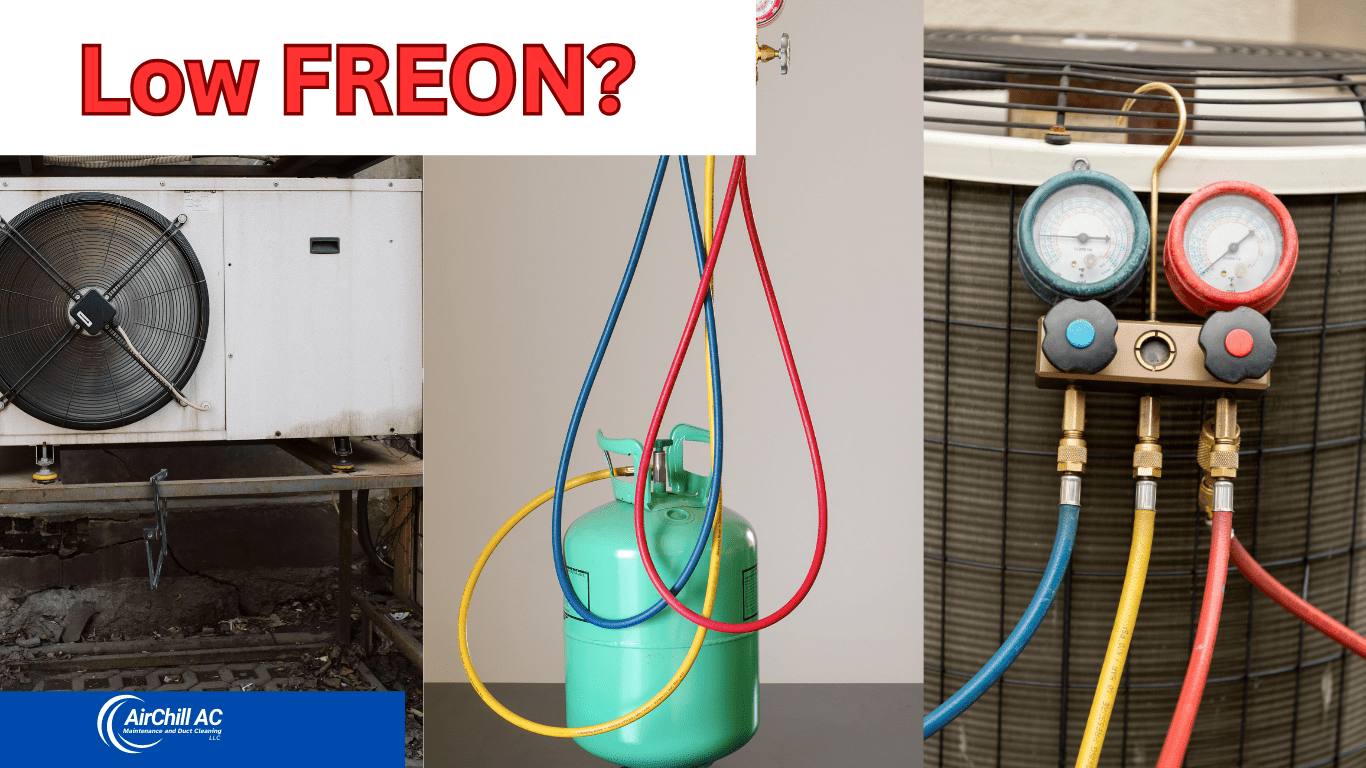
To get an accurate reading, you can use a manifold gauge set designed for HVAC systems. This tool measures the pressure of the refrigerant in your AC lines, helping you determine if the Freon level is below the optimal range.
Another practical method is using an electronic leak detector, which helps identify where Freon might be escaping. Pinpointing leaks early can prevent further Freon loss and freezing problems.
For most homeowners, calling a professional with the right tools and knowledge is the safest bet. They can perform a thorough check, including pressure tests and refrigerant analysis, ensuring your system runs efficiently. Would you rather risk guessing, or trust a precise measurement?
Fixing Low Freon Issues
Low Freon levels in your AC can cause it to freeze up, leading to poor cooling and potential damage. Fixing this issue requires careful attention to both replenishing the refrigerant and preventing future leaks. Addressing these areas will help keep your AC running smoothly and efficiently.
Recharging Freon Safely
Recharging your AC’s Freon isn’t as simple as just adding more refrigerant. Too much or too little can cause problems, so accuracy is key. Before adding Freon, check the system pressure with a gauge to know exactly how much is needed.
If you’re not experienced, consider hiring a professional. Handling refrigerants incorrectly can harm your AC and the environment. Remember, some types of Freon require specific tools and certifications to handle legally and safely.
Preventing Future Leaks
Leaks are often the root cause of low Freon levels. To avoid recurring issues, inspect your AC system regularly for signs of wear or damage. Look for oily spots or corrosion around connections and coils, as these often indicate leaks.
Simple maintenance steps, like cleaning coils and replacing worn-out parts, can extend your AC’s life and reduce leaks. Have you thought about scheduling annual check-ups? Regular inspections help catch small leaks before they turn into major headaches.
When To Call A Professional
Knowing when to call a professional for your AC issues can save you time and money. Some problems need expert tools and skills. Trying to fix these on your own may cause more damage or safety risks. Recognizing signs that require expert care helps keep your system running smoothly.
Signs You Need Expert Help
- AC freezes up repeatedly, even after simple fixes
- Strange noises or smells come from your unit
- Cooling stops or becomes very weak
- Water leaks around the indoor unit
- Higher energy bills without more usage
- Thermostat shows errors or won’t respond
These symptoms often indicate a deeper problem. Low Freon levels can cause freezing, but only a technician can check and fix it safely. Handling refrigerants requires certification and special equipment.
Choosing The Right Technician
- Look for licensed and certified HVAC professionals
- Check reviews and ask for recommendations
- Confirm they have experience with your AC brand
- Ask about their service guarantees and warranties
- Get a clear, written estimate before work starts
Hiring a skilled technician ensures the issue is fixed correctly. They can also spot other potential problems during the visit. This helps avoid future breakdowns and keeps your AC efficient.
Credit: airchillac.com
Frequently Asked Questions
What Causes An Ac To Freeze Up Besides Low Freon?
Low airflow, dirty filters, and thermostat issues can also cause an AC to freeze. These problems restrict air movement, leading to ice buildup on coils, similar to low Freon effects.
How Does Low Freon Lead To Ac Freezing?
Low Freon reduces pressure in the AC system, causing evaporator coils to get too cold. This results in moisture freezing on the coils, leading to the AC freezing up.
Can Low Freon Damage My Ac Unit?
Yes, low Freon can cause the compressor to overheat and fail. Running an AC with low refrigerant stresses components, leading to costly repairs or replacement.
How Often Should Freon Levels Be Checked?
It’s best to check Freon levels annually or during regular AC maintenance. Early detection of low Freon prevents freezing and maintains optimal cooling performance.
Conclusion
Low Freon can cause your AC to freeze up over time. This happens because the system cannot cool properly. Ice builds up on the coils, blocking airflow. Fixing low Freon early stops bigger problems later. Regular maintenance helps keep your AC working well.
Watch for signs like weak cooling or strange noises. Acting fast saves money and keeps your home comfortable. Don’t ignore these warning signs. Stay on top of your AC’s health for smooth cooling all summer.