Are you about to tackle a project that involves cement board but unsure how to cut it cleanly and safely? Cutting cement board might seem tricky at first, but with the right tools and techniques, you can do it like a pro.
Whether you’re updating your bathroom, installing a backsplash, or working on a flooring project, knowing how to cut cement board correctly will save you time, effort, and frustration. Keep reading, and you’ll learn simple, effective steps to get precise cuts every time—no expert skills needed.
Your next project just got a whole lot easier.

Credit: www.tilemountain.co.uk
Choosing The Right Tools
Cutting cement board needs the right tools for good results. Using proper tools makes the job easier and safer.
Different tools work best depending on the size and type of cut you need. Let’s look at some options.
Hand Tools For Small Cuts
Hand tools work well for small or simple cuts on cement board. They are easy to use and control.
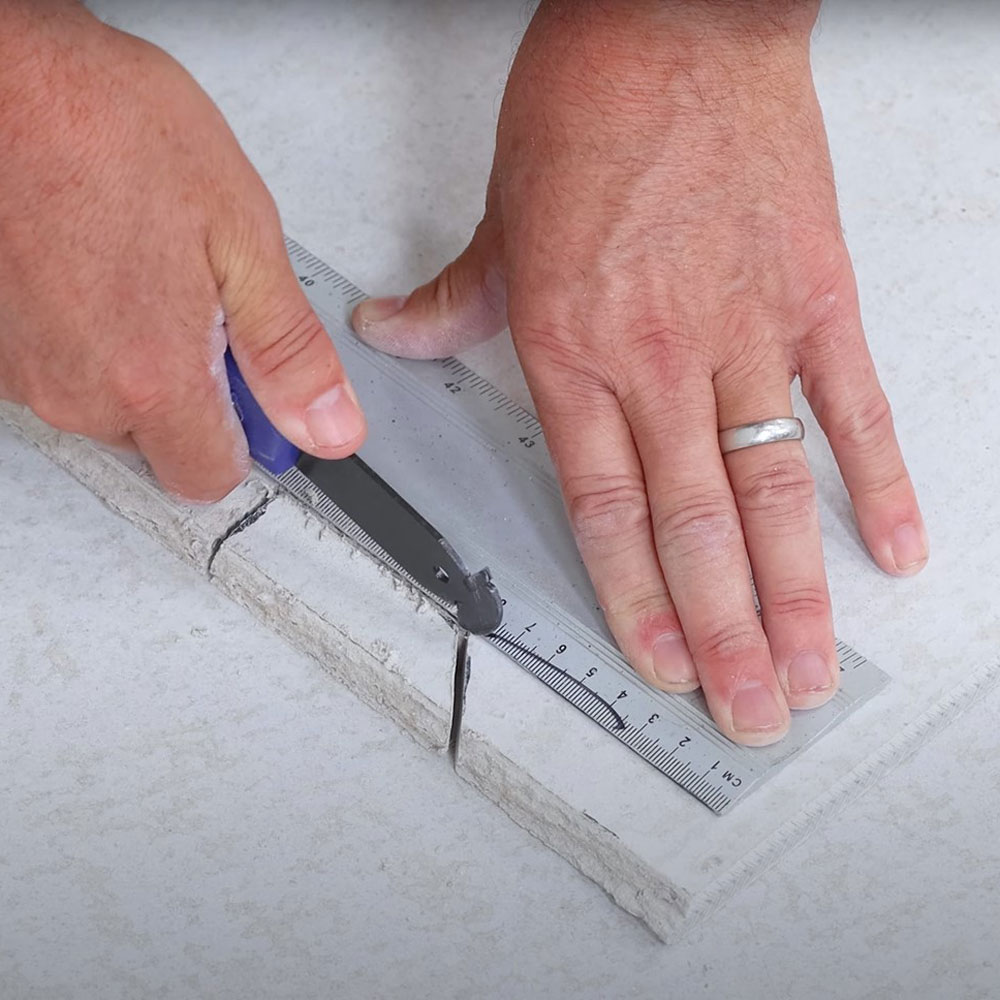
Utility knives and scoring tools can score the board before snapping it. This is good for thin boards.
- Utility knife for scoring
- Carpenter’s square for straight lines
- Measuring tape to mark cuts
- Hand saw with carbide teeth for thicker boards
Power Tools For Larger Projects
For bigger jobs, power tools save time and effort. They can cut through thick cement board quickly.
Use a circular saw or jigsaw with a diamond blade or carbide-tipped blade. These blades handle tough material well.
- Circular saw with diamond or carbide blade
- Jigsaw for curved cuts
- Angle grinder for detailed shaping
- Dust collection attachment to reduce mess
Safety Gear Essentials
Cutting cement board creates dust and sharp edges. Safety gear protects you during the work.
Wear protective glasses and a dust mask to keep dust out of your eyes and lungs. Gloves help protect your hands.
- Safety glasses or goggles
- Dust mask or respirator
- Heavy-duty work gloves
- Long sleeves to protect skin
- Ear protection when using power tools

Credit: insulationgo.co.uk
Preparing The Cement Board
Cutting cement board needs proper preparation. This helps you make clean, accurate cuts.
Start by preparing the board well before cutting. This makes the process safer and easier.
Measuring And Marking
Measure the board carefully using a tape measure. Mark the cutting line clearly with a pencil.
- Use a straight edge to draw the line.
- Double-check your measurements before marking.
- Mark both sides of the board for better guidance.
- Wear safety glasses to protect your eyes during marking.
Securing The Board
Fix the cement board on a flat, sturdy surface before cutting. This stops the board from moving.
| Securing Method | Details |
|---|---|
| Clamps | Use clamps to hold the board firmly on a workbench. |
| Work Surface | Choose a flat, stable surface to prevent wobbling. |
| Protective Padding | Place padding under the board to avoid damage to surfaces. |
Cutting Techniques
Cutting cement board requires the right tools and methods to get clean edges. Proper techniques make the job easier and safer.
This guide covers three common ways to cut cement board for your projects.
Scoring And Snapping Method
This method uses a utility knife to score the cement board deeply on one side. Then, you snap the board along the scored line for a clean break.
- Place the board on a flat surface with the hard side up.
- Use a straightedge to guide the utility knife.
- Score the board deeply in one pass.
- Flip the board over and snap it along the score line.
- Use sandpaper or a rasp to smooth rough edges.
Using A Circular Saw
A circular saw with a carbide-tipped blade cuts cement board faster. It works well for straight lines and large pieces.
| Tip | Details |
|---|---|
| Blade Type | Use carbide-tipped or diamond blade |
| Depth Setting | Set blade just deeper than the board thickness |
| Safety | Wear a dust mask and eye protection |
| Cutting | Cut slowly to avoid chipping edges |
Jigsaw For Curved Cuts
Use a jigsaw for cutting curves or shapes in cement board. Select a blade made for masonry or carbide grit.
Move the jigsaw slowly to control the cut and avoid breaking the board.

Credit: insulationgo.co.uk
Dealing With Dust And Debris
Cutting cement board creates a lot of dust and small debris. This dust can irritate your eyes and lungs. It is important to control dust to stay safe and keep your work area clean.
Using the right tools and techniques helps reduce dust. Cleaning up after cutting keeps your space tidy and prevents accidents.
Dust Control Tips
Use tools designed to reduce dust when cutting cement board. Wet cutting is one way to keep dust down. You can also use a dust shroud or vacuum attachment on your saw.
Wear protective gear like masks and goggles to protect yourself from dust particles. Work in a well-ventilated area to avoid breathing in dust.
- Use a wet saw or spray water on the cutting line
- Attach a vacuum to your cutting tool
- Wear a dust mask and safety goggles
- Cut outside or in a well-ventilated space
- Keep your work area clear of clutter
Cleanup Best Practices
After cutting, clean the dust and debris carefully. Use a vacuum with a HEPA filter to pick up fine dust. Avoid sweeping or blowing dust, which spreads it into the air.
Dispose of the dust and scraps safely to protect your health and the environment. Clean your tools and work surfaces to prevent dust buildup.
- Vacuum dust with a HEPA filter vacuum
- Use damp cloths to wipe surfaces
- Dispose of dust in sealed bags
- Wash your hands and face after cleaning
- Store tools in a clean, dry place
Finishing The Cut Edges
Cutting cement board leaves rough edges that need extra care. Finishing these edges helps the board fit well and last longer.
This guide focuses on smoothing the rough edges and preparing the board for installation.
Smoothing Rough Edges
After cutting, the edges can be sharp or jagged. Use sandpaper or a rasp to smooth them. This prevents injury and helps seal the edges better.
- Wear gloves to protect your hands from sharp edges.
- Use medium-grit sandpaper or a rasp to file the edges gently.
- Clean off dust with a dry cloth after sanding.
- Check edges for any remaining rough spots and repeat if needed.
Preparing For Installation
Once edges are smooth, apply a sealant or primer to protect the cement board. This step helps the board resist moisture and damage.
| Preparation Step | Purpose | Tools Needed |
| Clean edges | Remove dust and debris | Dry cloth, brush |
| Apply sealant | Protect edges from moisture | Brush or roller, sealant |
| Let dry | Ensure sealant sets properly | Time and space with airflow |
| Final check | Confirm edges are smooth and sealed | Visual inspection |
Common Mistakes To Avoid
Cutting cement board needs care and the right tools. Mistakes can cause damage or injury. Knowing what to avoid helps you work safely and correctly.
Two common mistakes are cutting without proper support and ignoring safety precautions. Both can lead to accidents or poor results.
Cutting Without Proper Support
Cutting cement board without support causes uneven cuts or breaks. The board can crack or crumble if not held firmly.
- Never cut the board while it is loose or hanging.
- Use a flat, sturdy surface to place the board.
- Clamp the board to stop it from moving.
- Support the board on both sides of the cut line.
- Avoid bending the board while cutting.
Ignoring Safety Precautions
Safety is very important when cutting cement board. Dust and sharp tools can harm you if you are not careful.
| Safety Precaution | Reason |
| Wear safety glasses | Protects eyes from dust and debris |
| Use a dust mask | Prevents breathing in harmful dust |
| Wear gloves | Protects hands from sharp edges |
| Use proper cutting tools | Ensures clean cuts and less risk of injury |
| Work in a well-ventilated area | Reduces dust concentration in the air |
Frequently Asked Questions
What Tools Are Needed To Cut Cement Board?
To cut cement board, you need a utility knife, a straightedge, and a carbide-tipped scoring tool. For more precise cuts, use a circular saw with a carbide blade or a jigsaw. Always wear protective gear like safety glasses and a dust mask to ensure safety while cutting.
Can You Cut Cement Board With A Utility Knife?
Yes, you can cut cement board with a utility knife. Score the board deeply using a straightedge as a guide. Snap the board along the scored line by applying pressure. This method is suitable for straight cuts. For complex shapes, consider using a jigsaw or circular saw.
Is It Necessary To Wear Safety Gear?
Yes, wearing safety gear is crucial when cutting cement board. Cement board produces dust that can be harmful when inhaled. Always wear a dust mask and safety glasses to protect your eyes and lungs. Additionally, wearing gloves can protect your hands from sharp edges.
How To Cut Curves In Cement Board?
To cut curves in cement board, use a jigsaw with a carbide-grit blade. Mark the curve on the board, then slowly guide the jigsaw along the marked line. Ensure the board is well-supported to prevent breakage. Always wear protective gear to safeguard against dust and debris.
Conclusion
Cutting cement board is easier than it seems. Use the right tools for clean cuts. Measure carefully before you start cutting. Score the board deeply to snap it well. Always wear safety gear to protect yourself. Practice on scrap pieces if you can.
Taking your time leads to better results. With patience, your project will look professional. Now, you can handle cement board with confidence.