Are you curious about how many amps your RV air conditioner pulls when it’s running? Knowing this number is key to keeping your RV’s electrical system safe and efficient.
Whether you’re planning a trip, upgrading your power setup, or just want to avoid blown fuses, understanding your AC’s power draw can save you from unexpected problems. You’ll discover exactly how to figure out the amps your RV air conditioner uses and what that means for your battery and generator.
Keep reading to make sure your RV stays cool without any electrical surprises.
Credit: www.vevor.com
Rv Air Conditioner Basics
RV air conditioners come in different types. The most common are roof-mounted, portable, and window units. Roof-mounted models are popular because they save space inside the RV. Portable units can be moved and used where needed. Window units fit in RV windows but need proper support.
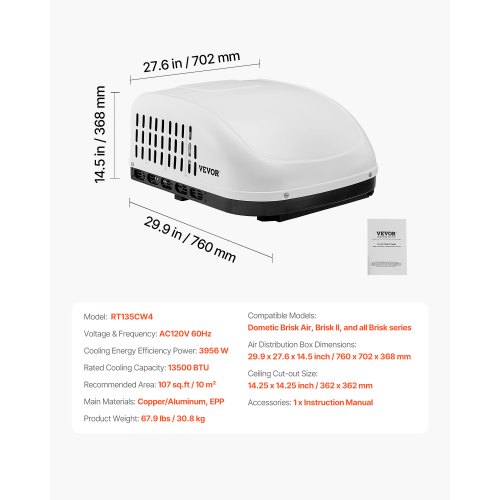
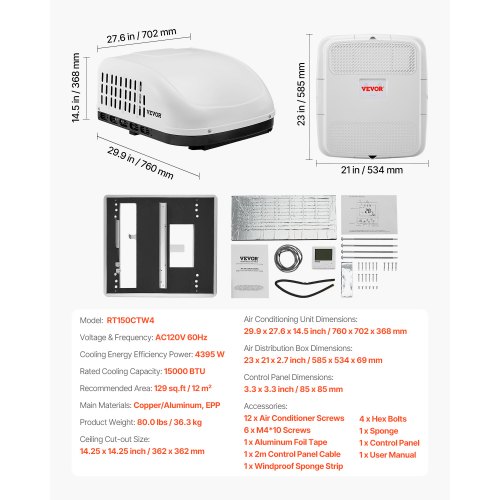
Each type uses a different amount of power. Most RV air conditioners have power ratings between 8,000 and 15,000 BTU. This affects how many amps they draw from your power source. Knowing the power rating helps in choosing the right generator or battery setup.
| Type | BTU Rating | Approximate Amps Drawn |
|---|---|---|
| Roof-mounted | 13,500 BTU | 10-15 amps |
| Portable | 8,000-10,000 BTU | 7-10 amps |
| Window | 10,000-15,000 BTU | 8-15 amps |
Amp Draw Factors
Starting ampsare much higher than running amps. This is because the air conditioner’s motor needs a big surge of power to start.
Running amps are the power the unit uses to keep working once it is on. Knowing both helps choose the right fuse or breaker size.
- Unit sizeaffects amps. Bigger units use more amps to cool space.
- A small RV AC might draw 10-15 amps running.
- Larger units can draw 20-30 amps or more.
Voltagealso changes amp draw. Most RV air conditioners use 120 volts.
Some units use 240 volts, which lowers the amps needed for the same power.
Check the label on the unit for exact amp numbers.
Typical Amp Draw Ranges
Small RV air conditioners usually draw between 7 to 12 amps. These units are perfect for compact RVs or smaller spaces. They consume less power and are easier on your RV’s electrical system.
Medium and large units require more current. They typically draw 12 to 20 amps. These units cool bigger spaces and offer stronger airflow. They need a higher power supply and often require a dedicated circuit.
Dual-unit systems combine two air conditioners. They can draw 20 to 40 ampsor more. These systems offer better cooling for large RVs but demand a powerful electrical setup.
| Unit Type | Typical Amp Draw | Use Case |
|---|---|---|
| Small RV Air Conditioners | 7 – 12 amps | Compact RVs, smaller spaces |
| Medium and Large Units | 12 – 20 amps | Bigger spaces, stronger airflow |
| Dual-Unit Systems | 20 – 40+ amps | Large RVs, powerful cooling |
Credit: www.promasterforum.com
Measuring Amp Draw
Using a clamp meteris an easy way to check the amp draw of an RV air conditioner. Place the clamp around one wire of the power cord. The meter shows the current flowing through that wire. This lets you see how many ampsthe unit uses while running.
Always read the manufacturer specificationsto know the expected amp draw. This information is usually on the AC unit label or in the manual. It tells you the running ampsand the starting amps. Starting amps are higher because the motor needs extra power to start.
Power Supply Considerations
Generator capacitymust match or exceed the RV air conditioner’s starting amps. Most RV AC units draw 12 to 20 ampsrunning and up to 30 ampsstarting. A generator with at least 3000 wattsis usually needed to run the AC and other devices.
Shore powertypically provides 30 or 50 ampsto RVs. A 30-amp shore power can handle one AC unit, but 50-amp service supports multiple appliances. Check your RV’s breaker panel to know the limits.
| Power Source | Typical Amp Draw | Notes |
|---|---|---|
| Generator | 12-30 amps | Needs 3000+ watts capacity |
| Shore Power (30-amp) | 30 amps | Supports one AC and small appliances |
| Shore Power (50-amp) | 50 amps | Supports multiple AC units and devices |
Batteries and invertersadd flexibility but have limits. Inverters convert DC battery power to AC for the air conditioner. A large battery bank and a high-capacity inverter are needed to run the AC for long periods. Otherwise, battery drain will be fast.
Credit: www.vevor.com
Reducing Amp Consumption
Regular cleaningkeeps the air conditioner running smoothly. Change or clean the filtersoften to help airflow. Check the coilsand remove dirt buildup to improve efficiency. Tighten any loose wiringto prevent power loss. Proper lubricationof moving parts reduces strain on the motor.
Use the air conditioner only when needed. Set the thermostat to a comfortable but not too low temperature. Turn off the unit when the RV is empty. Keep doors and windows closed to trap cool air inside. Use fans to help circulate air and lower energy use.
Safety Tips For Electrical Load
Overloading an RV’s electrical system can cause serious problems. Keep the total amps below the system’s limit. Use a power meter to check the current draw of devices. Turn off appliances not in use to reduce load. Watch for signs like flickering lights or tripped breakers. These warn of overloads.
Use the correct wire size for your RV’s circuits. Thin wires can heat up and cause fires. Always match fuses or circuit breakers to the wire size. Never use a fuse with a higher rating than recommended. This prevents damage and keeps everyone safe.
| Item | Recommendation |
|---|---|
| Wire Size | Use the size that matches the amp load |
| Fuses / Breakers | Match fuse rating to wire and device amps |
| Checking Load | Use a power meter to measure amps drawn |
| Signs of Overload | Flickering lights, warm wires, tripped breakers |
Frequently Asked Questions
How Many Amps Does An Rv Ac Use?
An RV air conditioner typically draws between 11 to 16 amps. This varies based on the unit’s size and efficiency. It’s essential to check your RV’s specific AC model for accurate amp usage. Proper knowledge helps in managing power sources effectively.
Can I Run My Rv Ac On A 15-amp Circuit?
Running an RV AC on a 15-amp circuit is challenging. Most RV AC units require more power. This may lead to tripped breakers or inadequate cooling. Always ensure your power supply matches the AC unit’s requirements for optimal performance.
Do Rv Air Conditioners Use A Lot Of Power?
Yes, RV air conditioners can use considerable power. They typically draw between 1,500 to 2,000 watts. This can significantly impact your RV’s power consumption. Understanding this helps in managing your RV’s overall energy usage efficiently.
How Can I Reduce Rv Ac Power Usage?
To reduce RV AC power usage, maintain regular maintenance. Clean filters and use energy-efficient settings. Park in shaded areas and use insulation. Proper ventilation also helps reduce the load on your AC unit.
Conclusion
Knowing how many amps your RV air conditioner uses helps you plan power needs. Most RV AC units draw between 10 and 15 amps while running. Start-up can need more amps for a short time. Check your specific model’s details to be sure.
Proper planning keeps your RV’s electrical system safe and efficient. This way, you avoid trips that blow fuses or drain batteries. Understanding amp draw also helps you choose the right generator or power source. Stay comfortable and powered up on every trip.