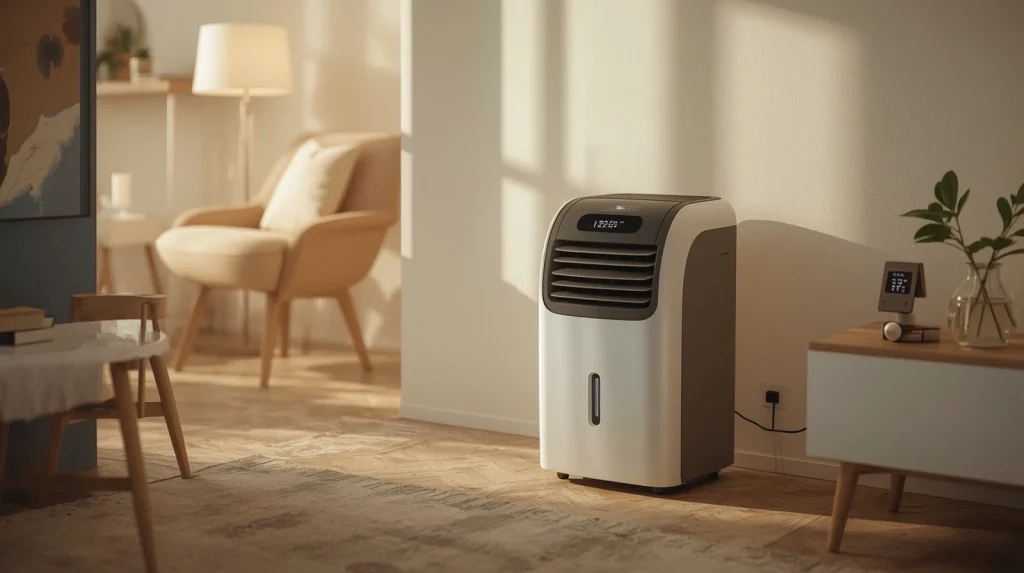
Are you wondering how much electricity your portable air conditioner is actually using? Knowing the number of watts it consumes can help you save money and avoid surprise energy bills.
Whether you use it occasionally or rely on it daily, understanding its power usage is key to making smart choices for your comfort and budget. Keep reading, and you’ll discover exactly how to measure your portable air conditioner’s energy use—and how to keep it efficient without sacrificing coolness.

Credit: nomadicsupply.com
Portable Ac Power Basics
Portable air conditioners use different amounts of powerdepending on their size. The cooling capacityis measured in BTUs (British Thermal Units). Higher BTUs mean the unit can cool larger spaces but will use more watts.
Here’s a simple guide:
- Small units (around 8,000 BTU) use about 800 to 1,000 watts.
- Medium units (around 10,000 BTU) use about 1,000 to 1,200 watts.
- Larger units (around 14,000 BTU) use about 1,200 to 1,500 watts.
The power usagealso changes with settings like fan speed and temperature. Lower settings use fewer watts. Higher settings cool faster but use more electricity.
Typical Wattage Range
Portable air conditioners use different watts based on size. Small unitsusually consume between 500 to 900 watts. They are good for small rooms or single areas.
Medium unitsneed more power, around 900 to 1400 watts. These work well for medium-sized rooms.
Large unitsuse the most electricity, from 1400 to 2000 wattsor more. They cool large spaces or multiple rooms.
| Unit Size | Typical Wattage | Best For |
|---|---|---|
| Small | 500 – 900 watts | Small rooms, single areas |
| Medium | 900 – 1400 watts | Medium rooms |
| Large | 1400 – 2000+ watts | Large rooms, multiple areas |
Energy Efficiency Ratings
EERstands for Energy Efficiency Ratio. It measures how many BTUs a unit cools per watt of electricity. A higher EER means the air conditioner uses less power for the same cooling.
SEERmeans Seasonal Energy Efficiency Ratio. It shows efficiency over a whole cooling season. SEER is useful for comparing energy use over time.
Both ratings help you find energy-savingair conditioners. Look for units with higher numbers to save on power.
Electricity bills depend on how many watts the AC uses. Portable air conditioners usually use between 800 and 1500 watts. Higher EER or SEER ratings can lower these costs.
- Lower wattage = less power used
- Higher EER/SEER = better efficiency
- Choose models that fit your room size
- Use a timer or thermostat to save energy
Calculating Daily And Monthly Usage
The power use of a portable air conditioner depends on its wattageand running time. Most units use between 800 and 1500 watts. To estimate daily usage, multiply the wattage by the hours it runs.
For example, if a unit uses 1000 watts and runs for 5 hours, it uses 5000 watt-hoursor 5 kWhdaily. Multiply by 30 for monthly usage.
| Wattage (Watts) | Daily Running Time (Hours) | Daily Energy Use (kWh) | Monthly Energy Use (kWh) |
|---|---|---|---|
| 800 | 4 | 3.2 | 96 |
| 1000 | 5 | 5 | 150 |
| 1500 | 6 | 9 | 270 |
- Check your unit’s label for wattage.
- Estimate how many hours it runs daily.
- Multiply wattage by hours for daily use.
- Multiply daily use by 30 for monthly use.
Factors Increasing Power Consumption
Room sizegreatly affects power use. Bigger rooms need more cooling power.
Good insulationhelps keep cool air inside. Poor insulation makes the AC work harder.
The ambient temperatureoutside also impacts energy use. Hotter days make the AC consume more watts.
How often and how long you run the AC changes its power use. Continuous use leads to higher consumption.
- Short, occasional use saves energy.
- Running at lower fan speeds uses less power.
- Using a timer can reduce unnecessary running time.
Tips To Reduce Power Use
Place the portable air conditioner near a window or vent. This helps it cool better and use less power. Avoid putting it in direct sunlight or near heat sources.
Keep the unit clean by regularly removing dust and debris. Check and clean filters often. This keeps the machine running efficientlyand saves energy.
- Set the thermostat to a comfortable but not too low temperature.
- Use a timer to turn off the unit when not needed.
- Try higher settings during cooler parts of the day.
Comparing Portable Ac To Other Cooling Options
Portable air conditionersuse between 800 to 1500 watts, depending on size and cooling power. Window unitstypically use 500 to 1400 watts, often less than portable ACs since they cool by venting outside.
Central air systemsuse much more power, around 2000 to 5000 wattsor more. They cool entire homes but are expensive to run.
Fansuse very little power, usually 40 to 100 watts. They don’t cool air but help with air flow and comfort.
Evaporative coolersuse about 100 to 300 watts. They cool by adding moisture to hot air, best in dry climates.
| Cooling Option | Power Use (Watts) | Notes |
|---|---|---|
| Portable Air Conditioner | 800 – 1500 | Easy to move, vents hot air outside |
| Window Unit | 500 – 1400 | Fixed, efficient for single rooms |
| Central Air System | 2000 – 5000+ | Cools whole house, high energy use |
| Fan | 40 – 100 | Uses little energy, no actual cooling |
| Evaporative Cooler | 100 – 300 | Best in dry climates, adds moisture |

Credit: www.amazon.ca
Choosing The Right Portable Ac For Your Needs
Choosing the right portable air conditioner depends on several key factors. First, matching the BTU (British Thermal Unit)rating to your room size is crucial. A small room needs about 5,000 BTUs, while larger rooms require more. Picking the right BTU ensures the AC cools effectively without wasting energy.
Energy labels provide important information about the unit’s power use. Look for models with high Energy Efficiency Ratio (EER)ratings. These use less electricity and save money on bills. Always check the wattage to estimate how much power the AC will consume.
Budget and efficiencyoften need balance. Cheaper units may cost less upfront but use more electricity. More efficient models might be pricier but save money long-term. Think about how often you will use the AC and your electricity costs before deciding.
Credit: www.jackery.com
Frequently Asked Questions
How Many Watts Does A Portable Ac Use?
A portable air conditioner typically uses between 800 to 1,500 watts. The exact wattage depends on its size and efficiency. Larger units and those with higher BTUs consume more power. Always check the manufacturer’s specifications for precise details. Energy-efficient models can help reduce electricity consumption.
Is A Portable Ac Energy-efficient?
Portable air conditioners can be energy-efficient, especially newer models. Look for units with a high Energy Efficiency Ratio (EER). An EER above 10 indicates good efficiency. Additionally, using the right size for your room helps optimize energy use. Regular maintenance and proper installation also enhance efficiency.
Can I Run A Portable Ac On A Generator?
Yes, you can run a portable air conditioner on a generator. Ensure the generator’s wattage capacity exceeds the AC’s requirements. Most portable ACs need between 800 to 1,500 watts. Check both the generator and AC specifications. Using a high-quality extension cord can help ensure safe operation.
Does Portable Ac Increase Electricity Bill?
Yes, using a portable air conditioner can increase your electricity bill. The extent depends on its wattage and usage duration. Running a unit with 1,200 watts for eight hours daily can significantly raise costs. Opting for energy-efficient models and using them wisely can help manage expenses.
Conclusion
A portable air conditioner uses between 500 and 1500 watts. The exact number depends on the model and size. Smaller units use less power, while bigger ones need more. Knowing this helps you plan your electricity use better. It also helps keep your bills lower.
Choose a unit that fits your room size and cooling needs. This way, you get comfort without wasting energy. Understanding watt usage makes your cooling smarter and easier.