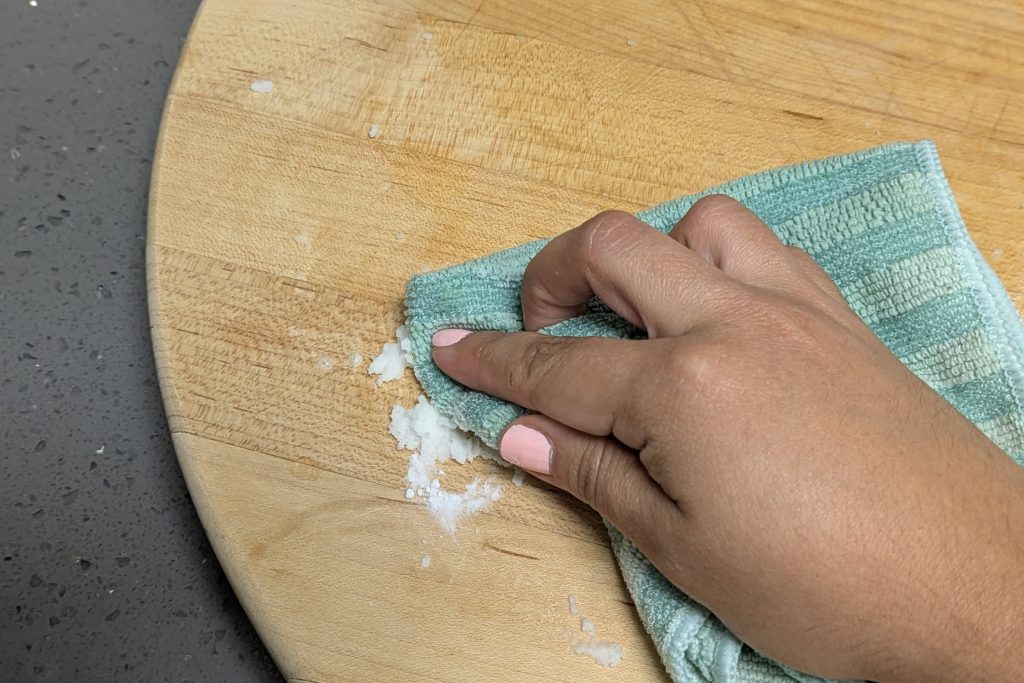
Your wood cutting board is a kitchen essential, but keeping it clean and safe isn’t always easy. If you don’t clean and sanitize it properly, harmful bacteria can hide in the tiny grooves and cracks.
You might think a quick rinse is enough, but that’s not true. You’ll discover simple, effective ways to clean and sanitize your wood cutting board so it stays fresh and safe for every meal. Keep reading to protect your health and extend the life of your favorite kitchen tool.
Choosing The Right Wood Board
Wood cutting boards come in many types. Choosing the right one helps keep your kitchen safe and clean.
Some woods are better for cutting boards because they last longer and resist bacteria. Let’s look at what to pick.
Types Of Wood Used
Common woods for cutting boards include maple, walnut, cherry, and bamboo. These woods are tough and do not dull knives quickly.
- Maple: Hard and widely used for cutting boards
- Walnut: Dark wood with good durability
- Cherry: Smooth texture and rich color
- Bamboo: Fast-growing and eco-friendly option
Benefits Of Hardwood Boards
Hardwood boards last longer and resist deep cuts. They also help prevent bacteria from growing inside the board.
| Benefit | Explanation |
|---|---|
| Durability | Hardwoods resist scratches and dents better than softwoods. |
| Knife Friendly | They keep knives sharper by being firm but not too hard. |
| Hygienic | Hardwoods close their pores, reducing bacteria absorption. |
| Appearance | They have attractive grain patterns and colors. |
Avoiding Softwood Boards
Softwoods like pine or cedar are not good for cutting boards. They get cut easily and trap food particles.
- Softwoods have open grain that absorbs moisture
- They wear out quickly and can split
- Bacteria can hide in deep cuts and pores
- Softwoods may smell strong and affect food taste
Credit: www.thekitchn.com
Daily Cleaning Routine
Keeping your wood cutting board clean each day is important. Proper cleaning stops germs and keeps your board in good shape.
This routine includes washing, drying, and care tips to prevent damage like warping or cracking.
Washing With Soap And Water
Use warm water and mild soap to clean your wood board. Scrub it gently with a soft sponge or brush to remove food particles.
- Rinse the board under warm running water.
- Apply a small amount of mild dish soap.
- Use a soft sponge to scrub all surfaces.
- Rinse thoroughly to remove all soap.
- Do not soak the board in water to avoid damage.
Drying Techniques
Dry your wood cutting board quickly after washing. Leaving it wet can cause bacteria growth and wood damage.
| Drying Method | How To Do It |
| Air Dry | Place the board upright on a drying rack for good air flow. |
| Towel Dry | Wipe the board with a clean, dry towel immediately after washing. |
| Sunlight | Briefly place the board in indirect sunlight to help dry it faster. |
Preventing Warping And Cracking
Protect your wood board by following simple care tips to keep it flat and strong.
Use this checklist to avoid damage:
- Do not leave the board soaking in water.
- Keep it away from direct heat sources like stoves or ovens.
- Apply mineral oil regularly to keep the wood moist.
- Store the board in a dry place with good air circulation.
- Flip the board occasionally to dry both sides evenly.
Deep Cleaning Methods
Wood cutting boards need deep cleaning to remove germs and stains. Regular washing may not clean them well.
Use natural ingredients to clean and sanitize your wooden board safely.
Using Vinegar And Lemon
Vinegar kills many bacteria on wood surfaces. Lemon adds extra cleaning power and a fresh scent.
Spray white vinegar on the board and let it sit for a few minutes. Rub lemon slices over the surface to remove stains.
- Spray white vinegar over the board
- Let it sit for 5 minutes
- Rub the board with a cut lemon
- Rinse with warm water
- Dry the board thoroughly
Baking Soda Scrub
Baking soda works as a gentle scrub to lift dirt and odors. It is safe for wood and easy to use.
Sprinkle baking soda on the board. Use a damp cloth or sponge to scrub in circular motions. Rinse well and dry.
- Sprinkle baking soda over the board
- Scrub with a damp cloth or sponge
- Focus on stained or smelly areas
- Rinse with warm water
- Dry completely with a towel
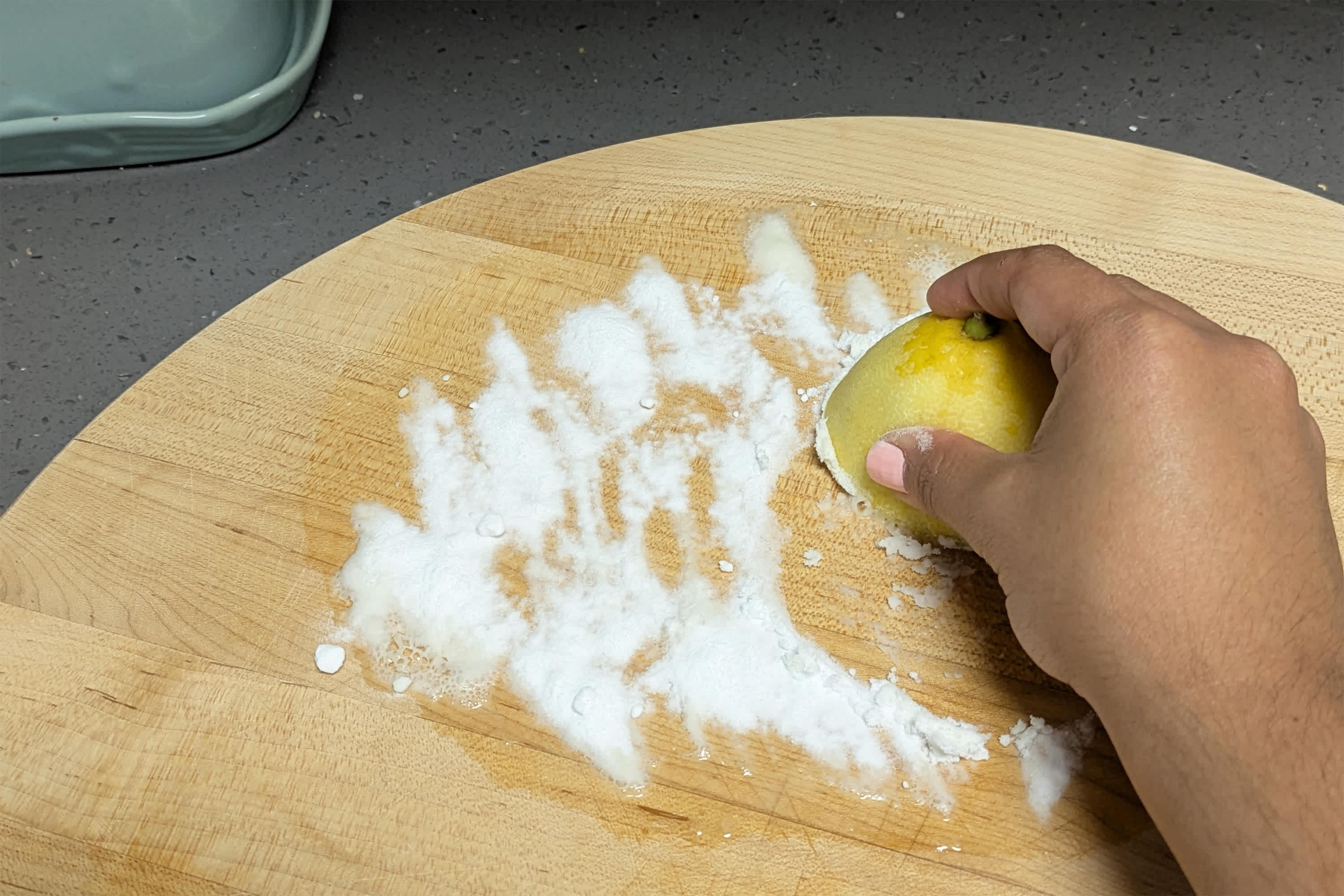
Salt And Lemon Scrub
Coarse salt scrubs away grime and kills germs. Lemon juice helps brighten and sanitize the wood.
Cover the board with salt. Rub a lemon half over the salt, squeezing juice as you scrub. Rinse and dry well.
- Spread coarse salt on the board
- Rub a lemon half over the salt
- Scrub in circular motions
- Rinse the board with warm water
- Dry the board fully before use

Credit: ca.style.yahoo.com
Sanitizing Your Board
Sanitizing your wood cutting board is important to keep it safe for food. Bacteria can hide in the wood’s pores. Cleaning removes dirt, but sanitizing kills germs.
There are several safe ways to sanitize your board. Using common household items or commercial products can help. Always dry your board well after sanitizing.
Using Hydrogen Peroxide
Hydrogen peroxide is a natural sanitizer. It kills many types of bacteria and is safe for wood. Use 3% hydrogen peroxide for best results.
- Pour hydrogen peroxide over the board surface.
- Let it sit for a few minutes to kill germs.
- Rinse the board with warm water.
- Dry the board completely with a clean towel.
Diluted Bleach Solution
Bleach can sanitize wood but must be used carefully. Use a very diluted solution to avoid damage. Always rinse well after use.
| Ingredient | Amount |
| Bleach | 1 teaspoon |
| Water | 1 quart (4 cups) |
Mix one teaspoon of bleach with one quart of water. Wipe or soak the board in this solution for a few minutes. Rinse with water and dry fully.
Commercial Sanitizers
Many stores sell sanitizers made for cutting boards. These products often kill bacteria quickly and are safe on wood. Follow the package instructions carefully.
Tips for using commercial sanitizers:
- Choose food-safe products labeled for wood surfaces.
- Apply sanitizer evenly across the board.
- Allow the sanitizer to sit for the time shown on the label.
- Rinse or wipe off if required by the product.
- Always dry the board completely before use.
Maintaining And Conditioning
Wood cutting boards need care to stay safe and last longer. Cleaning is important, but conditioning helps keep the wood strong and smooth.
Conditioning stops the wood from drying out and cracking. It also helps the board resist stains and smells.
Applying Mineral Oil
Mineral oil is a common choice to condition wood boards. It soaks into the wood and keeps it from drying out. Use only food-grade mineral oil for safety.
To apply mineral oil, pour some on the board and rub it with a clean cloth. Let the oil soak in for a few hours or overnight. Wipe off any extra oil before using the board again.
Using Beeswax And Oil Blends
Beeswax mixed with oil gives extra protection. The wax seals the wood and adds a smooth finish. This blend also helps water bead off the surface.
- Warm the beeswax and oil blend gently before use.
- Apply the mixture evenly with a soft cloth.
- Let the board sit for a few hours to absorb the blend.
- Buff the surface with a dry cloth to shine.
Frequency Of Conditioning
| Conditioning Frequency | Reason |
| Weekly | For heavy use boards |
| Monthly | For moderate use boards |
| Every 3 months | For light use boards |
Condition your board often to keep it in good shape. If you use it every day, oil it weekly. For less use, monthly or every few months is fine.
Avoiding Common Mistakes
Wood cutting boards need special care to stay clean and safe. Many people make mistakes that can damage the board or cause germs to grow.
Knowing what to avoid helps you keep your board in good shape for a long time.
Not Soaking The Board
Do not soak your wood cutting board in water. Water can make the wood swell and crack. It also makes the board weaker over time.
Instead, clean the board with a damp cloth or sponge and dry it quickly with a towel.
Dishwasher Use
Never put your wood cutting board in the dishwasher. The heat and water can cause the wood to warp and crack.
Hand wash the board with mild soap and warm water. Dry it right away to keep it safe and strong.
Cross-contamination Risks
Using the same board for raw meat and vegetables can spread bacteria. This is a big health risk.
- Use separate boards for meat, fish, and vegetables
- Clean boards thoroughly after each use
- Sanitize boards with vinegar or a mild bleach solution
- Replace boards that have deep cuts or cracks
Signs To Replace Your Board
Wood cutting boards need regular cleaning and care. Sometimes, they get damaged beyond repair. Knowing when to replace your board keeps your kitchen safe.
Old or damaged boards can harbor bacteria. Check your board often for signs that it needs to be replaced.
Deep Cracks And Gouges
Deep cracks and gouges are places where bacteria hide. These cuts are hard to clean well. They can cause food contamination.
If your board has big cracks or deep cuts, it is time to get a new one. Small scratches can be sanded down, but deep damage cannot.
Persistent Odors
Sometimes, wood boards keep bad smells even after cleaning. Persistent odors mean bacteria or mold may be inside the wood.
If your board smells bad all the time, replace it. This keeps your food tasting fresh and safe to eat.
Warping And Splitting
Warping makes the board uneven and unstable. Splitting creates gaps that trap dirt and germs. Both damage the board’s function.
Replace your board if it warps or splits. A flat, solid board helps you cut safely and clean easily.

Credit: homewithgraceandjoy.com
Frequently Asked Questions
How Often Should You Clean A Wood Cutting Board?
Clean your wood cutting board after each use to prevent bacteria buildup. Regular cleaning ensures it remains hygienic. Use warm soapy water and a scrub brush. Rinse thoroughly and let it air dry. For deeper sanitization, use a vinegar or bleach solution weekly.
Can Vinegar Sanitize A Wood Cutting Board?
Yes, vinegar can sanitize a wood cutting board effectively. Its acetic acid properties kill bacteria. Simply spray white vinegar on the board, let it sit for a few minutes, and rinse. This natural method is safe and eco-friendly, ensuring your cutting board remains clean and free from harmful germs.
How Do You Remove Stains From Wood Cutting Boards?
To remove stains, sprinkle baking soda on the stained area. Scrub gently with a damp cloth or sponge. Let it sit for a few minutes before rinsing with warm water. For tougher stains, use a mixture of lemon juice and salt.
This method naturally lifts stains without damaging the wood.
Is It Safe To Use Bleach On Wood Cutting Boards?
Yes, it’s safe to use diluted bleach on wood cutting boards occasionally. Mix one tablespoon of bleach with a gallon of water. Apply with a cloth or sponge, then rinse thoroughly with water. Ensure the board is fully dry before storing.
Regular use of bleach isn’t recommended to avoid wood damage.
Conclusion
Cleaning and sanitizing your wood cutting board keeps it safe and lasting longer. Use simple steps like washing with soap and water right after use. Dry it well to stop bacteria from growing. Occasionally, treat the board with oil to protect the wood.
Avoid soaking or putting it in the dishwasher. These small habits make a big difference. Keep your cutting board clean for healthy cooking every day. Easy care leads to a safer kitchen and tastier meals.