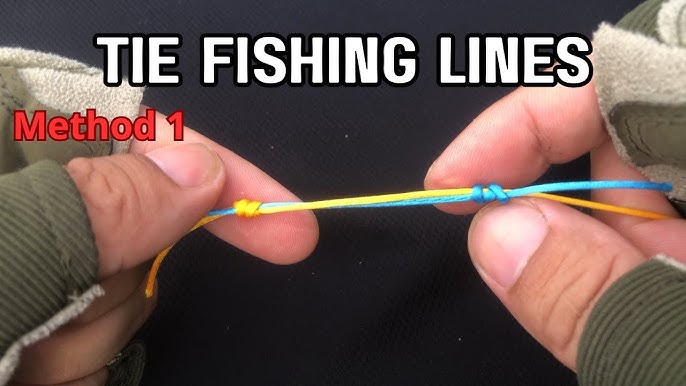
Are you struggling with connecting two fishing lines smoothly? Whether you’re facing a snapped line or just need to extend your reach, knowing how to join fishing lines properly can make all the difference.
Imagine casting your line with confidence, knowing it won’t break at the weakest point. You’ll discover simple, effective methods to tie your lines together quickly and securely. Keep reading to learn the tricks that will keep you fishing longer and help you land more catches.

Credit: www.wikihow.com
Choosing The Right Knot
Joining two fishing lines is a common task for anglers. Picking the right knot is important to keep the lines strong.
A strong knot helps prevent the line from breaking when you catch a fish. Learn how to choose the best knot for your fishing lines.
Factors To Consider
Think about the thickness of your lines. Different knots work better with thin or thick lines.
Also, consider the type of fish you want to catch. Some knots hold better under pressure from big fish.
- Line strength and thickness
- Type of fish targeted
- Ease of tying the knot
- Slippage resistance
- Flexibility of the knot
Types Of Fishing Lines
Fishing lines come in different materials. Each type needs a knot that works best for it.
Monofilament, fluorocarbon, and braided lines have different strengths and stretch. Choose knots that match these features.
- Monofilament:Stretchy and easy to knot
- Fluorocarbon:Less stretch, more abrasion-resistant
- Braided:Very strong but slippery
Credit: knotspedia.com
Step-by-step Knot Techniques
Joining two fishing lines is important for a strong connection. Using the right knot keeps your line from breaking.
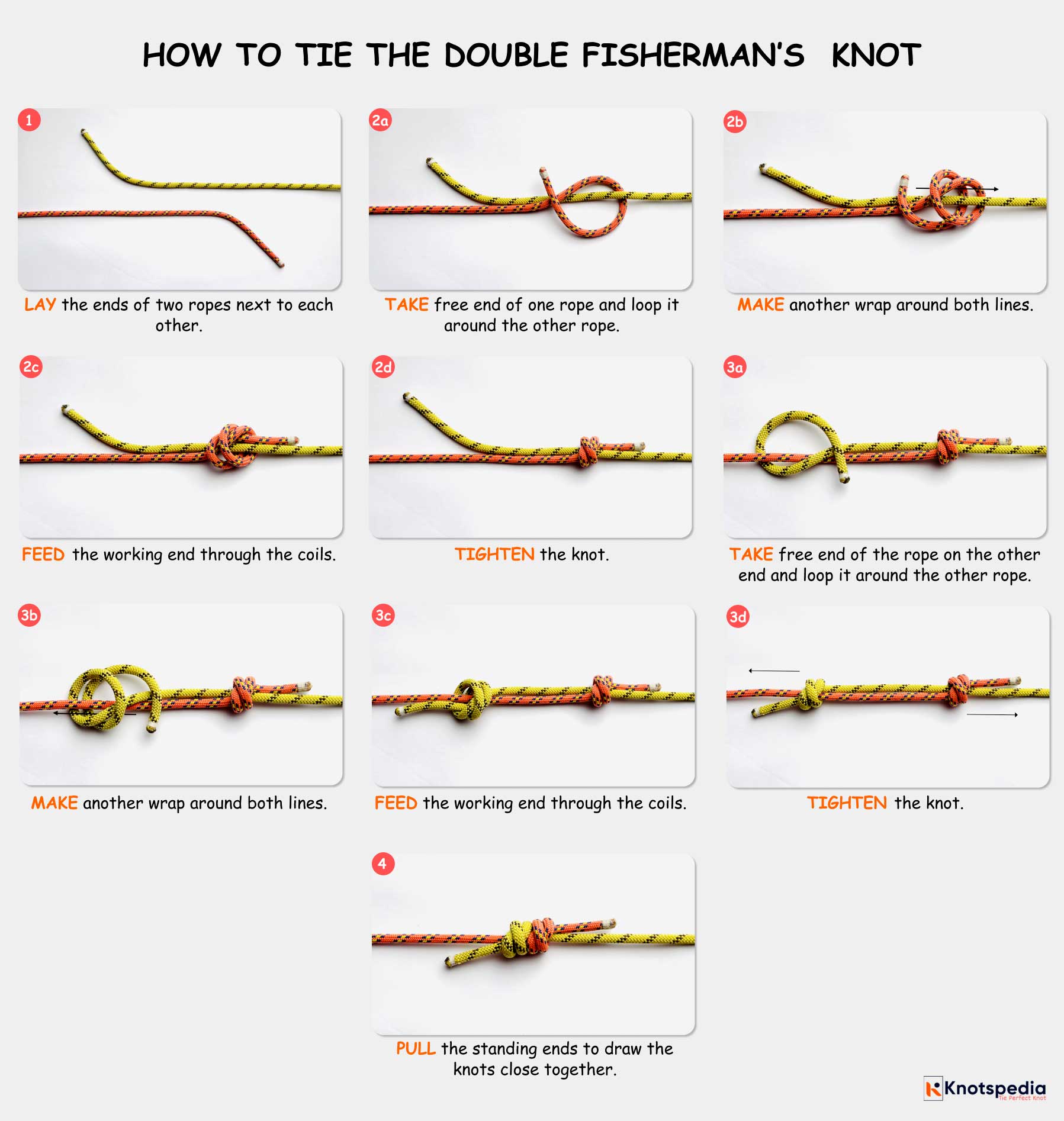
Here are simple step-by-step knot techniques to tie fishing lines together. Each knot works well for different types of fishing lines.
Double Uni Knot
The Double Uni Knot is strong and easy to tie. It works well for lines of different thicknesses.
To tie this knot, start by overlapping the ends of the two lines. Make loops with each line around the other line.
- Overlap the ends of the two lines
- Make a loop with one line and wrap it 5 times around both lines
- Pass the tag end through the loop
- Repeat with the other line
- Pull both standing lines to tighten the knots
- Slide the two knots together
- Trim the tag ends
Blood Knot
The Blood Knot is good for joining two similar lines. It creates a smooth and strong connection.
To tie it, overlap the ends and wrap one line around the other several times. Then pass its end back through the center.
- Overlap the two line ends
- Wrap one line around the other 4-6 times
- Pass the tag end back through the center loop
- Repeat with the other line in the opposite direction
- Pull both standing lines slowly to tighten
- Trim the tag ends close
Albright Knot
The Albright Knot is perfect for joining heavy line to light line. It works well for connecting braided line to monofilament.
Start by making a loop in the heavier line. Pass the lighter line through the loop and wrap it tightly.
- Make a loop in the heavier line
- Pass the lighter line through the loop
- Wrap the lighter line around both loop strands 10 times
- Pass the lighter line back through the loop
- Pull the heavy line loop and light line ends to tighten
- Trim the tag ends
Double Surgeon’s Knot
The Double Surgeon’s Knot is quick and strong. It works well for joining lines of different thicknesses.
Overlap the line ends and tie a simple overhand knot with two turns. Then tie another overhand knot and pull tight.
- Overlap the two line ends
- Tie an overhand knot with two loops
- Tie a second overhand knot
- Pull both standing lines to tighten the knots
- Trim the tag ends close
Tips For Stronger Connections
Joining two fishing lines well is key to a solid fishing setup. A strong connection helps prevent breaks and lost fish.
Focus on preparing the lines, tying the knot tightly, and cutting off extra line for the best results.
Proper Line Preparation
Start by cleaning and aligning the ends of both lines. Remove any dirt, knots, or frays before connecting.
- Cut the lines cleanly with sharp scissors.
- Soak the ends in water to make them more flexible.
- Overlap the lines evenly for a smooth knot.
Tightening The Knot
Pull the knot firmly but avoid sudden jerks. A slow, steady pull keeps the knot secure and prevents slipping.
| Action | Tip |
| Pulling the knot | Use steady pressure, do not rush |
| Checking tightness | Make sure no gaps appear in the knot |
| Wet the line | Lubricate before pulling to reduce friction |
Trimming Excess Line
Cut off the extra ends close to the knot. Leaving too much line can cause tangles or weaken the connection.
- Use sharp scissors or clippers for a clean cut.
- Leave about 2-3 mm of line beyond the knot.
- Avoid cutting too close or leaving long tails.
Common Mistakes To Avoid
Joining two fishing lines is a skill that needs care. Many anglers make simple mistakes. These errors can cause the lines to break or slip apart. Avoiding common mistakes helps keep your lines strong and secure.
This guide explains three common mistakes. Learn how to avoid using the wrong knot, tying knots incorrectly, and ignoring line compatibility.
Using The Wrong Knot
Choosing the wrong knot weakens the connection between lines. Some knots work well for certain line types but fail with others. Using a knot that does not hold can cause your catch to escape.
- Do not use simple knots like the overhand knot for joining lines.
- Use knots made for line joining, such as the double uni knot or blood knot.
- Consider the knot’s strength and ease of tying before deciding.
Improper Knot Tying
Tying knots incorrectly is a frequent error. Even the right knot can fail if not tied well. Loose or uneven knots reduce line strength and can slip under tension.
| Common Knot Issue | Effect on Line | How to Fix |
|---|---|---|
| Not tightening knots properly | Knot slips or loosens | Pull knots firmly and evenly |
| Uneven wraps | Weak spot in the knot | Make smooth, even wraps |
| Cutting tag ends too short | Knot may come undone | Leave a small tag end for security |
Neglecting Line Compatibility
Using lines that do not match in type or thickness causes problems. Different materials may not hold knots well together. Lines of very different thickness also make knot tying difficult.
- Match line types, such as braided to braided or monofilament to monofilament.
- Keep the thickness or test strength close for both lines.
- Check manufacturer advice for line joining compatibility.
Testing Your Knots
After tying two fishing lines together, it is important to test your knots. This ensures they will hold under pressure. Testing helps avoid losing fish or gear.
Different methods exist to check if your knot is strong enough. Knowing when to retie your knot can save your fishing trip.
Pull Test Methods
The pull test is the most common way to check a knot. Hold the line firmly on each side of the knot. Pull steadily and feel for any slipping.
- Pull the lines apart slowly to test strength.
- Check if the knot tightens or slips.
- Look for any damage or fraying on the lines.
- Repeat the test a few times for safety.
When To Retie
Retie your knot if you notice any weakness. A knot can fail after heavy use or a big catch.
| Condition | Reason to Retie |
| Knot slips under pull | Not tied correctly or too loose |
| Line shows frays or damage | Weakens the knot strength |
| Knot feels loose after casting | May untie during fishing |
| After catching a large fish | Stress can weaken the knot |

Credit: www.ohero.com
Frequently Asked Questions
How Do You Join Two Fishing Lines Together?
To join two fishing lines, use strong knots like the blood knot or double uni knot. These knots create a secure, smooth connection that passes through rod guides easily.
What Is The Best Knot For Joining Fishing Lines?
The double uni knot is the best for joining fishing lines. It’s strong, easy to tie, and works well for lines of different thicknesses.
Can You Join Different Types Of Fishing Lines?
Yes, you can join different fishing lines using the double uni or Albright knot. These knots ensure a reliable and smooth connection between varied line types.
How Do You Avoid Weakening Fishing Lines When Joining?
Wet the lines before tightening knots to reduce friction and prevent damage. Pull knots slowly and firmly to maintain maximum line strength.
Conclusion
Joining fishing lines is simple with practice. Use the right knot. Securely connecting lines ensures a successful fishing trip. Patience and practice improve your skills. Always check the knot strength. Wetting the knot helps it hold better. Trim excess ends for a clean finish.
Mistakes happen; learn from them. With time, connecting lines becomes second nature. Happy fishing and tight lines!