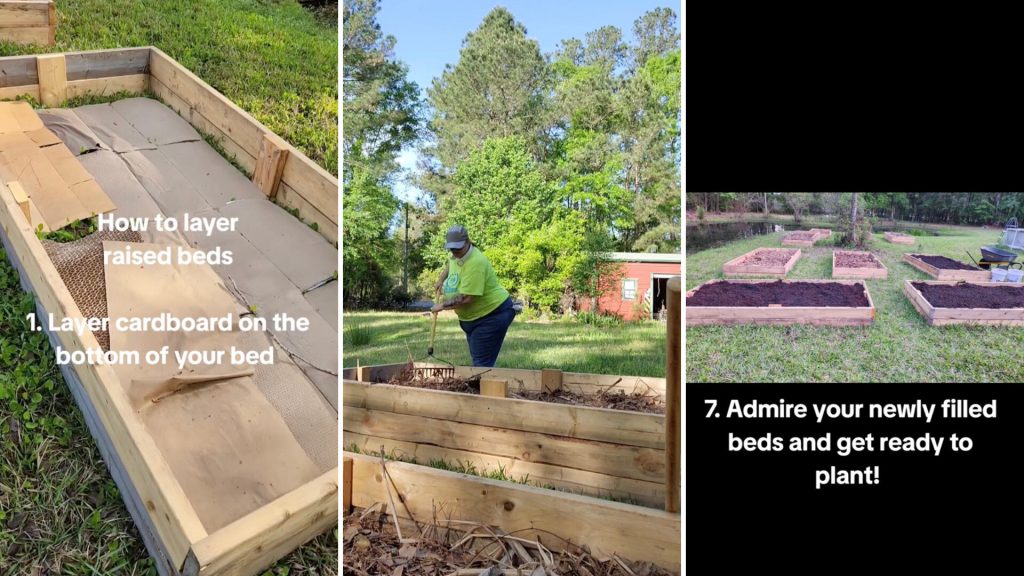
Are you ready to transform your raised garden bed into a thriving, lush oasis? Knowing what to layer in your raised garden bed can make all the difference in growing healthy plants with vibrant blooms and tasty veggies.
The right layers create a perfect environment for roots to dig deep, moisture to stay just right, and nutrients to feed your plants steadily. You’ll discover simple, effective layering techniques that anyone can use—whether you’re a beginner or a seasoned gardener.
Keep reading to unlock the secrets that will turn your garden bed into a powerhouse of growth!
Choosing The Right Location
Choosing the best spot for your raised garden bed helps plants grow well. It affects sunlight, water, and ease of care.
Think about sunlight, soil drainage, and how easy it is to reach your garden. These factors make a big difference.
Sunlight And Shade Considerations
Most vegetables need at least six hours of sunlight daily. Too much shade can slow plant growth. Some plants tolerate less sun.
- Pick a spot with full sun for sun-loving plants like tomatoes.
- Place shade-tolerant plants like lettuce where there is partial shade.
- Avoid places blocked by trees or buildings that cast long shadows.
Soil Drainage And Accessibility
Good drainage keeps roots healthy by preventing water buildup. Choose a level place that does not flood.
| Factor | Why It Matters | What to Look For |
| Drainage | Prevents water pooling | Well-drained, no puddles |
| Accessibility | Makes gardening easier | Near paths, easy to reach |
| Soil Type | Affects plant growth | Loamy, not heavy clay |
Selecting Materials For Layers
Building a raised garden bed involves choosing the right materials for layering. The right layers help plants grow strong and healthy.
Let’s explore options for organic and inorganic components, and learn what materials to avoid.
Organic Matter Options
Organic matter is essential for healthy soil. It provides nutrients and helps retain moisture.
- Compost: Made from kitchen scraps and yard waste.
- Manure: Adds rich nutrients to the soil.
- Leaf Mold: Created from decomposed leaves.
Inorganic Components
Inorganic components improve drainage and support plant roots. They help balance the soil structure.
Common inorganic materials include:
- Sand: Enhances drainage in compacted soil.
- Perlite: Lightweight and improves aeration.
- Vermiculite: Retains moisture and nutrients.
Avoiding Harmful Materials
Some materials can harm your garden bed. Avoid using anything that contains chemicals or pollutants.
| Material | Reason to Avoid |
| Treated Wood | Contains harmful chemicals |
| Non-compostable Waste | Does not break down |
| Construction Debris | May contain toxins |
Layering Techniques
Layering in a raised garden bed helps plants grow strong. Each layer has a special job. Good layering improves soil health and plant growth.
Use different materials in each layer. This gives your plants the right mix of air, water, and nutrients.
Bottom Layer For Drainage
The bottom layer stops water from pooling. It keeps roots from getting too wet. Use coarse materials that let water flow easily.
- Small stones or gravel
- Broken terra cotta pots
- Coarse wood chips or twigs
- Shredded bark
Middle Layer For Nutrition
This layer gives plants food to grow. Use organic materials that break down slowly. They release nutrients over time.
| Material | Purpose | Notes |
|---|---|---|
| Compost | Rich in nutrients | Provides balanced nutrition |
| Grass clippings | Add nitrogen | Use fresh or dried |
| Leaf mold | Improves soil texture | Keeps soil moist |
| Manure | Boosts fertility | Well-rotted only |
Top Layer For Planting
The top layer is where plants grow their roots. Use loose soil that holds moisture but drains well. It should be rich and soft.
- High-quality garden soil
- Peat moss or coconut coir for moisture retention
- Perlite or sand for drainage
- Organic fertilizer for extra nutrients

Credit: www.epicgardening.com
Maintaining Soil Health
Good soil is key to a healthy raised garden bed. It helps plants grow strong. You can keep soil healthy by layering it properly.
Layering adds nutrients and keeps the soil moist and loose. Let’s look at some ways to do this.
Mulching Strategies
Mulch covers the soil to protect it. It stops weeds and keeps moisture in. Organic mulches break down and feed the soil.
- Use straw or hay to cover the soil surface.
- Wood chips work well but take longer to break down.
- Leaves can be shredded and spread as mulch.
- Compost makes a rich mulch that adds nutrients.
- Avoid plastic mulch as it does not improve soil health.
Watering Tips
Water helps plants and soil microbes stay alive. Too much water can wash away nutrients. Too little slows plant growth.
| Watering Practice | Benefit |
| Water early in the morning | Reduces evaporation |
| Use drip irrigation | Delivers water to roots |
| Check soil moisture before watering | Prevents overwatering |
| Mulch to keep soil moist longer | Reduces watering needs |
Replenishing Nutrients
Soil loses nutrients as plants grow. Adding organic matter brings nutrients back. It also improves soil texture.
Here are some ways to add nutrients to your raised bed:
- Spread compost over the soil each season.
- Add aged manure for extra nitrogen.
- Use cover crops like clover to fix nitrogen.
- Mix bone meal or rock phosphate for phosphorus.
- Top dress with seaweed or fish emulsion occasionally.
Common Mistakes To Avoid
Building a raised garden bed needs careful planning. Many gardeners make simple errors that harm plant growth.
This guide covers common mistakes to avoid when layering your raised garden bed.
Overpacking Layers
Adding too many layers or packing them tightly stops air from reaching plant roots. Plants need air and space for roots to grow well.
- Use loose materials to keep good airflow.
- Limit layers to 3-5 to avoid compaction.
- Mix coarse and fine materials for balance.
- Do not compress layers by stepping on them.
Ignoring Soil Ph
Soil pH affects nutrient availability for plants. If pH is too high or low, plants cannot absorb nutrients properly.
| pH Level | Effect |
| Below 5.5 | Soil too acidic, nutrient uptake reduced |
| 5.5 to 7.0 | Ideal for most plants |
| Above 7.0 | Soil too alkaline, some nutrients locked |
Test soil pH before planting. Adjust with lime or sulfur as needed to keep plants healthy.
Poor Drainage Issues
Poor drainage causes water to pool in the bed. Roots may rot, and plants can suffer from lack of oxygen.
- Water stays on soil surface for hours after rain.
- Plants look wilted even if soil is wet.
- Soil smells sour or rotten.
Use coarse materials like gravel or wood chips at the bottom. This helps excess water to drain away.

Credit: www.sproutboxgarden.com

Credit: www.vegogarden.com
Frequently Asked Questions
What Materials Are Best For Layering In Raised Beds?
Use organic matter like compost, shredded leaves, and grass clippings. Add soil, sand, and mulch for balance. These layers improve drainage, fertility, and structure, promoting healthy plant growth.
How Thick Should Each Layer Be In A Raised Garden Bed?
Start with 6-8 inches of coarse materials for drainage. Add 4-6 inches of compost or topsoil. Finally, top with 2-3 inches of mulch to retain moisture and suppress weeds.
Can Layering Improve Soil Quality In Raised Garden Beds?
Yes, layering adds nutrients and enhances soil texture. Organic layers break down, feeding plants naturally. This process supports better root development and higher yields.
Should I Add Fertilizer When Layering My Raised Bed?
Adding organic fertilizer or compost is recommended. It boosts nutrient content and supports microbial activity. Avoid over-fertilizing to prevent nutrient imbalance or plant stress.
Conclusion
Layering a raised garden bed helps plants grow strong and healthy. Start with coarse materials at the bottom for drainage. Add organic waste and soil on top to feed plants. This mix keeps roots moist and full of nutrients. Regularly check and refresh layers for best results.
Healthy soil means better vegetables and flowers. Try layering in your garden bed for a simple, natural boost. Gardening becomes easier and more fun this way. Your plants will thank you with great growth and yield.